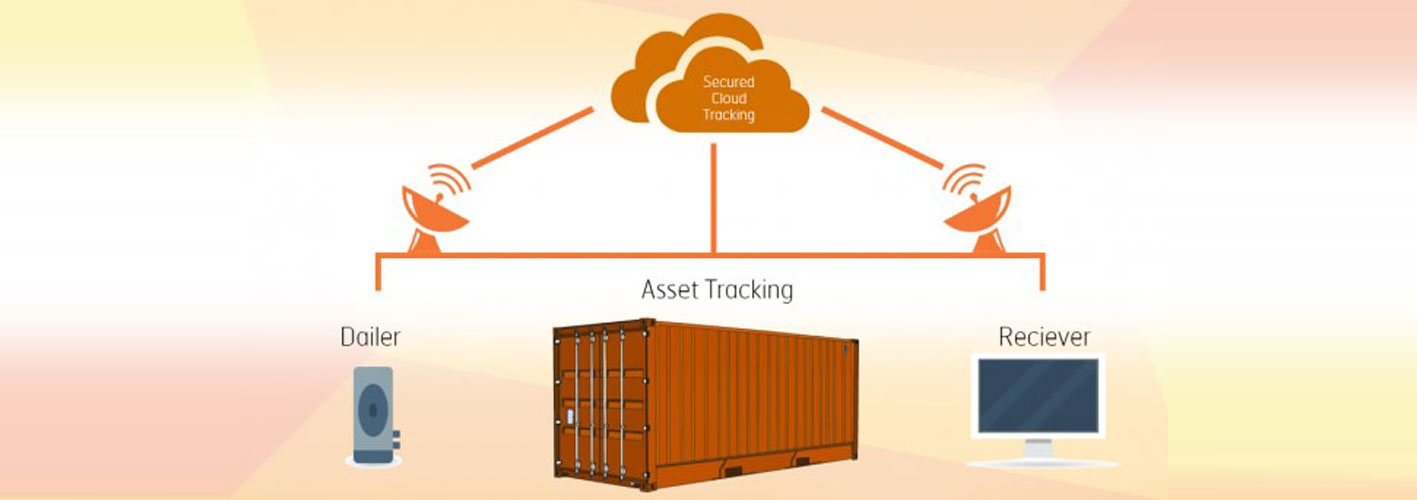
HOW DOES ASSET TRACKING WORK?

With GPS technology advancing faster than many people imagined, we are only beginning to realise the value that this technology can add to a variety of industries and businesses. One of the most burgeoning uses of this technology is asset tracking.

What is asset tracking?

Asset tracking refers to the process of tracking your company’s physical assets as well as any information related to these assets such as location, status and due date of arrival of assets.

What is asset tracking used for?

It all depends on the type of business you have, but essentially, it can be used to track any physical assets that you have, including tools, vehicles, equipment, IT devices or even the tracking of people.

Why the need for asset tracking?

Managing a large amount of assets in a company can often prove to be an operational headache, especially as it is difficult to keep track of these assets on a consistent basis. Tracking company assets ultimately enables you to save valuable time and money as critical information about asset usage is relayed to managers, thereby empowering them to either make timely interventions or change structures appropriately. Asset tracking data supports decision making that will help prevent theft, losses and maximise asset utilization rates.

Which industries use asset tracking?

There are numerous industries that can use asset tracking and benefit from this technology. Here are some examples:

Courier companies: Packages and vehicles can be tracked

Healthcare: Medical equipment can be tracked

Construction: Commonly used tools across multiple work sites and warehouses can be tracked

Education: Tracking through geofencing will ensure that expensive laboratory equipment stays within a university campus area

How are assets tracked?

While there are numerous ways to track assets, many companies in the modern era are turning to sophisticated technology such as electronic tagging and GPS technology. There are vast options for asset tags, including QR codes, NFC, barcodes, GPS, and beacons. The tags, in turn, are used to identify assets and act as a link between physical items and the information of these items in the database. Mobile applications further allow companies to easily check and update asset information on the go.

If you’re interested in asset tracking, then look no further than Cartrack. Our Asset Track product is a wireless and self-powered GPS/GSM tracking unit that helps you track and monitor the movement of virtually any movable asset.


How to avoid becoming another hijacking statistic

The latest crime statistics for the 2017/18 reporting year were released in parliament on September 11, 2018, covering the crime period 1 April, 2017, to 31 March, 2018. Unfortunately, the stats revealed that hijackings in South Africa are still unacceptably high. While hijacking saw a 2.3% decrease in 2017/18 compared 2016/17, there were still 16 325 reported cases, with half of them occurring in Gauteng alone.
In light of these stats, it must be acknowledged that crimes such as these a reality of everyday life in South Africa, and there is always a high possibility that this type of crime can happen to you. However, this doesn’t have to be the case; there are several steps you can take to avoid becoming another hijacking statistic.

Here are some tips on how to avoid a hijacking:

1. Make sure your car is well maintained
If your car is not well maintained and you encounter problems with it while in public, you will be far more vulnerable to an attack. It is therefore important to service your car regularly and to check your oil, water and tyres at least on a monthly basis

2. Plan your route beforehand

Driving around without an idea of where you’re headed is a recipe for disaster, as you will quickly be singled out as a criminal target. Make sure that you always have your wits about you by planning your route beforehand and by letting somebody know what time they can expect you at your destination. Also, try to change your schedule and routes (if possible) on a regular basis, as this will make it harder for criminals to track your daily patterns.

3. Be prepared

By being prepared when you arrive at your car, you will give criminals less time to attack you. As such, always have your keys ready (but not visible), only unlock your car when you’re near it, and check that no one is in the back seat before getting in. Also, don’t use your cell phone when walking to your car, as this will distract you and make you an easier target.

4. Be aware on your journey

Hijackers will target motorists who are unaware that they are being targeted. In order to prevent this, it is critical to have your wits about you – always be aware of any potential threat. This includes regularly checking your rear-view mirror to see if you are being followed, driving to your nearest police station if you suspect that you are being followed and avoiding distractions while driving such as using your cell phone.

5. Be aware when arriving home

Many motorists also tend to relax when they are arriving home and thus fall prey to criminals. As such, you should always be on the lookout for suspicious, unfamiliar people who are loitering around your property, reverse into your driveway when parking and make sure your driveway is well lit and clear of shrubbery.

No matter what steps you take, crime and hijacking can affect you. That’s why it’s also important to invest in a Stolen Vehicle Recovery device from Cartrack and get a Panic Button. Our world-class recovery team is available 24/7 to help you out in any hijacking situation, while our Panic Button will ensure that we can respond even quicker to any emergency.

Why good driver behaviour is important

Driver behaviour is a key part of operational and reputational management for any business. It is particularly critical in fleet management, as implementing more efficient and accountable driving practices could not only increase the bottom line of companies, but inculcate far better safety for all concerned.

Here are some facts as to why good driver behaviour is so important:

  • Poor driver behaviour is the main factor in road accidents

Most accidents can be attributed to human error. Adverse driver behaviour is the leading cause of these errors; in fact, over 90% of road crashes are caused by undesirable driver behaviour. Typical elements of driver behaviour that could lead to accidents include speeding, harsh turning, harsh braking and alcohol consumption.

  • Poor driver behaviour shortens the life of your vehicles

Poor driving habits don’t only result in accidents; they also considerably reduce the lifespan of your vehicles. Driver behaviour such as idling, harsh turning, harsh braking and illegal actions that drivers take on the road are likely to compromise the quality and longevity of vehicles. Conversely, drivers who adopt good driving practices on the road are less likely to wear vehicles out.

  • Driver behaviour impacts fuel consumption

Many of the bad driving behaviours described above will also result in unnecessary fuel wastage. To maximise the use of fuel, it is essential that drivers maintain a reasonable and law-abiding speed, don’t rush towards red traffic lights, don’t idle and don’t brake or turn harshly. Correcting driver behaviour can prove to be critical in conserving fuel use.

  • Better driver behaviour will increase productivity and efficiency

Driver behaviour is also a vital factor in determining the profitability of many companies, especially those that employ a fleet of vehicles. Correct driver behaviour will lead to fewer accidents, less breakdowns and will ultimately result in company vehicles reaching their intended destination in a more prompt and efficient manner.

One of the most effective means to curb poor driver behaviour is intelligent telematics in fleet management. Fleet managers can extract data relating to both their drivers and their fleet of vehicles, and based on this data, take appropriate action. This data can often be collected in real-time, which means that there can be swift and timely remedies taken to curb costly driver behaviour.

Cartrack’s fleet management solutions are an invaluable tool in helping to enforce safer driver behaviour. We can offer you a tailored solution that will fit your business model and lead to positive results in no time.