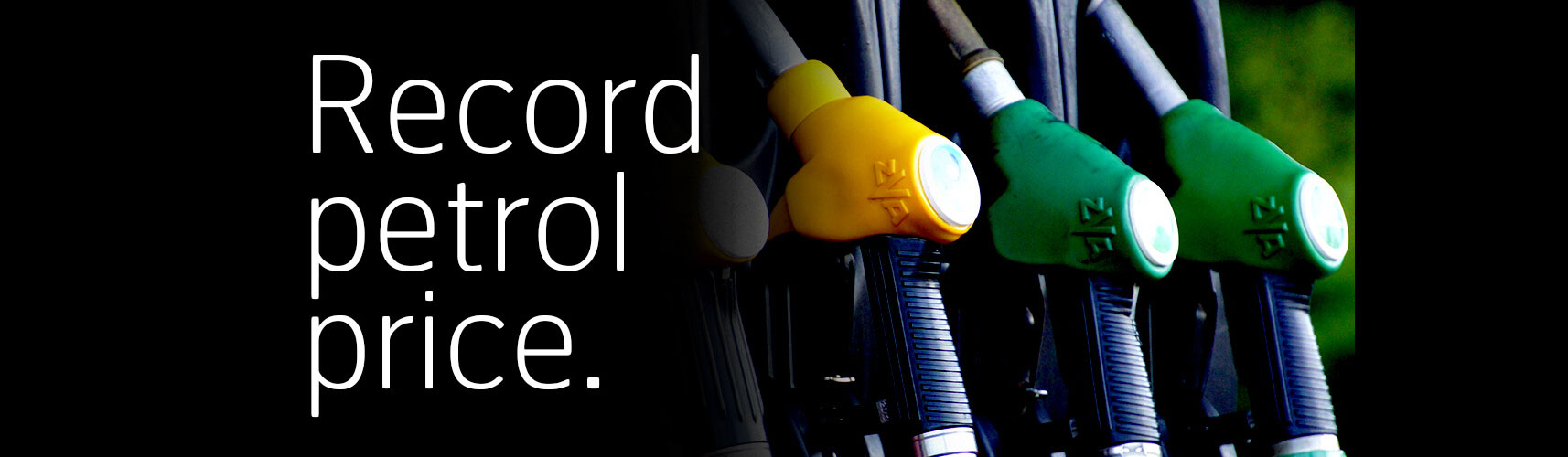
Brace yourself for record petrol price

Motorists will have to brace themselves for even more bad news, with petrol set to rocket to a record high price on Wednesday.

The Department of Energy (DoE) announced that both grades of petrol, 93 and 95 (ULP and LRP), will increase from midnight on Tuesday by 99 cents and 100 cents a litre (c/l) respectively. This will result in an overall retail price of R17.08 c/l for 95 ULP in Gauteng and R16.49 c/l at the Coast, while Diesel 0.05% sulphur and diesel 0.005% sulphur will both increase by 124c a litre.

While we have all gotten used to fuel price hikes this year, this hike is particularly steep, and a bad body blow for both motorists and the economy in general. The DoE apportioned blame to the weak rand exchange rate.

“The average rand/US dollar exchange rate for the period 31 August 2018 to 27 September 2018 was 14.7899 compared to 13.9430 during the previous period. This led to a higher contribution to the basic fuel prices on petrol, diesel and illuminating paraffin by 48.72c/l, 51.03c/l and 50.62 c/l respectively,” the DoE said.

The price was also heavily influenced by the rising global oil price, with Brent crude surging to over $85 a barrel –its highest price in four years. This time around, the DoE was unable to intervene as they had in September when they temporarily provided some relief against a major fuel hike [Link to previous article]. With the South African economy currently in a recession, things are unlikely to turn around in the near future, so we will all have to “tighten our belts” and economise s much as we can in the foreseeable future.

To give you an idea of the impact that the petrol price hike will have on your pocket, here are some food items that are priced equivalent to a litre of petrol:

  • A cooldrink
  • Three packets of 2-minute noodles
  • One long-life milk
  • Two packets of chips
  • A loaf of bread
  • A 750 ml bottle of tomato sauce
  • A 1kg bag of sugar

While things may seem bleak when it comes to the petrol price, things can get even worse if you don’t protect your vehicle against theft. Give yourself peace of mind by purchasing a tracking device from Cartrack, where we have an audited recovery rate of over 90%.

Most fuel-efficient cars in SA

With the petrol price escalating at a rate of knots, all motorists have been looking for new ways to save a Rand or two.

One of the best ways to ensure that fuel costs don’t drain your pockets too much is to save fuel. While the amount of fuel that you save will depend on a number of factors such as the road conditions, your driving style and the mechanical condition of your car, it is also important to drive a car that consumes as little petrol as possible.

As such, if you happen to be in the market for a new car, it would make sense to consider buying one of these highly fuel-efficient cars, all priced as of 2018. The Fiat 500, which is offered either as a convertible or a hard-top, is considered to be a particularly efficient vehicle, with its 63kW/145Nm 0.9-litre, two-cylinder turbo petrol engine claiming a fuel consumption figure of 3.8L/100km. This car can also be enjoyed in either manual or automatic mode, while there are three trim levels to choose from, namely, Pop, Pop Star and Lounge.

While the Smart For Two city car may be a little smaller, it packs a punch in terms of its fuel savings, with fuel consumption claimed at 4.1L/100km. It’s three-cylinder 1.0-litre petrol engine will still get you from A to B, while it also has 52kW and 91Nm of torque that is paired with a standard, five-speed manual transmission. It also has three trim levels of Base, Passion and Proxy. The Fiat Panda boasts low fuel consumption figures of 4.2L/100k. This five-speed manual transmission is powered by the same engine that is found in the Fiat 500, which has a two-cylinder, 0.9-litre turbo-petrol engine and torque outputs of 63kW and 145Nm.

The Audi A1 is the most expensive car on this list, but it is also quite fuel efficient, with its entry-level, manual A1 Sportback and three-door derivatives claiming a fuel consumption figure of 4.2L/100km. Its also packed with power thanks to a turbocharged 1.0-litre petrol engine that offers 70kW and 160Nm of torque. This five-speed manual transmission car is the most fuel-efficient within the 208 range thanks to a claimed fuel consumption of 4.3L/100km. It’s unsurprising that it is so fuel efficient, with an aspirated 1.2-litre petrol engine with 60kW and 118Nm naturally suited for economical driving.

Another good way to maximise fuel efficiency is to invest in fleet management solutions. Contact Cartrack today to find out how you can improve fuel savings with sophisticated vehicle telematics.

Top tips on how to save money

The economy has been struggling of late, and consumers have been badly affected by the financial crunch. Everything seems to be more expensive, from petrol to food to entertainment, and it is becoming harder and harder just to get by on our salaries. In these tough times, the only viable solution is to work out ways to save money and cut costs wherever and whenever you can.

Here are some handy tips on how to save money:

Make a budget

The first step towards financial relief and independence is setting out clear limits for yourself regarding what you spend each month. As such, it is of vital importance to devise a budget and then adhere strictly to that budget. In order to achieve this goal, you should start by working out what you spend each month, and organise your recorded expenses into a workable budget. This budget must outline exactly how your expenses measure up to your income, which will allow you to limit overspending. When putting together your budget, it is also important to consider expenses that can occasionally occur such as car maintenance.

Put money aside

No matter how tight things are, it’s always advisable to put away between 10% and 15% of your income as savings. Should your expenses be so high that you find it difficult to save that much, then you might need to reconsider your budget and try to cut back on unnecessary expenses such as entertainment and eating out. If you bracket savings as an expense in the same way that you consider groceries to be an expense, you will reinforce good saving habits. To ensure that you stick to a plan that factors in savings, you can set up an automated transfer to a savings account. In this way, you won’t think twice about saving and won’t be tempted to rather spend the money.

Set a goal of something to save for

As you are putting savings away for future use, it can sometimes be tempting to not want to commit to this practice, as you won’t receive immediate rewards from doing this. It is therefore essential to set a specific goal in mind when saving – whether you are saving for a TV, a car, a holiday or a home. Having an end goal in mind will help motivate you and focus your efforts.

Consider a smart investment

While it may seem against your best interests to add an expense on to your expenses, putting some money into a reputable investment could reap great financial rewards in both the short and long term. While investing presents a certain risk and could result in you losing money, it also creates the chance to gain compounded returns, and help create financial relief as well as a retirement nest egg. It is best to speak to a qualified financial advisor about this option

Be smarter with your service providers

Not every service provider is equal in terms of their price. Shop around and find a service provider that can offer you a lower price while still offering quality service. For example, Drive and Save can provide you vehicle theft insurance for only R9.99 a month (terms and conditions apply ).

Motorists saved from steeper fuel price

Weary South African motorists recently dodged a petrol price “bullet” thanks to intervention from the Department of Energy (DoE).

Fuel prices increased by only 4.9c per litre, with the total increase rounded up to 5c/l and applying to both grades of petrol. The price of diesel, paraffin and LP gas remained unchanged.

The limited increase is a temporary relief to motorists, with the Automobile Association (AA) having recently stated that they expected a 23c to 25c per litre increase, which would have pushed the price above R16 a litre.

In a media statement explaining why they had intervened, the DoE explained that the country had seen “sustained increases in fuel prices for the past few months, which placed a strain on the consumers”.

“Despite the fact that these increases were caused mainly by international factors, the department has decided to intervene temporarily for this month. This is a once-off temporary intervention to provide some relief to motorists and consumers against fuel price hikes,” they added.

The fact that there is an increase at all is due to the need to provide an “annual salary increase for forecourt attendants, cashiers and other administrative staff,” the DoE noted. It further stated that the annual increase is in line with the Motor Industry Bargaining Council agreement reached on November 18, 2016.

Despite the temporary relief, the petrol price outlook does not seem rosy for the foreseeable future, with the AA recently commenting that a return to cheap fuels is unlikely and that consumers will continue to be forced to economise.

If you own a business, one of the best ways to reduce fuel costs is to invest in fleet management solutions. Cartrack’s advanced fleet management solutions will help you gain more value out of your fleet.

Will September’s fuel price rise?

South African motorists and consumers have felt the pinch in the last few months of a seemingly never-ending stream of petrol price increases. With these trends, motorists and consumers have desperately been hoping for good news regarding the petrol price.

Unfortunately, another fuel price hike looms at the beginning of the month thanks to the prevailing economic turmoil in international markets, including US president Donald Trump’s “trade wars” and the ongoing dispute with Turkey.

However, there have also been suggestions that the trend was leaning towards a small price decrease for both petrol and diesel, as international oil prices and the Rand remained stable in the earlier section of the one-month cycle that will determine September’s fuel price (from 27 July to 30 August).

In fact, the Automobile Association (AA) noted that mid-month data suggests a fall in petrol of around two cents, with a respective four and eight cent drops predicted for diesel and paraffin.

On the other hand, the AA also said that the daily exchange rate for the rand fell nearly 9% against the US dollar in two days after the news of Turkey’s troubles broke, and remains well above its recent trend. This, they noted, had tipped petrol towards a likely increase at month end, and substantially offset the gains made by diesel and paraffin.

The ever-escalating petrol price has also prompted citizens to question the high levy that forms part of the fuel price in South Africa.

Recently, Minister of Energy Jeff Radebe acknowledged to Parliament’s portfolio committee on energy that the fuel price in South Africa was at an all-time high and negatively affecting consumers, but argued that there was little that could be done to rectify this situation as the country was currently at the mercy of international markets.

“Resolving this challenge is not a quick fix. It will require multi-dimensional efforts. There have been increases in fuel and Road Accident Fund levies, which Parliament also approved as government revenue generation measures,” said Radebe.

What this all ultimately means is that motorists will be dealt yet another blow at the beginning of September unless the Rand can reverse most of the losses it has recently experienced.

With petrol so costly, it’s also important not to add an extra financial burden on to your plate – get peace of mind that your car won’t be stolen by installing a tracking device from Cartrack.

If you happen to manage a large fleet, Cartrack can help you save fuel in your business with our fuel monitoring product.

How Fleet management can help minimise the trade wars impact

Ever since US president Donald Trump commenced “trade wars” with US trading partners by imposing tariffs on steel and aluminium imports from China, Canada and the European Union, companies around the world have raised concerns about the potential short and long-term impacts on their profitability and viability.

These concerns have proven to be genuine, with the Professor of Economics and Political Science at the University of California, Berkeley, US, Barry Eichengreen, noting that growth dropped in the second quarter in the five large European economies (Germany, France, Italy, Spain and the UK). Meanwhile, he notes that financial difficulties are mounting in emerging markets as they have experienced capital outflows that have forced their central banks to tighten measures, while China’s stock market and currency have lost ground.

Further, Eichengreen argues that the current boost in the US economy is a false dawn, with the increase in manufacturing output and orders, including export orders, a direct consequence of worries about trade policy actions. He says that US companies are accelerating production in order to achieve increased financial output before their supply chains and access to imported inputs are disrupted.

As such, companies are searching for ways to weather the storm while this trade dispute plays itself out. One of the best ways for companies to increase reduce costs and create better stability in a volatile economic environment is to implement operational functions that improve operational efficiency.

Fleet management, which refers to the intelligent management of commercial vehicles such as cars, trucks, vans, specialist vehicles and trailers, could prove to be especially beneficial in offsetting the negative impacts of the trade wars for companies in which their fleet of vehicles are critical to the organisation’s functioning.

In particular, the telematics aspects of fleet management could prove to be valuable to companies. Vehicle telematics relates to the convergence of telecommunications and information processing in vehicles. This burgeoning technology has enabled fleet management to be highly effective in achieving tangible and underlying value for companies.

These are some of the benefits of fleet management that will help companies minimise the effects of the trade war:

  • Vehicle telematics enables companies to receive detailed reports about driver behaviour. Subsequently, these reports can be used as a means to implement remedial action that will improve driver safety and reduce unnecessary costs
  • Telematics data relating to actions such as harsh turning, idling, speeding and unnecessary acceleration can be derived and used as a way of making intelligent decisions regarding driver training
  • Routes can be analysed and the timing of journeys modified, which will help companies save time and money
  • The causes of fuel wastage and theft can be identified, and appropriate actions can then be taken to defuse these operational interruptions
  • Companies can better identify the reasons for breakdowns and put plans in place to avoid these breakdowns in future
  • Premiums could potentially be reduced as fleet managers can actively demonstrate to insurers that they are achieving higher levels of safety

As a leading global provider of fleet management and insurance telematics services (along with stolen vehicle recovery), Cartrack is perfectly positioned to implement world-class and tailored fleet management solutions for companies. Through dedicated GPS monitoring, our clients can always locate all the vehicles in their fleet and monitor this fleet’s activity, which is accurately shown on our web-based street-level map, in real-time. Clients can use their PC or smartphone to monitor their fleet, with no additional software required.

Find out today why implementing Cartrack’s fleet management solutions is the best way to counter the international trade wars.

How SA’s petrol price compares to the rest of the world

Motorists have felt the effects of escalating fuel prices in recent months, with the inland petrol price recently reaching a record R16 a litre. These seemingly astronomical prices have largely been attributed to a weaker rand as well as higher international fuel prices. It must also be noted that a large portion of our price is attributable to taxes and levies.

Having already felt the pinch of a deteriorating economy and rising prices in general, these increased petrol prices have been a hammer blow to the pockets of many motorists

However, is the cost of petrol in South Africa really more expensive than the rest of the world? Let’s examine whether this is really the case:

Cheapest prices

Venezuela has been rated the country with the cheapest petrol price at 13 cents per litre. However, this incredibly cheap price must be viewed against the context that this price has come about due to a fervent socialist policy that has crippled the country ‘s economy over the last few years, with many motorists not even able to afford this price. Iran is second with a price of R3.94 per litre. Comparatively, South Africa stands at number 90 of 167 countries. As such, our fuel price is middling in international terms.

Most expensive prices

The island nation of Iceland has the planet’s most expensive petrol price at R28.12 per litre. Hong Kong, which is an autonomous territory in south-eastern China, is ranked as the second most expensive, with petrol setting motorists back R27.86 a litre.

So how expensive is our petrol, comparatively?

While our petrol prices are not that expensive when compared to developed nations, they are expensive when compared to developing nations. Many other African countries pay far less for fuel than us, with Nigeria, Sudan and Egypt, all paying less than R6 per litre, while Botswana, Mozambique, Tunisia, Ethiopia and even Lesotho all pay cheaper fuel prices. However, we’re still sitting pretty compared to Zimbabwe and Mauritius, where you have to pay R18.66 and R19.97 per litre of petrol, respectively.

Are our petrol prices affordable?

It’s important to not only consider the actual price but evaluate its affordability for the average South African citizen. South Africa ranks at number 56 in terms of affordability, with Bloomberg noting that the average South African has a daily income of R237.53. As such, consumers have to fork out 5.98% of that daily income in order to simply afford 1 litre of fuel.

Your monthly vehicle-related costs could become even more expensive if your car is stolen. Get peace of mind that your vehicle is safe by purchasing a tracking device from Cartrack.

The future of car technology

For a long time, the only security threat you worried about when it came to your car keys was them being stolen. However, while our modern age of technology has brought about so much progress, there is some irony that it has also made easier for thieves to steal your car keys. As it turns out, wireless key fobs are a seemingly easy to hack.

In fact, thieves can intercept the signal from the unprotected fob to a car through something known as a “relay attack”. Using this method, they can gain entry to your vehicle, and even turn on the ignition without the key. Essentially, the attack works by “fooling” the car and key into thinking that they’re closer to each other than they really are.

Wired magazine also reported on a method whereby “one hacker holds a device a few feet from the victim’s key, while a thief holds the other near the target car”.

While these methods seem to pose huge security risks to your vehicle, there is actually quite a simple solution to protect your car: wrap your keys in tin foil. Wrapping your keys in this every-day household item will act as a barrier and ensure that the signal is not transmitted in a relay attack.

It’s important though to ensure that you don’t use any old foil to implement this anti-theft mechanism- it is recommended that you use a Faraday bag, which a small bag lined with metallic material that can also prevent signals from going in or out.

If you don’t want to experience the hassle of taking extreme precautionary measures, simply protect your vehicle by installing a Cartrack vehicle tracking unit. Cartrack has a variety of world-class stolen vehicle recovery packages designed to give you peace of mind.

Why wrapping your car keys in foil is the best way to protect your keys

For a long time, the only security threat you worried about when it came to your car keys was them being stolen. However, while our modern age of technology has brought about so much progress, there is some irony that it has also made easier for thieves to steal your car keys. As it turns out, wireless key fobs are a seemingly easy to hack.

In fact, thieves can intercept the signal from the unprotected fob to a car through something known as a “relay attack”. Using this method, they can gain entry to your vehicle, and even turn on the ignition without the key. Essentially, the attack works by “fooling” the car and key into thinking that they’re closer to each other than they really are.

Wired magazine also reported on a method whereby “one hacker holds a device a few feet from the victim’s key, while a thief holds the other near the target car”.

While these methods seem to pose huge security risks to your vehicle, there is actually quite a simple solution to protect your car: wrap your keys in tin foil. Wrapping your keys in this every-day household item will act as a barrier and ensure that the signal is not transmitted in a relay attack.

It’s important though to ensure that you don’t use any old foil to implement this anti-theft mechanism- it is recommended that you use a Faraday bag, which a small bag lined with metallic material that can also prevent signals from going in or out.

If you don’t want to experience the hassle of taking extreme precautionary measures, simply protect your vehicle by installing a Cartrack vehicle tracking unit. Cartrack has a variety of world-class stolen vehicle recovery packages designed to give you peace of mind.

Defensive Driving Tips

While driving has become an essential part of life, there is always the underlying danger of the hazards that are present on the road. Even if you’re doing everything you should be doing when driving and obeying the laws of the road, the chance persists that another motorist will endanger your life through their reckless actions. In these instances, it is essential that you have the tools required to avoid an accident.

Here are some tips on how to be a defensive driver:

Always keep a steady pace

The slower you drive, the more reaction time you will have to avoid and prevent collisions and accidents. It is therefore critical that you don’t overspeed on the road, and always keep a safe following distance between your vehicle and the vehicle in front of you.

Make sure you focus

There are always a host of variables that can distract your drive, including the radio, your phone, kids or somebody talking to you. Make sure that you don’t let these distractions overwhelm you and always keep your focus firmly on the road so that you are prepared for any eventuality.

Expect the unexpected from other drivers

No matter how well you drive, you still have to be constantly aware of other drivers’ mistakes on the road. By anticipating their mistakes, you will always be one step ahead and have the means to pre-emptively avoid disaster on the road. In essence, you should learn to be more aware of your peripheral surroundings, which will improve your readiness in this regard.

Safety First

One of the key defensive driving pointers is to ensure that your vehicle is equipped with all the latest safety features such as airbags and booster seats, while your passengers should adhere to basic road safety principles such as buckling belts and not sticking any body parts out of a moving vehicle.

Yield first, ask questions later

In circumstances on the road when you are unsure, the safest course of action is to always give the right of way to other drivers. It makes no difference who is right or wrong; even if you have the right of way, the best way to avoid an accident is to take a cautious approach.

Cut out the road rage

Tempers can flare on the road, especially when you perceive other motorists to have endangered your life and the lives of other motorists. However, if you don’t keep your cool in these situations you will make things worse, as you might also break the rules of the road and endanger others in your moment of rage. As such, always try to remain as calm and collected as possible and to always keep your wits about you when dealing with errant motorists.

As you take these tips on board, it is also important to protect your vehicle from would-be thieves by installing a tracking device from Cartrack.