
Predictive Maintenance: How to Reduce Unplanned Downtime

In this day and age, with rapid business development and steep competition, your fleet or machinery’s working condition is a vital factor to consider. For most companies, unplanned downtimes are costly, with challenges such as lost productivity and repairs.

Predictive maintenance is the most important way to cut unplanned downtime, optimise fleet management, and generally improve operational performance. This innovative approach focuses on advanced technology along with data-based insights to foresee incidents from the beginning and keep the assets performing at their top condition while causing minimal disturbances.

In this blog we learn about how predictive maintenance can help you get real-time vehicle diagnostics and establish effective maintenance plans for your fleet.

In this article, you will:

  • Learn about predictive maintenance
  • Discover the impact predictive maintenance has on fleet operations
  • Find out why Cartrack is the ideal partner for predictive maintenance solutions

What is Predictive Maintenance and How Does It Work?

Predictive maintenance uses data analysis to identify operational issues and potential equipment defects, enabling timely repairs before failures occur. It aims to minimise maintenance frequency, avoiding unplanned breakdowns and unnecessary preventive maintenance costs.

Core Principles of Predictive Maintenance

Predictive maintenance relies on various technologies in order for it to work effectively, these include:

  • The Internet of Things (IoT)
  • Predictive analytics
  • Artificial intelligence (AI)
  • Connected sensors

These components gather data from assets such as machinery and equipment. Here is how the components of predictive maintenance work:

Data Collection:

  • Components gather data from assets (machinery, equipment).
  • Data is collected in the cloud within an AI-enabled EAM or CMMS.

AI Analysis:

  • AI and machine learning analyse data in real-time.
  • This analysis provides an understanding of the equipment’s current condition.

Defect Detection & Alerting:

  • Alerts are triggered for potential defects.
  • Alerts are delivered to the maintenance team.

Predictive Capabilities:

  • Machine learning algorithms predict future equipment conditions.
  • Enables efficient maintenance workflows (scheduling, labour, parts).

Continuous Improvement:

  • Increased data collection leads to more insights and better predictions.
  • Provides confidence in optimal equipment performance.
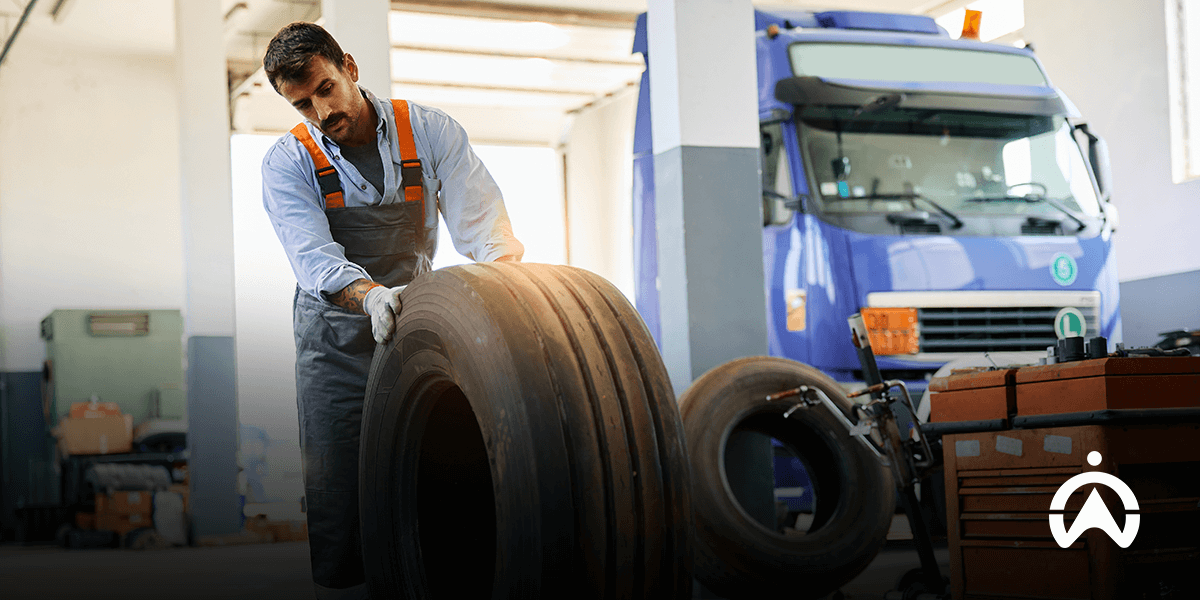
Mechanic in overalls rolling a large tire with a blue truck in the background.

Data Sources in Fleet Predictive Maintenance

In predictive maintenance, it is only through rich and accurate data that problems can be predicted before they bring about unexpected downtime. With Cartrack’s advanced and effective fleet management solutions, we exploit different sources to give a complete picture of how a vehicle performs. This data is acquired in real-time through telematics devices, sensors, and onboard diagnostics, enabling fleet managers to monitor critical metrics and get alerts for potential problems. Below are some of the critical data sources for effective predictive maintenance:

  1. Engine Health
    The heart of any vehicle is its engine, and one needs to ensure that such components are monitored in order to avoid any chances of failure. Control actions regarding engine temperature, oil pressure, fuel consumption, and engine loading make it possible to flag early evidence of crisis. Take for example increased temperature in the engine or abnormality in oil pressure which can indicate possible failures in the cooling system or oil leak respectively. All these are parameters that are monitored continuously by the telematics systems from Cartrack, thus supplying fleet managers with real-time information regarding the times when engine health begins to decline, making timely action possible before more severe damage occurs.
  2. Braking Patterns
    Brakes are the most important safety feature in a vehicle. Worn-out or non-efficient brakes often lead to fatal accidents and very expensive repairs. Monitoring braking behaviour, including braking force, frequency, and response time, will help in identifying potential problems at an early stage. For example, excessive braking, especially sudden or hard braking, can lead to defective brake pads or adversely affect systems linked to brake fluid. With the help of Cartrack’s telematics system, fleet managers can track and analyse braking behaviour, thus providing an analysis that could lead to action being taken.
  3. Fuel Efficiency
    A drastic drop in fuel economy could be indicative of problems related to the engine, under-inflated tyres or a dysfunctional fuel system. Constant monitoring of average fuel consumption over time can help identify and address inefficiencies, which can accumulate into significant costs. Cartrack tracks a vehicle’s fuel usage in real-time so that fleet managers can study patterns on fuel consumption. This is then used when planning routing, optimising driving behaviour, and in case of any mechanical problem affecting fuel efficiency.
  4. Tyre Wear
    Tyres have a great deal to do with the safety and performance of a vehicle, factors to consider include varying forms of wear such as excessive and uneven tyre wear. These could indicate misalignment, improper inflation, or some other mechanical failure. Monitoring of tyre pressures as well as tread volumes informs when tyres will have reached the replacement service level. Cartrack has sensors that continuously monitor tyre health and notify fleet monitoring personnel when the pressure reaches below optimal levels or physical wear patterns indicate a need for replacement. By having early prevention measures in place, it will minimise blowouts and improve safety.

Why Predictive Maintenance Matters for Fleet Businesses

Predictive maintenance matters most to fleet businesses because of the cost reduction it brings. Another main reason is that efficiency increases since vehicles will rarely have downtime due to repairs. Most importantly it makes driver safety that much more possible as the vehicles will almost always be in top condition.

The Impact of Predictive Maintenance on Fleet Operations

Predictive maintenance has had a massive impact on the fleet management industry. Fleet managers can now foresee many issues that would otherwise affect fleet performance. Many benefits have come from this way of planning maintenance, let’s have a look at some of them.

Key Benefits of Predictive Maintenance

Minimising downtime and repair costs is the biggest benefit of predictive maintenance. The early services of vehicles mean that repairs are reduced and in some cases completely removed.

Another benefit is prolonging vehicle lifespans and improved asset utilisation. When vehicles are repaired early it means that they will have significantly reduced downtime and are not likely to break down randomly, maximising operational time.

Reducing fuel waste is a byproduct of optimally functioning vehicles. An engine that is working well and in good condition is more fuel efficient than one that isn’t. This means that fuel costs can be expected to go down overall. An added benefit is the reduced environmental impact from the reduced fuel use.

Operational Efficiency

Operational efficiency is the biggest advantage of predictive maintenance as it allows better planning for vehicle availability. It becomes very easy to manage vehicles when very few of them are in maintenance or getting a service. Smarter resource allocation with accurate maintenance scheduling will be the norm moving forward.

Cartrack: A Game-Changer in Predictive Maintenance

Cartrack is a provider of advanced telematics solutions for fleet management, the services include GPS tracking, vehicle diagnostics, and vehicle data analytics. This is all provided both in real-time and in scheduled reports. These features all assist in predictive maintenance, here’s how.

How Cartrack Enhances Predictive Maintenance

Cartrack’s telematics technology detects performance anomalies and warns well in advance about potential critical issues. The management software then gives actionable insights to operators on how to resolve each vehicle’s issues, thus reducing unplanned downtime and ensuring that vehicles remain operational.

Fleet managers that use a Cartrack platform, are able to:

  • Monitor the entire fleet’s KPIs.
  • Get predictive alerts on components that are nearing failure.
  • Evaluate historical data to anticipate future maintenance activities.
  • Schedule maintenance activities based on data-driven insights.
  • Prevent unnecessary fuel consumption.
  • Improve driver behaviour and route optimisation.

Features of Cartrack Solutions

At Cartrack, we pride ourselves on offering a comprehensive suite of features designed to enhance the effectiveness of predictive maintenance, improve fleet management, and ultimately reduce unplanned downtime. Our solutions are built with flexibility, reliability, and real-time data at their core, ensuring that fleet managers have all the tools they need to keep their vehicles operating at their best. Here are some of the standout features that set Cartrack apart:

  1. Customisable Maintenance Schedules and Automated Reminders
    Cartrack understands that each fleet has unique needs, which is why we offer customisable maintenance schedules tailored to your specific fleet profile. Our system takes into account the type of vehicles you operate, their usage patterns, and manufacturer recommendations, ensuring that maintenance is scheduled at the optimal time for each asset. Furthermore, we provide automated reminders for scheduled maintenance tasks, such as oil changes, tyre rotations, or filter replacements. These reminders are delivered via email or the Cartrack mobile app, ensuring that no important maintenance task is overlooked.
  2. Proven Results in Reducing Downtime and Saving Costs
    Cartrack’s predictive maintenance technology has consistently delivered tangible results in reducing unplanned downtime and lowering maintenance costs for fleets of all sizes. By providing accurate, real-time data on vehicle health, we enable businesses to shift from reactive maintenance strategies to a more proactive, data-driven approach. Our predictive insights allow fleet managers to address small issues before they escalate, preventing costly breakdowns and repairs.

    Our customers have reported significant improvements in both vehicle uptime and cost savings through Cartrack’s predictive maintenance solutions. By preventing unexpected repairs and optimising maintenance schedules, businesses can reduce repair costs, extend the lifespan of their assets, and improve fleet performance.

  3. Real-Time Alerts and Predictive Insights
    Cartrack’s advanced alert system offers immediate notifications when a vehicle requires attention. This helps ensure that issues are addressed before they result in a breakdown. Whether it’s an engine anomaly, a critical component failure, or unusual driving behaviour, fleet managers receive predictive alerts through the Cartrack app or other communication channels. These insights enable a proactive approach, allowing for quick fixes or the adjustment of maintenance schedules to avoid disruptions.

    With Cartrack’s real-time alerts and insights, you can stay ahead of potential problems and significantly reduce the risk of unplanned downtime.

  4. Data-Driven Performance Optimisation
    Cartrack’s system also provides performance analytics that go beyond predictive maintenance. By monitoring trends in fuel efficiency, driving patterns, and vehicle health, fleet managers can identify inefficiencies and make data-driven decisions to improve overall fleet performance. Optimising routes, adjusting driving behaviour, and managing fuel consumption not only contribute to vehicle longevity but also enhance operational efficiency and reduce costs across the fleet.
  5. Comprehensive Reporting and Fleet Insights
    Cartrack’s platform offers comprehensive reporting tools that allow fleet managers to track and analyse data on all aspects of fleet performance, from maintenance schedules to fuel consumption. These reports can be customised to your specific needs, offering detailed insights into the health and status of each vehicle. With Cartrack, you can track the progress of maintenance tasks, compare fleet performance over time, and gain a deeper understanding of which vehicles or components are most likely to require attention.
  6. 24/7 Vehicle Monitoring
    One of the key advantages of using Cartrack’s telematics system is our round-the-clock vehicle monitoring. Our platform continuously collects and analyses data from all vehicles in the fleet, providing real-time insights into their performance, condition, and location. This 24/7 surveillance ensures that fleet managers are always informed, whether they are on the go or managing their fleet from the office. With Cartrack, fleet operators can detect issues as they emerge, allowing for immediate action to prevent failures and keep operations running smoothly.
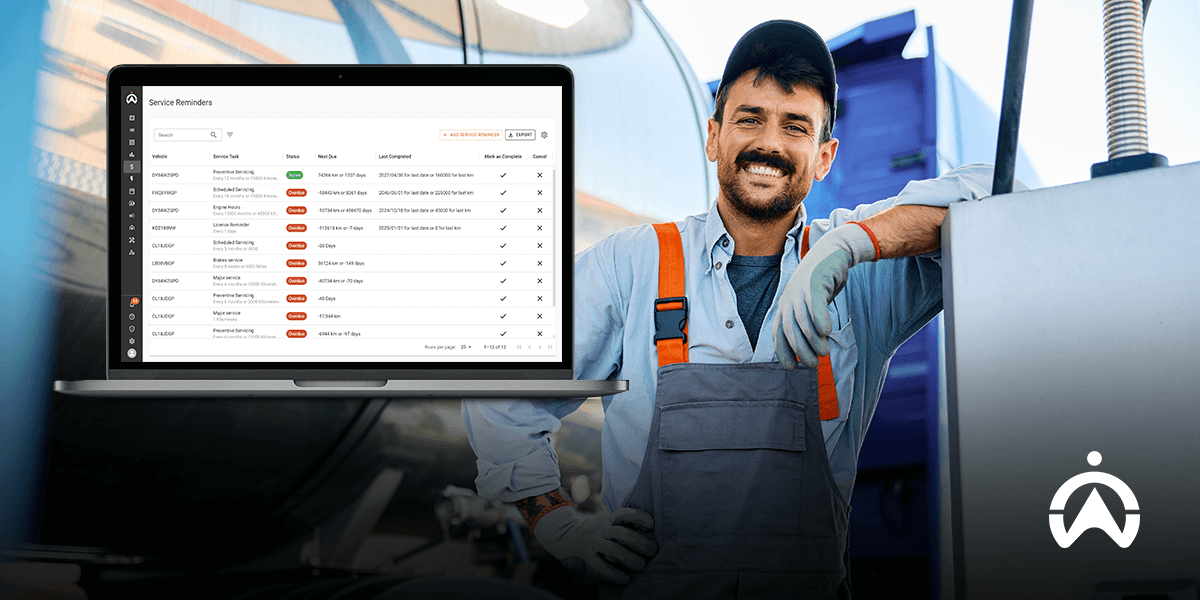
Worker in overalls presenting a laptop screen displaying service reminders.

The Future of Predictive Maintenance

The evolution in technology is going to continue to open the door wider for predictive maintenance. Future breakthroughs promise ever more intelligent machine learning algorithms, tighter integration of Internet of Things (IoT) devices, and more in-the-moment monitoring capabilities. Thus enabling companies to achieve more precise predictions on failures and the improvement of operational efficiencies.

Predictive maintenance, in short, is a drastic shift in strategy for an organisation with a fleet of vehicles or heavy equipment. For organisations trying to remain competitive, predictive maintenance is no longer optional but rather a strategic need. To optimise fleets, reduce unplanned downtime, and boost productivity Cartrack’s advanced telematics solutions are the best way to go.

Cartrack is at the forefront of this technological evolution to make businesses shine with smarter, safer, and cost-effective fleet management practices.

Contact us today to learn more about how Cartrack can help you and your fleet stay ahead of the curve.

FAQs

What is the ROI of predictive maintenance?

The ROI depends on factors like the industry, equipment complexity, and implementation scale. However, businesses typically see significant savings through reduced downtime, lower repair costs, and enhanced operational efficiency.

Can small businesses implement predictive maintenance?

Yes, with the increasing affordability of IoT devices and scalable cloud-based platforms, even small businesses can leverage predictive maintenance to improve efficiency and reduce costs.

How does predictive maintenance differ from preventive maintenance?

Predictive maintenance relies on real-time data to predict failures and act just in time, whereas preventive maintenance follows a fixed schedule based on time or usage, regardless of equipment condition.

What industries benefit most from predictive maintenance?

Predictive maintenance is widely used in industries like manufacturing, transportation, energy, healthcare, and utilities—where equipment reliability and uptime are critical.
Roadworthy Test Checklist: What You Need to Know

Keeping your car running smoothly on the road requires regular maintenance. The more you let things slide, the more the damage to your vehicle, and eventually, it might not be good enough to use or sell to anyone.

One way to check the condition of your car is through a roadworthiness test, and we have compiled a checklist that will help you pass the test.

This blog will discuss everything you need to know about roadworthiness and how Cartrack solutions help you stay compliant on the road.

In this article, you will:

  • Learn what a roadworthy test is
  • Find out what should be in your roadworthy checklist
  • Discover how Cartrack can help keep your vehicle roadworthy

What is a roadworthy test?

A roadworthy test, also known as a roadworthy inspection, determines whether the vehicle is safe to drive or not. Every new or used vehicle in Tanzania needs to pass a roadworthy test before it can be licensed in the new owner’s name. The inspection is administered by a trained and registered technician, whose job is to ensure the vehicle is safe to use on the road. A roadworthy test can be done at a public or private testing station. Once completed, the vehicle owner will get a certificate that is generally valid for 60 days.

A vehicle that is roadworthy is less likely to have breakdowns, which reduces the risk of accidents. For this reason, the roadworthiness test is a legal requirement to ensure that a vehicle meets the safety standards set by the Tanzania Bureau of Standards (TBS). Every vehicle owner must take responsibility for maintaining his or her vehicle regularly. Failing to keep a car roadworthy can also result in fines or penalties if caught by traffic enforcement.

A roadworthy test must be done every time a vehicle changes ownership. If your vehicle is used for public transport or is a heavy-load vehicle (excluding buses), you must take it to be tested for roadworthiness every year before you renew your licence.

The roadworthy checklist every driver needs to know

So how do you know if your car is roadworthy? Well, here are the basic criteria for roadworthiness in Tanzania:

  • Identification: The engine number and the vehicle identification number (VIN) must match those on the registration document. There should be no signs of tampering on any of the vehicle identifiers. If the engine has been changed, all associated requirements must be in place and logged on to the National Traffic Information System.
  • Braking system: This is one of the most critical safety components in any vehicle because reduced braking efficiency can cause fatal accidents. The owner’s manual for your car should give you an idea of how often you need to replace your vehicle’s brake pads. When preparing for a roadworthy test, you not only need to check the brake pads but the disc and brake fluid levels as well.
  • Suspension and steering: The suspension system is there to maximise the friction between the tyres and the road surface. This helps stabilise the vehicle and makes it possible for the car to handle bumps and dips on the road. It consists of various parts, such as shock absorbers and coil springs, that all play a part in maintaining stability on the road. A car’s steering wheel is also closely tied to the health of its suspension system. Inspectors check the steering wheel and the linkage between the wheel and the rest of your car. Your wheels must be aligned to specifications, and the undercarriage must be free of rust and leaks.
  • Tyres and wheels: Tyres must be the correct size and in good condition; this includes the spare wheel. They should be inflated to the proper pressure and must have a tread at least 1.6mm deep. There should not be any cuts, bumps, or any other form of damage. If your tyres fail the inspection, you will need to have them repaired or replaced before your vehicle can be deemed roadworthy.
  • Lights and basic electrics: All lights must work independently and correctly; this includes headlights, fog lights, brake lights, and indicators. They must be securely fitted, with no signs of water leaking into any of them. Also, check for loose or exposed wiring and that all battery clamps are there.
  • Exhaust and emissions: Check if emission levels meet regulations. There should be no leaks, excessive smoke, or noise coming from the exhaust.
  • Engine and transmission: Your car’s engine should not have any leaks or damage. The engine and transmission mountings must be intact. Additionally, there should be no loose or damaged wirings, and the transmission must be in good working order.
  • Bodywork: Inspectors will also conduct an interior and exterior check on your vehicle. The chassis should not show any sign of weakness and the undercarriage must be free of rust. There should be no structural damage that can cause injury to pedestrians or cyclists. Ensure that all doors, mirrors, and bumpers are secure and correctly positioned and that all of your reflectors are intact.
  • Windscreen and windows: There should be no cracks on the windscreen or any sort of damage obstructing the view. At least one correctly functioning windscreen wiper must be fitted; all windows must open and close properly.
  • Seatbelts and interior safety features: All seatbelts must be fastened and released with ease, with no cuts or damage. Seats must be securely in place. The odometer, hooter, and speedometer must also be in working order.

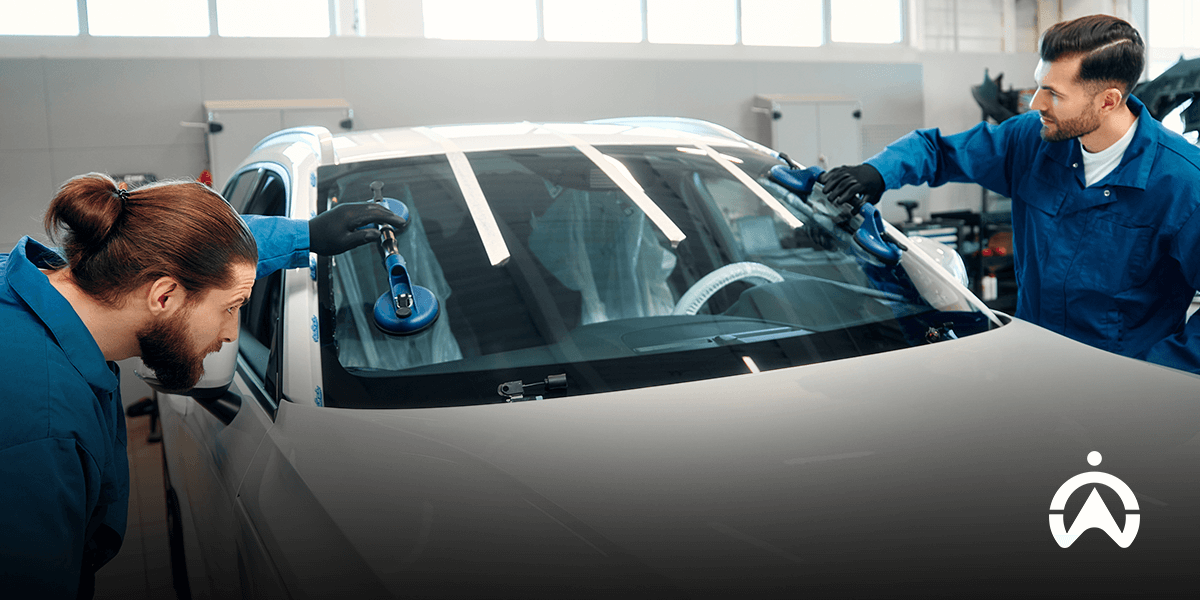
Two technicians repairing a car windshield in an auto shop.

What happens if your vehicle fails the roadworthy test?

If you fail the roadworthy test, you will be given 14 days to fix any defects identified. Once done with the repairs, you must return for a retest to ensure the issues have been addressed. If you fail to complete the repairs within 14 days, you will have to undergo a full inspection from scratch.

How Cartrack solutions help you stay on the road

To ensure that your car remains roadworthy, you need to take care of it on a daily basis. This means improving your driving habits in order to reduce the chances of accidents and vehicle damage. Cartrack not only specialises in location-based tracking; our advanced device also keeps a record of your driving habits. You can log on to the Cartrack mobile app or website to get a full view of driving that could increase vehicle wear and tear, such as speeding, harsh braking, and harsh cornering.

Cartrack also has value-added services that are there to assist you in maintaining or replacing certain car parts, such as:

  • Battery replacement
    If you need a new battery for your vehicle, you can contact your service agents to get a quote and make arrangements. Just like the tyre service, battery replacements are done either at your home or at one of our fitment centres.
  • Roadside assistance
    Immediate repair prevents further damage. Cartrack’s roadside assistance is a value-added service that comes to the rescue when ever you encounter issues on the road such overheating and, flat tires, and battery problems, reducing the risk of further damage.

Person holding car keys near a vehicle while giving a thumbs-up gesture.

Keep your vehicle in top shape with Cartrack

Secure your car and keep it roadworthy with Cartrack’s value-added services. Choose a plan that works best for you and enjoy the benefits. Cartrack specialises in stolen vehicle recovery but also caters to almost all your vehicle needs. Join us today and have one less thing to worry about.

What Are 10 Ways to Save Fuel?

The cost of fuel is a regular concern for many vehicle owners, especially with fuel prices fluctuating numerous times. Planning for this cost has come with some challenges which have made it hard to keep fuel costs low. Many vehicle owners are feeling the pinch and eagerly looking for different ways to save on fuel.

In this article, let’s explore ten simple ways you can start saving on fuel and how Cartrack can help you keep track of your fuel consumption.

Let’s dive in.

In this article, you will:

  • Discover 10 ways to help you save fuel
  • Learn how driving habits and vehicle maintenance impact fuel usage
  • Find out how Cartrack’s mobile app can help you save on fuel cost

10 Ways to Help You Save Fuel

Changing your approach to how you care for your vehicle is an effective way to save on fuel, these can range from adopting new driving behaviours to regular vehicle checkups. Learn these ways to make fuel wastage a thing of the past.

Here are ten effective ways to save fuel:

1. Adopt Efficient Driving Habits

Saving fuel starts with how you drive your vehicle. When a vehicle’s speed increases, the car experiences more drag (air resistance). This occurs when the force from the resistance causes the engine to work harder to accelerate which burns more fuel. By incorporating a more moderate driving speed, which is normally between 65-90 km/h, your vehicle will experience less drag as it moves.

Other practices include avoiding congested roads that lead to idling and keeping your rev per minute constantly around 3000rpm while driving. Another efficient driving habit to adopt is avoiding frequent lane changes and abrupt stops in stop-and-go traffic.

2. Use engine braking and drive in higher gears

Engine braking and driving in high gear is an underutilised method for driving that many drivers don’t consider when trying to save fuel. Engine braking is when you take your foot off the accelerator pedal and allow the engine to slow the vehicle down. This can be incorporated instead of using the brake pedal when you’re getting close to a traffic light or stop sign. Less fuel is consumed because the engine is allowed to slow the vehicle down, using less brake power to stop it.

3. Opt for fuel-efficient vehicles

If you are thinking of buying a new car, it is best to choose the type that is fuel efficient, such as vehicles with small engines or hybrid cars. These vehicles were designed to provide an excellent driving experience while using less fuel.

There are a few things to consider when looking for a fuel-efficient vehicle, such as fuel consumption rate, engine size and weight. Lighter cars and smaller engines burn less fuel and can maximise your fuel savings over time.

4. Maintain Optimal Tyre Pressure

Optimal tyre pressure plays an important role in a vehicle’s performance and fuel efficiency. Keeping your tyres at the appropriate pressure recommended by your manufacturer will greatly benefit you down the line.

Let’s discuss how:

  • Underinflated tyres increase the rolling resistance of a car and force the engine to work harder and burn more fuel. It also causes uneven tread wear on the edges of the tyres which leads to the tyres degrading faster.
  • Overinflated tyres negatively affect the handling of the vehicle, they make the drive bumpy, create uneven tread wear and burn more fuel. Furthermore, the uneven tread wear reduces the tyre’s ability to maintain contact with the road which can be dangerous at high speeds.

To make sure that you save on fuel and reduce wear and tear on your vehicle, it’s suggested that you check your tyre pressure at least once a month.

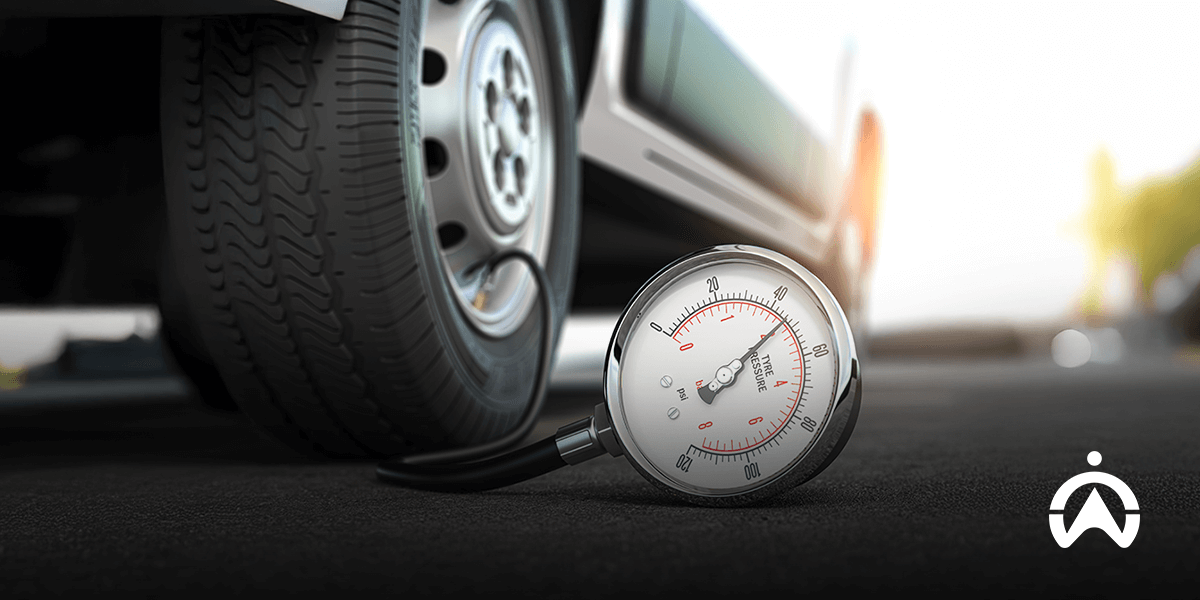
A tire pressure gauge on the ground next to a car tire.

5. Keep windows closed at high speeds

I know what you’re thinking, driving with your window open while cruising at a high speed feels refreshing, however, this significantly affects fuel efficiency. This normally occurs when a vehicle travels above 80 km/h, where the air resistance is at its greatest. To save on fuel consider keeping your windows closed and use the vehicle’s ventilation system instead.

6. Avoid heavy loads

Unnecessary weight in your vehicle makes the engine work harder which increases fuel consumption. This is especially true when driving long distances. Another load that adds extra weight and consumes more fuel are roof racks. Roof racks increase air resistance and reduce your vehicle’s aerodynamics when driving at high speeds.

To enjoy better fuel efficiency and a smoother drive consider packing light or keeping heavy items inside the vehicle.

7. Use quality fuel

There are three primary fuel types used in Tanzania: Unleaded Petrol (RON 91), Premium Unleaded (RON 95), and Diesel. Each fuel impacts a vehicle’s performance and fuel efficiency differently. RON 95 can withstand more compression before it ignites compared to RON 91, which directly improves vehicle performance at high speeds and under heavy loads.

RON 91 is the standard fuel grade in Tanzania and is generally suitable for many older vehicle models whose engines were designed for lower octane ratings. However, newer model vehicles imported into the country require higher octane fuel like RON 95 to maintain optimal performance and fuel economy. Using a lower octane fuel in these modern engines can decrease fuel efficiency and potentially lead to ‘knocking,’ which can damage the engine or the vehicle’s emission control systems over time.

8: Use cruise control on highways

Cruise control is an added feature that comes with most modern vehicles today. Not only do cruise control systems offer comfort and convenient driving, but they also help you save fuel. Cruise control helps the driver maintain a steady speed enabling them to only concentrate on steering. This allows for a smooth trip with fewer manoeuvres. Cruise control minimises how much fuel is used by removing the need to constantly accelerate and decelerate which burns more fuel.

9: Take advantage of loyalty programs

A great option to save on fuel costs these days is to join loyalty programs, these are offered at petrol stations, banks as well as through retailers. Whenever you refuel petrol you receive a certain amount of points. You can accumulate points over time and use them to purchase fuel or receive discounted prices. Consider choosing a program that is best for your needs and that allows you to fill up at a petrol station near you.

10. Combine trips

To save on fuel day to day, consider combining errands and driving fewer trips. Plan all the tasks you need to do ahead of time and do them all in one trip. By doing this you reduce the distance you drive that not only saves you valuable time but reduces fuel consumption.
Another effective way you can cut down on trips is by starting a lift club. Each person in the lift club can take turns driving one week a month, saving up to three weeks of fuel that you would have used if you were driving alone.

By implementing these ten ways, you can significantly reduce fuel wastage and save on fuel costs.

Mechanic with dreadlocks working on a car engine near a tool chest.

How Cartrack’s mobile app can help save fuel

Now that you know the 10 ways to save fuel, let’s discuss how Cartrack’s Mobile app can help keep track of your fuel usage.

Here are some reports from the app that will help save fuel:

  • Monitoring vehicle speeds
    Constant increases in speed require the engine to work harder to maintain the higher speed. The Cartrack mobile app map indicates every point where you were speeding and how fast you were going. This insight helps you identify this behaviour so that you adjust your driving behaviour to use less fuel.
  • Reducing harsh braking
    Harsh braking from high speeds causes your vehicle to use more fuel than necessary. This happens because after you have slowed down the vehicle transmission needs to shift to a lower gear to regain lost momentum. The Cartrack app records every harsh braking event, this informs the driver on how frequently this mistake is made.
  • Avoiding idle time
    Long periods of idle time in congested traffic consume fuel unnecessarily. The Cartrack app tracks your idle time during a trip, this data provides you with a wealth of information that shows you where the most traffic congestion is and when it occurs. This allows you can identify less congested routes that enable you to plan less congested routes.
  • Planning efficient routes
    Every time you drive your vehicle, the trip information is saved on your app history. This trip history provides insights into the route you took which shows the distance and how much fuel was used. This is an effective way to plan every route you take.

    You may use different routes to work and would like to know which route uses the least fuel. You can use the report history of the different routes to see your past trips. This will tell you how long the trip took as well as the speeds you were able to travel, so you can compare them against each other to see which one is the most fuel-efficient.

Start saving fuel with Cartrack Today!

Fuel costs do not have to be a burden. By taking advantage of Cartrack’s advanced mobile app technology you can reduce fuel consumption and save costs in no time.
Cartrack is committed to helping motorists drive smarter and efficiently. Our mobile app is not only for tracking your vehicle, it provides actionable insights that empower you to make fuel-saving decisions every day.

Why wait? Start applying these tips and let Cartrack help you save on fuel costs. Contact us today to find out more.

Driver Incentive Programs: How Dashcams Can Help You Coach Your Drivers

When running a fleet business no other resource matters more than your drivers. Managing them requires efficiency and good planning, this is what allows for safer travel and optimised delivery of goods and services. For this efficiency and optimisation to happen, drivers must perform at their best at all times.

A good way to encourage better driving practices and behaviour is by implementing a driver incentive program. One way of doing this is by using dashcams to record trips and overall driver performance.

This blog will discuss how driver incentive programs and dashcams can help improve driver safety through coaching.

Let’s get into it.

In this article, you will:

  • Learn about driver incentive programs
  • Find out what role dashcams play in driver coaching
  • Discover how to implement an incentive program
  • Understand the legal considerations of using dashcams
  • Learn how Cartrack’s dashcams can work for you and your coaching program

What Are Driver Incentive Programs

An incentive program is a reward-based method to motivate someone to complete an action. These programs leverage the power of rewards to align behaviour with business goals. When incentives are used in a work setting as part of a formalised system with business goals, it’s called an incentive program.

The goal of an employee engagement program is to improve workplace performance and culture while retaining employees with rewards and recognition. One of the biggest benefits of incentive programs is their flexibility as they can be tailored to suit the goals of the company, with enough room for occasional adjustments.

There are many types of incentive programs, each with its own process and reward structure. Here are some types of incentives offered:

  • Monetary bonuses: The most common incentive program is bonuses for good or outstanding performance. This comes in the form of a cash reward usually based on a percentage of the driver’s salary.
  • Recognition: Getting official recognition is another popular incentive that employers use. This could be an award given at the end of the year or any other public declaration of the driver’s great performance. The most common version of this is an Employee of the Month program that rewards a driver monthly for meeting or exceeding company goals.
  • Career development: Creating a reward structure that promises high performers a chance at career development is a very effective incentive program. This offers a clear path for drivers to see how to progress in their careers, this progression can be in the form of a promotion or skills development.

These incentive programs benefit both companies and drivers as they offer reduced costs, increased morale, and better customer service overall.

The Role of Dashcams in Driver Coaching

When it comes to monitoring driver behaviour only a few other technologies work as well as dashcams. They offer comprehensive recordings of trips, offering alerts for distracted driving and other offences. Let’s learn more about modern dashcams in a business setting.

How dashcams provide insights into driver behaviour

As a fleet manager, monitoring drivers as they perform their deliveries is important, this is why the use of dashcams is highly advised. They offer real-time video recordings of the journey and give the fleet manager insight into how the route usually goes, providing areas of improvement.

Modern dashcams offer a range of AI-powered solutions that assist in reducing accidents. One of these is event-triggered alerts that inform the driver and fleet manager on specific behaviours such as smoking and distracted driving.

The use of AI for analysing driving patterns is now an industry standard for most fleet management software. Key features of AI-powered dashcams include:

  • Real-time behaviour analysis: This feature identifies incidents of distracted driving, driver fatigue, and forward collisions.
  • In-cabin alerts: Gives instant feedback to drivers to avoid an incident or an accident.
  • Data integration: They have integrated connectivity with fleet management platforms to enhance organisational procedures.

Why use dashcams for coaching and training drivers

Dashcams are reliable mechanisms that have been in use for a number of years now. Using them for coaching and driver training is ideal as they provide objective feedback that can not be easily disputed. The biggest benefit of using dashcams for driver training and coaching is that they help in identifying areas of improvement. These can often be hard to figure out and spot without actual footage of the incident. Some common types of incidents you may want to respond to in coaching include:

  • Smoking
  • Fatigue
  • Forward collisions
  • Camera cover or tampering
  • Cellphone use
  • Seat belt compliance
  • Distracted driving

Monitoring these incidents and using them as a source for coaching is highly beneficial as it gives drivers real-world context. Failing to adhere to the rules leads to drivers getting demerits that can accrue over time. This is useful not only for the drivers but the business as well as it will have a comprehensive catalogue of offences that most drivers commit. When done correctly this can lead to safer trips overall. There are three main occasions when it is best to coach drivers, these include:

  • Onboarding new employees
  • In response to incidents
  • Ongoing scheduled basis

Following this process is useful as it will assist in reducing liability and incident frequency. Additionally, this footage can help lower insurance claims costs, and help protect your brand. Dashcam footage can also significantly expedite and simplify the resolution of disputes arising from traffic incidents. By offering an objective, first-hand account of the events leading up to an accident, these devices can help establish fault and facilitate fair compensation for the parties involved.

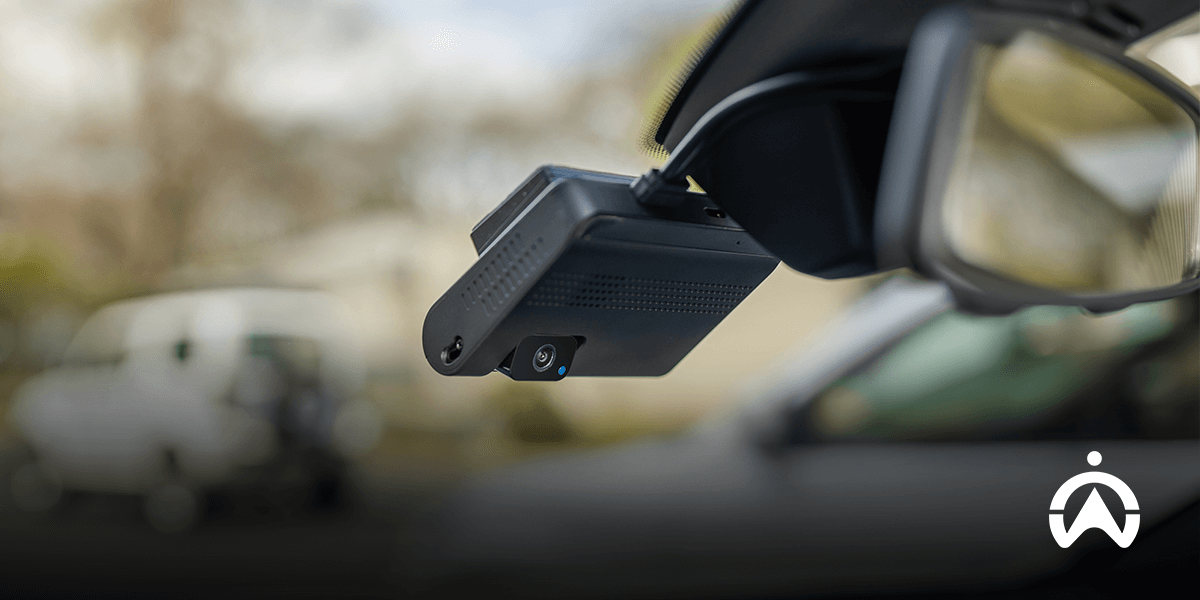
Dashcam attached to a car's windshield with blurred background.

How to implement Dashcam-Based Coaching Programs

In order to maximise on your dashcam footage and create incentives, a coaching program needs to be put in place. This will serve as a system to encourage better driving and make the overall management of drivers easier. This coaching program can be administered during the journey, after a trip and even during performance review sessions. The goal is to encourage better driving habits from drivers and improve fleet performance holistically.

Here is a step-by-step guide on how to create the right program for you and your drivers.

Step-by-step guide on how to implement a dashcam-based coaching program:

  1. Selecting the right dashcam solution for your fleet.
    The first step is choosing the best dashcam solutions for your business. This must be a solution that aligns with the goals of your company and the program you are setting up.

    You must consider whether you will need just one camera or more; whether it will have AI-powered features; and how much storage and recording capacity it will have.

  1. Integrating dashcams with fleet management systems.
    In order for this process to run smoothly the dashcams should be able to be integrated with whichever fleet management system your business has in place. This is essential as it will simplify the monitoring and reporting process. The tools in the system should support the features in the dashcam solution so that there is a seamless integration of the two.
  1. Developing clear coaching and feedback protocols.
    Once the system is integrated the next step is to establish clear coaching and feedback protocols. This means drivers will need to know how and when the coaching happens, from whom it will come, and how to give feedback on the coaching. This will assist in measuring incentives and determining who to award them to.
  1. Aligning coaching sessions with incentive programs.
    The goal of the coaching sessions should be clearly stated, aligning with how the incentive program will run. This could mean explicitly stating which goal leads to which incentive or creating a points system that accumulates over a certain period of time. A driver should find it easy to understand where the coaching intersects with specific rewards from the incentives program.

Tips for a Successful Coaching Program

In order for the coaching and rewards program to work successfully there are some vital things to consider. Consistent feedback is essential for coaching, especially when people’s careers are on the line. The feedback should not just be in one direction, drivers should be able to give feedback on their coach’s performance as much as coaches do.

This leads to the next component to consider fairness. A program like this requires transparency so that drivers do not feel that there is bias or favouritism in how the coaching works and how incentives are given. It is this fairness that will keep drivers engaged in the program, unfairness will lead to disgruntled drivers and a drop off in performance.

Celebrating improvements is equally as important, not just celebrating the top achievers. This kind of recognition will make all the participants in the program feel seen even when they are not receiving rewards from the incentives program.

Future Trends in Driver Incentives and Dashcam Technology

There are many emerging advancements in dashcam technology sweeping the fleet management industry. The most prevalent of them all is AI integration in camera systems. This involves development in other areas such as machine learning and cloud storage capabilities. All these elements work together to form Advanced Driver Assistance Systems (ADAS) which aim to enhance driver safety.

Integration with telematics and predictive analytics is where the industry is going, with most fleet management systems already using these technologies. This is especially true for dashcams and driver behaviour monitoring.

The development of these technologies has made it easier to implement and run driver incentive programs. The evolving role of incentive programs in companies is a sign of how many drivers prefer it. Most driving job offers now include this as part of the employment package, making it a deciding factor for many in a competitive market.

Person in a hi-vis vest working on a laptop with security camera feeds displayed on the monitor.

Cartrack’s Dashcams and Coaching Solutions

At Cartrack we offer a variety of camera solutions where you get to monitor your fleet with road and cabin-facing AI dashcams. You can get up to 8 internal or external cameras to help keep your drivers, fleet, and cargo safe.

This solution comes with preventative in-cabin voice alerts that let drivers know about potential safety violations so they can correct them immediately. Our event-based footage instantly gives you the exact footage you need, when you need it. Our AI-powered cameras analyse internal and external surroundings, allowing you to detect and alert drivers in real-time about any high-risk behaviour so they can avoid accidents. All footage of any incidents is stored on our cloud platform and can be used to coach drivers on how they can improve their driving behaviour.

You will have no more wasted hours spent going through hours of footage hoping to find what you’re looking for. You can live-stream the recordings for any active vehicle using Android, Apple or Huawei. View categorised event-based footage for any safety events captured, request footage based on a time and date or live-stream footage for any active vehicle.

As we move into a new technological era in fleet management it is advisable to make use of the tools currently available, such as dashcams. Combining driver incentive programs with dashcam-based coaching is one of the ways in which you can optimise your business and increase overall driver safety.

If you are looking for a reliable and trustworthy dashcam and AI-powered camera system, then make sure to contact us to learn more about our offering.

FAQs

How much does it cost to implement dashcams in a fleet?

Contact us at Cartrack to get a quote on our range of dashcams and cameras.

Are there privacy concerns with using dashcams in Tanzania?

There is no specific law clarifying their legality or how the footage can be used. This means that recording people in public without their knowledge could potentially raise privacy issues, especially if the footage is shared without proper justification; however, dashcams are generally considered legal to use when recording public spaces such as roads.

What types of incentives work best for drivers?

The most effective incentive programs are cash bonuses and career development opportunities. These two options provide actual benefits to drivers that can positively impact their lives.

How quickly can results be seen after implementing these programs?

This will depend on the type of reward structure in place, but it is typical to see results in the first month after implementation.

Optimised Fleet Solutions for Refrigerated Transport Services

The global demand for refrigerated transport services has increased over the years due to the rise in e-commerce. Nowadays, people buy food and medication online, which has increased the need to transport products in agriculture, food and beverages, and pharmaceuticals.
Refrigerated transport services play a vital role in modern global supply chains. They make sure temperature-sensitive goods such as vegetables, seafood, and fresh flowers reach their destinations in perfect condition. Without the right technology, this essential service can get quite complex.

Today we explore everything you need to know about fleet solutions for refrigerated transport services.

In this article, you will:

  • Get a brief understanding of the cold chain logistics industry
  • Discover three main challenges faced by refrigerated transport services
  • Find out how Cartrack solutions make it easier to run a refrigerated transport business

All you need to know about refrigerated transport services

Temperature-controlled trucks enable businesses to reduce their transportation costs by transporting products by road, which is cheaper than shipping by air. This form of transport service is also known as cold chain logistics. The main objective of this industry is to maintain product quality and safety throughout the entire supply chain.

These goods can be on the road for days before reaching their destinations, so there have to be strategies in place to ensure that they are transported efficiently—that’s where fleet management technology comes in.

Understanding the needs of refrigerated transport

There are many obstacles that refrigerated transport businesses come across daily, most of which can be avoided through advanced technology. Here are three major challenges faced by most businesses that offer refrigerated transport services:

  • Temperature Sensitivity: It is important to maintain a specific temperature range when storing and transporting refrigerated goods. The temperature depends on the type of product it is. For example, fruits and vegetables require a temperature range of 2℃ to 4℃, while seafood needs to be frozen at -28℃ to -30℃. Products such as vaccines are so sensitive that they require constant controlled temperature from the moment they are manufactured. If the temperature changes, even for a short period, they could lose potency and become unfit for use. For this reason, there has to be an unbroken transport chain. This means, from the production stage, through distribution, to delivery, the products must be kept at a constant controlled temperature. Achieving this result can be difficult due to factors such as extreme weather conditions and the opening and closing of cargo doors during the loading and offloading stage. With the right technology, the issues surrounding temperature sensitivity can be quickly resolved.
  • Timeliness: Being on time is important for many businesses, but for temperature-sensitive goods, it is crucial. Drivers are constantly under immense pressure to reach their destinations without delay. A delay during the delivery stage may cause temperature fluctuations, which then affect product quality. This also shortens the shelf life of products such as fruits and vegetables, meaning the products cannot be in the store for long once they reach their destinations. For this reason, some retailers have strict guidelines that can result in steep penalties for deliveries that arrive late. There are many things that prolong transit times, such as vehicle breakdown, taking longer routes, or border clearance. This heightens the need for real-time visibility, properly planned routes, and good communication.
  • Compliance: A major challenge is that fleet businesses for refrigerated goods need to adhere to strict industry regulations and standards. Transporting temperature-sensitive products, particularly food, requires good hygiene and total reliability. The food transportation businesses are regulated by law. These regulations first address the hygienic aspect, stating that the vehicle compartment must be clean to the extent that physical or microbiological contamination of the food is prevented. Secondly, it is important that the vehicle itself is reliable; the vehicles must be in good condition at all times because that is also a reflection of the refrigerated compartments. Failure to adhere to such regulations will result in heavy fines or the business being deemed unfit for the role.

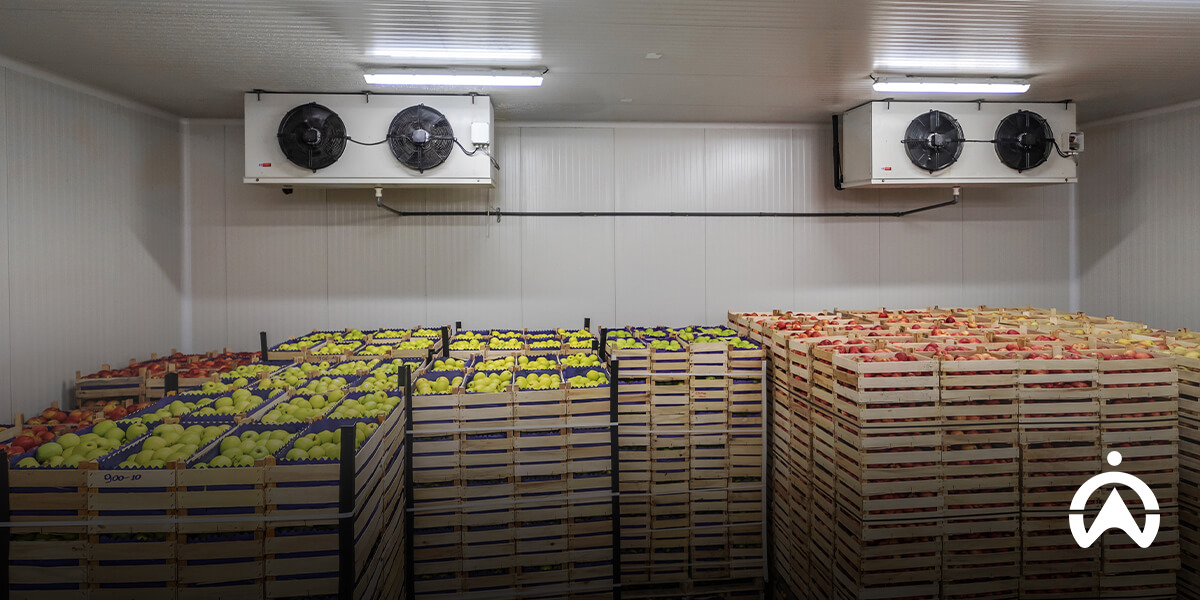
Industrial cold storage room filled with wooden crates of apples, with cooling units on the wall.

How to Monitor Refrigerated Cargo with Cartrack

Cartrack gives you optimised fleet management solutions for your refrigerated transport service so you can focus on happy clients and making a profit. Here’s how we help:

Real-time temperature monitoring:

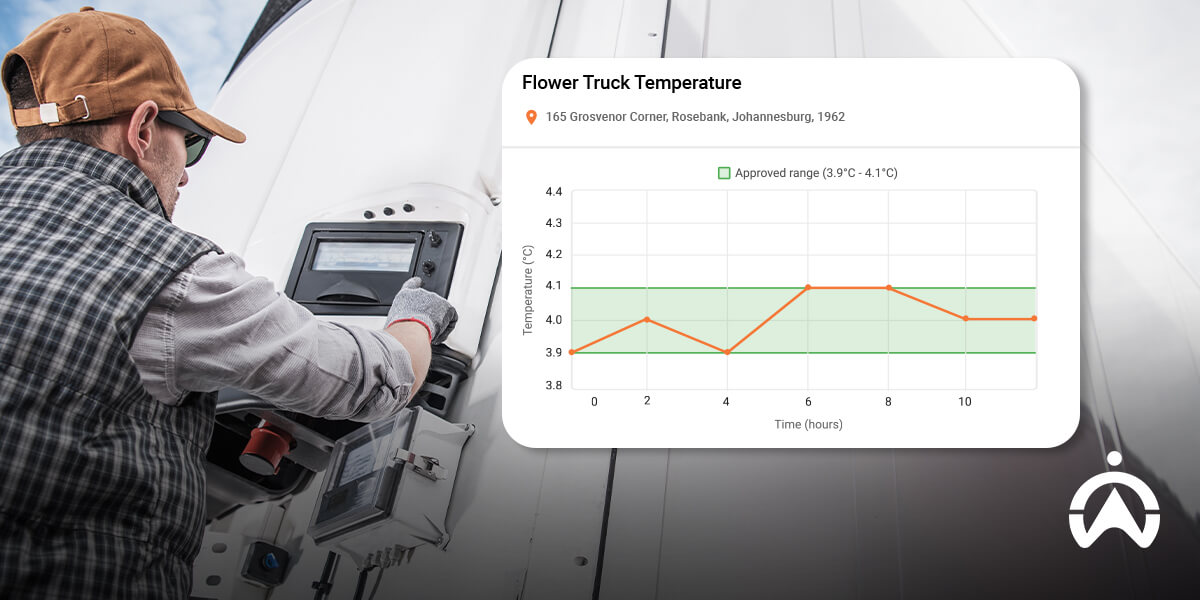
Cartrack offers up to four temperature sensors to remotely monitor the temperature of your cargo. With this, you can receive alerts on any temperature fluctuations and reports that show temperatures stayed within the compliant range. For example, you can get alerted if temperatures go outside your approved range and correct them before produce or goods go off. If products spoil, cargo temperature reports can help prove that transportation was not the cause.

Secondly, through our cargo door sensors, you get to know when cargo doors open and close and get real-time alerts as well as reports that give you the location and duration of the sensor activity. This means you will immediately know when cargo doors are opened and whether they were opened outside of your pre-approved pickup or dropoff zones. The reports show you how long your reefer trailers’ cargo doors were open, so you can identify temperature fluctuations caused by drivers leaving them open.

Route optimisation

Reduce transit time to preserve product quality with our route optimisation service. This feature helps you avoid longer travel times that could cause delays and also affect product quality. Our system automatically creates job routes for drivers that minimise mileage and fuel costs. With this tool, you will know when drivers did not go according to the planned routes so you can quickly address the issue.

Fleet location tracking

Live location
Cartrack gives you full visibility of your vehicles in real-time, so you know where they are at all times. Our GPS tracking technology shows you accurate vehicle locations so you can ensure safe and efficient travelling.

Geofencing
Create virtual fences around areas of your choice, such as drop-off zones and filling stations, to ensure route compliance and that drivers adhere to their schedules. Our geofence feature alerts you whenever drivers enter or exit these zones so that they start and end their shifts at the correct times to enhance productivity and streamline operations.

Driver management

In addition to having technology that will keep your refrigerated cargo in good condition, drivers also need to be trained on how to handle temperature-sensitive cargo. To make it easier, Cartrack has a driver coaching platform that helps monitor driver behaviour so you can have a record of incidents, such as when cargo doors are left open for long. Drivers can then be called in for a coaching session in order to improve their habits.

Predictive maintenance

Our IoT-powered fleet management tools help you reduce downtime and maintenance costs while boosting productivity. With this, you get accurate odometer readings for internal reporting and vehicle management. You also receive information on engine diagnostics so you can send vehicles for repairs before the problems become bigger. This helps prevent unexpected delays caused by vehicles breaking down, which could compromise goods. Additionally, you can record, update, and store maintenance activities digitally for easy reference and convenient reporting.

Man adjusting truck refrigeration unit with a "Flower Truck Temperature" chart displayed.

Ensure your refrigerated cargo stays fresh at all times

Cartrack specialises in all things fleet management. Our solutions are here to boost your fleet’s productivity, streamline operations, and reduce costs. With us, your refrigerated cargo will always be closely monitored to ensure your clients receive the goods in the best possible condition. Contact us today and get a free quote.

Here are some frequently asked questions about refrigerated cargo

How to transport refrigerated goods?

Firstly, the goods need to be properly packed using materials that are meant for packing refrigerated goods, such as styrofoam, dry ice, and gel packs. The packaging must keep the heat out so the products can remain frozen.

Secondly, there are vehicles that are specially designed for this task, such as reefer trucks and reefer trailers. You need to choose vehicles with refrigeration and freezing systems that meet your specifications and carefully plan the transportation process.
Lastly, you need to invest in a fleet management system that will help you monitor cargo temperatures in real time, so you always know what’s going on and ensure that the goods remain in desired conditions.

What is the demand for refrigerated transport?
According to Research and Market, the refrigerated transport market is expected to reach US$ 27.07 billion by the year 2032 from US$ 17.77 billion in 2023,with a growth rate of 4.79% from 2024 to 2032.

What is refrigerated transportation?

Refrigerated transportation is a way of transporting goods that have specific needs for controlled temperatures. The goods are placed in vehicles that have built-in refrigeration systems in order to maintain the required temperature during the transportation process.

If you have more questions, you cancontact us today and speak to a fleet consultant.