
Best GPS Bike Tracker Anti-Theft Solution

The best GPS bike trackers for anti-theft solutions are those that have a good battery life and deliver accurate GPS tracking. Signal strength is also a feature you should look for, as well as durability and water resistance for harsh conditions. Consider the subscription fee of your bike GPS tracker and don’t forget to check SIM card compatibility.

Tanzanian Regional Police Commanders have reported a rise in bodaboda thefts across major transit regions like Iringa, Morogoro, and Dar es Salaam, noting that organized syndicates have been targeting motorcycles using forged registration papers and contributing to a sharp increase in violent theft incidents. If you want to keep YOUR bike safe, you might be wondering what the best anti-theft GPS tracker is. Cartrack Tanzania has the answer, so let’s find out.

Key Takeaways:

  • A good GPS bike tracker should have long battery life, strong signal, live tracking, and be tough and waterproof to handle all conditions
  • Choosing a small, hidden tracker with fair monthly costs and SIM compatibility makes it harder for thieves to find and easier for you to manage
  • GPS trackers work best with a skilled recovery team like Cartrack’s, which has helped recover thousands of stolen motorcycles
  • The most effective bike protection comes from combining a GPS tracker with locks, alarms, and insurance for complete peace of mind

What features should you look for in a GPS bike tracker for anti-theft?

Features you should look out for when choosing an anti-theft GPS bike tracker are:

  • The battery life
  • Tracking accuracy
  • Signal strength
  • Live tracking with minimal delay
  • Durability
  • Waterproofing
  • Concealment of the installation
  • The monthly price
  • SIM card compatibility

Choose a GPS bike tracker that encompasses all of these features so that you have as many security layers as possible.

Why are these features important? Take a look:

Feature Why It Matters Example Benefit What Cartrack Tanzania Offers
Battery life Keeps your tracker running longer You don’t need to charge it often A long lasting rechargeable battery
Tracking accuracy Shows your bike’s exact spot Easier to find your bike if it’s stolen GPS with high precision and a stable connection
Signal strength Works even in weak network areas Keeps tracking in remote places A tracker that uses multiple networks
Live tracking Sends real-time updates Let’s you follow your bike quickly A short update delay or live map view
Durability Handles bumps and drops Lasts longer and works in rough use A solid build with quality materials
Waterproofing Works in rain or wet weather No need to worry about water damage At least an IP67 water resistance rating
Concealment Hides the tracker from thieves Harder for thieves to find and remove A small tracker that fits inside the bike frame
Monthly price Affects your ongoing costs Helps plan your budget easily A fair fee with no hidden charges
SIM card compatibility Sends tracking data correctly Ensures the tracker connects anywhere A tracker that supports your local network

Now let’s look at each of these features more closely.

Battery life and power options

Bike trackers need to be recharged periodically. So choosing one that lasts longer is important, because it’ll determine how long you can track your bike without recharging. Some trackers last weeks, others just a few days. You should also check if it uses rechargeable batteries or a replaceable option so you don’t get caught off guard when you need it most.

Does the Cartrack motorcycle tracker have a good batter? Yes, our trackers are designed to self-charge from your bike’s battery, and will last several weeks even if not charged.

GPS accuracy and signal strength

Not all GPS trackers for bikes are created equal. Some aren’t as accurate as others (and you can usually tell by the low price or the obscure brand). GPS accuracy is key to finding your bike quickly. Strong signal strength means your tracker can pinpoint your bike even in busy streets or near tall buildings.

Does Cartrack’s bike tracker have good signal and accuracy? Yes! Our GPS trackers work off cellphone towers and even work when in rural or low-signal areas.

Real-time tracking and mobile app alerts

You definitely want a bike tracker with zero delays in pinpointing its position. You also want to be able to see its signal on your mobile phone or tablet. That way you’ll always know what’s happening, and can act fast if someone tries to steal your bike.

Does Cartrack Tanzania offer real-time (live) tracking? Yes! Cartrack Tanzania has one of the quickest GPS response signals on the market!

Durability and waterproof rating

Rain. Mud. Dust. Rattling. All these things can damage a bike tracker if it’s not the best quality. Look for a GPS bike tracker that’s waterproof and tough enough to handle long, rough rides. A strong casing is also a good idea, since this ensures it keeps working even in wet or dusty conditions.

Are Cartrack’s tracking devices durable and weather-resistant? Of course! When you fit a Cartrack GPS tracker to your motorcycle, you’re choosing one of the best quality devices in Tanzania.

Discreet installation and size

Bike thieves (especially those working for syndicates) are well aware that some motorcycles have tracking devices. They’ve learnt how to disable or even uninstall them before or during the theft. A small and discreet GPS tracker is harder for thieves to find. You can hide it inside your bike frame, under the seat, or in the handlebars. The smaller it is, the safer your tracker stays.

Is the Cartrack GPS tracker well hidden on bikes? Yes, a Cartrack motorcycle GPS tracker won’t be easily found by would-be thieves.

Subscription fees and SIM card compatibility

Most good GPS trackers are going the way of subscriptions. These fees cover data for live tracking and alerts sent to your device. Other trackers use built-in SIMs or even your own mobile network. Check the costs before buying so you don’t end up with a surprise bill at the end of the month. Also make sure it works with your phone and location.

Does the Cartrack tracking device for bikes work on a subscription? Yes, and it’s affordable considering the safety benefits you’ll enjoy against theft.

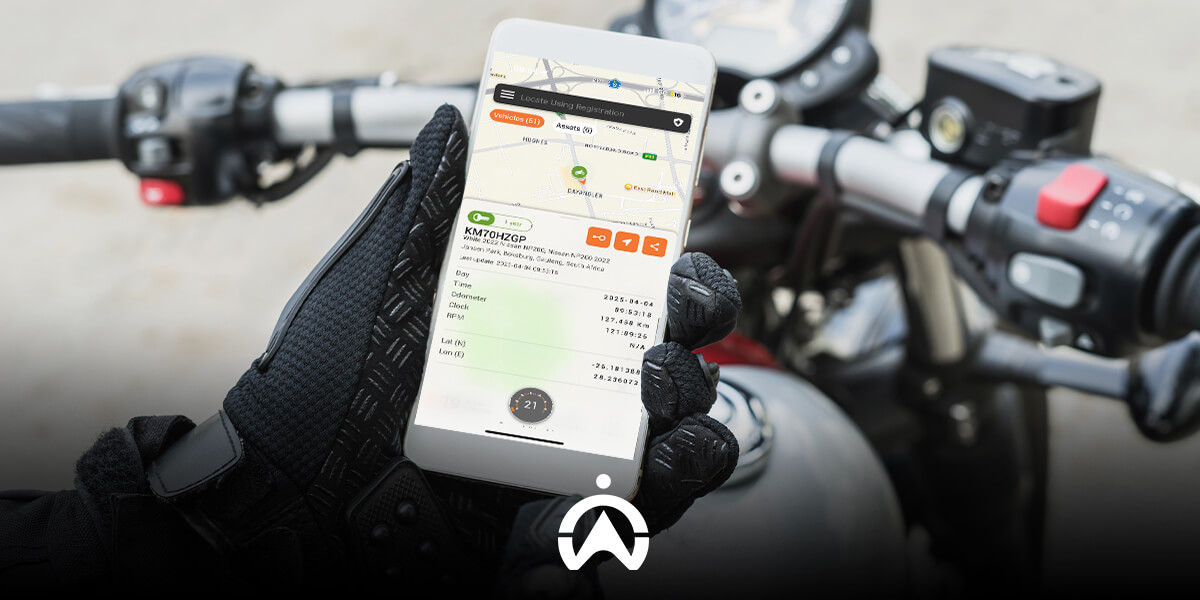
A vintage motorcycle parked beside a gray wall with a white door, featuring a location pin icon above it.

How does GPS bike tracking technology work?

GPS bike tracking works through satellite signals that pinpoint your motorcycle’s exact location. This is done live, and the tracker sends this data to a platform that might be on your phone or PC. From here you can see where your bike is at any moment, which also increases your chance of recovering if it gets stolen.

But there’s more to having a GPS tracker for your bike than simply preventing theft…

The benefits of GPS tracking beyond theft prevention

GPS tracking for your bike has a bunch of other great uses. You can track your rides, especially if you’re part of a club that goes on weekend trips or breakfast runs. You can also track your fuel use, and identify which routes offer the most economic rides. Finally, GPS tracking also monitors your speed, giving you interesting data on how fast you went and how long it took you to get to your destinations.

What to consider before installing a GPS tracker on your motorcycle

Before you get a GPS tracker for your motorcycle, choose your provider carefully. You want a GPS that:

  • Won’t drain your battery: Cheap GPS trackers might drain your battery, especially if you’re not riding for long periods of time.
  • Is water resistant: For those times you’ll be riding in the rain, always make sure your GPS tracker for motorcycles is water resistant. Not all of them are, so check with your supplier.
  • Is small and easy to hide: Thieves have gotten wise to GPS trackers, and might try to locate and disconnect yours. Choose a supplier that’s good at hiding the device due to professional installation and small size.
  • Still works when the signal is weak: In some areas in Tanzania, your GPS will lose signal. However, good GPS trackers can still pinpoint your bike thanks to cell tower triangulation and built-in signal buffering that stores and transmits location data once connectivity returns.

How effective are GPS bike trackers at recovering stolen bikes?

GPS bike trackers are highly effective when it comes to ultimately recovering your motorcycle. However, this is only true if you have a top notch recovery team as backup. It’s one thing to see your bike being driven away from where you left it; it’s another to call on a team of experts to get it back!

How GPS trackers assist in theft recovery

Because GPS trackers provide a live, second-by-second indication on where your bike is, it can be easily found and recovered before it gets to a chop-shop or across the border. Cartrack’s vehicle recovery team works with local authorities to get your vehicle back and stop thieves as soon as your bike leaves its parking spot.

Real-life success stories and statistics

Cartrack Tanzania has successfully recovered over 100,000 vehicles in the past decade. A chunk of that statistic is attributed to recovered motorcycles. Many companies and bike owners currently have their bike safe in possession because they chose us as their tracking partner.

Factors that influence tracker performance

A bike tracker is very effective, but if you want to get the most out of yours, it’s important to note some of the factors that influence its performance.

  • Clear view of the sky for accurate GPS signals
  • Strong battery life to keep the tracker active
  • Stable mobile or data signal for real-time updates
  • Tall buildings, walls, or underground parking can reduce accuracy
  • Proper setup and installation help the tracker work at its best

What to do immediately after your bike is stolen

If something unfortunate happens and your bike gets stolen, don’t panic! This is why you got the tracker in the first place, remember? Here’s what you do:

  • Open your tracker app to see the last known location
  • Alert the police and provide them with the GPS location
  • Notify friends or biker groups who might help spot it
  • Check nearby CCTV or witnesses if possible
  • Keep monitoring the tracker for updates while waiting for help

What are common mistakes people make when choosing a bike GPS tracker?

Learn from the mistakes of others and avoid these mistakes when choosing your next (or first) GPS bike tracker:

  • Picking a tracker with poor battery life that dies quickly
  • Installing the tracker in an obvious or easy-to-remove spot
  • Ignoring hidden costs like subscriptions or SIM fees
  • Overlooking signal issues caused by buildings or weather
  • Failing to test the tracker before relying on it
  • Choosing a cheap device that lacks durability or accuracy
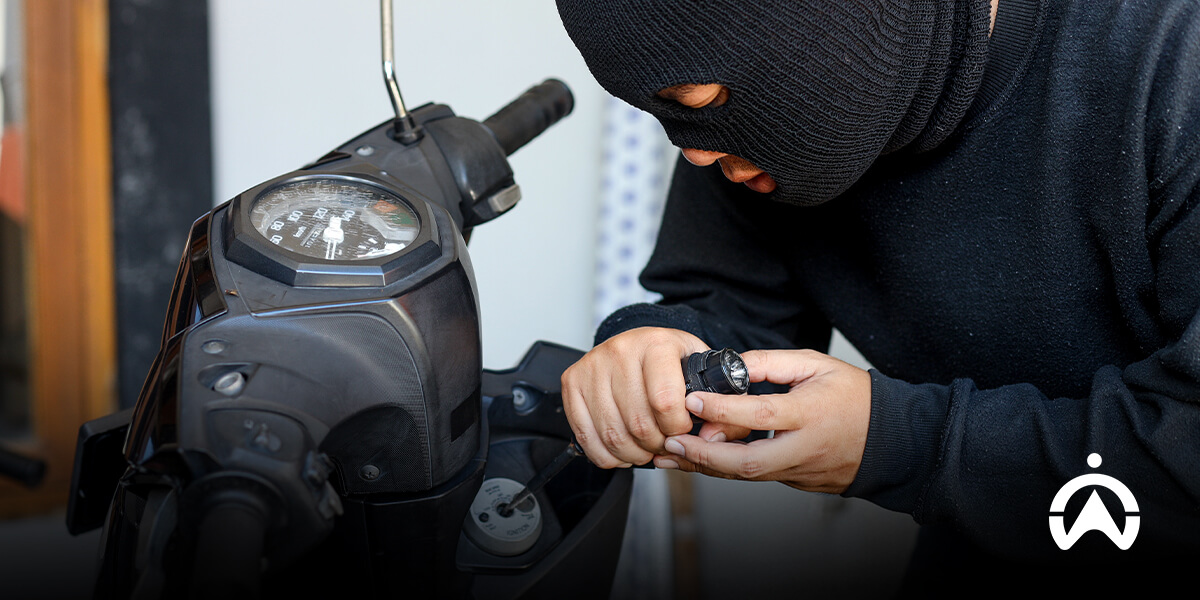
A person in a black ski mask manipulates a scooter's dashboard, suggesting potential theft or tampering.

How do GPS bike trackers compare to other anti-theft measures?

GPS tracker vs. heavy-duty locks

Myth: A heavy-duty lock alone will keep your motorcycle safe.

Fact: Locks are a strong deterrent, but thieves can still break or cut them (and often do). A GPS tracker won’t necessarily STOP theft, but it helps you locate your bike quickly if it’s taken. THIS should rather be a second line of defence.

GPS tracker vs. bike alarms

Myth: Motorcycle alarms chase away thieves.

Fact: Alarms can scare off casual thieves, but not syndicates and serious (or desperate) thieves. Loud noises don’t always work. A GPS tracker tracks your bike in real-time, so even if the alarm fails, you can still recover your motorcycle.

How trackers complement physical security

Myth: One type of protection is enough for your motorcycle.

Fact: Combining a GPS tracker with locks and alarms gives you MULTIPLE layers of defence. While physical measures slow thieves down, the tracker lets you locate your bike immediately if all else fails. This makes it way harder for thieves to get away with your property.

When to combine GPS with insurance or marking systems

Myth: A GPS tracker alone protects your motorcycle’s value.

Fact: Trackers help you find your bike, but insurance covers financial loss if it’s stolen. Marking systems make motorcycles easier to identify and deter theft. Using all three together gives you both security and peace of mind.

What’s the best GPS tracker for bikes in Tanzania?

The best anti-theft GPS tracker for bikes in Tanzania is the one that’s been specially designed by Cartrack. Why is it perfect for all motorcycles? Because it keeps tabs on your bike in real time no matter where you are, it’s also tough for Tanzanian roads and weather. Best of all, it sends instant alerts if your bike is moved or tampered with.

Plus, it’s linked to Cartrack’s recovery team, so if your motorcycle ever gets stolen, they can help track it down fast. In short, it’s like having a 24/7 bodyguard for your ride!

Frequently asked questions about GPS bike trackers anti-theft solutions

Can I track my bike if it’s inside a building or an underground parking area?

Yes, in most cases it’s possible to track your bike if it’s inside a building or underground parking area. There are some limits because GPS signals can get weak indoors or underground. The Cartrack one uses extra tech like GSM or Wi-Fi signals to give a close estimate even when GPS is blocked.

Do GPS bike trackers work internationally when travelling with your bike?

Yes, most GPS bike trackers work internationally when you travel on or with your bike! If your tracker’s SIM card supports roaming or works with networks in the country you’re visiting, you’ll still get live updates. Just check your plan or app settings before you go so you don’t get hit with surprise data charges.

What’s the difference between Bluetooth and GPS trackers for bikes?

Bluetooth trackers work only over short distances—usually a few meters—so they’re better for finding things nearby, like your keys or a parked bike. GPS trackers, on the other hand, use satellites to track your bike anywhere in the world. That’s why GPS is best for theft protection.

Can I use my smartphone as a bike tracker instead of buying one?

You can try to use your smartphone as a bike tracker instead of buying one, but it’s not a good solution. Phones run out of battery life quickly, and they can overheat. Phones are also easy to spot, and yours might get stolen along with your bike! A bike tracker provides long battery life, hidden placement, and constant tracking.

Are there GPS bike trackers that don’t need mobile data or a SIM card?

Some basic GPS bike trackers don’t need mobile data or SIM cards. They use satellite data and upload it later when you’re back online. This may defeat the anti-theft purpose, though, since you won’t be able to track your bike live.

Should I combine the GPS tracker with other anti-theft devices?

Yes, you SHOULD combine your GPS tracker with other anti-theft devices, because layered security is always the best way to prevent theft. Consider locks, immobilisers, and even an alarm to add more protection. Also be vigilant about where you park your bike, and in which areas you leave it unattended.
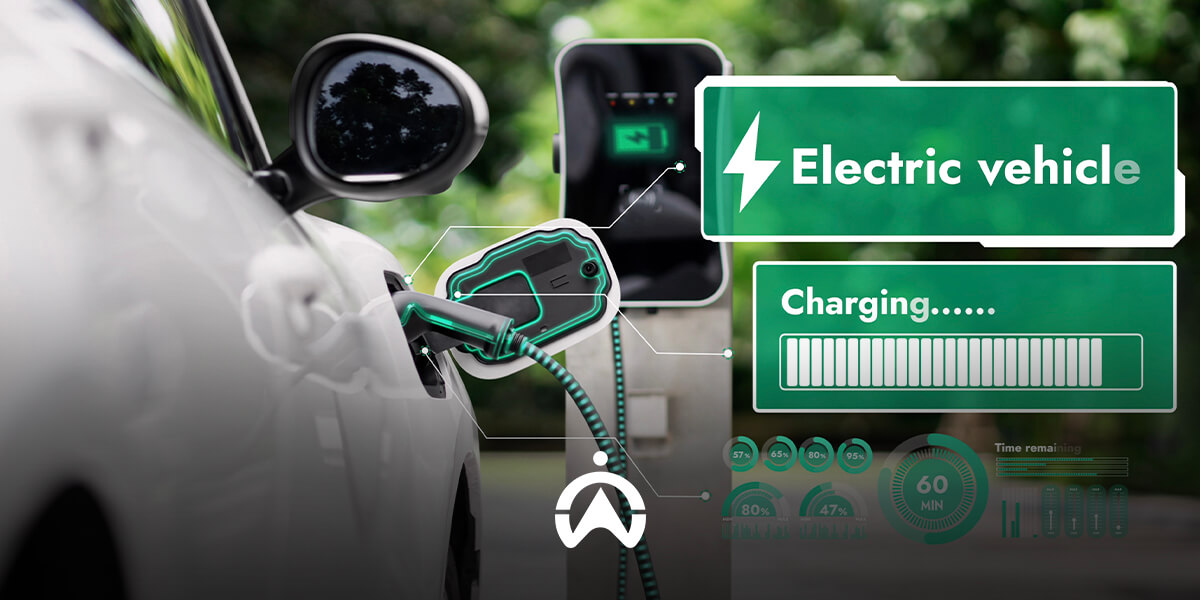
Top 9 Electric Vehicle Myths That You Need to Know

There are a lot of myths surrounding electric vehicles (EVs), but it’s important to note that EVs aren’t just a buzzword. They’re rapidly becoming a significant part of fleet and business mobility strategies. However, there are still plenty of myths and misconceptions that hold companies back from adopting them.

According to the International Energy Agency (IEA), in 2024 global EV sales topped 17 million, pushing EVs to account for over 20% of new car sales worldwide. These figures demonstrate that EVs are becoming more mainstream and are no longer considered a niche product.

For any business considering green mobility, understanding and dispelling these myths is key. In this blog, we’ll tackle the top 9 electric vehicle myths you need to know—and why you shouldn’t let them stop your fleet from evolving.

Before looking at each myth, let’s take a moment to understand why they continue to exist. Many are based on outdated data, limitations of early-generation electric cars, or misconceptions from passenger car use cases.

Key Takeaways:

  • EVs fit your daily routes. Most modern EVs offer 300km to 400km per charge, which is more than enough to cover daily trips
  • Charging is faster than you think. Fast chargers give you up to 80% in around 30 minutes
  • Costs are lower in the long run. You’ll save with cheaper electricity, less maintenance, and local incentives that cut your running costs
  • EVs are here to stay. Global sales passed 17 million in 2024, and Tanzania adoption is growing

Why it’s crucial to debunk electric vehicle myths

It’s crucial to debunk electric vehicle myths because misconceptions discourage decision-makers from investing in EVs in advance or correctly. In reality, accurate data assists businesses in avoiding oversights, lowering risk, and maximising productivity. Better planning for charging infrastructure, total cost of ownership, and integration with risk and compliance systems is made possible by busting EV myths.

Myth 1 — EVs don’t have enough range

A major concern when it comes to EVs is that they don’t have enough range. It’s true that the early EVs did struggle with range, but thanks to battery and energy density improvements, it has dramatically improved.

In fact, the average modern EV has a range of 300-400 kilometres per charge, more than enough for many business fleet routes. For many commercial routes, such as deliveries, sales rounds, and local services, range isn’t the constraint it once was.

Fleets benefit from knowing route patterns. For example, if 90% of routes fall under 250 km, then an EV’s range should be sufficient. Although there’s still a need for long-haul route planning for some operations, “range anxiety” is exaggerated for many other routes.

Myth 2 — Charging takes too long

While it’s true that refilling a vehicle with an internal combustion engine (ICE) is much faster than charging an EV, charging doesn’t actually take as long as you think. In fact, fast charging can give an 80% charge in roughly 30 minutes in many EVs.

Charger technology has advanced in public places and depots. Downtime is reduced through high-power DC fast chargers, smart charging scheduling, and overnight depot charging. In practice, many fleets charge during off-peak hours or during driver breaks.

When you compare this to refuelling ICE vehicles—driver wait time, queuing, fuel price fluctuations—charging can be far more predictable when managed correctly.

Myth 3 — EVs are more expensive to own

In actuality, EVs frequently have lower costs per kilometre over the course of a vehicle’s life. The upfront price may be higher, but lower energy (electricity vs. fuel) costs, lower maintenance (fewer moving parts, no oil changes, simpler drivetrains), and incentives frequently tip the scales in its favour.

Additionally, during specific periods, some governments or utilities provide tax breaks, grants, or reduced electricity prices.

When fleet managers run total cost of ownership (TCO) models, EVs frequently come out favourably, especially for higher-usage vehicles.

Myth 4 — EVs can’t handle heavy loads or long trips

Another major misconception is that EVs can’t handle heavy loads or long trips, when they actually can. Many EVs are built with strong torque and a capable load capacity. Electric motors are able to deliver instant torque, which is helpful for heavy loads or hilly terrain. Many manufacturers now offer electric vans, trucks or utility vehicles.

Long trips will require charging infrastructure planning, but for medium-duty logistics and urban freights, EVs are practical. Some EV versions of existing trucks show performance that’s on par with diesel in certain scenarios. This is sure to only improve with time.

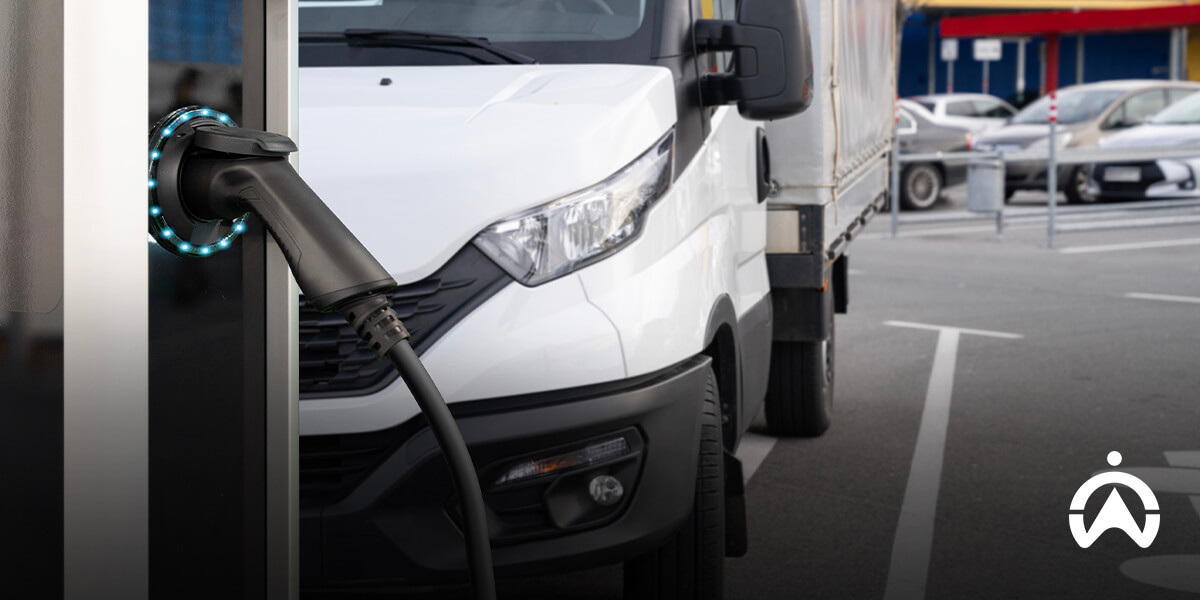
An electric vehicle charging connector plugged into a station, with a white delivery truck parked nearby.

Myth 5 — The power grid can’t support EV growth

The myth that the power grid can’t support EV growth may not be the case. Smart charging tools aid in load management, and grids are also evolving. Electricity systems are making investments in demand response, energy storage, and upgrades. Smart chargers have the ability to dynamically adjust charging rates or move loads to off-peak times. Demand curves are also made smoother by integration with renewable energy sources (like wind and solar).

With proper planning, adding EVs to a fleet won’t overwhelm a grid—it’s a manageable engineering challenge.

Myth 6 – EV batteries wear out too quickly

Many believe that EV batteries wear out too quickly, but in reality, they often last 8–15 years or more, depending on usage and care. Yes, battery degradation is real, but it’s slower than many expect. Many manufacturers also offer warranties (e.g., 8 years / 160,000 km or similar).

Many batteries maintain 70–80% capacity well into later years. You can also extend the battery life by not fully charging it, not letting the battery get very low before charging, and not exposing it to extreme temperatures. In real-world fleets, battery replacement is a minority expense within the lifetime of the vehicle.

Myth 7 – EVs aren’t really sustainable

When comparing internal combustion engines to full lifecycle emissions, they’re more sustainable. Although EVs do have upstream emissions from manufacturing and battery production, they typically emit fewer carbon emissions over the course of their lifetimes than ICE vehicles, particularly when the energy is low-carbon.

The “sustainability” argument is strengthened when recycling and advancements in battery technology are included. EV fleets can significantly lower emissions associated with transportation when aiming to meet ESG targets or carbon reporting.

Myth 8 – There aren’t enough charging stations

Actually, the infrastructure for charging is growing quickly, and private stations are possible. Cities, highways, and business centres are seeing an increase in the number of public charging stations.

Installing on-site or depot chargers provides control and coverage in various fleet situations. Combining public and private charging usually works well, even in places with limited coverage.

Businesses can frequently overcome the “lack of stations” issue by implementing a hybrid scheme that combines public network use with private depot charging.

Myth 9 – EVs are just a passing trend

The last myth is that EVs are just a trend. They’re not. Global momentum and regulatory shifts indicate long-term popularity.

Electrification is being strongly supported by both markets and policies. Internal combustion is being phased out by several automakers. Over the next ten years, EVs are expected to account for the majority of new car sales. EVs are a long-term solution because of customer desires, carbon regulations, and ESG concerns.

For a fleet, dismissing EVs as a passing trend is risky. You may miss the wave rather than ride it.

Side-by-Side: Myth vs Reality

Having a clear comparison is helpful before jumping into a more in-depth conversation or operational planning session. By resolving misunderstandings, it immediately lowers risk in executive planning, budgeting, and decision-making. Companies are able to steer clear of overly complex solutions or overestimating challenges.

Businesses can develop realistic, affordable rollout plans and meet sustainability targets by having confidence in the true potential and limitations of EVs. This also helps them maintain their competitiveness in a changing mobility market.

Myth Reality Implication for Business / Fleet
EVs have insufficient range Many EVs now deliver 300–500 km+ on a single charge Fits many daily routes without range issues
Charging takes too long DC fast charging (80 % in 20–40 mins), plus overnight depot charging Downtime is manageable and predictable
Too expensive Lower energy and maintenance costs, incentives Total cost of ownership often favours EVs
Poor for heavy loads Electric motors deliver strong torque, usable in vans/trucks Viable option for many logistics tasks
Grid can’t cope Smart charging, grid upgrades and energy storage help EV growth manageable with planning
Batteries degrade fast Warranties and real-world data support 8–15+ year life Battery replacement is rarely prohibitive
Not truly sustainable Lifecycle emissions lower than ICE, especially with clean grid Aligns with ESG and carbon goals
Not enough chargers Charging networks are growing & depot charging Charging accessibility is improving rapidly
Just a trend Sales, regulation and investments indicate staying power It’s a strategic, long-term shift

The Business case for acting now

Putting off the introduction of electric vehicles could lead to higher costs and missed opportunities. Businesses that wait run the risk of losing market share as laws become more stringent and consumer demands shift. By acting early, you can get incentives and establish your fleet as environmentally conscious and progressive.

Act now to:

  • Secure access to government or utility incentives before they phase out.
  • Lock in lower long-term operating costs compared to ICE vehicles.
  • Build a stronger ESG profile to meet stakeholder expectations.
  • Improve brand reputation with customers who value sustainability.
  • Get ahead of competitors who are slower to adapt.

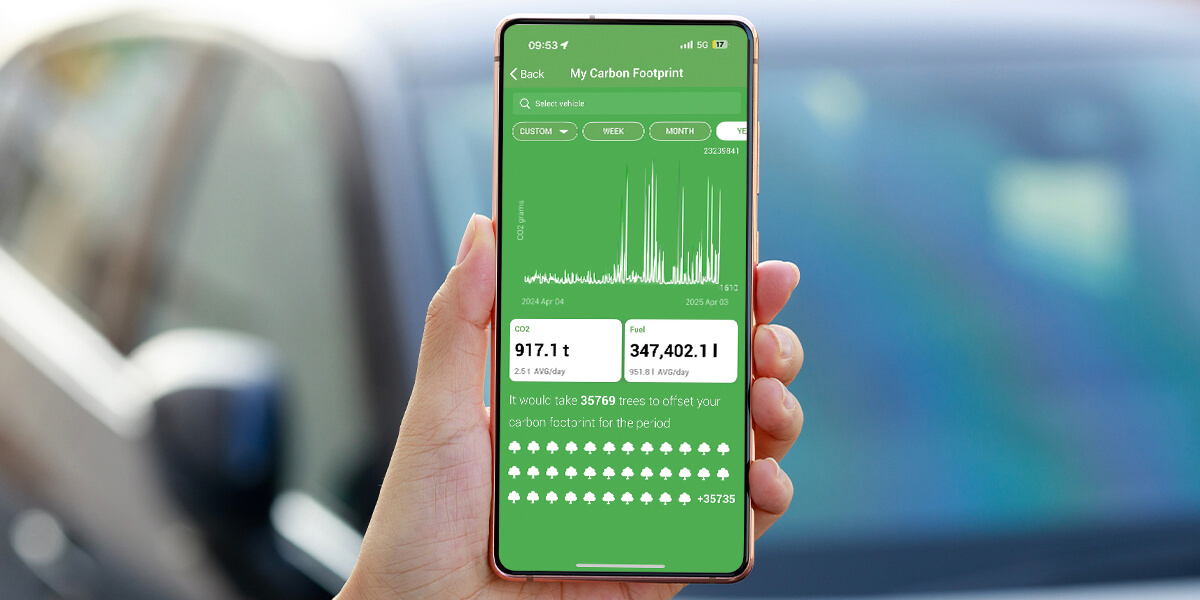
A hand holds a smartphone displaying carbon footprint data, including CO2 emissions and trees needed for offsetting, against a blurred car background.

The benefits of using EVs for your fleet in Tanzania

The benefits of using EVs for your Tanzaniann fleet are lower operating costs, improved fleet reliability, a better driver experience, sustainability and future-proofing. Making the switch to EVs has immediate benefits for your fleet and your bottom line, so it’s not just about complying with regulations.

Businesses stand to benefit financially, operationally, and in terms of their reputation by reducing emissions. Because of these advantages, EVs are a better long-term investment than traditional cars.

  • Improved fleet reliability: Fewer moving parts mean fewer breakdowns and less downtime.
  • Better driver experience: Quieter, smoother vehicles improve driver satisfaction and reduce fatigue.
  • Sustainability gains: Demonstrate real progress towards ESG goals and carbon reporting.
  • Future-proofing: Position your business ahead of regulations and industry changes.

How Cartrack Tanzania supports your EV transition

Cartrack Tanzania supports your EV transition in the following ways. From monitoring battery health, charge levels, and energy usage to integrating risk compliance and sustainability reporting. Cartrack Tanzania ensures that your fleet’s EV rollout is measurable, optimised, and aligned with corporate goals. Our risk management and compliance tools make it easier to track, audit and report on your EV operations.

With Cartrack Tanzania, you can confidently and intelligently manage EVs rather than just adopting them. Electric cars have long since outlived their infancy. There are more and more antiquated misconceptions regarding range, cost, infrastructure, battery life, and sustainability. Busting these myths is more than just academic for companies and fleets—it’s crucial for long-term planning, risk reduction, and wise investment.

If you’re considering electrifying your fleet, let Cartrack Tanzania help you to make the transition smooth, measurable and safe. Visit our Sustainability & Compliance page to see how our tools support your EV journey.

Frequently asked questions about electric vehicles

Do EVs hold their resale value?

Yes, EVs are starting to hold value better as demand grows. In Tanzania, the second-hand EV market is still small, but it’s expanding fast. Businesses that invest now can expect stronger resale opportunities in the future, especially as more drivers and fleets shift to electric.

Are electric vehicles reliable for business fleets?

Yes, EVs are increasingly dependable when properly managed. Many fleets report strong uptime, and EVs have fewer mechanical parts (no oil, fewer fluids, fewer moving components). Regular maintenance checks, battery monitoring and software updates typically keep reliability high.

How do EV running costs compare to petrol or diesel vehicles?

EV running costs are usually lower per km. Electricity is often cheaper and more stable in price than fuel. Maintenance costs drop (no oil, fewer moving parts). When you factor in incentives or tax breaks, the gap widens further in EVs’ favour.

Can EVs really reduce my company’s carbon footprint?

Yes, EVs really do reduce your company’s carbon footprint over their full lifecycle. EVs tend to emit less CO₂ than ICE vehicles. Even considering manufacturing emissions, the operational emissions are far lower—especially when charged from a clean grid. For businesses with ESG targets, switching to EVs is one of the more tangible carbon reduction levers.

Are EVs practical for fleets in Tanzania?

Yes, EVs are becoming more practical for your fleet in Tanzania. More public fast-charging stations are rolling out, and you can also install depot chargers for your vehicles. With electricity still cheaper than petrol or diesel, you’ll cut operating costs while building a greener, future-ready fleet.

Will EV adoption affect fleet productivity?

No, EV adoption won’t affect fleet production if it’s planned well. In fact, it often improves reliability and predictability. By aligning charging times (overnight, off-peak), pairing with route planning and using real-time monitoring, EVs can match or surpass ICE fleet productivity. Predictable energy costs and fewer mechanical failures help too.

How to really protect your courier vehicle from being hijacked?

To really protect your courier vehicle from being hijacked, always ensure you’re covered with preventative tactics, protection strategies while out on deliveries, and post-incident assistance. By implementing these steps as part of a comprehensive protection plan, you’re strengthening the safety and protection of your fleet and its drivers.

Courier vehicles are a growing target for criminals, exposing a genuine vulnerability in transportation and logistics. Local research and police reports indicate that motorcycle delivery couriers and taxi operators face elevated security risks, with a rise in organized syndicates targeting motorbikes across transit hubs like Dar es Salaam, Morogoro, and Iringa to dismantle them for parts or resell them using forged registration papers. Companies are ‘spending an absolute fortune on security’ to tackle these vulnerabilities, reflecting how criminals see courier vehicles as quick wins and fast money.

The best way to tackle this? Real and actionable solutions. In this guide, we go beyond a simple ‘stay alert and stay safe’ approach. We explore the best ways to implement prevention methods, keep your drivers protected, and partner with Cartrack Tanzania for full coverage and fleet vehicle safety.

Key Takeaways:

  • Courier vehicles are prime targets for hijackings because they carry valuable goods
  • Training drivers, changing routes, and hiding cargo help prevent attacks
  • Live tracking, panic buttons, and remote shutdowns protect drivers on the road
  • Cartrack Tanzania offers full support with 24/7 recovery teams and smart safety technology

Actionable steps to protect courier vehicles from hijacking

The actionable steps you need to take to protect courier vehicles from hijacking are prevention strategies, in-journey protection, and post-incident support. This layered approach means that you’re combating every possible angle that could impact your fleet and will ensure full visibility, support, and protection for your vehicles and their drivers.

Prevention strategies

The secret to managing safety even before your drivers are on the road is to implement prevention strategies. Preventative measures will always be one of the best ways to handle risk management. This is why driver training, route optimisation, and limiting cargo visibility can play a monumental role in fleet and driver protection.

  • Train drivers: Teaching and training your drivers ensures that they know what they need to look out for, can practice remaining calm in high-tension situations, and can manage exposure to potential risks.
  • Vary routes and delivery times: A routine can make drivers an easy target, which is why regularly modifying schedules or making variations to routes can throw off hijackers who’ve been surveying a vehicle over time.
  • Limit cargo exposure: If the cargo in the vehicle is kept out of sight as best as possible, there’s less of a chance that valuable goods being transported will be targeted.

BONUS TIP: It’s also important to keep the goods in neutral packaging when possible.

In-journey protection

You could put all the preventive measures in the world in place, but in-journey protection will always be just as important. Visibility, live tracking solutions, and immediate alerts are all necessary for onboard protection. This is especially the case for reacting as quickly as possible if your driver’s in danger.

  • Live GPS tracking with alerts: Not only does live GPS tracking allow you to keep an eye on vehicles and their trips, but route deviations are immediately flagged, allowing you to react accordingly if there’s danger.
  • Remote vehicle immobilisation: If a vehicle has beenstolen or hijacked, you can shut down the vehicle remotely once it’s safe to do so. This limits how far the vehicle goes and aids in quicker recovery.
  • Panic buttons: A well-concealed panic button, pressed by a driver in danger, can quietly alert control rooms, which can then notify the correct parties to send help.
  • Camera solutions: The presence of advanced camera solutions means that everything is surveilled, which can provide crucial evidence if there’s a criminal case.

Post-incident support

Sometimes, the worst does happen, which is why it’s best to ensure that you have clear strategies in place that’ll support your drivers and put you in a position for quick recovery. You want to ensure that your post-incident support puts your staff first and shows that you genuinely care.

  • Swift recovery assistance for stolen vehicles: The best thing you can do for your asset recovery is to ensure you partner with a company thathas strong support and swift vehicle recovery.
  • Protecting the driver’s physical and mental well-being: Your driver could be left physically hurt, mentally shaken, or both. Offer counselling, cover hospital visits, or encourage paid leave so they can recover fully and return to work in their own time.

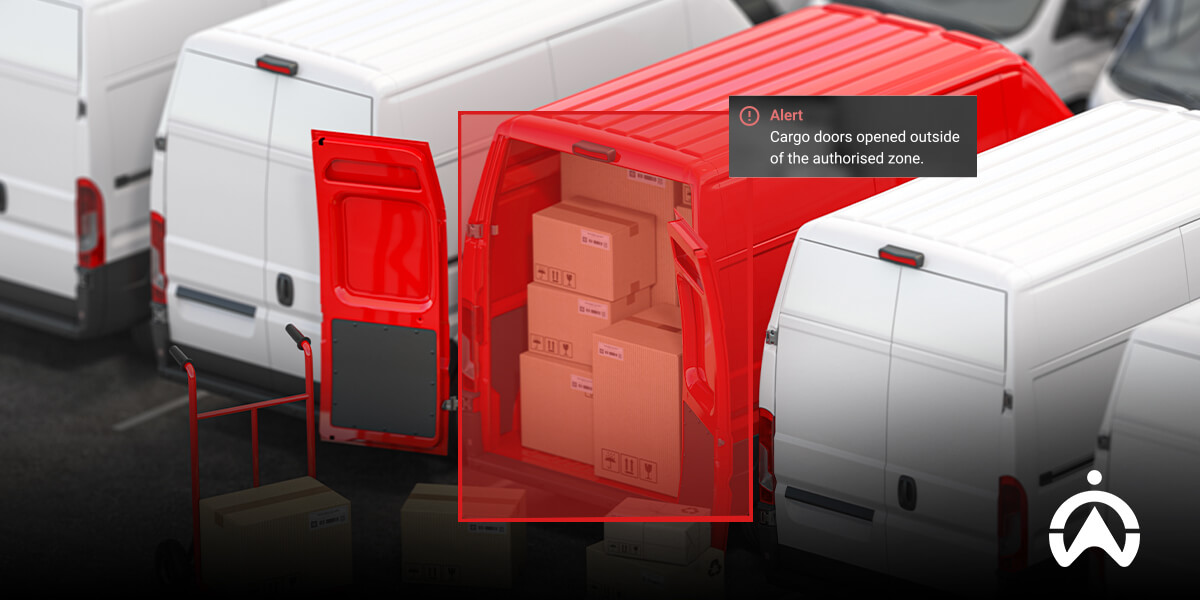
Cartrack alert detects potential hijacking of courier vehicle as cargo doors open outside authorised zone.

Why are courier vehicles prime hijacking targets?

Courier vehicles are prime targets for hijacking because they often carry valuable goods. This includes expensive clothing, electronics, skincare products, and other costly merchandise. Criminals often see these vehicles as ‘quick wins’, recognising courier vehicles as low-risk, easy targets.

The risk extends beyond financial loss. Despite the burgled cargo, drivers can face real physical and mental trauma, there can be damage to the business’ reputation, and deliveries can be lost or delayed.

Tanzania’s metropolises are often the areas most vulnerable when it comes to courier vehicle hijackings. Dar es Salaam (specifically the Kinondoni and Ilala districts), Mwanza, and Morogoro are all big cities with dense populations and predictable routes, making them anticipated targets.

Understanding hijacking tactics and the threats couriers face

Couriers are vulnerable to very real threats and hijacking tactics every time they’re out in the field. Methods include roadblocks, fake delivery orders, or being followed and monitored. Criminals are refining this more and more every day, signalling the importance of implementing strong security measures.

Consider these real-world scenarios:

  • Fake delivery customers or order diversions: Drivers can be drawn to locations that are isolated or directed to a pick-up point where they’re vulnerable to an ambush.
  • Following the courier vehicle to figure out schedules and routines: If drivers have regular and predictable routes, malicious parties can predict and learn driver routines.
  • Roadblocks or forced stops: Thieves can put up fake roadblocks or initiate forced stops by putting objects that obstruct the road for the courier driver. Following this, they’ll ambush the vehicle.
  • Insider threats and tip-offs: Thieves can plan their strategies by getting insider knowledge. This could be leaked information from an employee who tips them off about very expensive items in transit.

Breaking down risks vs protection regarding courier vehicles and hijacking

Take a look at this table that compares risks vs the best protection methods:

Risk / Threat Hijacker Tactic Courier Weakness Best Protection Strategy
Fake deliveries Luring drivers to unsafe areas Lack of route verification GPS tracking and route alerts
Forced stops Blocking the road/staging an accident Driver unprepared Panic button and driver training
Following routes Monitoring vehicle habits Predictable routines Route variation and live monitoring
Insider info leaks Shared delivery details Poor info security Secure dispatch systems

How Cartrack Tanzania keeps courier vehicles safe

Cartrack Tanzania keeps your courier drivers safe by offering the best in security and protection technology. Some of these tools include GPS tracking, vehicle immobilisation, and strong customer care and brand trust. You can rest assured knowing that your assets are protected, from first to last-mile delivery.

Here’s why Cartrack Tanzania is a cut above the rest:

  • Vehicle tracking: We offer strong GPS tracking systems with impressive backup solutions in case of signal interference, meaning you’ll always have full visibility of your fleet at all times.
  • Real-time alerts: Immediate alerts for geofencing breaches, idling, or any other strange driving behaviours mean you can act swiftly and immediately if something seems “off” about a trip.
  • Remote vehicle shutdown: Our remote vehicle immobilisation tool allows you to safely shut down a vehicle when hijacked. The vehicle won’t move any further, allowing for quicker vehicle recovery.
  • 24/7 recovery teams: Our team is on standby around the clock in case of any emergency or recovery needs, and with our high recovery rate, the numbers speak for themselves.

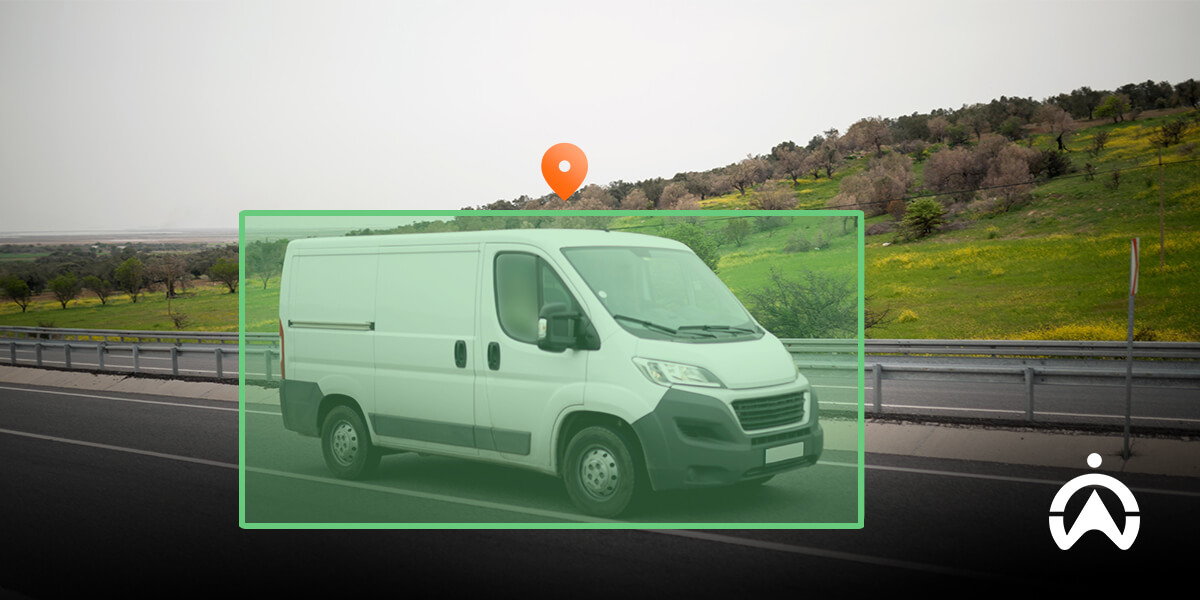
Courier vehicle parked near countryside road, representing hijacking of courier vehicle threats.

Wrapping up on courier vehicle safety

Courier vehicle hijackings remain a serious concern in Tanzania, but businesses can greatly reduce their exposure by taking proactive steps. From skilled drivers and varied routes, to live tracking and rapid recovery support; every layer of preparation strengthens fleet security.

Take all the safety precautions you can to protect your fleet. With Cartrack’s advanced technology and full, constant support, you’ll have complete control and visibility across your fleet, helping drivers and managers deliver safely, every day.

Your drivers deserve safety, and your business deserves security you can trust. Know that help is always close at hand;partner with Cartrack Tanzania to protect your courier fleet.

FAQs

Which are the worst bodaboda (motorcycle) courier and cargo theft hotspots in Tanzania?

The worst hotspots for delivery courier and cargo theft in Tanzania are Dar es Salaam (specifically the Kinondoni and Ilala districts), Mwanza, and Morogoro. These represent the country’s largest commercial hubs and critical transit bottlenecks which, due to dense populations and heavy cross-border traffic, naturally attract organized theft syndicates.

What preventive measures can we take in the event of hijacking?

In the event of hijacking, the best preventative measure is teaching drivers beforehand about hijacking safety procedures. Invest in other prevention strategies like rotating routes and drivers, geofencing and other immediate alerts set up, and swift vehicle recovery plans in place.

What should a courier driver do during a hijacking situation?

During a hijacking situation, a driver should remain calm and keep their hands visible at all times. Drivers should carefully alert the necessary parties by pressing a panic button if there’s one located in the vehicle. A driver should always try to keep movements and words clear and slow—erraticness can startle hijackers and cause them to make dangerous mistakes.

Does insurance cover courier vehicle hijackings?

Yes, insurance companies do typically cover vehicle hijackings, but many contributing factors determine the insurers’ specifications. Companies will usually first look over the business’ safety policies and risk management. Following this, they’ll likely require information like evidence of driver training and tracking technologies.

What is the leading cause of truck accidents?

The leading cause of truck accidents is driver error. Fatigue is said to be the biggest contributor to driver error, often caused by long hours on the road. When drivers are tired, their alertness, reaction time, and decision-making are all affected, making them more likely to:

  • Miss road signs
  • Respond too slowly to sudden changes
  • Fall asleep at the wheel

According to Studco, various studies reveal that approximately 80% to 90% of road accidents are caused by human factors. In the same article, they state that fatigue is particularly common among commercial and public transport drivers who work long hours. Other major contributors to truck accidents include speeding, distracted driving, mechanical failure, and extreme weather or road conditions.

Let’s discuss why driver error is so common in truck driving, and what you can do to reduce the frequency of accidents in your fleet.

Key Takeaways:

  • Most truck accidents happen because of driver error, often caused by tiredness, stress, and long working hours
  • Fatigue is one of the biggest reasons for driver mistakes, making truck crashes much more likely
  • Other causes include speeding, distractions, poor vehicle care, bad weather, and unsafe cargo loading
  • Preventing accidents needs teamwork from drivers, managers, and companies must all focus on safety and smart technology

Understanding the main cause of truck accidents

Driver error is the main cause of most truck driver accidents due to a combination of demanding job pressures. The long hours on the road and strict deadlines take a toll on drivers’ physical and mental health. This results in various risky situations such as driver fatigue, stress and rushing.

According to a study conducted by the Federal Motor Carrier Safety Administration (FMCSA), driver error is 10 times more likely to cause an accident than any other factor. In the same study, they divide driver error into four different categories:

  • Non-performance: When the driver falls asleep, has a heart attack, or is physically impaired by something else.
  • Recognition: When the driver is inattentive, distracted by something, or fails to adequately assess the situation for other reasons.
  • Decision: When the driver is driving too fast, misjudges the speed of other vehicles, or follows other vehicles too closely.
  • Performance: When the driver is panicking and is unable to accurately respond to a traffic situation.

What is the leading contributor to truck driver errors

Driver fatigue is a leading contributor to truck driver errors because most of the time, truck drivers spend long hours on the road, often exceeding working hour limits. They don’t take enough breaks between stops because of unrealistic delivery schedules. These circumstances make it difficult for the drivers to avoid fatigue.

Industry experts highlight that operator fatigue is a primary contributing factor in a significant portion of commercial vehicle incidents. They also emphasize how the greatest risk of an increase in drowsiness occurs in the following circumstances:

  • After 15 hours of driving, a driver starts a shift before 9 am.
  • After 6–8 hours of night driving (when a driver starts a shift in the afternoon or evening).
  • After 5 consecutive shifts, when driving again for over 13 hours.
  • When driving an early shift that starts after midnight and before 6 am.
  • During the first 1-2 night shifts a driver undertakes, and during long night shift sequences.
  • When a driver undertakes a backward shift rotation (from an evening, back to the afternoon, or an afternoon back to a morning start.
  • After long shift sequences of more than seven shifts.
  • During nose-to-tail shifts where a seven-hour break only enables five hours of sleep, a duration previously associated with a threefold increased risk for motor vehicle accidents.

Fatigue can go unnoticed. A tired driver may not feel sleepy but will react more slowly and make more mistakes. It’s as dangerous as drinking under the influence, which is why you need to focus on it to reduce the frequency of accidents in your fleet.

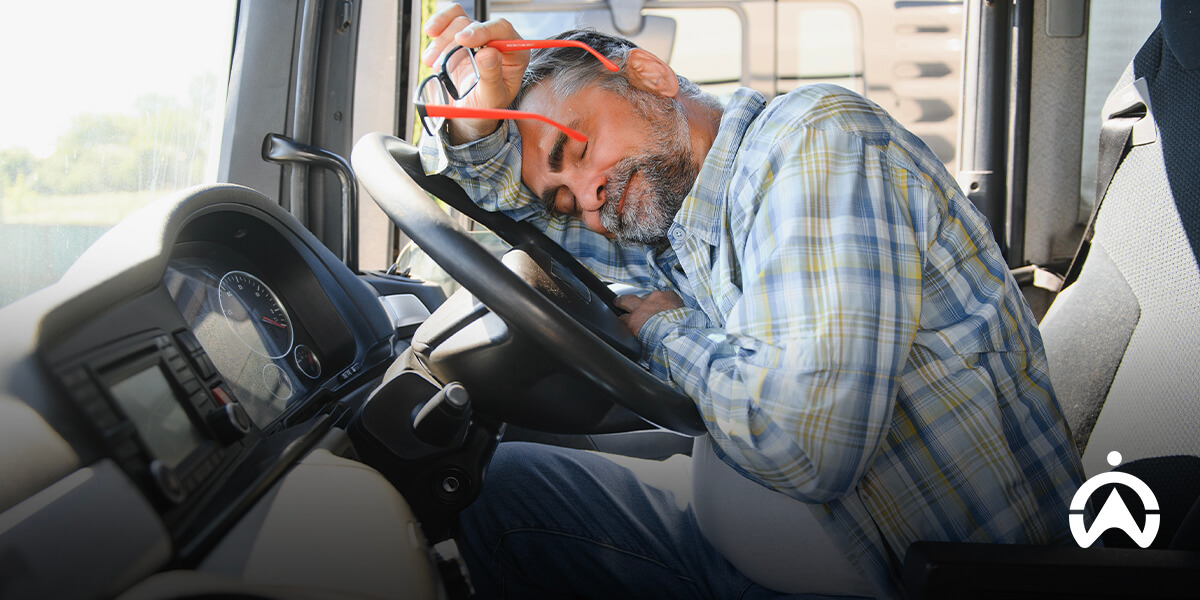
A person in a plaid shirt leans against the steering wheel of a truck, appearing stressed or fatigued in the driver's seat.

Other major contributors to truck accidents

Other major causes of truck accidents include speeding, mechanical failure, driving under the influence, poor weather and road conditions, as well as improper loading of cargo. Knowing the root cause and addressing these factors is crucial for the safety of your vehicles and drivers.

Distracted driving

Distracted driving is a growing concern among commercial truck drivers. Common causes of distracted driving include:

  • Cellphone use
  • Eating
  • Daydreaming
  • Smoking
  • Rubbernecking

Over the years, as more people become more dependent on smartphones, cell phone use while driving has been the fastest-growing and one of the most problematic forms of distracted driving. Data from leading automotive insurance providers indicates that a significant portion of policyholders who submit accident claims were more likely to have used their phones when the accident occurred. This makes it one of the crucial forms of distraction you should look out for in your team.

Speeding and reckless behaviour

Big trucks require more distance and time to stop. When a truck driver goes above the speed limit or drives recklessly, avoiding a collision in a sudden traffic slowdown becomes almost impossible. The truck’s heavy weight and excessive speed significantly increase the force of impact, which can lead to more severe injuries or fatalities.

Mechanical failure

Due to being on the road for long hours, trucks account for a large daily mileage. This means they require more maintenance than smaller vehicles. If you or your drivers neglect regular inspections and vehicle upkeep, critical systems can fail. Brake malfunctions, tyre blowouts, and steering wheel problems are common culprits of truck accidents caused by poor maintenance.

Adverse weather and poor roads

Extreme weather conditions, such as rain, fog and snow, create hazardous driving conditions for commercial truck drivers. They can reduce visibility and make the road surface slippery, making it harder to control the trucks, which can increase the likelihood of accidents. Road safety data highlights that adverse weather conditions, particularly rainfall, contribute to a noteworthy portion of annual motor vehicle incidents and traffic-related fatalities. This underscores the critical impact that reduced visibility and compromised road traction have on overall fleet safety.

Improper loading of cargo

How a trailer is loaded is critical to secure handling. When the cargo is unbalanced or overloaded, your cargo may shift during transit. This can destabilise the truck, resulting in rollovers or jackknife collisions. If cargo isn’t secured, it might even spill onto the roadway, causing more harm to other vehicles on the road. Failure to properly load cargo may result in heavy penalties from regulatory authorities, depending on the severity.

Driving under the influence

It’s no secret that drinking and driving is a major issue in South Africa. Unfortunately, this also happens with commercial drivers, which has a dangerous impact on public safety. It carries severe legal penalties, like a permanent commercial driver disqualification. For your company, it can lead to reputational damage.

The consequences of truck accidents

Truck accidents can have far-reaching consequences that often result in serious injuries or even fatalities. They also leave lasting emotional trauma for those involved. Your business might face major financial setbacks from vehicle repairs, insurance claims, and lost productivity. Your company may also experience reputational damage and regulatory penalties that affect long-term operations and trust.

Here’s a table breakdown of the main effects truck accidents can have, according to three categories:

Category Impact Details
Human cost Injuries and fatalities Can cause emotional trauma for drivers, families, and other road users
Financial impact Repair and insurance costs Leads to vehicle repairs, insurance claims, and fleet downtime
Business consequences Reputational and legal issues May result in reputational damage and regulatory penalties

How to prevent truck accidents

Preventing truck accidents starts with simple but consistent safety habits from everyone involved. This includes drivers, managers, and other staff members within the company. From there, you need to invest in technologies that enhance driver awareness, such as AI dashcams and telematics. Combining technology with consistent safety habits reduces the chances of mistakes.

Here’s how each group can play their part in keeping every journey safe and smooth:

For drivers

When it comes to road safety, drivers are the first line of defence. You must ensure that your drivers take enough rest breaks between trips so they can maintain concentration and alertness. Your drivers must also get enough sleep prior to lengthy travels so they have a good amount of energy and sharp thinking. Lastly, avoiding distractions like eating or using cell phones while operating vehicles can make a significant difference.

For fleet managers

As a fleet manager, you play a key role in preventing accidents by using smart fleet management tools that help you keep track of driver behaviour. It’s also important that you develop strict policies against distractions such as cellphone use, so drivers know the consequences and therefore avoid doing so.

You should also ensure that cars are kept in good condition by performing routine safety inspections of vital components such as brakes, tyres, and lights. Also, keep in mind the importance of driver wellness programs to ensure that drivers are coping.

To further reduce stress and exhaustion, you must ensure that driver schedules and deadlines are realistic to promote rest periods. This ensures that your drivers have enough time to finish deliveries safely. Drivers are more likely to take safety seriously when managers set a good example.

For companies

Your company needs to create a culture that values safety. One way this can be done is through driver incentives. Offering rewards for safe driving practices promotes improved team behaviour. Businesses safeguard their employees, vehicles, and reputation when they prioritise long-term safety over short-term profits.

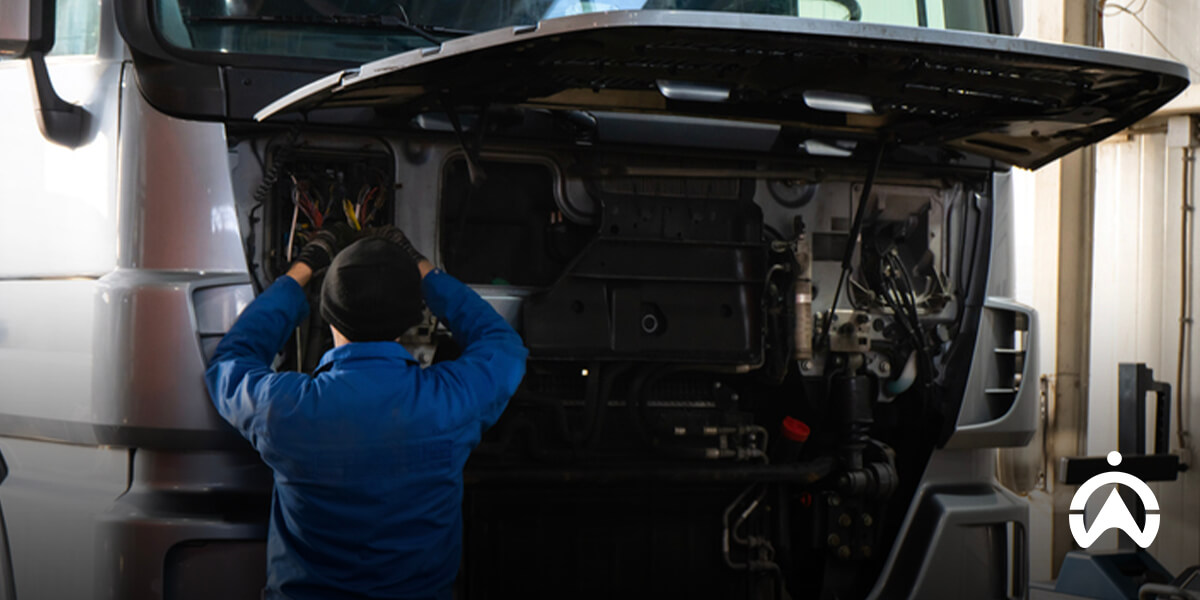
A mechanic in a blue shirt and gloves works on the electrical components of a large truck with the hood open.

Reducing truck driver accidents with Cartrack Tanzania

At Cartrack Tanzania, we have various technologies that’ll enhance the safety of your drivers and ensure that your business adheres to safety regulations. Over the years, we’ve had a hand in combating the frequency of accidents in many industries, including transport and logistics. We offer advanced and easy-to-use vehicle safety and monitoring technology, all from one platform.

Have a look at our top solutions for avoiding truck driver accidents:

AI Dual Vision camera

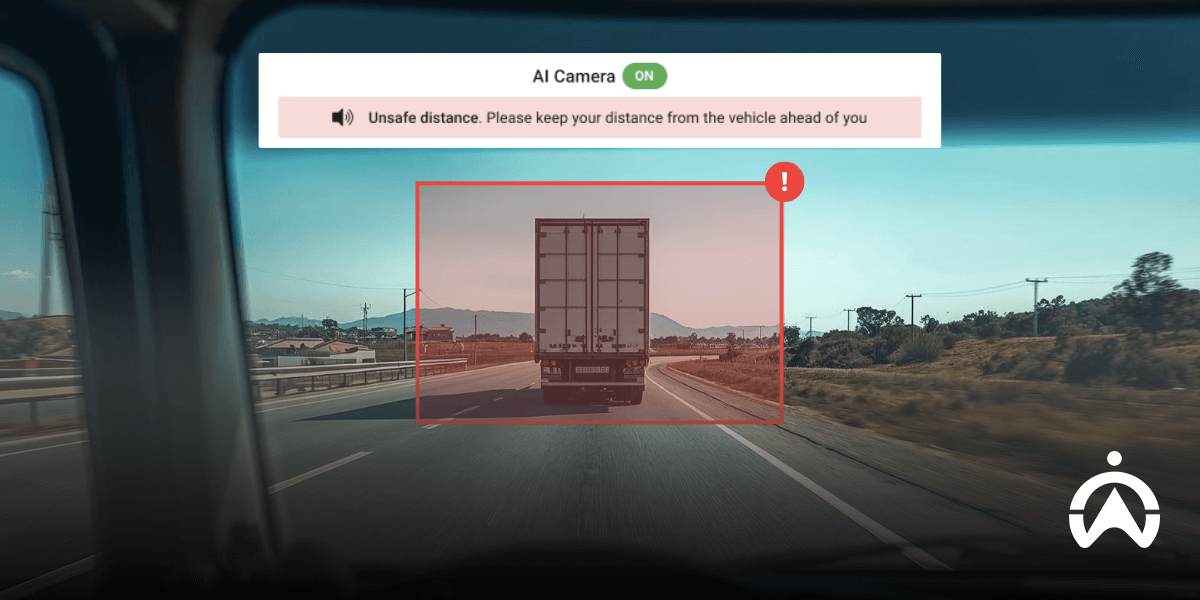
Cartrack’s AI Dual Vision dashcam helps you monitor driver behaviour. Its distracted driving detection capabilities include drowsiness, fatigue, eating, looking away from the road, smoking, and cellphone use. Once detected, it gives out an audible alert so your drivers can quickly correct their actions. This camera further enhances driver alertness by detecting blind spots and when drivers are tailgating.

Our AI-powered dashcam also has telematics capabilities, helping you notice other leading causes of accidents, such as speeding, harsh braking, and harsh cornering. It also has GPS technology, making sure you always know where drivers are.

Predictive maintenance

Prevent accidents caused by mechanical failure by using our preventative maintenance system. With this, you get alerts of engine issues, worn-out brake pads, and oil-and-water fluctuations. You can also use our system to keep up with vehicle service dates so you don’t have unexpected breakdowns.

Logbook

Manually logging driver hours leaves room for human error or fraud. It can create the impression that drivers are within their hours limit when, in fact, they’re not. The Cartrack digital logbook helps you keep up with driver working hours, ensuring that they’re accurate. This helps your business remain compliant, assists in creating schedules and gives drivers enough rest. This is yet another way to prevent driver fatigue and reduce stress levels.

DID tag

In many cases, drivers share vehicles, and it becomes difficult to know who used which truck. With our Driver Identification (DID) tags, to instantly know which driver is using which vehicle. Should anything happen, you’ll know exactly who must be held accountable. It also helps you ensure that the correct driver is assigned to a truck they qualify for, as each tag is linked to one specific vehicle.

Driver Scorecards

The Cartrack Driver Scorecard system is a great way to promote a culture of safety within your team and motivate your drivers. This is a system that monitors how drivers operate vehicles and rates each driver according to the number of harsh events detected. Through this, you can give recognition and reward high-scoring drivers, and use it as an opportunity to address issues of those who need improvement.

Your fleet’s safety starts with Cartrack Tanzania

Driver error presents many risks for trucking businesses; however, there are various other major causes of accidents that you should also look into. As a fleet manager, it’s important that you invest in advanced driver monitoring technology to help your drivers avoid accidents. Protect your drivers and assets — see how our fleet management solutions improve safety. Contact CartrackTanzania today!

Frequently Asked Questions about truck accidents

Where do most truck accidents occur?

Most truck accidents happen on major highways and busy main roads, where people travel at high speeds and the traffic is dense. Specific regional corridors and major economic hubs consistently experience the highest concentration of fatal road traffic incidents.. Specific accident-prone routes include the N1 freeway in Gauteng and the N2 in KwaZulu-Natal.

What are the 4 causes of accidents?

The four common causes of accidents are distracted driving

  1. Driver error
  2. Drunk driving
  3. Speeding
  4. Vehicle faults

Other causes of accidents include reckless driving, poor weather conditions, jaywalking, and driver inexperience. Understanding the cause of road accidents is crucial for developing effective safety precautions to prevent future collisions.

Which country in Africa has the most car accidents?

According to an article by Business Africa Insiders, Nigeria has the highest number of road traffic fatalities, followed by Ethiopia and DR Congo. However, when measured per 100,000 population, Kenya, Ghana, and Tanzania recorded much higher fatality rates.

Are older drivers safer?

Yes, older drivers are generally safer than younger ones. This is because they have years of experience and are more cautious when driving. However, the Centres for Disease Control and Prevention reports that drivers aged 70+ have higher road accident fatality rates per 1000 crashes compared to middle-aged drivers (aged 35-54).

Why are there so many car accidents in Tanzania?

Tanzania has high accident rates because of a mix of human factors and environmental factors. Human factors include things such as reckless driving, speeding, fatigue, and distractions. Environmental reasons include poor road conditions, such as potholes, as well as bad weather.

Reduce the risks! Explore the Cartrack Tanzania driver monitoring tools.

Which Factor Most Affects the Cost of Last-Mile Delivery?

The factor that most affects the cost of last-mile delivery is labour, with fuel coming second. These areas are where most of the costs go when businesses get deliveries from the processing point to the customer’s hands. Last-mile delivery is seen as the most costly stage of logistics, sometimes making up as much as 53% of total supply chain expenses.

Labour costs typically include factors like driver salaries, overtime, and route details. On the other hand, fuel costs usually consist of driver density (which refers to the number of stops on a trip) and distance. Combined, they play a key role in shaping how smoothly your operations run and how profitable your business can be.

To help you better understand the high costs of last-mile delivery, we’ll guide you through the expenses associated with this stage, why labour is the heavyweight factor, and how your business can get these costs under control. See how Cartrack Tanzania and our sophisticated technology can give you full visibility and assist in keeping costs under control.

Key Takeaways:

  • Labour costs make up most of the last-mile delivery expenses, with fuel costs coming next
  • Things like driver pay, overtime, and idle time make labour costs rise quickly
  • Rural routes and failed deliveries make trips longer and more costly
  • Using smart tools and planning can cut costs and make deliveries more efficient

Why is labour the highest cost of last-mile deliveries?

Labour is the factor that most affects the cost of last-mile deliveries because the last mile is incredibly demanding, with factors like driver wages, idle times, and overtime contributing to the total. So much of the cost is contributed to labour that it usually surpasses other factors like fuel. The longer a delivery takes, the higher the costs.

Let’s look at the effects and amplifications of labour costs:

  • Urban vs rural routes: Urban or dense routes typically see more deliveries being made in less time, typically reducing labour costs. Rural or sparse routes mean more travel time and fewer stops, typically inflating labour costs.
  • Driver pay & overtime: If drivers are working overtime or longer hours to ensure deliveries are complete, then more money is going towards wages.
  • Failed deliveries: Failed deliveries mean that redeliveries have to happen, which directly contributes to overtime/longer hours and more fuel spent.

What does “last-mile delivery cost” mean?

Last-mile delivery costs refer to the expenses related to the process of getting packages from the last hub to the hands of a customer or business. The last mile is typically considered the most expensive part of the process, even though it’s usually the shortest.

Last-mile delivery describes the last step in an order journey—getting the delivery from the centre to the customer—but it’s complex and costly because of the numerous expectations. Not only are there tight time windows and many stops, but there are also high customer expectations and the need for stellar communication.

Although the last mile is usually seen as a collection of expenses that could weigh the business down, it could actually prove to be a profitable venture. If you implement positive adjustments, like route optimisation or consolidating deliveries, you could potentially gain a competitive edge.

Take a look at the process in its entirety:

  • First mile: This is from the supplier to the warehouse
  • Middle mile: This is from the warehouse to the local hub
  • Last mile: This is from the hub to the customer

Why is last-mile delivery so expensive?

Last-mile delivery is so expensive because of factors like pressures to deliver on time, congested roads, the cost of fuel, and sparse delivery stops. All of these directly add to the overall costs and can affect your business’ level of efficiency.

There are also some Tanzania-specific obstacles to overcome:

  • Sparse delivery stops: Tanzania has vast rural areas, which means there can be long travelling times between delivery points.
  • Infrastructure: Routes and roads can be very unreliable, especially as you move further into rural or farm areas.
  • Safety: To ensure safety and security, drivers might take longer routes so as to avoid dangerous areas.

Labour costs don’t always have to give you a headache. You can optimise driver routes and keep track of their performance using Cartrack Tanzania technologies.Book a demoto see how you can improve the performance and profitability of your fleet.

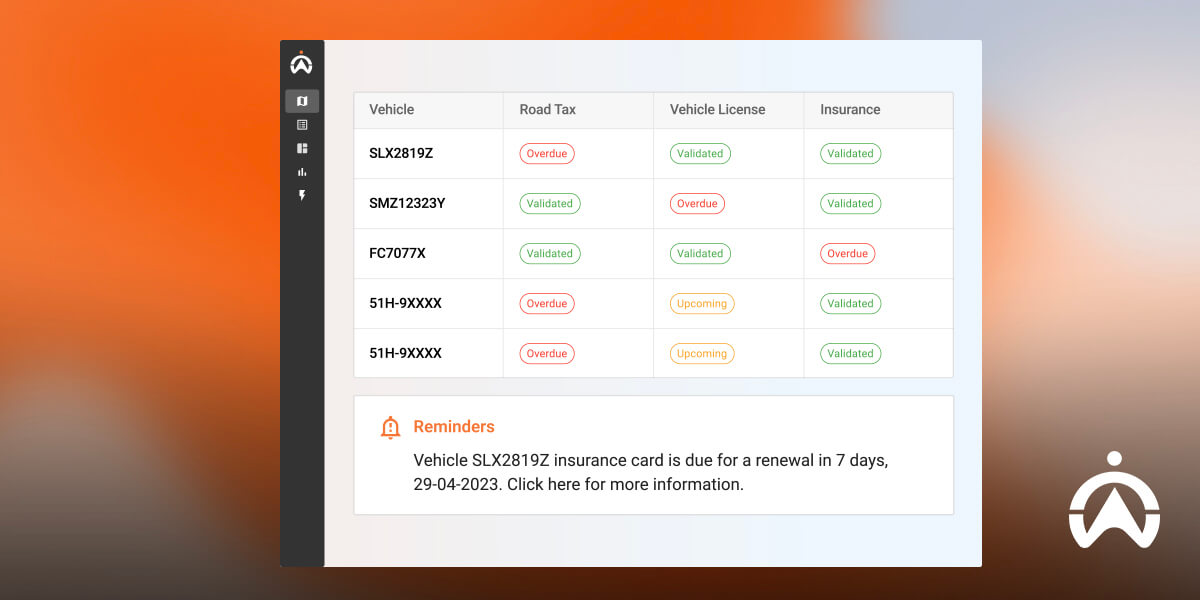
Vehicle management dashboard showing licenses and insurance renewal alerts affecting last-mile delivery cost.

Breaking down the overall cost of last-mile delivery

If we look at a breakdown of the overall cost of last-mile delivery, we have to consider factors like fuel, customer expectations, and driver labour costs. Some of these factors are easier to manage than others, but understanding these variables can help you decide where you can optimise and save.

Take a look at this breakdown of the typical contributors:

  • Fuel and vehicle operating costs: These are probably the most erratic expenses. With the ever-rising cost of fuel, typical wear and tear on a vehicle, andthe stop-start nature of delivery driving, it’s no surprise that costs here are high.
  • Routes and potential inefficiencies: This is one of the best factors to manage cost-wise, as route optimisation can massively improve last-mile costs. Without route optimisation, expect longer routes, overtime, and more idle time.
  • Potential failed or repeated delivery attempts: These essentially become hidden costs. Having to make redeliveries means even more per-delivery costs, from wasted fuel to extended driver hours.
  • Customer expectations: Customers expect smooth handoffs and deliveries that can be tracked while they’re on the way. This makes deliveries more complex, with restricted delivery windows and rigid schedules.

To better understand which areas are easier to optimise, look at the table below.

How to read the table:

  • High controllability: These are areas where costs can quickly be brought down through proactive governance and fleet management technologies.
  • Medium controllability: These costs can be reduced through statistically informed decisions, though they’re still partly shaped by outside factors.
  • Low controllability (N/A here): These relate to larger, general variables such as economic shifts or regulatory changes, which are harder to manage directly.
Factor Impact % (Average Estimate) Description Controllability (High/Med/Low)
Labour 40–50% Salaries, overtime, and staff shortages Medium
Fuel and maintenance 20–30% Vehicle costs and rising fuel prices Medium
Failed deliveries 10–15% Redeliveries or customer absence High
Route Inefficiency 10–15% Poor planning and traffic High
Tech/Infrastructure 5–10% IT and fleet tools High

Takeaway:
While labour remains the biggest last-mile delivery cost factor, the most achievable expenses often come from controllable inefficiencies. With various smart technologies available with Cartrack Tanzania, businesses can improve productivity and make meaningful cuts to operational spending.

How to manage and reduce labour-driven last-mile costs

To manage and reduce labour-driven last-mile costs, it’s best to focus on high-controllability areas and manage those before tackling lower areas. Having a better handle on how drivers spend their time can immediately improve efficiency, but a holistic approach will always be the best way forward.

Consider these strategies:

Route optimisation software and smart planning

Implementing route optimisation software and smarter planning can help you cut back on wasted time, fuel, and effort. Through innovative technologies and AI systems, the most efficient and fuel-saving routes can be planned for each of your drivers.

By choosing to prioritise route optimisation software, especially from Cartrack Tanzania, you can:

  • Decrease fuel usage
  • Bring down idle time and total time spent on the road
  • Confidently manage more stops in a single shift

Delivery consolidation and managing batch orders

By effectively managing batch orders through delivery consolidation, you enable your drivers to complete more deliveries in less time per trip. Smarter delivery consolidation means you can strategically combine trips in the same geographical areas, cutting down on back-and-forth trips.

Cartrack’s FleetWeb features can help you manage dispatching so that every trip is grouped correctly and more time-effective.

Real-time customer communication

Real-time customer communication—through channels such as in-app updates, SMSes, and ETA notifications—massively improves overall delivery experience. Additionally, clear and constant communication with customers helps prevent potential redelivery attempts.

Cartrack’s customer visibility features (proof of delivery, live tracking, automated customer notifications, etc.) guarantee improvement with first-delivery-attempt success rates.

Safe and efficient driver management

Better productivity and protection directly correlate with safe and efficient driver management. Driver behaviour monitoring tools and telematics allow you to keep track of your drivers while also facilitating proactive and preventative approaches.

Cartrack’s GPS tracking and driver scorecards promote safer driving habits, meaning accident-related interruptions and overtime are reduced.

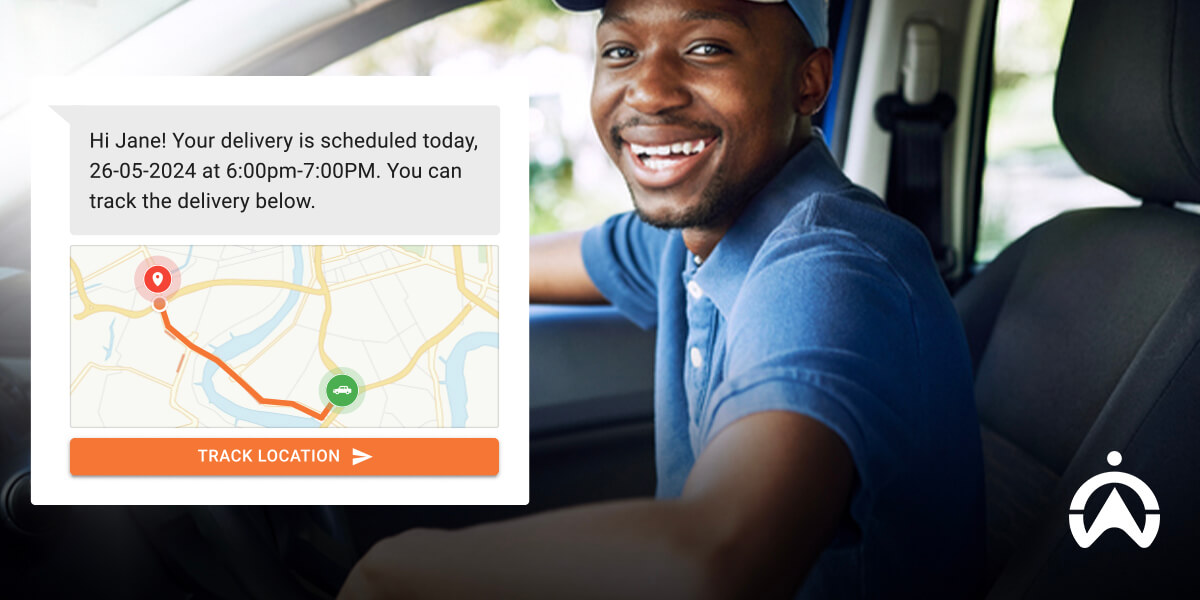
Delivery tracking notification next to driver, illustrating last-mile delivery cost factors

Is last-mile delivery profitable?

Yes, last-mile delivery is profitable, but businesses must balance performance, customer satisfaction, and running expenses. Although this part of the delivery cycle is the most costly, it’s also the most personal, giving you space to truly connect with your customers. If done correctly, you can cement a favourable brand connection and stand out among the rest.

Cost and customer experience

Although reducing costs is the goal, you’ll want to ensure you preserve customer satisfaction and high service standards. Profitability rides on balancing costs and quality service. If you have satisfied customers, you’re almost guaranteed profits through repeat customers and clear brand loyalty. This, however, can only be achieved by quick, flawless, and reliable delivery experiences.

Balancing efficiency and profit

Businesses that implement the right tools and technologies to improve performance are those that are likely to have the best success rates. Lowering costs per delivery while maintaining customer satisfaction could not only improve your bottom line but also give your business an edge over the competition.

Cartrack’s role in reducing last-mile delivery costs

Empowered by advanced technology and real-time visibility, last-mile delivery can transition from a major expense to a strategic advantage. It’s a transformation that Cartrack Tanzania enables for every business it supports. By directly tackling the highest last-mile costs and helping you take control of them, Cartrack Tanzania is your top solution as a loyal business partner.

Here’s a look at what we can do for you:

  • Route optimisation: We use smart tools and AI-driven insights to optimise your drivers’ routes, helping them drive smarter and not longer. This cuts back on fuel and overtime spend, ensuring that drivers stay on schedule as regularly as possible.
  • Delivery tracking & real-time ETAs: With ourcustomer visibility features, you can ensure smooth deliveries on the first attempt. Redeliveries should become far less frequent, and your completion rates will increase.
  • Fleet cost management tools: Thanks to our value-added services like MiFleet, you can have complete oversight over operational finances and performance. This kind of oversight allows you to make insight-backed decisions to improve your bottom line.
  • Vehicle security: Hijackings and other threats to safety can lead to potential driver shortages and delivery losses. Cartrack Tanzania is a leading name in vehicle tracking and recovery, protecting your assets and drivers while preventing pricey disruptions.

Final takeaways

There are plenty of reasons why last-mile delivery costs can add up—fuel, maintenance, routes, and especially labour. The list goes on. These expenses are part of doing business, but it doesn’t mean they have to feel out of control.

With the right technology behind you, your business can move away from just reacting to costs and start improving them before they become a problem. You can keep your fleet efficient, your team productive, and your customers satisfied every step of the way.

Ready to cut your last-mile costs while keeping customers happy?Discover how Cartrack Tanzaniahelps dispatch teams deliver smarter, safer, and more profitably.

FAQs

Q: What causes failed deliveries, and how do they affect cost?

A: Failed deliveries are caused by numerous factors; a customer may not be available for pickup, the pickup location may be wrong, or there may be delays at the warehouse. Whatever the reason, failed deliveries affect cost by adding to the already existing fuel and labour costs through redelivery.

Q: How do peak periods (holidays, etc.) impact delivery costs?

A: Peak periods impact delivery costs through their increased volumes; higher traffic, higher delivery flows, and higher overtime. All of these factors are directly linked to an increase in labour and fuel costs. It’s possible to keep these costs under control, though, by ensuring you assign tasks to enough drivers and keep routes optimised.

Q: How doesTanzania’s rural delivery landscape affect last-mile costs?

A: Tanzania’s rural delivery landscape affects last-mile costs by covering longer routes, having fewer drop-off points, and featuring roads that aren’t always in great condition. These challenges drive up fuel consumption, ultimately extending delivery times. Imposing smart dispatch planning and GPS tracking means fleets keep operations profitable, even in remote regions.

Q: How does driver training impact last-mile delivery efficiency?

A: Driver training impacts last-mile delivery in a massively positive way. Skilled and well-trained drivers get deliveries done faster, but also use vehicles more efficiently and are far less likely to cause delays or safety incidents. When managers have regular insight into driver performance, it becomes easier to guide improvement, boost productivity, and steadily reduce operating costs.

Real IOT tracking devices and solutions for your business

An Internet of Things (IoT) tracking device links your vehicles to larger central tracking systems. This is presented in a visual form that makes it easier for you to visualise where your assets are. This helps you collect better data and track your fleet with ease.

As of the end of 2024, there were over 18.8 billion IoT devices worldwide, a number that keeps rising as technology improves. Fully connected tracking devices have always been part of the IoT network, but NOW they can connect to even more tools and systems in your fleet.

When Cartrack units connect to your fleet’s telematics, your vehicles become part of a smart network. This means real-time tracking and better communication between you and your drivers.

So if you’re wondering how your fleet communicates with your fleet managers, read on to receive a full breakdown on what these devices can do for you.

Key Takeaways:

  • You can track your vehicles and assets in real time across Tanzania, keeping your fleet safe and efficient
  • IoT tracking devices help you save time, reduce fuel costs, and improve route planning for your business in 2025
  • With Cartrack Tanzania units, you get instant alerts, geofencing, and tamper detection to prevent theft and misuse
  • The data collected helps you make smarter decisions, monitor driver behaviour, and manage your fleet more easily

How can IoT tracking devices and solutions improve your business?

Want to know something interesting? All tracking units are IoT devices. They connect to the internet using mobile signals and send accurate GPS data. This data, combined with smart AI tools helps to improve:

  • Route planning
  • Driver behaviour
  • Regulation adherence for your business

Real IoT tracking devices do more than just show fleet location. They integrate fully with your vehicles. That means they can track things like harsh braking, fast acceleration, idling time, and fuel use. All of this gives you a clearer view of how your fleet is performing.

Owing to GPS accuracy, within 2 to 5 metres, you can always keep an eye on your vehicles. As you and your fleet managers get used to the system, your business becomes more efficient and easier to manage.

What is an IoT tracking device, and how does it differ from standard GPS trackers?

An IoT tracking device sends real-time updates to a central system. Showing where the vehicle is, how fast it’s going, and even its condition. This makes it smarter than a simple GPS tracker, which might only send data now and then, or only after the information has been downloaded manually.

There are many differences between these devices. The table below clearly shows why an IoT tracking device gives you more value:

Feature IoT Tracking Device Standard GPS Tracker
Data Type Location and extra information Location only
Alerts Sends instant alerts Usually no alerts
Connectivity Works over the internet Works with GPS signal
Integration Connects with other systems Limited or none
Monitoring Tracks assets and conditions Tracks location only
Decision Making Helps businesses make smart choices Gives basic location info
Updates Real time Sometimes delayed
Usage Vehicles, equipment, and assets Mainly vehicles

What are the main functions of an IoT tracking device?

The main functions of an IoT tracking device are sending real-time data and collecting telematics information through an always-on internet connection. If you’ve been in the fleet management industry before, you may already be familiar with these devices. The latest IoT tracking devices offer several smart features that keep drivers and assets safe.

IoT tracking devices solve several problems that fleet managers face each day, from weak tracking to fuel costs. These are how IoT devices solve the four most common problems.

Never lose track of your vehicles

Problem: A common problem that many may not know about is that fleet managers aren’t always aware of where their vehicles or fleet assets are. A frantic search for specific vehicles, drivers, or assets often causes delays, lost deliveries, and wasted fuel.

Solution: IoT tracking devices show the exact location of your vehicles and assets in real-time. Tracking your fleet through an app or portal anywhere in Tanzania is made possible, which makes it easier to plan routes and respond to issues.

Keep drivers safe and fuel costs low

Problem: Monitoring how drivers are using their vehicles is hard, and they may take this opportunity to drive unsafely, increasing fuel usage.

Solution: Any real IoT tracking device that’s been fully integrated with your fleet can measure bad driver behaviour, such as harsh braking, speeding, and excessive idling. With gathered data like this, you can help coach inexperienced drivers, reduce accidents across your fleet, and save fuel.

Protect your assets from theft

Problem: A fleet’s assets and vehicles can face theft if they’re left unmonitored.

Solution: With geofencing and tamper alerts, you get instant notifications from IoT tracking devices if something is detected. Along with tools such as geofencing, you and your fleet managers know when assets or vehicles enter or leave restricted areas.

Make smarter fleet decisions with data

Problem: Without accurate data, it’s hard to make informed business decisions about fleet efficiency and maintenance.

Solution: A real IoT tracking device will collect data on fuel, routes, and driver habits. They help fleet managers to generate reports that are used to optimise operations, making your business more efficient and cost effective.

Person using a smartphone with a map showing multiple locations at night, powered by IoT tracking devices.

Do IoT tracking devices work with cellular networks?

Yes, any real IoT tracking device will connect to the internet through cellular networks, sending accurate GPS location data to a central system. Mobile signals like 4G and 5G are the fastest, but many do have other ways of sharing information. Backup connections solve the problem of weak or intermittent cellular connections.

Advanced IoT tracking devices have features that you may want to know about, making them reliable countrywide. You’ve probably got a few questions about this. Here are some of the ones we hear most often.

Do IoT tracking devices require special SIM cards?

Basic tracking devices that you install yourself can use any SIM card. However, real IoT tracking devices from service providers use special SIM cards that are built for secure tracking. These SIM cards have unique numbers and send encrypted data back to the provider’s system.

The SIM cards come with the device and are managed by the service provider, keeping your data safe and your tracking active at all times.

How do Tanzanian networks support IoT tracking devices?

Across Tanzania, mobile service providers have teamed up with tracking device suppliers. This means your devices use a special SIM card made for secure data sharing. Many of these SIM cards only send data, not calls or texts, unless specified.

To stay reliable, tracking devices also need backup systems. That’s why many providers have agreements to use older network types like GPRS and GSM, so your data still gets through even if newer signals go down.

Can IoT devices work across the country?

Yes, IoT devices can work across Tanzania, even in rural areas where the mobile signal may be low. An important feature of a real IoT tracking device is its ability to have backup connections and the ability to store data. Your fleet stays connected as it moves between provinces, even if a driver’s mobile phone loses signal.

No matter where your vehicles or assets go, they’ll stay online and be easy to track.

What are the top solutions an IoT tracking device provides?

A real IoT tracking device will provide solutions like real-time tracking, geofencing, and data-driven reporting. They are geared towards making fleet management simpler and much more manageable. They don’t just fix problems that already exist, they also help prevent any new ones that may appear.

A real IoT device doesn’t just make your fleet more efficient today. It helps you save time and money in the FUTURE by keeping your business efficient.

  • Real-time location tracking: Whether vehicles are moving, loading, unloading, or stuck in traffic, your fleet managers can plan ahead, knowing the location data is live and accurate.
  • Geofencing alerts: Get instant alerts when a vehicle enters or leaves a set area. This helps improve operations and lets you know straight away if something’s not right.
  • Theft detection: If a vehicle is started without permission, moved unexpectedly, or tampered with, the system will alert you and your service provider immediately.
  • Route optimisation: IoT tracking systems use traffic updates from third-party sources. If a driver is heading towards a problem area, the system can automatically reroute them to a better path.
  • Condition monitoring: These devices track how a vehicle is being used—whether it’s idling, braking harshly, or showing signs of wear & tear. Fleet managers get alerts if a driver’s behaviour needs attention.
  • Data-driven reporting: The system collects data on each driver and creates reports on their driving habits. These reports help with coaching, performance reviews, and improving the business overall

Should a business rely on IoT tracking devices?

Whether your business has just two vehicles or a fleet across Tanzania, using real IoT tracking devices should be an easy move. The devices give you live data that makes managing drivers and vehicles easier for your fleet managers.

Integrated IoT systems help your fleet managers make better decisions using accurate data. With a properly implemented system, tracking becomes an easy part of your business’ daily routine. This makes your fleet safer and more efficient without becoming more complex to manage.

Improve asset visibility and control

One of the best features of real IoT tracking devices is how easily you see your fleet. Whether it’s a vehicle or a valuable asset, tracking it no longer means making endless phone calls. You simply open the app or portal and check on its location. If something is wrong, you’ll probably know about it beforehand.

When an expensive asset is in use, or a high-value vehicle is out on the road, you can make sure it’s safe and not being misused. The integrated IoT tracking systems help you keep control and protect your investment.

Boost security and theft prevention

Often forgotten by fleet managers, stolen vehicle recovery is an add-on for fleet solutions that any business should consider for its fleet. This improves your vehicle and asset security, ensuring your fleet is always kept operational.

From simple tamper alerts to full stolen vehicle recovery, any real IoT tracking device will have it available as a service. This gives you full access to support 24/7, which will work with the police to find your vehicle.

Increase operational efficiency and cost savings

Every business, big or small, needs to improve efficiency and reduce costs. Real IoT tracking devices in your fleet help boost efficiency every day with simple additions. Better route planning and real-time data enable your vehicles to use less fuel and require fewer repairs. It’s a simple benefit that many overlook, but it can make a BIG difference.

Enable smarter, data-driven decision-making

Are maintenance bills starting to creep up on you ahead of time? The first step in taking control of this is making informed decisions. Spotting driver patterns and improving their behaviour is easier with IoT tracking devices that collect data over weeks, months, or even years.

If a driver shows risky behaviour, the system picks it up early. With the right coaching, these issues can be fixed quickly. That means safer drivers, fewer incidents, and lower costs for your business.

Blue truck at warehouse with Wi-Fi symbol showing IoT tracking devices enabling connected loading operations.

How Cartrack devices use IoT to improve your business

All Cartrack units are IoT devices, connected to the internet to provide accurate location data. When integrated with your vehicle telematics, our units provide real-time data that keeps your fleet connected.

There are five key areas where Cartrack IoT tracking devices will improve your business.

Seamless Real-Time Vehicle and Asset Monitoring

  • Track vehicles instantly: Receive your vehicle location without delay. The real-time location is updated constantly, showing where your fleet is through the app or portal.
  • Monitor assets constantly: Asset tracking updates you on each asset’s location throughout the day, keeping them safe and giving you peace of mind.
  • Reduce manual checks: Automated checks show each vehicle and asset location without manual work, saving time and resources.
  • Improve operational visibility: The system sends up-to-date data to your fleet managers, creating full visibility across your fleet.

Advanced Geofencing and Instant Alerts

  • Set virtual boundaries: You can choose locations you consider too dangerous for your vehicle to be in, or boundaries that none of your vehicles or assets are meant to leave.
  • Receive instant notifications: If a vehicle or asset crosses the bounds set by a geofence, your fleet managers and you immediately receive a notification.
  • Prevent unauthorised movement: If a geofence has been set up, Cartrack units can be set to go into downtime, which means any movement of a vehicle or asset causes an alert to be sent.
  • Enhance location control: Our geofencing system helps control the authorised locations of your fleet, keeping your most valuable assets exactly where you need them.

Data Collection for Operational Insights

  • Analyse usage patterns: Our system is constantly collecting data across your fleet, creating usage reports that show driver behaviour.
  • Optimise fleet efficiency: As you gather more data, your fleet efficiency starts to drastically increase, as you can stop bad behaviour and choose optimal routes.
  • Identify high-cost drivers: Drivers have a big influence on how efficient any fleet is. Cartrack’s data collection system can help you identify drivers who are inefficient or reckless.
  • Improve business decisions: As your fleet continues to grow, our data helps you identify areas that need to grow, whether it’s getting more vehicles, skilled drivers, or just choosing better routes.

Integration with Fleet Management Systems

  • Connect existing software: With Cartrack’s API feature, your existing fleet management systems are not removed, but integrated into the system.
  • Streamline workflow processes: As your fleet becomes fully integrated with Cartrack’s units, workflow drastically increases, improving delivery times and overall business efficiency.
  • Centralise operational data: A key feature of Cartrack’s API is that it centralises your operations onto one platform, giving you full control of your business operations.
  • Simplify reporting tasks: Because data collection through IoT tracking devices is so much simpler, weekly, monthly, and yearly reports become easier and much more accurate.

Enhanced Security through Tamper Detection

  • Detect device tampering: Cartrack units have tamper protection, and when fully integrated with your fleet, can detect when an asset or vehicle is being tampered with.
  • Prevent asset theft: Early warnings of tampering or signal jamming means your teams can prevent asset theft before it’s lost.
  • Alert management immediately: Our systems and units can be set up to alert management and the Cartrack control room immediately if tampering or signal jamming is detected.

Real IoT tracking devices help businesses keep track of vehicles and assets, improve security, and make smarter decisions using data. With features like geofencing, real-time monitoring, and condition alerts, companies can save time, reduce costs, and stay more efficient.

Don’t wait, start using Cartrack IoT tracking devices today to take your business to the next level.

Frequently asked questions about IoT tracking devices and business solutions

Are there tax incentives or grants for IoT deployment in Tanzania’s business sector?

Yes, Tanzanian businesses can access tax incentives and grants when adopting IoT tracking device solutions. The government has programs from the Tanzania Investment Centre (TIC) and the Information and Communication Technology Commission (ICTC) that will help offset costs. If you are unsure, you can check the eligibility criteria carefully to see which incentives apply to your specific IoT tracking device deployment.

How do I comply with Tanzanian data protection / PDPA when tracking assets?

You must collect, store, and use personal or vehicle data responsibly under PDPA. It’s important to always inform individuals whose data is being tracked, secure the data with strong security systems, and to only use it for its intended purpose. If you do regular audits and conduct staff training, you can stay compliant and avoid penalties

What support and warranty expectations should I require from my IoT solution provider?

You should expect clear service-level agreements with timely support, remote monitoring and software updates. A warranty covering hardware faults and replacement is essential. Your provider should also offer installation guidance, maintenance plans, and prompt response to issues so your IoT system runs smoothly without costly downtime.

Non-Powered Asset Tracking Solutions with Cartrack

Did you know that vehicles aren’t the only thing you can track with Cartrack Tanzania? You can keep an eye on your non-powered assets—like trailers, containers, or farm equipment—as well. It’s no surprise that non-powered assets are vital to many operations but are often the hardest to keep track of.

This is mostly because many of your movable assets often sit idle, which leads to wasted potential. Sometimes they even seem to grow legs and walk away. Commercial operations risk facing a notable reduction in overall asset productivity when vital machinery and equipment are left idle or misplaced. This underscores the critical importance of maintaining continuous operational visibility and effective equipment tracking across the supply chain.

These losses not only impact your productivity, they also impact your project timelines and profitability as well. Cartrack’s non-powered asset tracking solutions can provide your business with complete visibility over your valuable equipment, even when it’s not in use or doesn’t have an engine.

With features like real-time location data, durable long-life trackers, and a centralised dashboard, you’ll always know where your assets are and how they’re being used.

The result? Your business will experience fewer losses, smarter planning, and stronger operational control across every site.

Key Takeaways:

  • Cartrack Tanzania allows you to track more than just cars; it can also track farm equipment, trailers, and containers
  • Monitoring non-powered assets reduces the risk of loss, theft, and time wastage
  • Long-lasting GPS units from Cartrack Tanzania provide complete site visibility and real-time updates
  • You’ll increase your overall efficiency, work more intelligently, and save money with improved tracking

What are non-powered assets?

A non-powered asset is any equipment or machine that doesn’t have its own engine or built-in power source. You can easily find these in various industries such as logistics, mining, farming and construction—just silently doing their job in the background.

Examples of Non-Powered Assets

  • Construction trailers and site containers
  • Generators and compressors
  • Cranes
  • Farm implements (ploughs, planters, sprayers)
  • Water tanks and fuel bowsers
  • Dumpsters
  • Shipping containers
  • Mobile toilets and lighting towers
  • Industrial storage units

Although these assets may not necessarily move daily, when they do, you need to know where they are, how they’re being used, and whether they’re secure.

White freight trailer at loading dock demonstrating non-powered asset tracking for stationary cargo.

Why is tracking non-powered assets important?

Tracking your non-powered assets is important because it’s super easy for unpowered equipment to get misplaced, stolen, or left behind between sites. When a business makes use of asset tracking, it can prevent this from happening by providing you with location insights and usage visibility. By tracking non-powered assets, it helps with accountability.

And sometimes, these losses don’t just happen on paper—they happen in real time.

It’s 7:00 AM on a busy construction site. Ten workers are standing by, waiting for a compressor that’s nowhere to be found. The most expensive sound? Silence. A R50,000 piece of equipment isn’t where it was left, and every minute the team waits costs you money.

Cartrack’s real-time tracking and geofence alerts stop this problem before it starts. You’ll get an instant alert the moment an asset is moved off-site or during restricted hours.

The tracker pays for itself in the first hour of avoided downtime. Instead of scrambling to find missing gear, you’ll get a message saying, “Your asset is moving,” before it even leaves the area.

The risks of untracked assets

  • Equipment theft or loss
  • Delays in operations due to missing tools or parts
  • Poor asset utilisation
  • Increased maintenance costs from misuse or neglect
  • Wasted time searching for items

The benefits of tracking

  • Enhanced visibility across sites
  • Reduced equipment loss and theft
  • Accurate asset inventory
  • Improved maintenance planning
  • Smarter, data-driven decision-making

How does Cartrack’s non-powered asset tracking work?

Cartrack’s non-powered asset tracking technology works by making use ofsuperior GPS and IoT technologyto track the exact location and movement of non-powered assets in real time. The devices are small and weatherproof and are built to last for years, even in harsh outdoor environments.

Key features

  • Long-lasting battery-powered GPS devices that can run for years on a single charge.
  • Real-time location updates and movement alerts to help you stay informed.
  • Geofencing provides you with immediate notifications when an asset enters or exits a designated area.
  • A robust and weatherproof design perfect for outdoor and heavy-use settings.
  • An easy-to-use centralised dashboard to manage all your assets in one place.

Integration with Fleet and Equipment Data

Cartrack Tanzania brings everything together in one place. With your vehicles, machinery, and equipment all in view, you gain a complete picture of your operations.

What makes Cartrack Tanzania different from generic asset trackers?

Cartrack Tanzania is different from generic asset trackers because it has a comprehensive solution for demanding business environments. It’s important to note that not all tracking systems are created equal. There are many generic trackers that only provide you with location data. With Cartrack Tanzania, you’ll get performance, real-time updates and local support whenever and wherever you need it.

This table gives you a comparison of what Cartrack’s asset tracker can provide versus what you’ll receive from a generic tracker.

Feature Cartrack Generic Trackers
Battery life Up to 5 years 1–2 years
Data updates Real-time Delayed or periodic
Device durability IP68 weatherproof Limited outdoor use
Integration Full fleet + asset view Standalone only
Support 24/7 local team Offshore or limited
Alerts Customisable geofencing Basic movement only

Who can benefit from non-powered asset tracking?

Almost any business that uses portable or mobile equipment can benefit from non-powered asset tracking. Whether you’remanaging farm tools, construction gear, or transport trailers, knowing where your assets are at all times helps reduce losses, improve efficiency, and boost productivity. It’s a simple, reliable way to keep your operations running smoothly for less expenditure.

However, it’s worth noting that some sectors benefit more than others.

Agriculture

  • Safeguard remote equipment against theft.
  • Handle seasonal equipment distribution.

Construction

  • Improve the utilisation of equipment.
  • Avoid losses during site locations.

Logistics and transport

  • Prevent locking in assets that are needed.
  • Reduce downtime and idle storage.

Mining and industrial operations

  • Be able to view portable light towers and fuel tanks.
  • Enhance site safety and compliance.

White industrial containers outdoors illustrating non-powered asset tracking for static assets.

How does tracking improve ROI?

Tracking your non-powered assets can substantially improve your return on investment (ROI). You minimise losses and increase utilisation simply by knowing where your equipment is and who’s using it. You can also avoid unnecessary expenditures—both of which will enable you to maximise your ROI and decrease operational costs.

One hidden cost that’s often overlooked is the time your team spends looking for missing assets.

Misplaced equipment doesn’t just cause delays—it wastes expensive labour. When an asset goes missing, supervisors and skilled workers often spend hours driving between sites, searching for it. That’s productive time and payroll wasted on something that should take seconds to solve.

With Cartrack’s simple dashboard and mobile app, anyone can instantly locate an asset or share its live location. No more phone calls or wasted trips between depots.

Eliminate costly “search parties”. In just a few taps, a supervisor can pinpoint the exact location of any asset and redirect the team immediately. Time saved, money saved, productivity restored.

Financial benefits

  • Lower replacement costs: Limit the cost impact of lost or stolen goods.
  • Higher utilisation: Use existing assets more efficiently.
  • Improved planning: Avoid duplicate purchases.

Operational gains

  • Faster project turnaround.
  • Accurate inventory management.
  • Reduced downtime during asset transfers.

Is it difficult to implement Cartrack’s solution?

No, it is not difficult to implement Cartrack’s asset tracking solution. Cartrack’s non-powered asset tracking devices are a breeze to set up and don’t need any power source. They’re fully wireless and ready to use right away. Once you activate them, they connect effortlessly with your existing Cartrack platform, allowing you to monitor everything from one convenient spot.

Plus, we provide training and 24/7 support to back you up!

How reliable and secure is Cartrack’s system?

Cartrack weaves security into every aspect of its solution. Your data moves through encrypted channels, keeping it safe from prying eyes. If anyone tampers with or removes a device, you’ll get an alert immediately. Cartrack has proven itself as a reliable and trusted partner, trusted by over 2.4 million active users internationally.

Whether it’s a plough parked out in the field or a trailer shifting between locations, your non-powered assets deserve just as much attention as your vehicles.

With Cartrack’s non-powered asset tracking, you get durable, long-lasting devices, dependable connectivity, and real-time surveillance. Spend less time searching for equipment and more time driving your business forward. It’s a practical way to protect your investments and keep everything running smoothly.

FAQs

Can I track assets across different sites or provinces?

Yes, Cartrack’s tracking works nationwide and beyond. You can monitor all your assets across multiple sites, cities, or even countries in real time. Everything appears on one easy-to-use dashboard whether your equipment is on farms, at depots, or on remote construction sites.

Can I see asset history or movement over time?

Yes, Cartrack stores full location and movement history for each asset. You can check where your equipment has been, how long it stayed there, and its last recorded movement. This helps with planning, usage verification, and maintaining accurate asset records.

Do I need internet access on-site to use the system?

No, you don’t need internet access on-site to use the system. That’s because Cartrack devices use built-in SIM connectivity, so they send updates directly to the platform. This means that even in off-grid or low-signal areas, your non-powered assets remain visible and trackable without needing local internet access.

Can I export asset data for reporting or audits?

Yes, you can export data for reporting or audits in just a few clicks. Cartrack’s platform lets you generate detailed reports on your assets’ locations, movements, and usage. Which in turn can be used for audits, internal reviews, or management reporting—no extra software required.

Is there a minimum number of assets needed to use Cartrack’s solution?

No, there’s no minimum asset requirement when you use Cartrack’s asset tracking solution. Cartrack’s system scales with your needs, whether you’re tracking a handful of items or managing a large fleet. It’s designed to suit small businesses, medium operations, and enterprise-level organisations alike.

Collision avoidance vs crash detection: How to have both in your fleet business

Your fleet business can avoid collisions and get crash detection by investing in sensors. These sensors can detect impact, working well with dashcams that have artificial intelligence technology and can warn drivers BEFORE the impact takes place. This way, you’ll get all-round protection for your drivers.

One helps prevent your drivers from causing accidents, and if the accidents do happen, the other will ensure they get immediate assistance.

According to the World Health Organisation, approximately 1.19 million people die each year because of road traffic crashes. We see stories on the news about horrible accidents on common Tanzanian roads. To mitigate this, every road user needs to take full responsibility for their actions, and if you’re running a business, your company is liable for how YOUR drivers behave.

If you’re wondering which of the two (between crash detection technology and collision avoidance technology) you need for your business, then the straight answer is, BOTH. Today, we’re breaking down the importance of both technologies so you can make a more informed decision.

Key Takeaways:

  • Collision avoidance systems help drivers prevent accidents by warning them of danger
  • Crash detection systems respond after an accident by detecting impacts and alerting emergency services
  • Using only one system leaves gaps, so combining both gives drivers full protection and faster response
  • Cartrack’s integrated system offers AI dashcams, crash detection, and coaching to keep fleets safer and reduce costs

What is a collision avoidance system?

A collision avoidance system is a safety process that helps drivers avoid accidents. The system consists of various technologies such as

  • Cameras
  • GPS
  • G-force sensors
  • Artificial intelligence
  • Radar

These technologies work together to monitor what’s happening in and around the vehicle. If they pick up a dangerous situation, they alert drivers through a light or sound.

The key features of a collision avoidance system

Forward Collision Warning (FCW)

This is an accident prevention system that scans the road ahead and warns drivers of potential hazards. It uses cameras, radar, and other sensors. The sensors are usually located in front of the vehicle to be able to detect how far it is from a vehicle or object that’s ahead. It also measures the speed at which the vehicle is moving. Some FCW systems can only detect other moving vehicles, while others can detect both moving and stationary vehicles.

Lane Departure Warning (LDW)

A Lane Departure Warning system monitors road markings and the vehicle’s position within the lane. This is done through camera technology and artificial intelligence (AI). If the system detects that the driver has or will unintentionally stray out of the lane, it’ll give a warning. It’s a system that’s very useful to drivers who spend long hours on the highway.

Blind-Spot Monitoring (BSM)

Blind-Spot Monitoring refers to using radar sensors and cameras to scan the areas alongside and behind the vehicle. This is done in order to catch the vehicles your drivers can’t see when changing lanes. If drivers activate the indicator to change lanes, they’ll get alerts if it’s unsafe to do so.

Pedestrian detection

As the name suggests, this is a system that uses sensors and cameras to monitor things happening on the road. If the system picks up pedestrians near the vehicle, it’ll send out an alert. Some systems can also spot the presence of cyclists.

The noticeable positive outcomes of a collision avoidance system

The first thing you’ll notice is a reduction in the frequency of accidents. This will have a ripple effect on the amount of money your business will save. Fewer accidents mean less money being spent on unexpected repairs. It also means fewer insurance claims, which improves your fleet’s insurance risk profile and, therefore, results in lower premiums in the long run.

Furthermore, the system provides detailed data on driver performance. This allows you, as the fleet manager, to see common driver mistakes and address these issues. It also encourages driver accountability.

What is a crash detection system?

A crash detection system is a technology that automatically detects severe vehicle impact and alerts emergency services. The system consists of three core components, mainly:

  • Sensors: such as an accelerometer to detect impact.
  • A processing unit: to interpret sensor data.
  • Communication modules, such as GPS and GSM, are used to send alerts and location information.

The key features of a crash detection system

Impact sensing

Gravitational force (G-force) sensors measure acceleration. During normal vehicle movement, the sensors are relatively constant, but once there’s a sudden shift, like a forceful impact or a hard stop, it may imply a potential collision. Data from the accelerometer is crucial for identifying an accident.

Another sensor that plays a key role in impact detection is a gyroscope. It tracks the vehicle’s position and direction and constantly monitors tilt and rotation. This means it can detect if a vehicle has rolled over, flipped, or is at an unusual angle after impact. The gyroscope sensor helps the system differentiate between a normal turn and one where the vehicle is losing stability. Some systems also have pressure sensors, which help detect impact from the sides.

Independent logging

Once the accident is detected by the sensors, it sends an immediate alert to your system service provider using communication modules such as cellular networks. Once they receive the alert, they’ll call to check and then send immediate help to the accident scene.

Real-time GPS tracking

GPS tracking technology is crucial to the crash detection system being effective. It helps pinpoint exactly where the accident has occurred, even in remote areas. This helps emergency services get to the scene faster, which can potentially save lives in cases of severe incidents. In addition, it helps ensure that insurers have access to accurate information about the incident.

The difference a crash detection system makes

Imagine if one of your drivers who travels across the country gets into an accident in the middle of nowhere. If they’re able to call for help, they might not be able to quickly describe their location, as they’re likely in shock and in a place with few identifiable landmarks. This makes it difficult for emergency services to pinpoint their location, delaying the assistance the driver so desperately needs.

A crash detection system ensures that your drivers get help as soon as possible, saving time and possibly minimising damage and injuries.

Bird’s-eye view of two trucks parked closely, illustrating collision avoidance vs crash detection scenarios.

Collision avoidance vs crash detection | key differences

The key differences between collision avoidance and crash detection lie in their purpose, timing, and the technologies used. One is for increasing driver awareness to prevent accidents, and the other is for a faster response time if there’s ever an accident.

Here’s a side-by-side table comparison of the two:

Feature Collision Avoidance Crash Detection
Timing Works before an accident happens to prevent it Works after an accident happens to respond to it
Purpose Helps avoid accidents by warning or correcting the driver Helps reduce the impact and sends help quickly after a crash
Technology Focus Uses sensors and AI to spot danger and take action Uses built-in sensors to detect sudden impact and send alerts
Example Scenario A driver gets a warning to brake or steer away when drifting into another lane The system detects a crash and alerts emergency services automatically

What are the pitfalls of having only one system?

The pitfalls of having only one system instead of both at the same time are that you’ll lose the opportunity to prevent accidents or miss the chance to get your drivers quick assistance. Both systems provide the data that you need for fleet safety; one system alone isn’t efficient. As a fleet manager, you need to apply proactive and reactive measures to give your vehicles and drivers all-around protection.

Here’s why you need a dual-layer defence strategy for accidents:

The “missed data” problem

A collision avoidance system mainly focuses on preventing accidents. However, the driver might not always react in time, which will result in an accident, and your drivers will need quick assistance to possibly reduce the damage. Some collision avoidance systems may record telematics data, which gives you the sequence of events leading to the incident. However, they may not capture the full context, such as the severity of the impact.

The “too late” problem

Crash detection, on the other hand, only activates after an incident. By then, the costs and downtime have already set in. While fast emergency response is important, it doesn’t prevent the damage and financial loss that come with frequent accidents.

How to implement both crash detection and collision avoidance systems in your fleet

You can implement both crash detection and collision avoidance systems into your fleet by firstly investing in a fleet management service that offers both technologies on one platform. From there, you must ensure all staff members understand how they work. Lastly, you also need to perform regular reviews to monitor the progress.

Let’s break it down into three simple steps:

Step 1: Choose a single system that handles both collision avoidance and crash detection

With a fleet management service that has both systems, you’ll save time because you won’t have to look for accident-related information on different software platforms. It also saves you the cost of paying for the systems separately. Should you encounter any issues, you’ll have only one service provider to contact, and they can troubleshoot both systems to ensure they work well together.

Step 2: Train drivers and fleet managers

It’s important that you educate your drivers and other relevant staff members on how each system works. Your drivers must know about the type of alerts they’ll receive, and they must understand what the alerts mean. By educating your drivers, you ensure that they understand the impact of accidents from a business perspective. This will encourage better driving habits, improving your overall safety in the long run.

In addition, your managers must know how to access data and accurately interpret it. This will ensure accurate use of both systems, therefore improving the overall safety of your fleet and drivers.

Step 3: Monitor, review, and optimise

It’s also important that you regularly review incident reports. This way, you’ll know what risky driver behaviours are common, so you can address them. Based on the reports, you can set up group training programmes for common behaviours or individual sessions for each driver. Regularly checking this data ensures the effectiveness of these systems and that your business gets the full value of the integrated system.

Collision avoidance vs crash detection alert displayed by Cartrack AI cameras for unsafe following distance.

Protect your fleet and maximise ROI with Cartrack’s ultimate system for protection against accidents

Cartrack Tanzania is one of the leading providers of vehicle safety systems. We offer a variety of safety features such as telematics, AI cameras, crash detection, and driver coaching. Through this, you’ll get an all-round comprehensive solution to reduce accident rates and costs, all on one platform.

Have a look at our three top features for crash detection and collision avoidance:

Crash Detection

Our crash detection system automatically detects when one of your fleet vehicles is involved in an accident. It instantly sends an alert to our control room service, and from there, we’ll notify you. Our crash detection service works hand in hand with our GPS trackers, as they’ll provide location data that’ll make it easier for the emergency services to know where to go.

AI dashcam

The AI dashcam camera solution can help drivers avoid accidents by monitoring blind spots, lane changes, pedestrians, and possible forward collisions. Once detected, the system then warns drivers in the form of real-time audible alerts so they can quickly respond to the situation. You’ll receive reports of these incidents, so you’re made aware and can address your concerns.

Our AI cameras take driver safety a step further by detecting driver distractions such as cellphone use, smoking, and drowsiness. They also give out real-time audible alerts for such behaviours so drivers can focus on the road ahead.

Coaching

The Cartrack Tanzania Coaching platform helps you input data to provide targeted feedback. It collects driver incidents from the AI camera, then puts them on one platform. With this, you can identify trends within your teams and the number of repeated offences of a specific behaviour from each individual. From there, drivers will be sent for coaching based on their specific problem areas, and all discussions from the coaching session can be recorded on the platform.

Cartrack’s integrated collision avoidance and crash detection system can keep drivers safe and operations efficient

Using both our collision avoidance and crash detection systems gives fleets the best chance to prevent accidents and respond quickly if they occur. Reach out to us and safeguard your fleet with our multi-layered safety solution.

Frequently Asked Questions about collision avoidance and crash detection

Is collision avoidance worth it?

Yes, collision avoidance is worth it because it reduces the frequency of accidents in your fleet. It enhances driver awareness by giving them instant alerts of safety hazards. This technology helps save lives and the costs your vehicle could incur from insurance and repair fees.

What is the 3-step crash prevention formula?

The 3-step crash prevention formula is Recognise, Understand, and Act. ‘Recognise’ simply means you need to be aware of your surroundings to identify potential risks. ‘Understand’ means you must be prepared and know what to do to defend yourself, e.g., maintaining a safe following distance. ‘Act’ means you must make the decision on time to avoid the collision.

Which Delivery Management Software Is Best for Small Businesses?

The best delivery management software for small businesses depends on your specific needs. Cartrack Tanzania can cater to delivery businesses of all sizes, making it a strong choice. Our delivery management software is an automated system that simplifies job assignment, enhances efficiency, and gives you real-time tracking updates.

A good delivery company should help you grow, and once that growth comes, it should help you with handling the pressure. This is only possible if you choose a delivery service that can handle both small and large enterprises. At Cartrack Tanzania, we have the capacity to handle the changes that come as your business expands, making us the ideal solution.

Online shopping is extremely popular these days, resulting in a high demand for delivery services. Industry research indicates that the e-commerce sector is experiencing substantial growth, with online transactions projected to capture a notably larger share of the overall retail market. This upward trajectory highlights a permanent shift in consumer purchasing behavior and underscores the expanding role of digital marketplaces within the broader commercial landscape.. This means all delivery companies need to gear up and have the right technology in place to keep up with the demand and competition.

Key Takeaways:

  • Small businesses can save time, money, and resources by using delivery management software
  • The e-commerce boom has made deliveries more complex, and small companies need a scalable solution to keep up
  • Cartrack’s delivery management software helps small businesses run smoothly with real-time tracking, route planning, and automated customer communication
  • Success stories like The Courier Guy and Mr Build show how Cartrack’s system improves efficiency and business growth

Choosing the right delivery management software for your small business

Delivery management software helps small businesses handle common challenges like:

  • Operational inefficiencies
  • Client experience
  • Operational expenses
  • Scalability

Delivery businesses usually encounter such problems when they don’t invest in the right technology. By using the right software, businesses can improve operations and running costs.

Choosing the right delivery management solution for your small business is crucial. It can make a big difference in terms of running costs, customer satisfaction and operational efficiency. The Cartrack Tanzania delivery management software offers simple, scalable, cost-effective solutions for small businesses. With us, you get a top-rated platform with real-time tracking and automated processes that improve productivity within the team.

Here’s a brief breakdown of each of the common difficulties:

Operational inefficiencies

Without proper delivery management software, small businesses often struggle with streamlining the tasks of each driver. Manually scheduling drivers and planning routes takes time, mistakes like confusing orders often occur, and resources are wasted.

To add on to that, drivers might take longer routes, which affects fuel costs and leads to delivery delays. There’s also no way to see if all vehicles are used equally, which results in maintenance issues and unexpected downtime. These inefficiencies increase costs, reduce productivity, and make it harder to run your business.

Customer satisfaction issues

Pleasing an online shopper these days can be quite tough, considering how quickly they want their orders to arrive. They expect speed and convenience, but the key to winning them over is transparency. Even if there’s a delay, it’s always better to inform them as soon as the issue arises. When you fail to update customers and delivery times are unclear, they’ll be frustrated.

Without delivery software, customers can’t see where their orders are or when to expect them. This form of poor communication can harm the reputation of your business and turn customers away from using your services again. Customer retention is what you need for long-term growth.

Rising costs

Fuel is often the most expensive operational cost for many delivery businesses, but for small companies, high fuel prices can severely impact profitability. If you as a fleet manager can’t see the routes that your drivers take, there’s no guarantee they’re using the most efficient ones.

Drivers sometimes detour to attend to personal matters while on the job, because they know they can’t be traced. An increase in fuel costs can force your business to raise its prices, which affects your competitiveness.

Another factor that drives up costs is the time spent on manual administrative tasks. Completing admin by hand can take hours, often resulting in overtime and increasing the overall expenses of running your delivery business. A good delivery management solution automates processes, giving you more time to focus on other things without needing extra time.

Scalability

Scalability simply means the ability of your business to handle an increased workload without compromising on performance. Will your business be able to do that? Without the right technology, managing more orders, routes, and drivers can quickly become a mess as the number of customers increases.

A delivery management system enables businesses to scale effectively, making it easier to manage growth while maintaining customer satisfaction and service quality.

Logistics dashboard with Cartrack delivery management software for small businesses displaying routes and job statuses.

The e-commerce boom and its impact on delivery

The rise of the e-commerce industry since the Covid-19 pandemic has transformed the global economy, changing how businesses operate and how customers shop. It’s created the need for more frequent, faster deliveries of smaller packages. Companies in logistics, small or large, are now under higher pressure to meet these customer expectations.

Here are some interesting facts and stats about the growing e-commerce industry and how it affects delivery companies:

E-commerce growth and demand

According to Statista, e-commerce has become an essential part of global retail. As global internet access and adoption rapidly increase, the number of people making purchases online is also ever-increasing. Retail e-commerce sales are estimated to exceed 4.3 trillion U.S. dollars worldwide this year, and this figure is expected to go even higher in the coming years.

Industry analysis indicates that smaller enterprises face growing operational complexity when navigating the final stages of the distribution process.. Final-stage distribution expenses fluctuate significantly and can represent an overwhelming financial burden for smaller logistics providers operating with restricted resource capacity.

Evolving customer expectations

Nowadays, delivery time windows are narrower than ever. Most local orders either take one to two days to get to clients—or just a few hours. This puts immense pressure on companies that don’t have enough vehicles to deliver to customers that quickly.

Remember that your small delivery business not only competes with other small courier companies, but also with logistics giants who have the capacity and resources to offer faster, cheaper, or even FREE deliveries!

The difference delivery management software makes

The difference that delivery management software makes can be seen clearly in small businesses. It’s easily noticeable when looking at how your company operates and starts to increase profits. Tasks like scheduling drivers, tracking orders, and issuing customer updates are made quicker and simpler with the correct software.

Here’s a table comparison of the difference in company performance with compared to without delivery management software:

Feature With Delivery Management Software Without Delivery Management Software
Scheduling Easy and automatic Manual and slow
Order tracking Real-time updates Hard to know the status
Customer updates Instant notifications Customers call for info
Mistake reduction Fewer errors More lost or wrong orders
Route planning Optimised for speed Drivers choose routes
Billing accuracy Automatic and precise Prone to mistakes
Staff efficiency Workers know what to do Confused and slower
Growth support Easy to scale up Hard to manage more orders

How the Cartrack Tanzania delivery management software supports small businesses

Cartrack’s delivery management software supports small businesses by increasing:

  • Operational visibility
  • Job turnaround time
  • Customer satisfaction

We bring every part of the delivery process together on one easy-to-use platform. This helps you easily manage your vehicles, drivers, and orders. Our system also assists in cutting down delays, making your business more reliable.

Here’s how:

Automates job assignment

Our delivery management solution helps you optimise routing and dispatching. This is achieved through our advanced Route Optimisation feature, which suggests the most efficient route for your drivers. It factors in things like historical traffic patterns, road conditions, delivery time windows, and distance.

Based on driver availability and job priority, our delivery software also helps you easily allocate tasks for faster turnaround times. It basically suggests the best order for your deliveries to be done, saving time and reducing fuel costs.

Give you real-time delivery status updates

You can monitor the progress of each job, driver status, and customer request in real time. You’ll receive instant notifications as each driver completes each job. To reduce mistakes caused by miscommunication, you can leave clear instructions for drivers according to each task using our Delivery app.

Enhances customer experience

For complete transparency, your customers will get notifications on how far your drivers are. They’ll get accurate ETAs, making them feel more at ease by eliminating any uncertainties. After the products are delivered, our system provides electronic proof of delivery, saving time and cutting down on paperwork.

Backed by trusted support

We’re there to help you with setting up the system, so you’ll start smoothly with no confusion. Our platform is very user-friendly, so starting to understand how each function works is easy. With Cartrack Tanzania, you’ll also have continued support whenever you need it, whether you have questions or need some troubleshooting, we’re always one call, chat, or email away.

Cartrack delivery management software for small businesses showing order details as a courier hands a parcel to a customer.

Real-world results: How businesses benefit from Cartrack’s Delivery software

Case study 1: The Courier Guy

The Courier Guy is a well-known courier service provider. It started with one motorbike in the early 2000s and has since grown to over 2 200 vehicles. Given the expansion, the company had to continue meeting client demands without compromising on performance.

Their main challenges before using our delivery management system:

The Courier Guy needed a system that could simplify business operations and task management. They also needed to ensure their customers remained satisfied. They made a smart choice and decided to invest in our fleet management system. They also added the delivery management system to their package.

How Cartrack delivery and fleet management solutions made a difference:

Our software automatically populates the customer details of recurring orders. This helps them eliminate administrative errors and reduce paperwork. The automatic status updates have improved communication between managers and drivers, resulting in faster delivery turnaround times.

The Courier Guy keeps customers updated through the entire delivery process by sending them automated emails and SMSes. Managers can check where vehicles are in real-time and set requirements for drivers to send a photo or e-signature as electronic proof of delivery. This improves driver accountability and customer satisfaction.

The Courier Guy has improved the safety and security of their fleet using Cartrack’s AI-powered cameras. Their fleet managers get alerts when drivers practice unsafe driving habits such as speeding. This ensures drivers are held accountable, and has reduced the number of damaged goods as well as speeding fines. Our system has helped The Courier Guy build a stronger brand reputation.

“Cartrack’s technology allows us to focus on our drivers, customers, cargo, and fleet all from one platform. It puts us in control from dispatch to delivery.” — Jeffrey Wheeler, Assistant Fleet Manager, Courier Guy,”

Case Study 2: Mr Build

Mr Build is a hardware store that specialises in plumbing, woodworking, timber, cement, and a wide range of home decor. They have a fleet of approximately 40 vehicles that deliver building and DIY materials to their customers.

Their main challenge before using the Cartrack system:

They struggled with keeping track of driver locations, which affected their ability to inform customers of any delays.

How Cartrack transformed operations for Mr Build:

Our vehicle tracking system allows Mr Build to see exactly where drivers are throughout the day. They can access trip histories and see all the routes drivers take. This encourages driver accountability and has since reduced needless route deviations and improved productivity. Using the data they get from our system, Mr Build can now easily update their customers about deliveries throughout the day, helping them better manage expectations.

“Cartrack helps us monitor the fleet much better; I always know where all the vehicles are. There’s no part of the day where I have to look for a vehicle or driver. If I can’t get a hold of the driver, I know where the truck is.” | Mohammed Haider Yacoob, Manager – Mr Build, Tzaneen

The future of delivery: emerging technologies

The future of delivery is currently driven by technologies that are focused on speed, efficiency, sustainability, and customer experience. The rapid growth will result in higher volumes of orders. This means some businesses will eventually resort to other methods of delivery to meet the pressure, keep customers satisfied, and reduce their carbon footprint.

Key emerging trends include:

  • Drones for small parcel delivery and a more sustainable delivery ecosystem.
  • Smart lockers for a more flexible pick-up.
  • Artificial Intelligence (AI) and Machine Learning (ML) for forecasting and route optimisation.
  • Mini warehouses in the cities to store materials as close to the customer as possible.
  • Electric vehicles for more sustainable delivery fleets.
  • Subscription-based deliveries for customers to automatically receive their recurring orders on a set schedule.

Take control of your deliveries with Cartrack’s delivery management solution!

Our delivery management solution offers everything small businesses need to streamline operations, save time, and grow. With us, you can see everything on one platform. Our years of experience in the fleet management industry make us the perfect choice for managing your delivery business. See how our delivery software can transform your business operations; contact us today!

Frequently Asked Questions about Delivery Management Software

Can I integrate the delivery management software with my existing systems?

Yes, you can integrate the Cartrack delivery management software with your existing systems. This is known as API integration, which is one of the features of our delivery solution. It allows you to import other applications into the Cartrack Tanzania Delivery platform so that you can have one centralised system to manage operations.

What is the most effective delivery management tool?

There’s no single “most effective” delivery management tool. The best tool depends on the specific needs of your business. However, some highly rated delivery management tools include features such as:

  • Route optimisation
  • Real-time tracking
  • Automated scheduling and dispatching
  • Electronic proof of delivery (e-POD)

Is delivery management software expensive?

Delivery management software costs vary depending on the providers. The price depends on the features you require. You also need to keep in mind that the price you’ll pay will be worth the investment, as the software reduces costs in the long run through increased efficiency. Cartrack Tanzania has affordable packages that suit small or growing businesses.

How do I create my own delivery company?

To create your own delivery company, you first need to perform thorough delivery business market research. This will help you better understand the demand in your area, your competition, and how you’ll stand out. From there, you must create a business plan, strategise, invest in fleet vehicles, and get qualified drivers.

How to Avoid Driving Mistakes

Speeding through traffic, skipping red lights, and not following road rules, are just a few bad driving behaviours that can be seen on Tanzanian roads. These happen everywhere, from city centres to rural areas, affecting both motorists and pedestrians.

Witnessing driving mistakes has now become a regular part of our daily commutes, with minor to major infringements occurring daily.

If we want safer roads for all, then we need to learn how to avoid making these driving errors. Luckily, we have put together common mistakes drivers make and how you can avoid them with the help of Cartrack’s solutions.

In this article, you will:

  • Common driving mistakes and how to avoid them
  • How much these mistakes will cost you
  • How Cartrack Tanzania can help you avoid making these mistakes

Common Driving Mistakes and How to Avoid Them

Driving in Tanzania can sometimes feel like an Olympic sport or Grand Theft Auto video game experience, with all the unexpected road violations from drivers and pedestrians.

Driving mistakes remain the common thread connecting all crashes. Some of these mistakes are more frequent than others, with varying degrees of consequences for each. Let us have a look at the driving mistakes our fellow drivers make on the roads.

Driving Under the Influence

Tanzania has a high incidence of drunk driving, especially during weekends and public holidays. We all know somebody who has been pulled over for driving under the influence and have seen many reports of drunk drivers on the road in the news and on social media. In some cases, we have had to spend a night in jail for this offence, due to our own alcohol consumption.

We all know that alcohol consumption impairs judgment and reaction times and sometimes leads to accidents and fatalities. This is mostly because some of us misjudge our tolerance and believe one or two more drinks won’t affect us.

The best thing to do to avoid this mistake is to always have a designated sober driver or to make use of e-hailing services when going out for drinks.

Running Red Lights and Stop Signs

If you have ever found yourself in a big city rush hour, then you have come across someone running a red light or stop sign. From drivers of sports cars to SUVs, you can expect to see a range of people committing this traffic violation. This is such a prevalent issue that you are bound to encounter this in the city, the suburbs, rural areas, at night, midday and at any busy intersection.

Rushing through intersections is a major cause of accidents and pedestrian injury. The best way to deal with this problem is by always approaching intersections with caution, anticipating light changes and staying focused on the road.

Speeding

Having a car that’s capable of reaching 200km/h may be enticing to some drivers, but it is illegal, with the highest legal speed limit being 120km. We all know this, but many still choose to speed.

Speeding leads to accidents and fatalities. This is especially true on highways or in rural areas, where drivers feel there will be no recourse for their actions. Another reason is that the road infrastructure can be unpredictable in some areas, making speeding even more dangerous.

414 drivers were arrested for driving at high speed this past festive season, with 5 going well above 200km/h according to the Department of Transport’s report. The best way to avoid this is by staying aware of speed limits on main roads, residential areas and other roads with specific speed regulations.

Misjudging Safe Overtaking

Overtaking other cars on the road is a common occurrence; it is one of the few legal things we are allowed to do. The unfortunate part is that, like all good things, we take it too far and ruin it for everyone else.

How many times have we been on the road and seen someone get impatient with the driver ahead of them, overtaking in a huff without regard for other motorists on the road? Misjudging safe overtaking is very risky and can lead to head-on collisions.

To avoid this mistake, you will need to check all your mirrors and blindspots before overtaking, while cognisant of speed limits and other vehicles.

Failing to Yield

With load-shedding always a possibility and random outages happening across the nation, we have come to expect traffic lights that don’t work. This has made every intersection a de facto four-way stop, where we have to follow a first come, first go honour system.

This system requires drivers to yield and give the right of way to the appropriate car. Sadly, this does not happen often, with some people driving across roads before their turn.

Misjudging right of way at intersections or roundabouts causes confusion and accidents; to avoid this, drivers need to be patient and follow road rules. They will need to be attentive to what is going on around them and when they are next in line.

Not Checking Blind Spots

This is a common mistake, especially for new drivers. Not having the full line of sight in all areas that mirrors provide is very dangerous as it puts the driver at risk of hitting other cars. Another disadvantage of making this mistake is that it puts the driver at risk of hijackings or smash and grabs since they will not be able to see and react in time.

The solution here is practice, practice, practice. That is the best way to get comfortable with using and checking car mirrors and blind spots regularly.

Not Using Indicators

Changing lanes can sometimes be a treacherous experience, having to coordinate the lane change with the best opportunity, coupled with the generosity of the driver in that respective lane. This situation is made more fraught when the vehicle changing lanes does not indicate its intention to do so.

This is a common mistake, and it often leads to confusion on the road and some mild road rage and colourful language use. To avoid making this mistake, drivers need to be analytical of the situation on the road and make lane switches when it is clearest, instead of at the most opportune moment. This will give you time to consider your actions and use the indicator.

Tailgating

Due to the often-heavy traffic and impatience on Tanzanian roads, drivers frequently tailgate. This is when a car drives too closely to another without leaving a sufficient following distance. This increases the likelihood of a collision if the car in front were to stop suddenly. We see this often during rush hour, especially in the afternoons when commuters are making their way home.

Some cars have sensors that detect when another vehicle is too close to them. This helps avoid this mistake, but for people whose cars do not have this feature, the only way is to observe the mandated following distance. The best way to know if you are within a safe distance is if you can see the bottom of the tyres of the car ahead of you.

Driving While Fatigued

Long-distance travel is common in Tanzania, with many people taking cross-country trips for holidays and family visits. With long trips, many drivers often underestimate the dangers of driving while tired, particularly on long highways like the N1 or N3. They become too focused on completing the journey and don’t notice how fatigued they’re getting.

The best way to avoid this is by taking breaks every 3 hours to recuperate or by exchanging driving duties when on the road with someone else.

A weary man in a car yawns, illuminated by colorful city lights, conveying tiredness and late-night driving.

Overcorrecting or Jerky Steering

There are many reasons to stay vigilant on the roads in Tanzania, from wayward pedestrians to unexpected potholes. Some drivers often overreact to these scenarios, making sudden decisions on the road. Sudden steering or overcorrecting affects other drivers on the road who are then forced to make immediate decisions due to the unexpected nature of this driving error.

Let’s be real, potholes are not going anywhere any time soon and we all know that. The best we can do is drive carefully and make sure we are observant of the roads we are on, especially at night. By doing this, we can reduce the number of times that we are forced into sudden situations where we have to make rash decisions.

How Driving Mistakes Will Cost You

Driving badly on the roads has many consequences that will affect you, both in the short term and the long run. Some of the mistakes made above may seem minor and inconsequential but there are real-world effects and ramifications, let’s see what some of them are.

Legal Consequences

While most commercial and private drivers are aware that violating road rules results in penalties when detected, the potential financial severity of these citations can be unexpected. Standard traffic enforcement covers a range of typical moving and static violations, with penalties scaling based on the gravity of the infraction:

Fines and Penalties

VIOLATION PENALTY
Reckless driving and driving under the influence
Reckless driving Court
Inconsiderate driving 39171 TZS
Driving under the influence Court
Road traffic signs
Disobeying a stop sign or robot 78342 TZS
Overtaking on a white line 78342 TZS
Speeding over limit
11 km/h to 15 km/h 39171 TZS
16 km/h to 20 km/h 78342 TZS
21 km/h to 25 km/h 117514 TZS
26 km/h to 30 km/h 156060 TZS
31 km/h to 35 km/h
195076 TZS
36 km/h to 40 km/h 234091 TZS
Above 40 km/h Court
Accidents
Failing to report the accident 156060 TZS
Removing a vehicle from an accident involving injury or death without police authorisation 117046 TZS
Removing a vehicle without the owner/driver’s permission 195076 TZS

Financial Implications

Another way in which driving mistakes can cost you as a driver is financially. Repairs, buying a new vehicle, and increased insurance premiums are unexpected expenses that you will have to deal with.

The cost of repairing vehicle bodywork varies significantly depending on the severity of the impact, ranging from minor structural blemishes to extensive panel damage. While minor cosmetic touch-ups are relatively manageable, costs can escalate substantially if the structural integrity of the vehicle is compromised or if specialized repairs are required for premium automotive brands.

These financial costs are magnified especially when the car has been written off. Some insurance providers will not pay off the full amount without an excess being paid, which can sometimes be very high. In other cases, the amount received does not match the value of the vehicle and is not enough to purchase a new one.

Risk to Personal Safety

The loss of human life is the one outcome all drivers fear when getting into an accident, whether it be their own life, those they care about or strangers. If convicted, a driver can face up to life in prison for the wrongful death of another motorist or pedestrian. This is compounded by the grief and emotional trauma it will cause to the families of the deceased.

A police officer in a bright yellow jacket signals a stop to a vehicle from the roadside, surrounded by wooded scenery.

How Cartrack Tanzania Can Help You Avoid Making Driving Mistakes

Driving mistakes are a big problem, but fortunately, they can be addressed. Cartrack Tanzania provides some solutions to the problems that drivers face on the road. These solutions can help drivers make better decisions and have the tools necessary in the case of an accident.

Here are some solutions that can assist drivers:

Crash Detection

Cartrack Tanzania has crash detection technologythat comes as a value-added service. With this technology, a car is fitted with sensors that detect impact or collisions. This allows them to send alerts to the control room, which will contact the driver to ascertain the severity of the situation.

Emergency Assistance

Cartrack Protector is a feature that clients can take on, it allows them to receive emergency assistance in the case of an accident or other misfortune on the road. This can range from ambulances, roadside assistance, tyre replacements and towing. Terms and conditions apply.

Driving Analytics

With the Cartrack mobile app, drivers can see analytics of how well they drive. The app tracks and reports on driving events such as harsh braking, harsh turning, and speeding to name a few. This allows drivers to see where they are making mistakes and understand where they need to improve.

Dashcams

When accidents occur, it can be hard to prove who was in the wrong. Luckily, we have dashcams that you can install as part of your vehicle tracking package. These will record all the journeys you take and provide proof should any roadside altercation occur. This is useful for insurance and legal purposes.

We all make mistakes every once in a while when on the road, it is human nature, after all, but what’s important is what we do about it. Putting precautions in place to mitigate these odds is the best way forward, and with Cartrack Tanzania at your side, this is easier to accomplish.

Get the best in vehicle tracking and stolen vehicle recovery from a provider with more than 100,000 stolen vehicles recovered in the last decade, contact us to learn more about how we can make driving safer for you.