
7 Ways to Prevent Your Car From Being Stolen

Imagine leaving your local shopping centre, only to find your parked car vanished into thin air. Your first thought would be that maybe you forgot where you parked and so you look around, but as time goes on, you finally come to terms with the fact that your car has been stolen. That’s a reality that a lot of motorists have had to face which is why you need to know how you can possibly avoid that.

Today, we look at the different ways you can save yourself this trouble and how Cartack makes it all easier for you.

In this article, you will:

  • Learn the 7 ways you can prevent your car from being stolen
  • Read more on vehicle theft crime stats
  • Find out more about the different vehicle theft tactics
  • Discover where stolen vehicles end up
  • See the advantage of having Cartrack by your side

It’s no secret that vehicle theft in South Africa is an ongoing problem and that there is a high demand for stolen vehicles in the illegal market. The South African Police Service reported a rise in hijacking incidents across all nine provinces, with 5973 cases in the third quarter of 2023/2024.This calls for all motorists to find ways to avoid this sort of situation.

Here are 7 ways you can prevent your car from being stolen

This is how you can save yourself from the inconvenience:

  1. Lock your car
    This might sound obvious, but many people forget to lock their cars when they get out. Although the new vehicle models lock automatically even if you don’t do so immediately, it’s always better to check it yourself and be 100% sure. Thieves are always on the lookout for easy access and an unlocked car for them is like hitting the jackpot.
    Also, don’t just click the lock button and walk away, as there have been incidents where the thief sneaks in to hold one door, while an unsuspecting driver gets out of the car, assuming it’s all good. Make sure all doors are locked, not just the one by the driver’s seat.
  1. Use anti-theft devices
    Though not 100% foolproof, these are your first line of defence and could save you hours of going back and forth with the police and an increase in insurance rates after claiming for a stolen car.There are multiple anti-theft devices that you can use to protect your car. Here are a few examples that will save you from the hassle:

    – Steering wheel lock: Yes, they still work and are making a comeback. Steering wheel locks are low-tech solutions that have been around for many years yet some people have the perception that they are out of date and not as effective. However, recent studies have shown an increase in the purchasing of these devices since the surge of keyless car entries. If criminals manage to get into your vehicle, there should be a physical obstruction that will prevent them from getting away with your car.

    – Immobiliser:This is a security device installed into the vehicle to prevent the engine from starting unless the correct key is used.

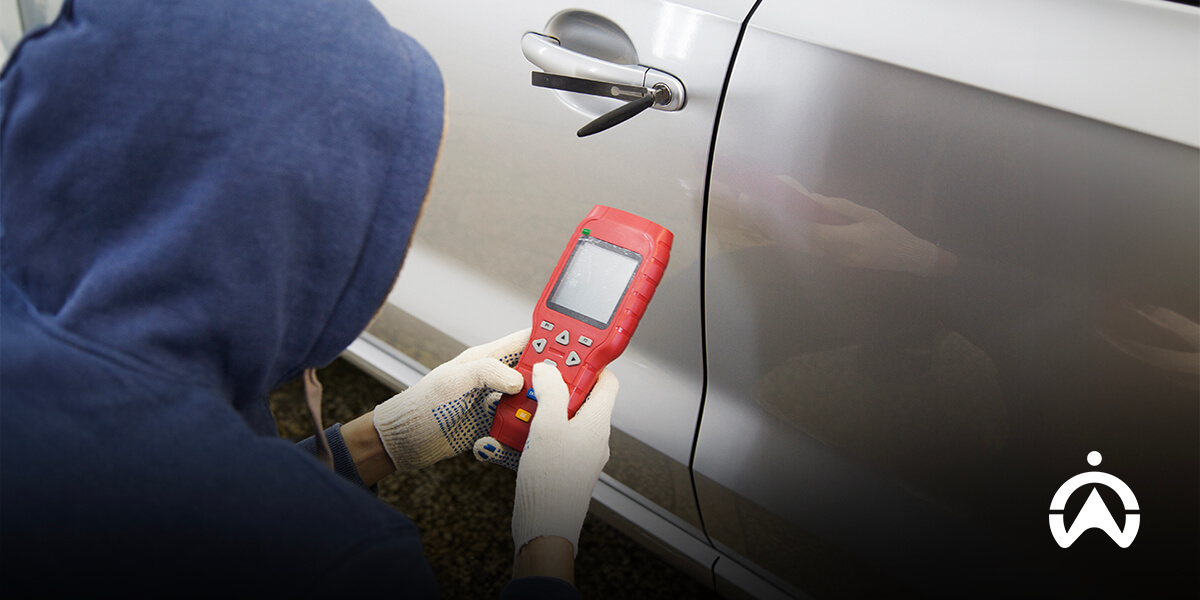
    – Faraday pouch: As mentioned above, keyless car theft is a thing nowadays. This is done through something called a relay attack. How it works is that they use two devices, one picks up the signal from your key fob which could even be 100 meters away, while the other device is used to trick your car into thinking the key is nearby. This can happen anywhere from mall parking lots to your own home.
    Two thieves need to be present for this to be properly executed, with one standing closer to your actual keys and the other close to the car. With that said, a Faraday pouch is your best bet at preventing that from happening as it blocks your key signal from being picked up.

  1. Get a GPS tracking unit
    You can count on a GPS tracking unit if the anti-theft devices fail. This GPS vehicle tracking technology is more advanced and ensures that you know where your vehicle is at all times by giving you live location visuals. A tracking unit such as Cartrack’s will not only help you notice quicker that your car is gone but also increase the chances of it being found.
  2. Park in well-lit areas
    Criminals avoid doing things in the light so by parking in a well-lit area, you’re lowering the chances of falling victim. When parking in a busy spot, choose spots that are closer to the security camera if there are any. When going to the mall, use the parking that is secure and paid for instead of just parking it outside.
  3. Don’t leave valuables in the car
    Take your phone, wallet and laptop with you at all times if possible then keep everything else that might be of value out of sight as these make criminals pay attention to your vehicle and they might take the chance. To avoid identity theft as well, make sure you also hide any paperwork that contains any of your personal details.
  4. Strengthen your driveway security
    Whether you park your car inside a garage or just outside in your yard, make sure the area has enough security features to scare away the thieves or make it easier to identify them. Install cameras in your driveway.
  5. Try not to go to high-risk areas
    The most common provinces for carjackings are Gauteng, KwaZulu Natal and the Western Cape. This makes sense as these are big cities that have a lot of people living in them. Now we are not saying don’t stay there but rather know the hijacking hotspots in your province so you can avoid driving there at night more especially.

Know the different vehicle theft tactics

As always, criminals are always finding ways to get your car, whether parked or on the move, here are a few hijacking tactics that you should be on the lookout for:

  • Police impersonation
    This is when the thieves dress up as policemen in order to make you, a law-abiding citizen, stop so they can rob you of your valuables and take your vehicles. There have even been incidents where victims were kidnapped, taken to the ATM and forced to withdraw money from their accounts. If you get stopped by an unmarked vehicle with blue lights or you suspect that you might be stopped by bogus police officers, do not stop, drive to the nearest police station or any busy area.
  • Placing objects on the road
    It could be spikes, rocks or pieces of clothing. Always be on the lookout for any objects on the road that will distract you and force you to stop. Once your vehicle comes to a standstill the thieves will be nearby, ready to take your vehicle, your phone or your money. Avoid driving after dark as this makes it easier to miss the signs.
  • Driveway hijacking
    So you’ve spent the entire day being vigilant on the road while driving and now that you’re home you finally relax? Don’t! Always be aware of your surroundings even when you’ve reached your driveway. Look out for cars nearby, make sure no one is following, and alternate your route home because what they’ll do is corner you while driving into the yard. Another thing you can do is to switch on your indicator two or three houses early as this might make them lose interest and pass you.
  • Tollgate/drive-thru
    This is when the perpetrators use their own vehicles to box you in while in the queue at a tollgate or drive-thru at a fast food restaurant. One car will be at the front and the other at the back. Now how can you avoid this? There’s not much you can do besides paying attention to who is following you.
  • The tap-tap method
    Once again, another way to lure you out of the car. This is when the thieves drive behind you and then slightly bump you, knowing very well that you’ll stop to assess the damage and take their details. The driver will talk to you for a, maybe apologise then boom, into your car they go.
Where the stolen vehicles end up

According to Sabinet African Journals, approximately 60% of stolen vehicles remain in South Africa – especially lower-value vehicles, then approximately 30% of stolen vehicles are taken across our borders – mainly luxury vehicles. Chop shops take the remaining 10% portion. Here’s a deeper look into all three categories:

Stripped and sold

It takes about 30 minutes to completely strip a vehicle and chop shops have an estimated value of about R442 million and there is a high demand for affordable, readily available vehicle parts on the black market. The parts are harder to trace and easier to conceal making them more profitable than reselling the whole vehicle. In an article by IOL, Miway spokesperson Siyakha Masiye told the news reporter that the most frequently stolen accessories include car wheels. wheel caps, car batteries, sound equipment, vehicle mirrors and headlights.

Cloned and sold

Vehicle cloning is when the stolen vehicle is presented as legitimate. At the beginning of this year, Top Auto reported that between 3000 and 5000 cases of cloning are reported each year. How this happens is that criminals copy the VIN of a car that is parked in a public location, take a picture of the license disc then take a standard vehicle registration document and edit it in a software program so the details in the document match their target vehicle. From there, they go to a local number plate manufacturer to print the cloned plate.

These cloned vehicles are then sold to innocent people who believe everything is legit. So when buying a used car, do a background check to avoid falling victim and losing the vehicle and your money once the police find out. Cloned vehicles are also used as a getaway for committing other serious crimes such as hijackings, kidnappings, and cash-in transits.

Out of the country? Where to?

If it’s not stripped or sold in the country then it goes to the black market abroad. Vehicles move from South Africa into the borders of neighbouring countries, mainly Mozambique, Botswana, Namibia, and Zimbabwe. Concrete fences have now been built in an effort to combat the crime but syndicates have started building makeshift bridges across solid fences because they are on a mission and the show must go on. Cars are seen crossing to the other side in broad daylight and it is said they can go from one country to the other and can get as far as Angola to the Democratic Republic of Congo.

Bonus – The 8th and most effective way to prevent your car from being stolen: Cartrack Tanzania

Driving around has become a dangerous sport, always having to watch over your shoulder and all, but luckily Cartrack is here for you. Here’s how:

  • Stolen vehicle recovery
    In the unfortunate event that your precious ride gets stolen, you can rest assured that our skilled air and ground team will be there to get it back to you. Cartrack has a 90% recovery rate, which proves that we will have your back when you need it the most.
  • Cross-border vehicle recovery
    If your vehicle gets stolen and taken out of the country, we will still have your back. Our GPS vehicle technology supports international roaming, allowing us to track your vehicle internationally.
  • Protector
    Our protector service gives a quick response to emergency services such as medical and roadside assistance. Just flick the button on your Cartrack mobile app, and a service agent will call you or your loved ones to understand and organise the kind of help you need.
  • CarWatch
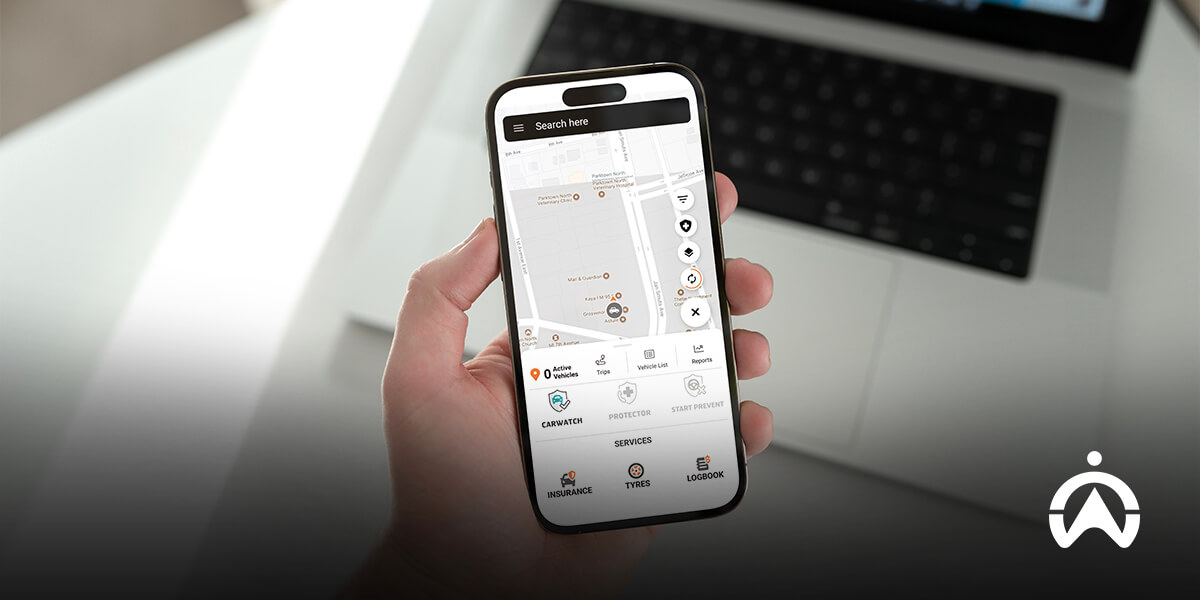
    All you have to do is go on your Cartrack on your mobile app after parking your car and you’ll get an alert if the car moves without your knowledge. This means you can go about your day worry-free knowing that you will find your car exactly where you left it.
  • Jamming Detection
    For the thieves who think they can outsmart our technology, Cartrack offers signal-jamming detection as a value-added product feature so we can still track the vehicle’s location even when the signal is blocked.
  • Insurance
    Some insurance companies do not cover vehicle replacement if you do not have a tracking device installed, so make sure you get that sorted out first then get insurance. Cartrack makes it quicker and easier for you by helping you find insurance best suited for your lifestyle. You can contact us and we’ll help you find what works for you.
  • Cartrack’s Road Vision camera solution
    Get a front-facing camera with GPS tracking technology installed into your vehicle so you can record every trip you make. This will help you document any accidents that you might encounter, plus it will scare away the thieves.
    You’ll have footage of them trying to steal your car so they can be easily identified. The footage can be easily accessed at any time on your Cartrack mobile app. But wait, there’s more—GPS technology allows you to see your vehicle’s live location at all times and you get reports of harsh driving behaviours such as speeding.
  • Limited Recovery Warranty*
    In the highly unlikely event that your vehicle is not found, you can claim up to R150 000 cash back payment for the replacement of your vehicle. *Ts&Cs apply.
Keep your eyes on the road while we keep ours on your ride

Although it’s important to always be aware of your surroundings, we know it’s easy to get distracted and let your guard down, and that’s why we are here.

Contact us today and have one less thing to worry about.
Are Car Trackers Worth the Money?

Imagine you’re driving a quiet scenic route to George: it’s green everywhere. The hills, the farms, the plants next to the road, all different shades of green. You’re so focused on admiring your surroundings that you miss one of the sharp turns the George Pass is so well known for.

The next moment, you’ve lost control of your car, and your coffee that turned cold hours ago is everywhere. Finally, you comes to a standstill, and you’re still alive! But, wait—no one knows where you are. There weren’t any cars behind you to witness your accident and offer help. If only your car had a tracker…

Compelling story, isn’t it, but are car trackers really worth the money? Let’s find out.

In this article, you will:

  • Find out what a car tracker is
  • Get a better understanding of why you need a car tracker
  • Get an idea of what your options are if you do not want a car tracker
  • See the benefits of having a Cartrack unit
  • Read a case study on how Cartrack helped Calgan Recliners save fuel

Are car trackers worth the money? Let’s start by looking at what a car tracker is

A car tracker is a small GPS telematics device used to monitor your vehicle’s location in real time. In other words, if you forget where you parked your car in the maze called the mall parking lot, don’t worry about it—you can use your vehicle’s tracking unit to locate your car.

A telematics tracking device can also be used to track your vehicle’s telematics data such as whether the ignition is turned on/off, and whether the driver committed any harsh driving offences such as speeding or sharp cornering.

Why you need a tracker in your car

Having a tracker in your vehicle poses a great number of benefits, and some of these include:

  1. Preventing your vehicle from falling victim to car thieves:
    A total of 5,937 carjackings took place from October to December 2023 according to the 2023/2024 third quarter report. A GPS tracker can stop thieves in their tracks because it can be integrated with other vehicle safety measures such as alarms that blare when your vehicle is being tampered with.
  1. Increased chance of recovering your vehicle:
    When our vehicles get stolen we all go through the 7 steps of grief:
  • Shock: “My car. My Sweet Suzi (the name of your car in this scenario) was just here. 10 minutes ago Sweet Suzi was just here. Where is she?”
  • Denial: “No no no. My car is not stolen. I just forgot where I parked (*starts turning in maddening circles trying to locate Sweet Suzi*).”
  • Pain: “My favourite sweater was in my car. And my brand new Stanley Cup. My brand new expensive Stanley Cup.”
  • Anger and bargaining: “When I find the guy who stole my Sweet S…”
  • Depression: “I’m never getting Sweet Suzi back again. Ever.”
  • Reconstruction: “It’s okay if I don’t get Sweet Suzi back again. And it’s okay if I tear up every time I see a beat-up white Suzuki Swift.”
  • Acceptance and hope: “I lost Sweet Suzi but I can still get her back.”

Your chances of getting your vehicle back once it has been stolen are much higher when it has a car tracker installed. The reason for this is that the recovery team, whether it’s the police or a tracking company’s recovery team, can use the GPS function of the tracker to locate your vehicle and retrieve it. So, you never have to worry about never driving Sweet Suzi again.

  1. Increase your safety:
    Have you ever driven down a secluded road and thought, “If I get into an accident right now, I will surely not make it because there’s no one around.” Your chances of being safe can increase exponentially when you have a vehicle tracker.
    The reason for this is that most trackers have telematics functions that can detect when your vehicle abruptly stops or collides with something. In instances like these, the system can contact you, your emergency contact and emergency services to provide you with immediate assistance.
  1. Keep an eye on your loved ones’ safety with real-time vehicle location monitoring: Traveling or moving to a new city can be quite daunting and your loved ones often worry about your safety. To give them peace of mind, you can share your live location and even create geofences to notify them when you’ve reached a specific location.
  2. Lower your vehicle insurance premiums:
    Your vehicle insurance premiums can drop like a penny down a well when you have a car tracker. Insurance companies oftentimes offer discounts for members who have car trackers because it reduces the chances of their vehicles being stolen, and if it does get stolen, the recovery rate is much higher.
  1. Your vehicle’s fuel efficiency at its best:
    We all know that we have a couple of… shortcomings… when it comes to driving, whether that is driving, by pure accident of course, 160km/h in the 120km/h lane or driving 40km/h in the 100km/h, or imagining we’re Usain Bolt, and zooming between the lanes by revving and braking at neck break speeds. We all have our habits. Which isn’t always good for our fuel efficiency. A car tracker’s telematics unit can gather the data to show what our individual shortcomings are, allowing us to work on improving those habits so that we can get the most out of our fuel per month.

You have other options when you don’t want to use a car tracker… at your own risk

In the instance that you wish not to get a car tracker, which we don’t recommend, you have other options at your disposal when keeping yourself and your vehicle safe:

  • Car guards can keep an eye on your car: There is at least one car guard at any shopping centre, store or office. However, let’s look at it from their perspective: they offer their services on the premise that they aren’t going to get paid because most of the time they aren’t. And if they are, it’s not a lot. They also don’t get the necessary training of have the tools to defend your vehicle when it gets stolen. Is it your best option? You decide.
  • Neighbourhood watch can do patrols: Another alternative to using a car tracker is neighbourhood watches. You and the people in your street can create shifts to drive around the neighbourhood at night to ensure that no one tries to steal the vehicles that are not securely parked. However, your car will not always be in the vicinity of your neighborhood watch patrol, and these patrol officers are often fatigued unalert as they have to stay up into the early morning hours.
  • Parking your vehicle in a secure location: You can park your vehicle in a gated area however that’s not always an option as not all stores or complexes have gated parking lots.
  • Use your cellular device’s GPS tracking: You can also use the GPS function on your mobile phone while you are in the vehicle; however, if you get out of your vehicle, it will no longer have a GPS tool to track it if it gets stolen.

Why choose Cartrack Tanzania as your tracking partner?

  1. Location tracker: Our tracking devices monitor your vehicle’s location in real-time and show data such as whether it’s, driving, idling, or turned off. This will allow you to have the peace of mind in knowing that the moment your vehicle gets stolen or you get hijacked we can see your live location and send out a team to find you and your vehicle.
  2. Stolen Vehicle Recovery (SVR): Cartrack’s specialised Stolen Vehicle Recovery teams use the GPS tracker in your vehicle to locate it and recover it as quickly as possible. It’s also reassuring to know that our stolen recovery rate has been holding a steady position of over 90% for several years now.
  3. Limited Recovery Warranty*: In the event that your vehicle gets stolen, and Cartrack is unable to recover it, you can claim up to R150 000 from us. This option does however come with *Ts&Cs.
  4. Risk alerts: You can get alerts on your mobile app when your vehicle is about to enter a high-risk area for instances such as popular hijacking zones. This can give you the option of not entering the area or being extra vigilant when you do decide to enter the area.
  5. CarWatch: You can get a personal digital car guard that notifies you when your vehicle moves without your knowledge and/or authorisation.

Case study: A baby, a stolen vehicle, and the relief of having a Cartrack

Alicia Lamprecht was visiting with one of her friends in Observatory (residential area in Johannesburg) when her car was stolen with her baby still in the back seat. Luckily, she has a tracking unit in her vehicle and was able to monitor the location of her vehicle in real-time on her Cartrack mobile app while she got in contact with Cartrack’s control room. With the help of Cartrack’s SVR team, they were able to find her vehicle but her baby was not in it anymore. Luckily, the vehicle’s location gave them a starting point to search for her baby.

Still wondering if car trackers are worth the money? Don’t wait for your most precious possession to get stolen to find out you need one! Contact us today and keep them safe with Cartrack Tanzania.

Frequently Asked Questions about Car Trackers

  • Is it worth putting a tracker to my car?
    Yes, it is worth getting a tracker in your vehicle. Having a tracker in your vehicle has various benefits such as a higher rate of vehicle recovery if your vehicle gets stolen, lower insurance premiums per month, and being able to see your vehicle’s telematic data which can help you lower your fuel costs per month.
  • Which car tracker is best in South Africa?
    There are a couple of really good car trackers in South Africa at the moment. But the best fit for you will depend on your needs. Cartrack’s telematics unitis designed to fit most makes and models, old and new, and offers an extensive range of tracking, recovery, and safety services.
  • Is it important to have a car tracker?
    Having a car tracker in your vehicle can be important. Especially with the rising vehicle theft statistics in South Africa, having a tracker in your car can help recover your vehicle if it gets stolen.

Truck Maintenance: How to Service a Truck

Truck service is the robust backbone for a healthy and long-living truck fleet! For this reason, placing it high on your to-do list while educating yourself on the “whats” and “hows” of taking care of your fleet is a good idea.

According to a press release by the American Truck Association, the 2022 freight cost in the United States of America (USA) consisted of 80.7% trucking, or $940.8 billion in revenue, with a clear sign of trucks taking charge when it comes to providing various goods and services worldwide.

Truck service is thus the ultimate bedrock for long-lasting vehicles and driver safety, and ignoring it can have severe consequences.

However, solutions lie around the corner – let’s take a peek.

In this article, you will:

  • Discover the negative consequences of ignoring truck service
  • Distinguish between truck service and maintenance
  • Discover the negative consequences of ignoring truck maintenance
  • Uncover the different types of truck maintenance
  • Learn about what maintenance needs to be done to a truck
  • Discover more about Cartrack’s fleet maintenance and service solutions

How to service a truck: a guide to minor and major services

To service a truck, you usually respond to what is wrong with your vehicle or fleet at that moment and determine what needs fixing. Service is not regular or scheduled but somewhat responsive. However, if you choose, you can receive general services, which fall under minor and major services.

Let’s find out more about the two to gain a deeper understanding.

Minor services include:

  • Oil and filter changes
  • Brake pad inspection
  • Fan belt inspection
  • Checking the clutch fluid
  • Checking tyre pressure

Major services include:

  • Full vehicle inspection
  • Replacing brake pads, or spark plugs if needed
  • Inspecting the speedometer or brake leaks if needed
  • Cleaning general components

The cost of ignoring truck service

Each minor and major truck service is an important milestone for your fleet’s health. Here’s what happens if you don’t service your trucks when you should.

Decreased reliability and longevity

When you service your truck, you get a healthy engine. This, in turn, increases the engine’s and the truck’s lifespan. Failing to do so will lead to a damaged engine with a limited lifespan.

Reduced Safety and security

Service focuses on all parts of a vehicle, all of which play an important role in the overall functioning of the truck system. Establishing that all these parts are in order leads to a secure truck without any unforeseen risks of failure.

Loss of costs, business, and clients

While servicing your truck, especially on a recommended regular basis, can be costly, it is an investment that will save you significant money in the long term. Neglecting to service your truck will increase the likelihood of issues and problems, shorten the truck’s lifespan, and drain your pocket.

Servicing also increases fuel efficiency, which helps save some extra cash.

An introduction to truck maintenance

Truck maintenance is the consistent and regular caretaking of your truck or fleet for various basic issues, such as checking oil or brakes. This goes hand in hand with service, but definite differences distinguish them from one another.

The difference between truck maintenance and truck service

The most straightforward way to tell the difference between maintenance and service is that maintenance is a broad approach to caring for your vehicle or truck, while service is a more specific approach to vehicle upkeep.

While maintenance and service can include similar methods of taking care of trucks, such as checking oil and brake inspection, maintenance implements this on a more regular basis. In contrast, services occur only on an as-needed basis.

Maintenance involves a regular schedule that consistently focuses on what vehicles need. This includes inspections, filter or oil changes, and checking tyre pressure. Service is not a consistent approach but a particular, targeted one. Service is sometimes only implemented when something is especially wrong with a truck or vehicle—fixing headlights or tending to engine damage are two examples.

Both are incredibly important. Maintenance ensures a long vehicle lifespan. Services are always available if a vehicle or truck faces more particular problems—usually due to maintenance neglect.

In its 2014 document, “Better Truck Maintenance,” The Abu Dhabi Department of Transport stressed the importance of truck maintenance. The document stated, “A planned safety inspection and maintenance system aimed at meeting the annual test standard at all times will improve truck operating standards, reduce truck accidents, and, as a result, improve road safety.”

The cost of ignoring truck maintenance

Truck Maintenance shares points of negative consequences when you do not approach them seriously, but they show up in completely different ways.

Decreased reliability and longevity

Constant and planned maintenance increases truck reliability and lifespan and ensures that many of the vehicle’s parts are in consistently good health. Neglecting maintenance and steering from the consistency of a schedule will cause quick deterioration and increased vehicle downtime that negatively affects your fleet’s efficiency.

Reduced Safety and security

Rules and regulations are there for a reason. From the state of your vehicle lights to flat tyres, brake problems, and many other issues,theselaws ensure that your truck is roadworthy—ensuring your safety and that of other road users.

It is easy to predict that if you do not follow these regulations and rules, you might end up in a world of trouble, having hurt yourself and, worse, others.

Loss of costs, business, and clients

Delays cost businesses. Companies need to implement a maintenance plan to avoid unnecessarily losing profits. Beyond profit loss, it can affect your business’s productivity. This leaves customers disgruntled or no longer desire to purchase your services or products–Ouch!

The different types of truck maintenance

There are many types of truck maintenance, each with a different role. Learning about the “whats” and “hows” of these maintenance types will help us understand them deeply.

These factors will also influence how you, your team, or professionals approach your own “how-to” method.

For this reason, placing them high on your to-do list while educating yourself on the “whats” and “hows” of taking care of your fleet is a good idea.

They include corrective maintenance, preventive maintenance, condition-based maintenance, predictive maintenance, and proactive maintenance.

Corrective maintenance

Corrective maintenance is implemented after an issue or breakage has already happened. It is also sometimes referred to as “reactive maintenance.”

Preventive maintenance

Prevention is always better than cure—this is the exact concept that preventive maintenance is based on. This well-known principle applies to maintenance as well as medicine. Preventive maintenance allows for early identification of issues so they do not snowball into unmanageable crises.

We have many solutions and systems geared toward preventive maintenance, such as risk reports. These reports on our fleet management app note harsh driver behaviour, such as speeding or harsh braking. This prevents possible future vehicle damage and threats to driver safety.

Condition-based maintenance

Condition-based maintenance is different in that it rids the need for scheduled maintenance. Instead, using collected information, it predicts when trucks will require maintenance and what kind of maintenance they need.

Predictive maintenance

Predictive maintenance combines data with prediction models to understand, diagnose, and tackle possible fleet-related complications awaiting on the horizon.

Using our application’s Dashboard can help you tackle future problems. Compare different data from your fleet of trucks over your chosen period–this will help you track and tackle multiple issues.

You can choose three out of these empowering seven options to source data from:

Proactive maintenance

Proactive maintenance will use information, analytics, and data to understand specific future problems. This will allow it to apply preemptive solutions that focus on fundamental issues.

What maintenance needs to be done on a truck?

Now that we understand the basics of maintenance and service, we can finally learn how to take care of trucks. This topic is all but simple – so here is an easy-to-reference-starter-pack list:

  • A regular schedule: Businesses or truck owners should maintain a regular truck maintenance schedule. Consistency is key!
  • Oil checking: Regular oil checks safeguard all vehicles, including truck engines. If you don’t consistently do this, engine failure lurks around the corner–no one wants that.
  • Keep on the pulse: Keeping up to date with what and when maintenance has been performed is a great way to ensure that your trucks are getting the tender care they need and deserve.

Using Cartrack’s application, you can access the MiFleet option. Using this solution, you can keep track of and download maintenance reports over your chosen period.

  • Tyre maintenance: Regular tyre upkeep ensures that trucks run smoothly and promptly. MiFleet can also keep track of tyre operations. It sends the relevant person or business a report of these operations. These reports outline the information according to the person or company’s chosen timeframe.
  • Inspecting brakes: Overlooking brake inspection will lead to nothing but regret, especially if they stop working mid-journey and you’re stuck in the land of nowhere.
  • Battery health: A working and healthy battery is vital for a functioning and reliable vehicle.
  • Air filtration: A clogged air filter reduces power, while a well-functioning one contributes to a smooth-running engine. Ensure that you schedule regular air filtration cleanings.
  • Exterior lighting: Exterior lighting secures your safety and that of other road users. Make sure to replace any exterior lighting that is not working.
  • Clutch and gearbox: The clutch and gearbox are used regularly on the road and should be inspected.
  • Listen to the professionals: Invest in a professional, such as a repair shop or an experienced, hands-on engineer. If this is impossible, do not stray from the owner’s manual.

The importance of professional assistance

It is easy to look at trucks in isolation and how they affect those closely connected to them. From negative profits to driver safety, these close-to-home considerations are crucial. However, in the broader society, from shops that buy in bulk to consumers who need their vital goods and services, there is a chain reaction to companies neglecting their fleets’ health, with more reaching consequences.

This is why companies, big or small, should consider investing in professional services instead of maintaining and servicing trucks manually.

Get the best fleet maintenance and service solutions with Cartrack Tanzania

If you’re looking for professional assistance, Cartrack Tanzania provides an all-in-one solution for all your maintenance needs.

Maintenance and service solutions

Our maintenance services offer many benefits, such as automated scheduling, a reduction in waste-of-time downtime, and pre-trip inspections. They also include updated maintenance logs, service management, and less money spent on overall maintenance.

Let’s discover the details:

  • Maintenance logs: By recording digitalisation, you consistently document maintenance-related tasks for records and reference purposes, so accurate data is available whenever you need it. Service management is another type of maintenance logging that allows you to track whether your vehicles or trucks are en route to being serviced.
  • Real-time engine diagnostics: Cartrack’s vehicle diagnostic tools are CANBus-powered. CANBus allows all your vehicle’s parts to transmit and, in a sense, “talk” with one another. These communications between parts can then diagnose engine issues, helping you to react before damage becomes too extensive and costly.
  • Preventive maintenance: Preventative maintenance alerts let you know proactively when you need to take your vehicle in for maintenance or service. These alerts are triggered based on the vehicle’s odometer readings, which show when the next service is due based on the kilometers travelled or recent service dates provided on maintenance logs.
  • Vehicle inspection checklists: Use our Field Service/Delivery App to create pre-trip or vehicle inspection checklists based on your fleet and business’s unique needs.

Keep your fleet’s health on track with Cartrack Tanzania

From service and maintenance to security and driver safety, Cartrack cares about your fleet’s longevity from all angles. Take control of your fleet’s health—contact Cartrack Tanzania today.

Your pressing questions answered

Q1. What maintenance needs to be done on a diesel truck?

Filters are a significant issue for the health of a diesel truck. Therefore, filthy filters are a massive maintenance no-no. Fuel filter change is paramount and highly emphasised in diesel truck maintenance.

Frequent oil and air filter changes, as well as coolants, are also vital.

Q2. How do you keep a diesel engine healthy?

In line with general diesel truck maintenance, dirty fuel filters should not exist, so changing fuel filters is a must. You should also clean your engine regularly, replace oil when needed, and keep an eye on your air filter.

Q3. What is basic maintenance for a semi-truck?

Temperature and weather are core to how you approach semi truck maintenance, with differing atmospheres calling for different specifics.

For example, warm weather calls for inspecting the air conditioner. The electrical system should be checked for corrosion, and the wires should be secure. Keeping an eye on the tyre pressure is also very important. During the heat, it is also essential to have an annual flush, pressure test, and draining of the coolant.

Q4. How long is the useful life of a truck?

The lifespan of trucks depends on the model and type and, of course, how well they are maintained. For the most part, the average truck will last up to or slightly over a decade.

With Cartrack Tanzania, our various solutions will propel your truck or fleet’s lifespan to its ultimate limit. Contact us today to discover your fleet’s fountain of youth.

Tracking Devices: The One for All

There are many different kinds of tracking devices, each serving a significant function. These smart technologies are everywhere, and a common factor is how they make our lives easier.

Cartrack offers vehicle and asset tracking for various industries such as transportation, construction and agriculture. Let’s look at how this interesting technology works.

In this article, you will:

  • Understand what a tracking device is
  • See the different kinds of tracking devices and their functions
  • Learn how an IoT device connects with other devices
  • Find out how Cartrack solutions cater to your tracking needs

What is a tracking device, and what does it do?

A tracking device is exactly what the name says: an electronic device that helps you monitor the location of an object or person. There are many different types of tracking technology, all depending on what you need them for.

Knowledge is power: understand the different types of tracking technology

To help you understand the different types of tracking technology and how each one works, here are some examples of the most commonly used tracking systems:

  • Radio Frequency Identification: Also known as RFID, this is an asset-tracking technology that uses radio waves to track assets equipped with tags. It requires three main components to work: a reader, an antenna and a tag. The tag is connected to the antenna, which sends and receives radio signals from the reader.
    This sort of device is used in various industries such as retail, manufacturing, and healthcare for inventory management or access control. In the fleet management industry, RFID technology is used for driver identification.
  • Near-field communication: This one has turned many shopaholics because you don’t have to think twice. All you need to do is tap your phone or credit card, and voila, payment is done! NRC technology is another form of RFID and is found on most smartphones. Over the years, this has become very popular due to the modern-day demand for contactless payment systems. This sort of technology only works when devices are in very close proximity to each other.
  • Barcode: This is an easy and effective way for businesses to track data related to inventory or physical assets. All that’s needed is a barcode label and a reader. It enhances the accuracy of the inventory management process and is a must-have for last-mile deliveries or tracking shipments.
  • WiFi: Wi-Fi-based asset tracking uses an existing Wi-Fi network to track the location of vehicles or equipment that are indoors or frequently travel in and outdoors, where signals may have trouble passing through. Examples are refrigerated trucks and warehouse inventory.
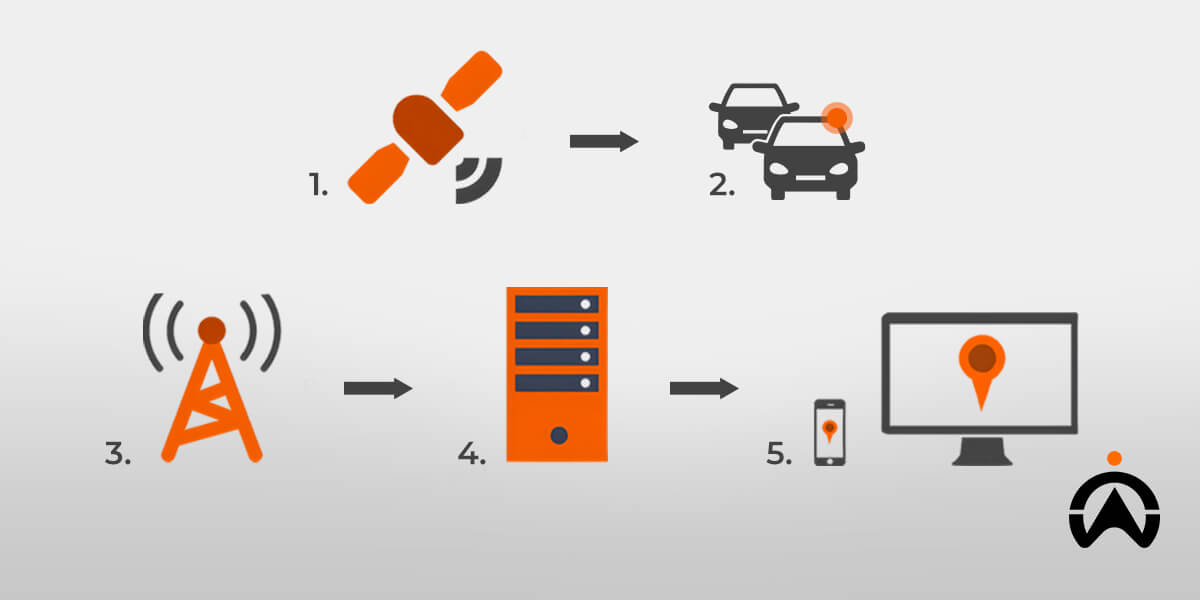
  • GPS tracking: Short for Global Positioning System, GPS is one of the most well-known and widely-used forms of tracking technology. It is a constellation of 31 satellites orbiting the Earth, with each satellite emitting signals that enable receivers, through a combination of signals from at least four satellites, to determine time and location. GPS technology is used on cell phones and other devices for navigation but has many other benefits such as the real-time location of vehicles and other assets such as a generator.
  • Geofence: Geofencing is based on either GPS or RFID systems. The only difference is that it does not consistently report location data but rather uses location data to set up invisible boundaries in an actual geographical area. When an object moves into or out of the virtual fence, a violation is reported through a transmitter.
    This kind of technology can be used to mark no-go areas, or you can put it around the workplace to let people know when vehicles enter or leave the building.
  • Cellular: This particular system can work with GPS but mostly relies on the presence of cellular towers to transmit location and asset information. Although not as effective as GPS, the system takes advantage of existing cell towers, which can be helpful for fleet management and equipment monitoring in remote areas.
  • Bluetooth Low Energy (BLE): A Bluetooth low asset tracker is a wireless solution that combines location accuracy and effective battery usage. BLE tags or beacons are attached to assets and Bluetooth-enabled devices like smartphones or getaways to give real-time updates on the location of equipment that is used. It helps track equipment within a restricted distance, typically reaching a maximum of 100 meters, which can be found in the construction and agricultural industries.

The IoT device, or should we call it the One-For-All?

Imagine some of the powerful tracking systems mentioned above working with one unit to give you the best accuracy on the location of your vehicles and equipment, as well as data that will help you make better decisions. You don’t have to imagine, actually, because that’s basically what an IoT device does.

Formally known as the Internet of Things, IoT devices are specialised hardware such as sensors, actuators, and appliances that connect to wireless networks to collect and exchange data. They access the Internet via a physical area network such as Wi-Fi, Bluetooth, GPS or cellular connectivity and can be installed in vehicles or assets for every major industry.

Tracking device solutions and equipment for individuals and fleets—the Cartrack way

Now that you know how all these devices work, here’s how Cartrack uses them to simplify your daily work and home routines:

  • Stolen Vehicle Recovery:
    Cartrack has a recovery rate of more than 90% and over 2 million subscribers, so you can rest assured that our tracking unit will give your vehicle the security it needs. Our highly-trained air and ground recovery team is always on standby, ready to return what’s rightfully yours.
  • CarWatch:
    As an extra layer of security, you can switch on CarWatch on your mobile app right after you’ve parked your car. You’ll be alerted if it moves. Think of it as your virtual car guard.
  • Protector:
    Vehicle tracking technology does not just end up finding your car when it has been stolen. Sometimes, you just need other services like roadside or medical assistance. At the push of a button on your Cartrack mobile app or website, a call centre agent will contact you immediately and get you the assistance you need.
  • Geofence:
    Using Cartrack’s geofencing feature, you can set virtual fences around areas of your choice. This feature alerts you whenever your vehicle enters or exits the area and works not only for vehicles but also for other equipment fitted with tracking devices. If your machinery suddenly grows feet and “walks out” of the geofenced premises, you’ll get an alert, too.
  • Asset tracking:
    Know where exactly your equipment is at all times using Cartrack’s asset track feature. With this feature, you will receive real-time alerts whenever a fault code is set off or when your machinery needs servicing.
  • Temperature monitoring:
    Keep your refrigerated cargo fresh with our temperature monitoring solutions. These sensors give you immediate alerts when temperature changes in refrigerated trucks or trailers so that cargo such as food and pharmaceuticals can reach its destination in perfect condition.
  • Driver ID tags:
    Cartrack’s DID tags use RFID technology to help you immediately identify who drove which vehicle. You can ensure only authorised operators use your machinery, or only authorised drivers use those particular vehicles. This feature also allows you to monitor driving habits so you can see who needs more coaching.
  • Delivery:
    Our delivery software helps streamline operations for you and your drivers. It allows you to find the best order to complete tasks to reduce fuel expenses and track delivery progress in real time. Customers are also notified of any changes that might occur.

Trust the industry leaders of tracking technology—trust Cartrack

We could go on and on about the many benefits of tracking technology because, with Cartrack, the list is endless. Just contact us to find out more.

Let’s answer some FAQs

  • Which one is the best tracker in South Africa?
    Cartrack holds the highest trust rating on Hello Peter among all tracking companies in South Africa. With an outstanding stolen vehicle recovery rate of over 90%, Cartrack proudly holds the highest SVR rating in South Africa.
  • Where can I find tracking devices on cars?
    For safety reasons, the location of a tracking device is never disclosed, not even to the person driving.
  • How much does it cost to have a tracker fitted to your car?
    A Cartrack device costs as little as R99 per month and comes with free installation.

Stay on track with Cartrack. Contact us today.

Driver ID Tags: Be in Complete Control of Your Drivers and Your Fleet

Keeping up with who’s driving which vehicle can be quite the challenge, especially for a large fleet. Drivers sometimes forget to manually sign in for the vehicle they’ve used on that day, and if anything happens, you might not know who did it, which is why driver identification plays a crucial role in fleet management.

A driver ID tag simplifies the process and puts you in control of every vehicle. Cartrack Tanzania specialises in automatic vehicle and driver identification, so let’s get into the nitty-gritty of driver ID tags.

In this article, you will:

  • Find out how DID tags work
  • Learn about three different types of Cartrack DID tags
  • Discover the 7 benefits of driver identification
  • See how DID tags form part of a driver monitoring system

Get to know driver identification tags – the what, why, and how

A driver identification (DID) tag is a key-ring-sized tag that is used in conjunction with the ignition key. It serves as an extra layer of protection and makes it easier for you to know who is on duty, who is driving which car and for how long. Look at it as an access card for drivers. If the vehicle is used without a tag, it can be flagged as potential theft. DID tags are essential for fleet management businesses in cold chain and logistics, the construction industry, and the transportation industry.

How do the tags work?

Driver ID tags use Radio-frequency identification (RFID) technology. This is a wireless communication that comprises three components: a reader, an antenna and a tag. The reader is connected to the antenna and transmits radio signals to the tag with added information. The tag also works in conjunction with GPS tracking technology to help monitor your drivers while on the road.

Cartrack’s advanced DID tag solutions

Introducing the three Cartrack driver identification features, specially tailored for your needs:

1. Driver ID
This helps you automatically identify drivers and vehicles using the driver’s identification number. If something ever goes wrong, this tag will be very useful. Drivers can also be assigned two tags, one for work and another for personal use. You can pull out a tag report to keep track of who was driving which car and when.

2. Driver ID start prevent

Eliminate unauthorised vehicle usage with Cartrack’s DID Start Prevent. With this, the tag assigned to the driver will be linked to the start inhibit, meaning the ignition will not go on unless there is a tag. This is ideal in industries such as mining and construction because there is equipment that needs to be protected and accounted for.

3. DID with configuration

This DID tag is configured for a specific vehicle to prevent others from using it. How is this any different from the rest? Well, let’s say you have some abnormal load trucks in your fleet. Not all drivers are qualified to drive trucks of that nature, so you need to control who gets access to them. It’s not easy to remember which driver has the correct license, but with a configured DID tag, you can ensure the tags only work on specific vehicle models. They are assigned to the drivers with licenses that qualify.

7 awesome benefits of a DID tag

These tags are made for your convenience and come with many benefits, such as:

  • Driver assignment control: Only authorised drivers will be allowed to use the vehicle. If the driver is not recognised, you will receive an alert.
  • Reduced admin and fraud: No time will be wasted manually recording who came to work and who didn’t, and handwritten timesheets become a thing of the past, eliminating fraudulent entries.
  • Driver accountability: Any careless driving will be quickly identifiable and tied to the correct driver; this will make it easier to conduct an investigation or correct the behaviour.
  • Route planning: This helps you ensure that drivers are using the most fuel-efficient routes through the information given in the reports.
  • Compliance: Driver ID tags help you monitor working hours through automated log reports so you can ensure drivers comply with working time limitations and get enough rest.
  • Less vehicle misuse: The driver can log the trip as business or private use, and because it works hand in hand with GPS technology, you will be able to see if that indeed was a scheduled trip. Furthermore, if drivers know they are being watched it limits the careless driving that leads to fuel wastage and road accidents.
  • Improves driver behaviour: Through driver reports, you will see where drivers need to improve, and that will gradually bring about a change in driving habits.

Enhance your driver identification game with Cartrack Tanzania

Cartrack Tanzania provides driver monitoring solutions that all work together for the safety of your fleet. Here are two other features that work hand-in-hand with our driver ID tags:

  • Driver Scorecards
    Telematics makes everything possible. Our driver scorecards monitor any high-risk behaviour, such as speeding or harsh cornering. Each driver will get a rating, which will help you identify areas for improvement and provide the opportunity to coach the drivers to improve their driving habits.
  • Driver Reports
    Get driver ID tag assignment reports that show drivers and the tags assigned to them. You can also access business, private or weekend trip reports which show you the start and end details of each trip, helping you keep track of driver working hours as well.
  • Driver Coaching
    Enhance safety and reduce risks by training drivers based on reports. This also increases productivity and boosts savings due to fewer accidents, fuel-efficient driving techniques and reduced maintenance costs.
  • Advanced Driver Assistance System (ADAS)
    ADAS uses camera-based sensors, intelligent algorithms, and AI technology to enhance driver awareness and, therefore, increase driver and vehicle safety. This system alerts drivers of blindspots and gives forward collision warnings.

Get to know your drivers better through Cartrack’s fleet management solutions

We make running a fleet less strenuous and help you build a reputable business while saving costs using innovative driver monitoring solutions such as the driver ID tag. Contact us today.

Any other questions? Well, let’s get you sorted.

Take a look at these frequently asked questions about DID tags.

  • Do driver ID tags monitor driver behaviour like speeding or harsh braking?
    Yes, driver ID tags assist managers in monitoring events such as harsh braking and speeding, making it easier for them to identify who was driving and allowing drivers to take accountability.
  • How can driver ID tags be used to incentivise safe driving habits?
    Drivers can get ratings based on the frequency of harsh events, and those showing improvement by getting high ratings can get rewarded. This also helps increase driver buy-in.
  • How easy are driver ID tags to install and use?
    The driver RFID reader is installed in the dashboard and connects to the GPS unit. When the driver enters the vehicle, he/she will touch their ID tag to the face of the reader. The installation process is simple, and drivers are quick to understand how to use it as it is straightforward.
  • Can driver ID tags help improve fuel efficiency?
    Yes. Fleet managers will get reports on route deviations and fuel-draining habits such as harsh braking and cornering, allowing them to coach each individual on how to improve and, therefore, save fuel.

Get the visibility your business deserves with Cartrack’s DID tags

Don’t miss out on smart driver monitoring solutions. Contact Cartrack today!

What is Driver Coaching? Get All the Insights on How To Boost Your Drivers

Fleet managers put their trust in their drivers but still need to keep an eye on driving habits in order to avoid fuel drainage, high repair costs or even fatalities. With the right coaching, better driving habits can be achieved, but the question is: What’s the best way to train drivers to improve your quality of service?

Let’s have a look at driver coaching.

In this article, you will:

  • Understand the importance of driver coaching
  • Discover the four main reasons why you need a driver coaching system
  • Learn about the consequences of bad driving habits
  • Get tips for effective driver coaching
  • Find out how Cartrack makes driver coaching easier for you

Driver coaching explained: What is it?

Driver coaching is the process of teaching and engaging with fleet drivers to improve their behaviour over time and enhance safety on the road. It is aimed at saving costs and increasing productivity.

Why driver coaching can be challenging

Drivers come with diverse skills; some are experienced, and others are at a beginner level. For example, a new driver might require an in-depth explanation of compliance and regulations, while an experienced driver will probably just need refresher training on advanced defensive driving. This means that the feedback needs to be tailored to each driver’s unique needs, but unfortunately, fleet managers and safety managers do not have time to engage with every single driver due to their ever-so-busy schedules, especially when running a large fleet.

Fleet managers can’t correct what they can’t see. They don’t exactly know what activities drivers get up to on the road, and that makes it difficult to notice patterns or pinpoint the real reason why fuel doesn’t last, why the driver ended up in an accident, or why vehicle parts always need repairing or replacement. Without data analytics from afleet management system, coaching doesn’t work.

4 consequences of bad driver behaviour on fleet businesses you need to know about

Here’s how problematic driving can cause serious profit drainage:

1. Fuel wastage

Fuel amounts to most of the budget for running a fleet and gets worse when not monitored. These are some of the driving habits that can dramatically increase fuel consumption:

  • Sudden braking: This usually happens when the driver does not keep a safe distance during traffic or is distracted. It uses more fuel because the vehicle’s transmission shifts to a lower gear to regain momentum.
  • Long periods of idling: According to North Carolina Environmental Quality, idling for 10 seconds uses more fuel than turning the engine off and restarting it. Idling also damages vehicle parts and causes pollution.
  • Speeding: A higher speed requires more power from the engine to overcome the drag from wind resistance, tyres, and transmission, which, therefore, burns more fuel.

2. Maintenance

Careless driving habits put a strain on the vehicle and shorten its lifespan due to the constant wear and tear. Here are some examples of careless driving habits that can cause maintenance issues:

  • Revving a cold engine: Usually done on cold winter mornings when you’re running late and need to get going, excessive revving puts strain on the engine before the oil has had a chance to circulate properly, increasing wear and tear.
  • Coasting: Keeping your foot on the clutch is called coasting and wears down the pressure plate and bearing before the expected time.
  • Ignoring warning signs: Drivers need to familiarise themselves with symbols on the dashboard so they know when to stop and take action to prevent further damage or a breakdown. If you see any warning lights relating to the engine, braking, airbag, oil pressure or tyre pressure, then you should pull over and request help immediately.

3. Safety concerns

This is important and more obvious. Reckless driving is one of the leading causes of road accidents. Drivers are responsible not only for their own safety but also for the safety of others. One small distraction or higher speed may cause a huge collision, end lives, and result in major lawsuits or jail time for the driver. This can also cause revenue loss due to unexpected downtime, repairs, and replacements.

4. A bad company rep

The purpose of the “How’s My Driving” sticker at the back of a truck or car belonging to a fleet business is to promote safe driving, which is another good way to monitor driver behaviour. If your drivers are not coached, they stand a chance of always being reported, damaging the company brand as it will be known for bad driving. This becomes more of an issue once more people notice, the word spreads, and clients start to avoid associating themselves with your fleet business. It gets even worse once drivers are caught in accidents, and it’s the same company that comes up.

Tips for effective driver coaching

Driver coaching plays a huge role in the overall business’s revenue, empowers the drivers, and helps them grow their skills. Your approach to doing so is very important; here are a few tips for successful coaching:

  1. Get a driver monitoring system: Telematics eliminates the gap by providing you with real-time data regarding your fleet. This allows you to track driver routes and monitor problematic driver behaviour.
  2. Build rapport with your drivers: Have a positive approach to each session, greet each driver, treat them with respect, ask how the day is going and how the family is doing and let them know how much you appreciate them.
  3. Make time for your drivers: The most serious incidents should be addressed within a day or two, but it is advised that you at least give weekly feedback so it becomes a part of the company culture.
  4. Make communication a two-way street: Coaching should be carried out as a conversation instead of just instructions. Ask the driver his/her side of the story, hear them out, then give directions and ensure they understand the risk of continuing the behaviour.
  5. Give recognition to top drivers: Those doing well should be rewarded, and those showing improvement should be recognised. This encourages the driver and boosts morale.
  6. Be positive when addressing drivers: All feedback should be seen as a way to improve instead of a scare tactic.
  7. Gain driver commitment: Drivers should be encouraged to take accountability for their actions and complete the agreed-upon follow-up actions.

Simplify driver monitoring and coaching with an all-in-one solution

It is evident that driver coaching is essential for every fleet business, and Cartrack, without a doubt, has the best solutions for you and your drivers:

The Cartrack driver coaching tools

  1. Advanced Driver Assistance Systems (ADAS)
    Enhance driver awareness with Cartrack’s ADAS. This powerful tool uses camera-based sensors, intelligent algorithms, artificial intelligence and machine learning to warn drivers of blind spots and forward collisions.
  1. ADAS coaching tool
    Cartrack’s on-platform driver coaching feature allows you to see risk reports and videos of daily or monthly driving violations, such as seatbelts not being used, fatigue, or cellphone use. This valuable tool also shows you the number of times a driver repeated an incident as well as how many times they have been coached on that specific violation. You can leave notes for each event, allowing you to keep track of what was discussed in the last coaching session.
  2. Driver scorecards
    Our driver scorecards give each of your driver’s ratings based on events such as harsh acceleration or braking. This helps you pinpoint areas for improvement so you know what kind of training they need, and it will also help you reward drivers with the highest ratings.
  1. Driver risk reports
    Easily monitor each driver’s progress and identify trends through the insight given by detailed driver reports so you can make informed decisions based on real-time data.

Unlock your drivers’ full potential with the right coaching: Choose Cartrack

Trust Cartrack to make you the best coach. Contact us today!

Here are a few driver coaching-related answers to questions you might still have on your mind

What is driver coaching?

The process of educating fleet drivers to improve driver behaviour so you can save on fleet running costs and enhance driver safety.

What is a coach driver?

An employee who drives a bus along a set route to pick up and drop off passengers. Usually for long-distance travelling.

How to improve the behaviour of the bus and taxi drivers?

You can boost the behaviour of bus and taxi drivers by providing training and education on road safety, customer service, and driving techniques that can improve their behaviour on the road.

How important is a good driver?

A good driver lowers the risks of accidents and promotes safety on the road.

What Is Fuel Efficiency? Everything to Know

Nothing makes a fleet manager more proud thana fuel-efficient fleet. However, as rewarding as fuel efficiency is for fleets, many don’t know the first step to achieving it.

This blog explores the importance of fuel efficiency and the recommended steps to take to reach it. Let’s start our engine and begin exploring.

In this article, you will:

  • Learn the factors that influence fleet fuel economy
  • Discover the tools to calculate the fuel efficiency of your vehicles
  • Uncover essential tips for improving fuel usage
  • Explore Cartrack fleet management solutions tailored for optimal fuel performance
  • Get the answers to your frequently asked questions regarding fuel efficiency

Sustainability on the horizon

Fuel efficiency is a crucial aspect of managing any fleet but due to the fluctuating fuel prices recently, achieving such a goal has proven challenging for many fleet owners.

South Africa is trying to turn the tide by setting their sights on a more sustainable fuel economy. Focusing on improving their vehicle’s fuel economy will not only improve the business’s fleet fuel usage and improve fleet operations for business but also positively affect the surrounding environment and economy, which sounds like a win-win for everyone.

South Africa has expressed interest in creating a more sustainable economy, and vehicles are a good place to start. The Sustainability in South Africa report highlights targeting environmental sustainability and reducing our carbon footprint, showing that the wheels have already been set in motion for a cleaner future.

Everything you need to know about fuel efficiency

A thriving fleet requires effective fleet management, driver training programs, vehicle selection, andfleet management technology to ensure safety, compliance, and fuel efficiency.

What good is having a well-maintained fleet of various types of vehicles if none of them can use fuel efficiently? On the sustainability journey, the next logical step is to look towards vehicles on the roads and public transport operations, bringing a lens to vehicle fuel efficiency.

Fuel efficiency is measuring how far a vehicle can travel with one litre. Most would assume a litre of fuel can take you far, but not all vehicles will use a litre of fuel the same way. The more miles your vehicle can travel with that one litre, the greater fuel efficiency your vehicle has.

To improve your fleet’s fuel efficiency, you must overcome the many factors that affect vehicle efficiency.

Factors that affect your fuel efficiency

  1. Vehicle size and carrying weight
  2. Fuel quality
  3. Under-inflated tyres
  4. Road conditions and traffic
  5. Driver behaviour
  6. Poor maintenance habits

All of these play a part in the bigger picture. Understanding these is crucial for optimising your fleet’s fuel consumption and reducing costs.

Is my fleet fuel efficient?

After all this information, I’m sure you want to know if your fleet meets the fuel efficiency standard. One way to find out is to follow a few steps that assess your fleet’s vehicle performance, fuel consumption rate, and operational efficiency.

Step 1 Gather data
Your fleet’s fuel consumption rate is a clear indication of whether your fleet knows how to efficiently use fuel or not. Getting this rate can be done manually by looking through fuel receipts or tracking the total distance each vehicle travels. For a faster approach, fleet management software like Cartrack can automatically calculate this for you.

Step 2 Calculate your fuel economy

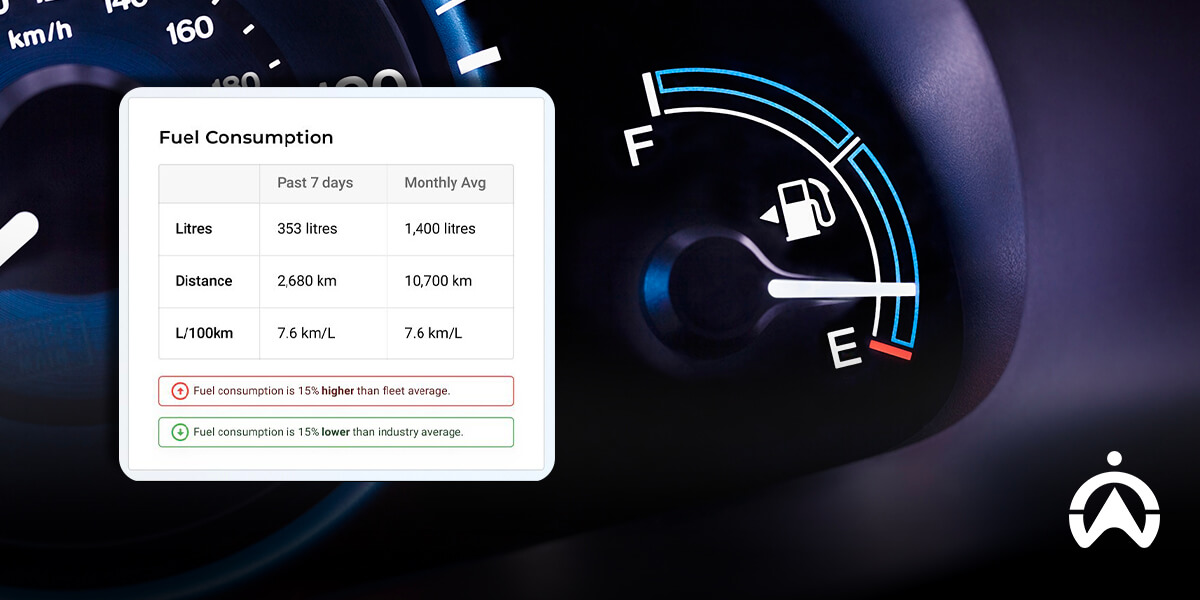
Once you have the information from step one, you can use it to calculate your fleet’s average fuel consumption per 100 km. All you have to do is divide the amount of fuel used in litres by the distance travelled and multiply by 100.

Step 3 Compare findings

Use the answer from your calculations to compare to industry standards or vehicle manufacturer insights on similar vehicle types.

This might seem like a long process but think of it this way, Calculating your fleet’s fuel consumption can bring light to your fleet efficiency levels and identify areas for improvement. Using this information to improve your fuel economy will result in lower fuel costs and less money spent at the petrol station.

Essential tips for achieving fuel efficiency

The way a vehicle is driven can go a long way in affecting how well its fuel efficiency is. Making small changes such as decreasing the amount of times you idle or abruptly accelerate can save you thousands per year, especially when this is practised across a whole fleet.

Here are other tips that can benefit not only your vehicle but also your wallet in the long run.

Purchase fuel-efficient vehicles

This option is not always available for all businesses but opting for more fuel-efficient vehicles such as electric or hybrid vehicles is a sure way of having a fuel-efficient fleet.

Actively track fuel consumption

After filling up the tank, how long can your vehicle go without refilling again? The steps listed above can help calculate your fuel efficiency and give you insights into improving fuel consumption.

Eliminate unnecessary weight

Be mindful of how you load your fleet as heavier vehicles use more fuel. Allocate the right vehicle to transport heavier material and don’t just cramp your vehicles with unnecessary weight that they can’t carry.

Stop excessive idling

If your vehicle is stagnant for a long period of time, it’s better to switch off the engine than to stay idle. Turn off your engine if you’ve stopped for longer than 30 seconds. Believe it or not, 300 millilitres, or around 1 cup of fuel, can be wasted by idling every 10 minutes.

Improve driver behaviour

Every hatch corner you take or sudden braking highly influences your fuel use. For this reason, many businesses have driver coaching available to ensure their drivers improve their driving skills so they can save on fuel and save costs on vehicle wear and tear.

Fleet management tools for fuel management

Partner with fleet management software like Cartrack that offers GPS vehicle tracking and telematics for vehicle diagnostic information, vehicle usage data, preventative maintenance, driver behaviour along with alerts for risky behaviour and real-time data on how fuel usage with fuel monitoring solutions.

The quicker you start implementing these tips, the faster your fleet and save on fuel and steadily move towards a healthier, more fuel-efficient fleet. The price for not following through can sometimes be greater than the impact on your budget.

The price for inefficient fuel use

  1. Higher fuel costs
  2. Negative environmental impact
  3. Increased wear and tear
  4. Operational inefficiencies
  5. Creates emissions

Cartrack fleet management solutions for improved fuel economy

Fortunately for South African businesses, they don’t have to tackle fuel efficiency alone.

Fleet management software along with companies that offer a variety of fleet management solutions such as Cartrack, is available to assist in improving fuel economy by streamlining every aspect of vehicle management such as vehicle maintenance, vehicle allocation and usage and driver behaviour, which can all contribute to how well your fleet uses the expensive resources.

Let Cartrack be the middleman between your business and achieving peak fuel efficiency. Cartrack has a fully-stacked feature list that is all ready to improve your fleet.

Here’s how Cartrack’s trusted solutions can help your fleet reach fuel efficiency potential:

  • Fuel monitoring for real-time fuel insights
  • Driver coaching via Driver scorecards and reports
  • Preventative vehicle maintenance notifications
  • Fuel usage reports
  • Route optimisation for fuel-efficient routes
  • Cartrack’s MiFleet to keep track of fleet fuel costs
  • Electric vehicle integration

Go electric: Invest in a greener fleet

Electric vehicles (EVs) have taken the world by storm ever since they were introduced and South Africa is steadily opening up to the idea.

These vehicles aren’t affected by the rising fuel costs that are causing many motorists in SA to reevaluate their fuel budgets, and they aren’t affected by the wear and tear caused by fuel usage. Since no natural resource is used to power these vehicles, they create zero emissions and offer impressive fuel efficiency to boot.

They sound perfect, right? Well not quite, as amazing as they seem to be, they aren’t very practical for South Africans because of the lack of constant power due to load-shedding.

Despite this, there is still a great deal of interest in these vehicles in many countries, with some businesses opting to operate fully electric fleets. In sunny South Africa, Woolworths has joined in using EVs for their deliveries, becoming the first retailer to have an EV fleet. In the USA, the next time you order items on Amazon orIKEA, an electric van might stop by to drop off your package.

If your business isn’t quite ready to go fully electric, there’s always hybrid cars ready and waiting.

These are a combination of a traditional combustion engine and an electric motor. These two technologies come together to offer the best of both worlds with fuel efficiency from the electric motor and peak vehicle performance from the combustion engine. If your fleet usually travels around urban areas and your fleet has mostly sedan or hatchback vehicles, then this option could be perfect for you as they are well-equipped for inner-city driving.

South African Incentives in support of electric vehicle rollout

To get the ball rolling, recently South Africa has offered a few big incentives to gain attraction for electric vehicles.

According to the annual budget released in February 2024, The government announced that companies that invest in the local production of electric vehicles will receive a150% tax deduction starting March 2026.

The Department of Trade has also allocatedR964 million towards electric vehicles, this is in line with the New Energy White Paper approved by Cabinet.

Improve fuel usage and slash fuel costs with Cartrack Tanzania

Cartrack is your one-stop shop for fuel efficiency. Put our advanced solutions to the test and start enjoying the benefits of managing a fully efficient fleet.

Contact Cartrack Tanzania today.

Frequently asked fuel-related questions

Do you still have one too many questions floating around your head regarding fuel efficiency and what you have to do to achieve it? Read on to get the information to some popular questions on fuel efficiency.

How to understand fuel efficiency?

To understand your fleet fuel efficiency, you have to evaluate your vehicle’s ability to use fuel to boost its performance. Calculate the distance your vehicles can drive on 1 litre of fuel. This will show you how fuel-efficient your vehicles are. The number you see is determined according to other factors that affect how your vehicle uses fuel such as the vehicle’s weight, maintenance of the vehicle, the type of engine it uses and more.

What is the concept of fuel efficiency?

The concept of fuel efficiency stems from motorists and managers needing to show the limits of their vehicles when it comes to fuel usage. Seeing what 1 litre of fuel can do for their vehicles, how much power can be used from it and what is needed to achieve minimal fuel consumption are all important information to have. This insight would influence the type of fuel you give to your vehicle, its maintenance schedule and the overall health of your vehicle.

How many litres per 100km is good?

If your vehicle is healthy, then lower litres per 100 km indicates good fuel efficiency. But there are other factors such as vehicle type, vehicle weight and size and driving condition that can change the fuel consumption rate.

What determines the efficiency of a fuel?

There’s a list of factors to consider that influence how fuel-efficient your vehicle is including:

  • Vehicle engine
  • Vehicle type
  • Driving habits
  • Driving terrain
  • Fuel quality used

And more, if each of these factors are managed with a car then your vehicle is capable of reaching maximum fuel efficiency standards.

Does cruise control save fuel?

This is a common myth that has been passed on from driver to driver over the years. Although it doesn’t directly influence fuel efficiency, cruise control does allow the vehicle to drive at a constant speed, which can improve fuel efficiency because of the steady, non-harmful driving behaviour as there would be no harsh acceleration, idling or deceleration.

For further insights into fuel efficiency and fleet management solutions, be sure to check out our blog on Fuel Efficiency: Know How to Save Your Fleet a Fortune.

Road Spiking: Sudden Huge Increase and How to Protect Yourself and Your Vehicle

Watch out! The number of vehicles falling victim to spikes on the road has been increasing. Criminals are constantly developing new ways of setting traps for motorists, and as they’re developing their techniques, we need to wise up to stay safe.

Here’s a closer look into this new trend and some tips on protecting yourself.

In this article, you will:

  • Learn about road spiking
  • Get tips on what to do should your wheels get spiked
  • Find out which highways are mostly targeted
  • See how you can avoid road spikes
  • Discover how Cartrack can help you in this situation

What is road spiking?

Road spiking involves placing spikes disguised to look like plastic bags or clothing on the road, usually when it is dark. This causes motorists to drive over them unsuspectingly, thinking it’s harmless. These “spikes” are mostly made out of nails, wood or even big stones.

Where on the road are the spikes placed?

Richard Brussow from the National Hijack Prevention Academy told eNCA that the thieves usually work in groups of two. One places the spiked object on the road, particularly the fast lane, while the other hides 300m-400m further down the road, waiting for the vehicle to come to a standstill. In most cases, the thieves are on foot, but there have been other cases where they drive behind the spiked vehicle till it stops, then attack.

The motive behind vehicle spiking

The aim is to damage the vehicle’s tyres, forcing you to pull over and assess the situation. Once you’re out of the car, the thieves come out of “nowhere” to rob you of your possessions. In some cases, this, unfortunately, does not only end with just getting robbed, as there have been several incidents where motorists were kidnapped and only released after all the money in their accounts had been withdrawn.

Calling all motorists: Targeted highways you should know about

What used to be reported once or twice a month has now risen to several incidents a week, with most incidents happening in Pretoria and surrounding areas. In the third week of May, 10 suspects were arrested in Pretoria in connection with road spiking. The Motor Industry Staff Association (MISA) has since provided a list of hotspots, most of which are on highways around Gauteng:

  • The N4 from Mpumalanga to Pretoria between the Soloman Mahlangu and Watermeyer off-ramps
  • The N4 from Pretoria to Mpumalanga between the Bronkhorstspruit and Balmoral off-ramps
  • The N1 and N4 Mpumalanga interchange in Pretoria
  • The N4 to Rustenburg between R80 Mabopane freeway and Britz Plaza tollgate Golden Highway
  • The R21 freeway from OR Tambo International Airport to Pretoria
  • The R562 in Olifantsfontein
  • The N12 in Witbank, under the Merridale bridge
  • The N12 between Klerksdorp and Potchefstroom
  • The N3 between Leondale and Barry Marais Road
  • The N17 between Rondebult and Heidelberg Road

Other highways in South Africa can still be targeted, as this is a growing trend, so stay vigilant!

Is there a way to avoid road spikings? Our top tips

Here are some tips on how steer clear of the spikes:

  • Avoid driving at night: It is difficult to see objects at night while driving, especially on roads that do not have enough lighting. Criminals take advantage of that, which is why most of these incidents happen at night or in the early hours of the morning. So, if you can, avoid being the night rider.
  • Have a good following distance: Create a safe space between you and the vehicle in front of you so that you can manoeuvre out of situations.
  • Do not stop for any objects on the road while driving: This is how they get your attention, which leads to you stepping out of the vehicle. If you spot an obstacle ahead of you, move into the emergency lane or the grass if the highway allows.
  • Reduce speed: Travel at a reasonable speed and try not to go over 80km/hr if you know you’re in a dangerous area. This increases your chances of seeing obstacles on the road. Thieves mostly target the fast lane because they know that by the time motorists realise that there’s something on the road, it is too late.
  • Stay in the middle: If circumstances allow, drive in the middle of two lanes, with two wheels on one side and two wheels on the other side. This may help you miss spikes placed in the lane, and it also makes it easier to swerve left or right. Remember, this is not in line with the rules of the road and should only be done in an absolute emergency, like when suspecting that you’re being targeted by spikes on the road.
  • Change lanes just before passing under a bridge. It is usually dark under a bridge, which makes it a hotspot for placing spikes.

So, let’s say you fall into the trap. What’s your next move?

These are some of the things you can do to get yourself out of the sticky situation unharmed and possibly dodge the entire situation:

  • Drive slowly and as far as possible: Your rims can handle more than you think. They can take you a few kilometres further, so long as you drive slowly. The goal is to get as far away as possible from the perpetrators, who are most likely on foot. Run-flat tyres also come in handy as they are built to keep your wheels running even with little or no pressure.
  • Do not brake: Most victims hit the brakes out of fear once the car falls in the direction of the damaged tyre. When you brake, you transfer all the weight of the vehicle to the front. Try as much as you can to keep the steering wheel straight and keep going, as the goal is to get as far away from the attackers as possible.
  • Don’t stay in the car: If your vehicle comes to a standstill, run out of the car as far as possible and hide while calling for help. Staying in the vehicle is what the thieves are hoping for because they want all your valuables, including your cell phone and bank card, so they can empty your bank account. This will also help you avoid getting kidnapped.
  • Send your live location: Make sure someone can track your whereabouts. This will be very helpful in getting you assistance faster, and should the thieves or any other potentially dangerous individual get to you, someone will be able to trace you using your last known location.

What to do should they get to you

If you were unable to run away from the thieves then the only thing that’s left to do is to comply. Here’s how:

  • Lift both hands up: If your hands are hidden or in your pocket, the thugs might think you are trying to call for help or take out a weapon to protect yourself, which can aggravate them and make the situation worse.
  • Do as you are told: At the end of the day, your life is worth more than whatever they are robbing you of. Do not try to fight them; instead, do as they say because everything is replaceable except your livelihood.
  • Take note of the little details: Without staring too much, try to take note of the little details so you may be able to give the police solid leads once you report the incident.
  • Keep calm: As hard as it is, try to remain as calm as possible. Panicking or making unexpected movements can intimidate the thieves and worsen the situation.

Additional safety precautions that’ll come in handy

Better safe than sorry! These are the daily safety measures that you can instil to help you from other dangers that you could come across on the road:

  • Always be in contact with friends/family
    Someone should know where you are at all times. Try to let your loved ones know your whereabouts as much as you can by always sending messages, making a call before you go, or sharing your live location with someone every time you’re on your way somewhere.
  • Pay attention to the people or objects around your vehicle
    If it is not road spikes, it might be police impersonations or other unusual objects that distract you and force you to stop and get out of your car. There might even be a car waiting not too far from your gate or in public spaces like drive-throughs to close you in. The bottom line is that you should always check your surroundings and be aware.
  • Get a GPS vehicle tracking device
    With a tracking device installed in your vehicle, your location will always be visible, making it that much easier to find should there be an incident like your wheels getting spiked.

Choose a GPS tracking system that is specially tailored for your safety: Choose Cartrack

These new tactics criminals use require you to be protected in all ways possible. Your vehicle’s location might be your saving grace should your wheels get spiked. If you get stranded, Cartrack is here to help. We offer advanced technological services for any outcome.

Here are some Cartrack’s safety must-haves:

  • Crash Detection
    This feature alerts our control room services when a collision is detected from your vehicle. If our control room can’t reach you, they will attempt to reach your provided emergency contacts or contact emergency services.
  • Panic button
    Get a panic button discreetly installed in your vehicle so you can call for help the instant you need it. The panic button sends a silent alert to our 24-hour control room service, which will attempt to call your emergency contacts, assisting in getting you help, should you not have enough time to reach for your phone after your wheels are spiked.
  • Protector
    This emergency medical and roadside assistance feature is available 24 hours a day and can be accessed on the Cartrack App at the touch of a button.
  • Geofence
    As an extra vehicle safety precaution, you can set virtual boundaries around areas of your choice so you are alerted whenever your vehicle enters or leaves them.
  • Stolen Vehicle Recovery (SVR)
    There are different motives behind criminals distracting you on the road; they may want what’s in the car or the car itself. It is, therefore, crucial that your car is protected at all times. Should the worst-case scenario be that your vehicle gets stolen, you will be more at ease knowing that Cartrack has your back. We have a 90% recovery rate, so that surely means you can trust us, and in the unlikely event that your vehicle is not recovered, you have a R150 000 recovery warranty that you can claim. Ts&Cs apply.
  • Cartrack Insurance
    Your car will need repairs after a road spiking incident, and the wheels will need to be replaced. Cartrack is also here to help you find an insurance quote that best suits you so you have fewer worries should you ever need to claim for repairs.

Cartrack goes beyond recovering your vehicle

We are an all-around company that specialises in vehicle safety and goes the extra mile for your personal safety. Contact us today and step into a realm of ease.

What Is a Fuel Management System?

According to research done by the National Highway Traffic Safety Administration, fuel expenses can take up to 60% of total fleet business costs. With the ever-rising fuel prices, having a fuel management system will save your business a large sum. This is why it is important for every fleet business to have a fuel management system.

Let’s have a closer look at how this works.

In this article, you will:

  • Learn all things fuel management-related
  • Discover the disadvantages of running your fleet without a fuel monitoring system
  • See which fuel monitor would best suit your business
  • Differentiate between fuel monitoring and fuel management
  • Find how Cartrack can help you save on fuel costs

Everything you need to know about a fuel management system

A fuel management system is a combination of hardware and software technology that is used to optimise fuel consumption in various industries such as mining, construction, and transportation.

Fuel management systems ensure that fuel is being used efficiently by monitoring factors such as fuel consumption and engine performance. Businesses without a fuel management system battle with the cost of fuel daily.

How do fuel monitoring systems work?

Fuel monitoring systems work hand in hand with fleet management software and telematics to be able to translate the data. Here is a brief breakdown of two components of fuel monitoring systems:

  • Engine Control Unit
    Also called an engine control module, this unit controls both the engine and the transmission. It collects data related to fuel consumption, engine operating hours and mileage.
  • Fuel level sensors
    These are filters installed in vehicle tanks to monitor fuel levels. A tube connects to the fuel measuring system, and when fuel is added, it fills the tube and the spaces around it. The information is then sent to a telematics system, which gives readings such as tank capacity, litres and vehicle location.

Disadvantages of running a fleet without a fuel monitoring system

Here are some of the things that can go wrong when your fuel is not being monitored:

  1. Fuel theft and fraud: Having a fuel card is essential when running a fleet as it helps keep track of fuel expenses. It makes it easier to know which driver refilled where, when and for how much. However, if the cards are not integrated with a fleet management system, there will be loopholes, such as false transactions or drivers using their fuel cards to purchase fuel from their personal vehicles.
  2. Incorrect data analysis: Without a fuel monitoring system, fuel card reports can be misinterpreted, and there is room for many human errors.
  3. Careless driving: Bad driving habits such as harsh braking, speeding, excessive idling, and harsh cornering require more energy from the engine. This means that more fuel needs to be burned, leading to fuel wastage. Aggressive driving not only drains fuel but also causes vehicle wear and tear, leading to unexpected breakdowns, vehicle downtime, and heavy repair costs.
  4. Unnecessary mileage: Fuel monitoring systems work hand-in-hand with GPS technology. This enables you to see the routes that heighten your fleet’s fuel consumption. Without it, it becomes more difficult to track mileage and pinpoint problem areas.
  5. Environmental impact: Businesses are charged more tax for a high fuel consumption. This is due to global warming and the aim is to slow down climate change by lowering greenhouse gas emissions such as the burning of fossil fuels.

Benefits of a fuel management system

There are many benefits that come with having a fuel management system, such as:

  • Improved driver behaviour
    Driving habits such as excessive idling, harsh braking or speeding not only put drivers in danger of possible collusion but also drain fuel faster. With a proper fuel monitoring system in place, fleet managers will be able to monitor driving habits that increase fuel as well as vehicle wear and tear.
  • Reduces human error
    Fleet technology simplifies administration and speeds up operations. A fuel monitoring system reduces the manual work and is more accurate, eliminating any miscalculations of fuel expenses.
  • Improved route planning
    Fuel management is part of fleet telematics. Fleet management software gets you access to real-time GPS tracking. With this, fleet managers can track the routes drivers use to make deliveries and see which routes are wasteful or unnecessary, therefore saving fuel.
  • Fuel theft prevention
    Integrating a fuel card with a fleet management system catalysis the process of matching fuel receipts with the vehicle’s location and fuel level status, making it easier to detect fuel theft.
  • Greener fleet
    If you want to go green, a fuel management system will help you lower carbon emissions by reducing the amount of fuel you use. You will save money and the planet too.
  • Reduced maintenance and repair costs
    Using engine technology to monitor fuel can save your fleet from breaking down and needing more repairs.

The difference between fuel management and fuel monitoring

Fuel management is about gaining full control of all the fuel operations in the business in order to reduce costs. It’s about knowing which vehicle needs refuelling, monitoring driver behaviour, maintenance, and fuel storage, and getting detailed reports. A fuel monitoring system, on the other hand, is the literal real-time tracking of fuel levels using fuel monitoring tools such as a fuel level sensor. Essentially, the fuel monitoring system is a part of fuel management.

What kind of insight can you gain from a fuel management system?

Let’s have a look at Chris, who’s fleet manager at a logistics company. He has noticed that every time a certain driver uses one of his cars, the petrol in the tank doesn’t last long. He always checks receipts for the fuel cards and just doesn’t understand why there are so many refills. So, where does the fuel go?

Chris suspected fuel card fraud, so he decided to get a fuel monitoring system to better assess the situation. To his surprise, it turns out that the driver was always taking a longer route because he was more familiar with it. There’s a bakery on the way that he likes and normally stops by. This route increased the mileage, which is why the driver always needed to refill.

Chris also noticed that the same driver had many incidents of excessive idling. This was because whenever the driver would stop by his favourite bakery, he would leave the engine running, thinking it would just be a quick in and out. However, on some days, there would be a queue, and he’d wait longer for his baked goods. Chris has since coached the driver on driving habits that increase fuel consumption and is now seeing massive improvement.

From this, you can see that very simple and innocent things can have a huge impact on fuel expenses. A quick analysis plus some chats with your drivers can save your fleet a fortune.

Boost your fuel savings with a Cartrack fuel management system!

Cartrack is an industry leader in the fields of telematics and has helped many from different industries, such as transport, construction and mining, to maximise their fuel savings. With us, you get:

MiFleet

Mifleet is cost management software that can help you detect fuel theft and fuel card fraud by validating transactions with vehicle telematics data such as location, litres and tank capacity. This powerful tool gives you alerts whenever there is suspicion of fuel fraud, allowing you to further investigate and resolve the matter.

Fuel sensors

You can monitor your vehicle or machinery’s in-tank fuel levels with any of the following three fuel monitoring tools:

  1. Float sensors: Every vehicle comes with a floater and a variable resistor installed inside the tank. This moves up or down as fuel is added or while the vehicle consumes fuel. Cartrack connects to the wires the wire to the IoT device in order to read the voltages produced and translate them into litres. This information is then accessible for your use on our fleet management platform.
  2. Fuel probes: These arefuel level measuring devices that use a float system to track fuel levels. They are for external tanks or fuel tanks that are not connected to the vehicle and are connected to a telematics device inorder to send fuel level data.
  3. CANBus: The Control Area Network bus (CANBus) clamp is connected to our telematics device to enhance the ability of vehicle components, such as the engine and transmission, to “‘communicate” with each other. This then makes it easier for vehicles to detect when fuel is needed, and the data is then stored and sent to our fleet solutions.

Preventative maintenance

An overworked engine uses more fuel. Cartrack has a preventive maintenance feature that tracks engine hours. This feature provides real-time alerts of engine faults and automated maintenance schedules for each vehicle, so you know in advance which vehicles are due for servicing.

Route optimisation

Find the best order for drivers to complete tasks and create job routes for drivers to minimise mileage and fuel consumption.

AI LiveVison

Promote driver safety by installing our AI LiveVison Camera solutions to help you monitor driver behaviour. Drivers get real-time alerts whenever distracted behaviour such as yawning, cell phone use or smoking is detected, allowing the drivers to make corrections quickly. The goal is to avoid driving habits that increase fuel consumption, such as harsh braking, which often happens when the driver is distracted and suddenly has to stop. You can also have external cameras that monitor your fuel cap installed into your vehicles.

Driver Scorecards

Get reports on driver events such as speeding, harsh braking and harsh cornering for each driver so you can use them to coach drivers on their areas of improvement.

Cartrack makes saving on fuel so easy!

We are an all-around solution for everything related to running a fleet with a user-friendly platform that gives you peace of mind. We are industry leaders in fuel management and all things fleet-related.

Contact us today to help you fuel your fuel efficiency.

Here are some of the most asked questions regarding fuel management

What does a fuel management system do?

A fuel management system is a combination of hardware and software technology that is used to optimise fuel consumption

How does the fuel management unit work?

A fuel management unit (FMU) is a secondary fuel regulator on the return line to the tank. A rise in fuel pressure equals a directly proportional rise in boost.

What is the purpose of a fuel monitoring system?

A fuel monitoring system effectively manages fuel usage by reducing costs, enhancing overall operational efficiency, and meeting regulatory compliance.

What is the management of fuels?

The management of fuel is a process of managing and improving overall fuel usage and costs using telematics.

Ready to fuel on fleet savings? Call +255 222 772 434 or click here so we can call you back.

City Driving vs Highway: How Can You Really Save on Petrol Either Way

Whether your daily trips involve driving through busy streets or scenic highways, both present unique challenges and affect your vehicle’s fuel consumption.

With a basic understanding of fuel consumption in both city and highway driving, useful tips for maximising your fuel efficiency and the help of Cartrack, you can significantly reduce your fleet’s fuel and maintenance costs.

Let’s start saving.

In this article, you will:

  • Learn about the factors affecting fuel consumption in city and highway driving
  • Discover the differences in fuel efficiency between urban streets and open highways
  • Get practical tips to achieve fuel efficiency for both city and highway driving
  • Understand how Cartrack solutions can improve fuel management and reduce costs
  • Read a case study on how Cartrack helped Calgan Recliners save fuel

Saving fuel in South Africa

Fuel is a highly demanded, natural material that sometimes feels like it costs an arm and a leg. Depending on the vehicle type and the fuel used (petrol or diesel), the average South African motorist can expect to spend anywhere between R800 and R1200 for one full tank.

Of course, the price of fuel fluctuates, sometimes costing more than expected when it rises and sometimes giving vehicle owners a break when it dips. This is currently the state of fuel updates in South Africa.

According to recent reports, petrol prices have dipped by R1.25, while diesel follows behind with a cut of around R1.19 per litre.

With this in mind, many drivers and fleet owners alike have put their efforts into managing their fuel consumption rate and allocating suitable vehicles based on delivery locations, all in an attempt to take advantage of the decreased fuel prices and save every drop.

City driving vs highway: Which is more fuel efficient?

Not all roads treat your fuel tank the same.

After dispatching your fleet to deliver materials and packages via different roads, have you ever compared the fuel consumption of vehicles that drive through the city to deliver in suburban areas to those that use highways to deliver to factories and warehouses?

If you have, you’ll find that driving through urban streets causes your vehicle more strain, not just with fuel usage but wear and tear as well. Your engine works harder when navigating the streets, changing driving speeds, halting or coming to a complete stop at intersections, and so much more.

Let’s see what makes these two have such an effect on your fuel efficiency:

Driving on urban streets

City driving is full of short streets split by intersections, zebra crossings, traffic lights, and more. Here are the factors that influence your fuel consumption rate.

  • Stop-and-go driving: Every time you yield at a zebra crossing or slow down to drive over a speed bump, your engine exerts effort to decrease or accelerate speed, putting strain on your engine. Issues like load shedding that cause traffic lights not to work can increase the number of times you need to slow down or stop due to the traffic that can form, leading to higher fuel usage.
  • Traffic lights and stop signs: When coming to a complete stop, abrupt acceleration can greatly affect your fuel consumption, as can frequently stopping at traffic lights, which causes unnecessary idling. Idling for 2 minutes can burn the same amount of fuel as driving for 1 km.

Driving on open highways

Open highways are easier on your tank, but there are still some downsides that affect your fuel efficiency.

  • Consistent speeding over long distances: Driving at a steady pace at a moderate speed within a set highway speed limit is more fuel-efficient than constantly changing gears to speed up or slow down. Using cruise control is recommended when driving over long distances on highways to further improve fuel use.
  • Vehicle weight: The weight of your vehicle plus the weight of materials of cargo you load onto your vehicle plays a role in its fuel consumption. The heavier your vehicle, the more fuel it takes to maintain highway speed. Reducing weight or using more appropriate vehicles that can withstand the extra weight can improve fuel efficiency.
  • Traffic congestion during peak hours: Unfortunately, traffic congestion on highways, especially if you’re driving during peak hours, can result in spending a considerable amount of time on the highway, which leads to idling and stop-and-go driving.

The simple solution to this is to plan your trips around these busy hours:

Cape Town
Peak morning traffic: 05:30 to 10:00
Peak evening traffic: 15:00 to 18:30

Johannesburg
Peak morning traffic: 06:00 to 10:00
Peak evening traffic: 15:00 to 18:00

Impact on engine health: Which scenery is better for your engine?

Similar to how these two types of roads affect your fuel consumption, they also affect your car’s engine health. Every day, when you are faced with driving through the city or on open highways when planning a trip or route for your fleet, consider these insights for your engine.

Open roads: Driving through open roads with no traffic or heavy loads to weigh you down can positively influence your engine health. A steady speed with minimal gear adjustments or acceleration can reduce wear and tear of the engine and reduce strain on it to produce power over long highway distances.

City driving: This is where your engine works the most. City driving requires frequent acceleration and braking. This constant speeding up and slowing down can increase strain on the engine and cause significant wear and tear, especially around spark plugs and timing belts. If your vehicle frequently drives around the city, it might require a bit more TLC to continue running smoothly.

Mountain roads: These roads wind around mountains and can sometimes go off-road, which can greatly affect your engine. Climbing steep hills requires a lot of power from your engine. This terrain is usually reserved for bigger vehicles like trucks with more powerful engines, sturdy tyres, higher torque, and stronger brakes, but proper and consistent engine tuning and maintenance are still needed to help mitigate the effects of these roads.

Practicing preventative maintenance management might be your perfect solution to ensure your maintenance bills don’t stack up over time due to city or hilly terrain.
Focus especially on oil changes, filter replacements, and keeping your engine clean from grime or dirt that can accumulate there.

Types of cars suitable for city vs highway driving

How can you determine which driving environment works best for your fleet? Whether your fleet consists of motorcycles or trucks, dispatching the right vehicle to a certain environment doesn’t just impact fleet efficiency and operations but fuel as well.

  • City driving: Compact cars, hatchbacks, SUVs, vans, and delivery motorbikes are all suitable for manoeuvring the narrow streets, frequent stopping structures and sharp corners of city driving. These vehicles are smaller in size, agile, and have smaller engines.
  • Highway driving: Trucks, sedans, minivans, and bigger SUVs are vehicle types that are more suitable for highway speeds and can travel longer distances. These often have larger engines, aerodynamic designs, and comfortable cruising capabilities.
  • Electric vehicles: These vehicle types can thrive in both environments. They come in different vehicle body types, have lower operational costs and produce decreased emissions.
    Because of range anxiety, drivers are more comfortable using these vehicles for driving through the city as there are charging stations available or shorter highway trips due to limited charging infrastructure.

Did you know that you could save around R10,00 per year in fuel costs travelling 20,000 km by choosing a hybrid vehicle instead of driving a vehicle using 95 unleaded petrol?

Whether urban or highway, these tips will help take you further for less

Driving the ideal vehicle types through specific areas will only get you so far in saving fuel attempts. Although this will help slow down fuel consumption, there are still extra fuel-efficient tips and tricks to reach their goals.

1. Maintain steady speed when driving and gently accelerate when needed

It’s easy to maintain speed on the highway, but city streets may require you to speed up and slow down constantly. Remember, your vehicle burns more fuel when it slows down and bursts or accelerates when you hit the gas paddle from a stop.

Consider taking about 5 seconds to accelerate to 20 km per hour from a stop and then maintaining your speed from there.

2. The faster you go, the more fuel you burn

Use cruise control at a steady pace for longer on flat surface roads at the highest gear to decrease your vehicle’s fuel consumption rate.

The optimal speed for fuel efficiency in various vehicles (passenger cars, vans, pickup trucks and SUVs) is between 50 km/h and 80 km/h; any more, your vehicle’s fuel consumption rate increases.

3. Reduce idling

This is a tall order, especially when city streets and highways are jammed during peak hours. If your vehicle has not moved for more than 60 seconds while delivering packages or loading parcels onto it, it is better to switch the engine off than to stay idle.

In just 10 minutes, a 3-litre vehicle can waste up to 300 ml (more than 1 cup) of fuel while idling.

4. Use safe driving techniques when operating vehicles

How you drive a vehicle can influence how much fuel the vehicle uses. Unsafe driving habits such as speeding, harsh acceleration, and abrupt braking or cornering not only influence fuel economy but also contribute to wear and tear issues that might affect maintenance costs.

5. Don’t fall behind on your vehicle maintenance

The healthier the vehicle, the better its fuel efficiency. Following your vehicle’s maintenance schedule and regularly servicing, it ensures its performance as intended.

Believe it or not, tyre pressure also influences fuel usage. Make sure your tyres are inflated to the recommended amount by your vehicle’s manufacturer, which can be found on the edge of the driver’s seat’s doorpost.

Separate fuel-saving myths from truth, and click here for fuel-saving tips that actually work.

By practising these tips, you’ll not only achieve fuel efficiency for your vehicle(s) but enjoy these benefits as well:

  • Save on fuel costs
  • Prevent wear and tear
  • Lower carbon dioxide emissions
  • Improve road safety
  • Extend engine life
  • Enhance vehicle performance

How Cartrack solutions improve fuel management for both environments

Cartrack is acclaimed as the best vehicle tracking system by The Star readers and other South African motorists who trust its vehicle tracking and fleet management solutions.

They have an extensive line of features all ready to turn your vehicle(s) into well-oiled, optimised machines.

Here’s how Cartrack’s features can help you achieve your fuel efficiency goals no matter which roads you use.

  • Fuel monitoring
    With Cartrack’s CANBus and fuel sensors, managers can accurately track their fleet’s fuel consumption rate by using real-time fuel data and accurate fuel level information.
  • Route optimisation through city infrastructure
    Use Cartrack Delivery to navigate the city’s urban streets. Delivery can optimise your task management by providing routes that are shorter in duration, consume less fuel and avoid traffic or other obstructions to efficiently complete tasks.
  • Driver training with driver scorecards
    Encourage fuel-efficient driving by proactively monitoring driving behaviour through Driver Scorecards and Reports. With these, you can track risky driving behaviours such as speeding, abrupt braking, harsh cornering, and even idling and use the information for training purposes.

Do you know you can potentially save between 5-15% on fuel just by using a telematics system like Cartrack to help you in your fuel-saving journey?

To prove this, Cartrack tested its MiFleet cost management tool with its utility fleet of over 700 vehicles. With MiFleet, we reduced total km travelled by more than 5% and fuel consumption per job by over 22%!

Similar positive findings were the case for our client, Calgan Recliners.

Cartrack Delivery case use for fuel-efficiency

Calgan Recliners is a furniture company specialising in recliner chairs and lounge suites. They use their large fleet to deliver their furniture all over South Africa and like many fleets they started facing the challenge of high fuel consumption rates.

With Cartracks’ smart fuel management solutions, Calgan Recliners improved their fleet’s fuel consumption rate and made it more fuel efficient.

Following the results, Cartrack thought of testing their solutions and conducting a test to prove fuel savings using our Delivery tool.

A Cartrack delivery solutions specialist took one of Calgan Recline’s frequently taken routes and their 15 different drop-off points and used Cartrack delivery to provide a more efficient route to take to complete the 15 deliveries.

These were the results: We only drove 167 km, while the Calgan driver usually drove 195 km on the same route, showing a massive 28 km difference. This equated to 7 litres of diesel saved in a single day.

If used for a whole month, Cartrack Delivery could help Calgan Recliners save around R3000 in fuel costs per vehicle.

You can also achieve this level of fuel savings with Cartrack. There is no need to imagine what we can do for your fleet; see it. Partner with Cartrack today and start seeing the difference in your fleet’s fuel consumption and overall fuel costs.

Contact Cartrack today to get your free quote.