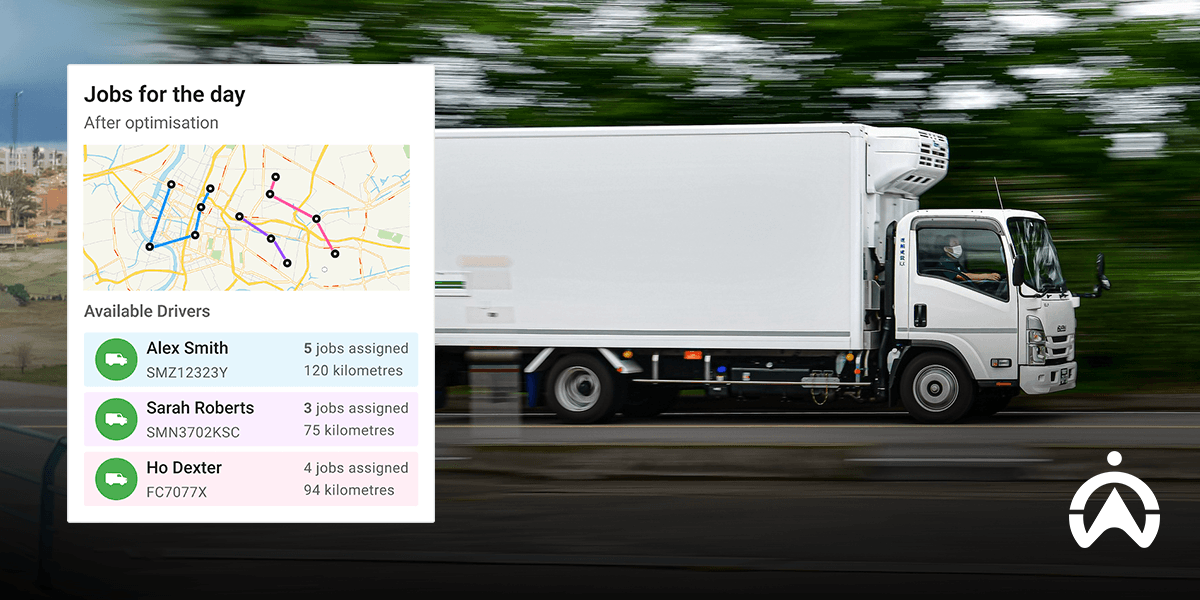
Best Field Management Software for Landscaping Companies

Cartrack is one of the best field management software providers for landscaping companies, because we offer you an all-in-one digital ecosystem. We can bridge the gap between your office admin and on-site manual labour. For modern, growing landscaping companies in Tanzania, you need software that gives you complete operational insights into almost every aspect of your business.

According to industry experts, the global landscape industry is estimated to grow at a 6.7% CAGR over the next few years. Having the best field management software for your landscaping company is a sure way to grow your business and give you an edge over your competitors.

This blog from Cartrack Tanzania is going to explore the landscaping industry and how having the best field management software is the key to growth and success!

Key Takeaways:

  • Kill the Paperwork: Replace messy service books with digital job cards to stop admin leakage and speed up your billing cycle.
  • Master the Map: Use AI-driven routing to slash fuel waste and fit more jobs into the day without hiring more crews.
  • Prove Your Value: Use GPS timestamps and in-app photos to provide “estate-ready” proof of service that wins premium contracts.
  • Track Every Asset: Don’t just track the bakkie; use portable tags for mowers and trailers to prevent theft and costly downtime

The landscaping logistics dilemma

Landscaping businesses often face many logistical problems, like poor routing, the ever-increasing cost of fuel, rescheduling, unplanned maintenance and driver management. All of these issues can cause a business to fail, especially one in such a competitive field. Landscaping companies need a permanent solution to avoid these logistical issues.

Running a landscaping business means you’re managing multiple teams, tracking equipment and scheduling various services across numerous locations. All while trying to maintain customer satisfaction, provide quality service and keep up with invoicing.

So how can you streamline the entirety of your operations?

Field management software.

How does FMS help landscaping companies?

Field service software helps landscaping companies by placing almost everything from admin to team management on one, central, user-friendly platform. When you’re juggling multiple tasks in multiple formats using multiple platforms, things tend to slip through the cracks, and stress goes through the roof.

Let’s give you a scenario. You have 6 teams working on a Monday across Dar es Salaam. The weather is fine, and it’s a great day for landscaping. One of your teams is on their way to Mrs Jones for her 10 am garden service, but at 9:30 she calls you to reschedule because she has a family emergency. Now the team won’t be able to access her garden without her being there.

This is fine (kind of) because you had a last-minute call from a new customer in desperate need of a garden service. But now you have to scramble around trying to rework your teams. You need to see where each team currently is and figure out who’s closer to the new client and who can take that team’s originally scheduled job.

You have to quickly call each of your teams and tell them to change their route and send them their new job schedules and addresses.

However, all of this could be streamlined with an FMS. A comprehensive FMS—like the one from Cartrack Tanzania—has an app that you and your team can work with. With this app, as the fleet manager or owner, you can see where your team is and how far they are with their current jobs and can change their schedules at the drop of a hat.

And the best part? Your team is immediately notified on their app, so there’s no need for you to call them.

Having field management software in your operations improves how you run your organisation and how you and your team communicate with each other.
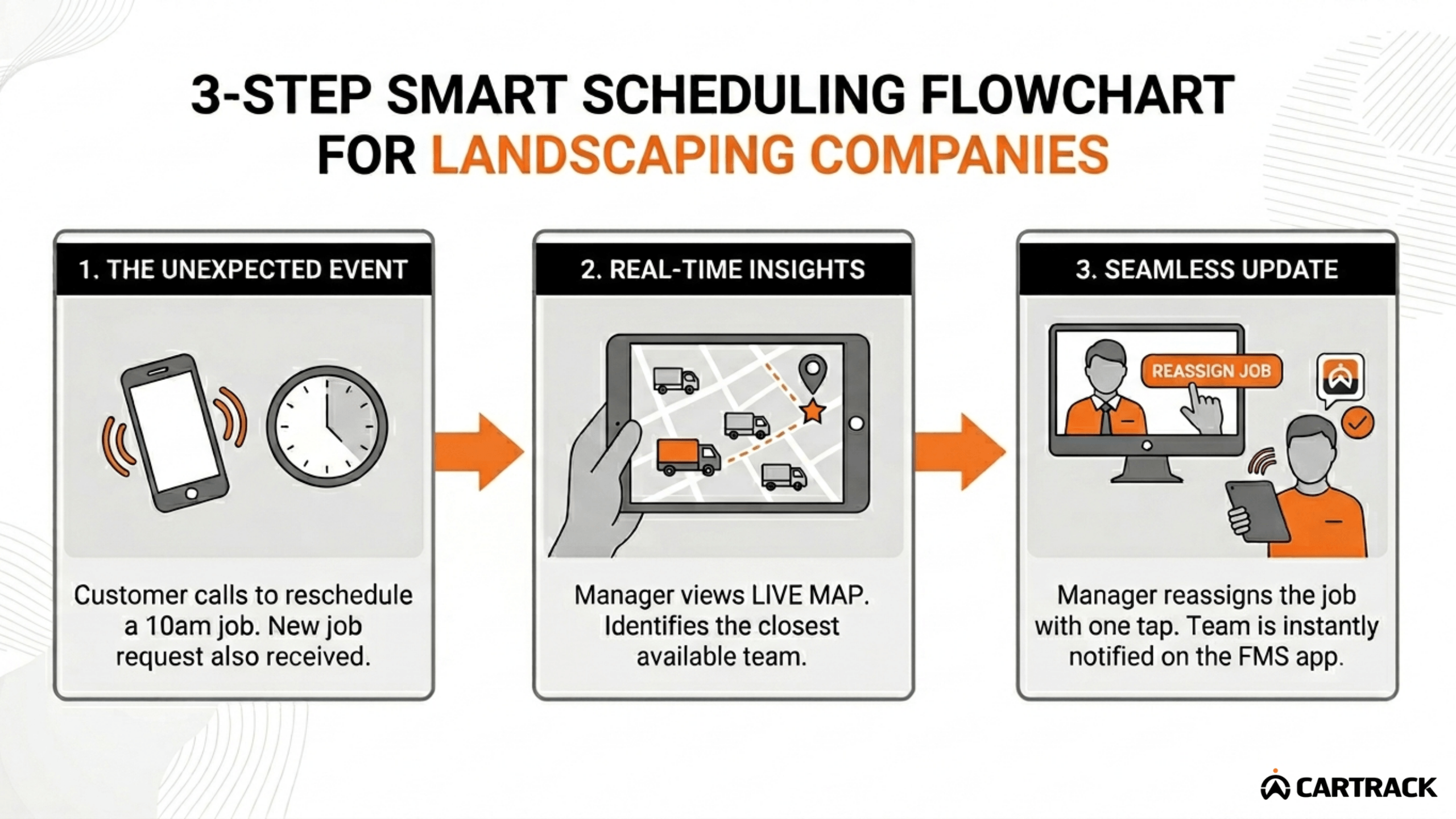
Flowchart of landscaping field management software showing smart scheduling steps: rescheduling calls, viewing live maps, and reassigning jobs via a mobile app.

Get complete operational intelligence with Cartrack’s FMS

If you’re looking for the best field management software, Cartrack’s FMS gives you complete operational intelligence that helps you streamline every aspect of your landscaping fleet. Our world-class add-ons, like AI cameras, asset trackers and fuel monitoring systems, can completely upgrade your landscaping business.

Let’s take a deeper look at what Cartrack Tanzania has to offer.

Fuel management system

The current cost of fuel is shocking to say the least. For all businesses globally, fuel is and always has been a massive cost & worry. At Cartrack, we understand this, which is why we have a top-of-the-rangefuel monitoring system.

In the landscaping industry fuel waste and theft can hinder the profits of your business. Cartrack Tanzana has a few tools that you can make use of to stay on top of fuel usage in your landscaping operation, including MiFleet and highly accurate fuel sensors.

With MiFleet, you’ll get the following insights:

  • Fuel level monitoring and updates: spot unusual drops in fuel or any other alarming fuel issues immediately.
  • Comprehensive fuel-use reporting: easily spot fuel waste and get budgeting support and expense estimates.
  • Fuel-card integration and fraud detection: Verify that all fuel transactions are legitimate and match locations and trip history.
  • Vehicle health and maintenance insights: Keep track of common problems that could add to fuel waste, like flat tyres or overdue servicing.
  • Driver behaviour monitoring: These alert you to poor driving patterns that contribute to fuel waste, like idling.
  • Web and mobile app accessibility: Easily lets you and your drivers take action no matter where any of you are.

Our range of fuel sensors are all connected to our telematics device. These include:

  • Fuel probe: This sensor is installed into your vehicle’s fuel tank to accurately (98%) monitor fuel levels.
  • CAN bus: A clamp that’s attached to your vehicle’s CAN bus system to read the fuel levels with 90% accuracy.
  • Fuel analog: A clamp that’s attached to your vehicle’s fuel wiring and sends voltage through the cable to the telematics device, with an accuracy of 80%.

Route optimisation

Landscaping businesses are constantly on the road and are needed at different locations at specific times. Being on time is a major influencer of customer satisfaction, which is why route optimisation is a must-have for landscaping companies to operate successfully.

Manual route planning is inefficient. It takes up time; mistakes are easily made, and making last-minute changes feels like ‘mission impossible’. Cartrack wants to make your business operations run smoother, which is why our state-of-the-art telematics and GPS systems are what you need to get your teams from A to B.

Cartrack’s route optimisation will find the most efficient route for your drivers to take. It will provide them with routes that:

  • Minimise travel time
  • Are the most fuel-efficient
  • Inflict the least wear & tear on your vehicles.

It does this by taking the following factors into consideration:

  • Weather conditions
  • Real-time traffic conditions
  • Each vehicle’s capacity
  • Delivery priorities
  • Driver availability

Landscaping professional using field management software workflows to install fresh rolled sod for a new lawn.

Precision scheduling

Having precision scheduling in your landscaping business is non-negotiable. Landscaping businesses are weather- and client-dependent, where our weather changes instantly, you need a tool that keeps your business efficient despite changes.

Our field service management solutions are AI-powered. You’re able to schedule and reschedule jobs easily, and your landscaping team is instantly alerted on their app. This removes the need for you to manually make calls to your team, keeping your entire operation efficient.

Real-time data and insights

As a landscaping fleet manager, having real-time data and insights on your team(s) is crucial. Knowing where they are, when they finish a job, when they’re on the road or when they’re delayed is critical information needed to keep your operations efficient.

Cartrack’s field service management app is the key to success. Our accurate and advanced system gives you complete visibility over your entire operation, from customer updates to live job tracking. You and your team will have immediate real-time information, so that both ends can ensure every part of the business is running smoothly and efficiently.

Asset tracking

When you work in landscaping, you have valuable equipment spread across multiple job sites, and you’ve probably Googled “How to track lawnmowers and trailers?” Being able to keep an eye on these assets is vital, providing not only operational control but also undeniable peace of mind.

Our GPS tracking devices will make sure all your vehicles in your landscaping fleet are safe and accounted for. With hijackingbeing a common concern for Tanzanians, making sure you have a tracking device in your vehicles that are constantly driving up & down quiet roads in the suburbs is a must.

The Cartrack tag is a non-wired portable tag that can be discreetly fitted on any asset you want to keep safe. It “pings” off existing GPS tracking devices in the location, so when you get your bakkies and vans fitted with our top-of-the-range tracking device, get the CT tags fitted onto your other movable assets, like lawnmowers, trailers and leaf blowers.

And the best part of having a tracking device with Cartrack? We have a dedicated 24/7 recovery team that will go out and try to get your assets, both big and small, back for you!

Proof of service

Providing good customer service is the number one thing that’ll keep your landscaping company blooming. Every part of a job, from how the team looks to how they work and how they deliver the service, affects how your clients view your business.

Having a dirty, damaged service book for a customer to sign for proof of service is the last thing you want. With Cartrack Tanzania, our field service management app is the perfect tool for this. Your team can let you know when a job was started and when they completed it. They can also take before-and-after pictures directly in the app and easily prove that the job was done up to standard.

This way you can ensure your teams are doing quality work and that your clients have proof of service in a seamless, clean and efficient way!

Automated job assignments

A common issue landscaping companies face is last-minute jobs. Now as the manager, you need to call up your team and figure out who you can send to that last-minute client.

Cartrack’s FMS uses AI to optimise your workflow and minimise delays and miscommunication. Our system assigns jobs intelligently based on location and priority jobs in their schedules. Once assigned, your team is immediately notified on the app and will accept the job on their side.

A professional using a lawn mower on a lush green lawn, demonstrating efficient field management for a landscaping company.

TRA-compliance

As the saying goes, there are two things in life that are inevitable: death and taxes. As a business in Tanzania, submitting your taxes is incredibly important, and because your business is on the road, your drivers probably have manual logbooks for travel claims. However, these are only valid if they’re done properly and accurately.

And to do this, you have to manually record your vehicle’s odometer reading, determine your total kilometres travelled and calculate how much was for business use and which were for private use. All of this is a lot of paperwork and effort, and leaves room for errors.

Cartrack provides you with a digital logbook that makes your life so much easier. Our digital logbook:

  • Automatically logs all vehicle trips
  • Lets you easily mark personal and business trips on the app
  • Automatically creates and emails you your TRA-ready, tax-compliant logbook
  • Lets you download your TRA-ready reports so you can submit them.

Cost control

Monitoring costs in your business is the best way to make sure you’re staying profitable. But manually keeping track of your costs can seem like an impossible task.

FMS helps you save on expenses associated with fuel, overtime and admin costs.

FMS with fleet management software

When you connect our field management software to our fleet management software, you’ll gain deeper insights into how your fleet is operating. Now with just field management software, you can already gain insights through features that help you save on fuel, like route optimisation.

However, integrating with our fleet management software, you’ll gain complete control of your operations by gaining insights on:

  • Asset utilisation
  • Which vehicles need maintenance
  • Reduce your carbon footprint
  • Identify bad driving habits
  • Reduce fuel costs

High-end estate compliance

Working at high-end estates requires your team to follow strict rules and safety protocols. If you’re a small landscaping company, it can be even more challenging for you to get jobs from or within these luxury estates.

Additional features from Cartrack that can help with this are our AI-powered cameras and our Driver ID tags.

These can be your unique selling point to these high-end luxury estates. You can guarantee that only authorised drivers will be entering their properties and that the teams are being monitored at all times.

So, if you’re ready to optimise your landscaping business with the best field management software, then give us a call at Cartrack Tanzaniaso we can help your business bloom!

FAQs

What is a CRM for landscaping?

Customer relationship management for landscaping is basically a specific software that’s designed to manage scheduling, routing, invoicing, dispatching, leads, and client and staff data. This helps improve efficiency in your landscaping business and connects all your tasks onto a single platform.

How does field management software actually improve daily productivity?

FMS improves daily productivity by removing all manual paperwork and your team having to come into the office each time they complete a job or you having to call them every time a new job comes in. Everything can be done through the app, meaning your drivers can complete more jobs in one day.

Is it difficult to move from a paper-based system to a digital platform?

No, it’s not difficult to move from a paper-based system to a digital platform. The Cartrack field management app is designed to be user-friendly, so yes, an initial training session will be necessary to get them started. But once they know the ins and outs of the app, it should be a breeze!
How to Choose a Telematics Solution for OEM Partnership

Choosing a telematics solution for an OEM partnership is all about finding the smartest and most efficient ‘brain’ for your fleet vehicles. The right telematics partner will act as the best translator for your vehicles, providing and turning the most comprehensive insights into data that could take your business to new heights.

Global research predicts that original equipment manufacturer telematics will dominate with around 63% of the total market share this year. For you, this global shift is all about finding a manufacturer collaboration that provides the richest data integration and the smoothest connection between your vehicle’s original factory telematics (i.e., “brain”) and your management tools.

This is how you stay competitive.

Give your fleet the exceptional support it deserves for its foundation. Discover the key features of a telematics solution, see what questions you need to ask a potential provider, and evaluate Cartrack’s reliability as a long-term partner.

Key Takeaways:

  • Look for a telematics partner that prioritises an API-first approach to ensure that your vehicle data connects smoothly with your management tools
  • A good telematics provider must be able to handle mixed fleets so that you can monitor different vehicle makes and models on one single platform
  • Your telematics system should offer more than just GPS tracking by providing deep insights into engine health and driver safety to help lower your costs
  • The right partnership will help you see a return on your investment in as little as three months by helping you reduce fuel waste and vehicle downtime

7 questions to ask when choosing a telematics system for an OEM partnership

The seven questions you should ask when choosing a telematics system for an OEM partnership are:

  1. Is my telematics provider reputable?
  2. Does my provider take an ‘API-first’ approach?
  3. Does the platform offer operational benefits?
  4. Is my provider’s platform easy to use?
  5. Is my provider scalable?
  6. Will the provider offer support to my company?
  7. How quickly will I see results?

By asking the right questions, you’ll easily separate the good from the bad and even the mediocre. The choice that you make in the end will impact the outcome of your business and, ultimately, the goods or services that are delivered to your customers in the end.

Let’s take a look at the 7 questions you’ll NEED to ask.

1. Is the telematics provider reputable and well-versed in OEM partnerships?

Your telematics provider must be reputable and well-versed. Not all telematics companies are able to handle OEM partnerships, so the right selection is crucial. An experienced provider gives your choice credibility and lets you breathe easier knowing that you’re dealing with a company that has experience and expertise.

A trustworthy provider will have a solid history of assisting with offering dependable, long-lasting solutions. This kind of relationship is crucial in an OEM partnership, where the telematics platform acts as an extension of the vehicle, which makes it an extension of the brand as well.

In this particular context, this is why it’s also important to acknowledge the brand integration that’s happening here. It’s important to see that your potential provider already has good relationships with bigger, established brands and other manufacturers so that you can expect the same for your partnership.

How does Cartrack deliver?

Cartrack is reputable and well-versed. Cartrack currently stands at over 2.6 million subscriptions throughout 23 countries around the world, with longstanding business clients from SMEs to larger enterprises.

We’re in a fantastic position to support an OEM partnership, especially because of our flexibility and ability to provide reliability.

Our clientele also goes beyond just the companies; we’re there to support families who are looking to watch out for each other and ensure their safety.

Every kind of person and business has put their trust in us.

2. Does my provider take an ‘API-first’ approach?

This is probably the most important question of all of them. Your provider must take an ‘API-first’ approach because this is the key to a smooth and successful connection and integration.

The whole point of the partnership is to create a more comprehensive and connected ecosystem, rather than having many disconnected tools that can’t work together and make your job harder.

An API-first approach is all about ensuring the door is built before the rest of the house comes along. The open and integration-friendly system is already in existence. When the time comes to integrate, a smooth and efficient integration process will be achieved.

How does Cartrack Tanzania deliver?

Cartrack takes an ‘API-first’ approach with our open and integration-friendly platform. This means that integration has always been front-of-mind for us. Integration readiness is the name of the game, which is why we have a fleet management system that’s designed for connection with other existing systems.

We have industry-standard levels of encryption and security, meaning your data is safe and only available to authorised users. And, if you take the steps to grow your business and scale it up, you’ll find no issue with us.

Our systems are prepared for new integrations if/as they come, and you don’t have to worry yourself with separate systems at all.

All of this means that you can build a telematics structure that can evolve with your business, as well as connect with whatever existing systems you already have in place.

3. Does the telematics platform actually deliver operational benefits?

There’s no point in creating this partnership if it doesn’t benefit you or your business, right? So while this collaboration supports the day-to-day business benefits like knowing where your vehicles are, it should also show you the full impact of telematics.

Rich and comprehensive diagnostic insights are the real catch here.

While just as important, detailed insights must go beyond simple live GPS tracking. The best in telematics will offer automation & AI-enabled features, route optimisation, driver behaviour monitoring, fuel management, risk control, predictive maintenance, and more.

All of these capabilities lead to massive business benefits, like reduced operational costs, improved safety, less downtime, and an overall happier and more secure business environment.

How does Cartrack Tanzania deliver?

Cartrack’s fleet management platform is stacked with tools and features that’ll improve your business, proving a successful partnership.

Not only do our systems produce some of the most comprehensive insights, but our platform is advanced enough that it seamlessly and easily processes that data into digestible, actionable feedback.

We also have numerous add-ons for our fleet platform, depending on what your business requires. This gives you the chance to customise your package and work according to your specific needs. You can get the best in cost management and performance.

4. Is my provider’s platform easy to use?

User-friendliness is a lot more important than you might think. A sophisticated system is nothing without a smooth user experience. This is especially important if you have a mixed fleet or fleet with various makes of vehicles, because the platform needs to be accommodating and easily handle variation.

A good platform and interface are what can make or break a connection between you and your telematics provider. It needs to be workable and easy for you and your employees to adopt from day one. Achieving this means your provider is the major differentiator in the competitive market.

How does Cartrack Tanzania deliver?

Whether you have traditional vehicles, electric vehicles, different vehicle makes and types, or all of the above, Cartrack can manage them all under one platform. Our telematics solutions don’t stop at one vehicle type, tackling pain points from safety improvements to range anxieties.

Our platform, FleetWeb, is an easy, sleek, and user-friendly platform that can be manoeuvred without the need for painful and tedious training. We offer easy onboarding, training, round-the-clock support, and helpful how-to guides online.

Our dashboard is intuitive and easy to navigate, alerts are customisable, the tools are straightforward, and our connected mobile apps are logical & clear. These are the keys to making vehicle monitoring and communication very simple.

5. Is my provider scalable and flexible?

Scalability and an integration-friendly approach are absolutely necessary for your company, especially if it’s a business you intend to grow and develop. If you decide to add, let’s say, 75 more vehicles to your fleet, will the partnership suffer? Will the technology continue to work smoothly without interruption?

You don’t need your business’ performance to drop or systems to break just because there’s development and growth. You also don’t need to deal with downtime, loss in revenue, or even gaps in data collection because of a software disruption.

How does Cartrack Tanzania deliver?

Cartrack is a flexible partner that’s been designed specifically to grow with your business. As mentioned, we’re an API-first company, meaning that you never have to worry about cross-platform confusion or having to introduce more systems to your fleet management.

We’re prepared to work with businesses of any size; our integration solutions are ready to scale with your operations, and our systems are cloud-based to easily manage business growth.

6. Will the provider offer my company sufficient support, even after sales?

Your provider should be prepared to offer onboarding and after-sales support, with semi-regular ongoing training to ensure you and your team are using the tools efficiently. Telematics solutions aren’t always easy to manage, and your provider should be patient enough to guide you through deployment, integration, etc.

You’ll also need the best in troubleshooting assistance, especially when it comes to the vehicle’s brain and the connected software.

The best kind of software is all about ongoing updating and optimisation. If you don’t have the right support, your business risks lower efficiency, slacking on compliance, and weakened safety standards.

How does Cartrack Tanzania deliver?

Cartrack can help you take control of your business and offer training on everything you’re looking to get acquainted with. As mentioned, we have an efficient onboarding process to help you and your workers quickly get acquainted.

We also have 24/7 support from our customer care team via phone, WhatsApp, and email. You’re also more than welcome to book a session with our professionals if you or your team needs refresher training down the line.

7. How quickly will I see results and ROI with this provider?

You’ll want to see relatively quick and noticeable ROI changes once the effects of a telematics solution are set in motion. According to research, businesses can start seeing changes in just 3 months.

This is especially the case if you’re focused on implementing telematics solutions as quickly as possible with minimal adjustments or heavy training.

How does Cartrack deliver?

Cartrack offers all the features you’d need to ensure you’re quickly seeing results. Here’s how:

Final takeaway: A fleet’s only as smart as its telematics

Choosing the perfect telematics solution for your OEM partnership is a bold, empowering, and strategic move. You want a partner that’ll give you the best in dependable data and the adaptability to evolve alongside your business.

Every aspect, from integration features to sustainable scalability, contributes to creating a solution that effectively strengthens what you have to offer. Cartrack Tanzania could be your answer.

Don’t settle for basic diagnostics; take things up a notch with Cartrack by your side. Choose us as your long-term partner and keep your business ahead of the curve.

Frequently asked questions on telematics and OEM partnerships

What’s the difference between telematics and a black box?

A black box is more the actual device itself, simply recording and storing raw information. Telematics brings together the hardware, the data, and the software; it’s the whole environment. Telematics also analyses the data that’s been produced and turns it into digestible insights that can be used to improve business processes.

What are the different types of telematics sensors?

The different types of telematics sensors include:

  • Temperature sensors: used in cold chain logistics to measure temperature in cargo bays.

  • Fuel sensors: located in the fuel tank and are used to measure consumption and potential theft.

  • Door sensors: used to track how often a cargo door is opened and closed.

  • Pressure sensors: used to monitor the pressure in vehicle tyres.

What is the best vehicle tracking company in Tanzania?

The ‘best’ vehicle tracking company depends on what criteria you may use to define it as ‘the best’. But, from a holistic viewpoint, Cartrack Tanzania is considered one of the best. We’ve got:

  • an impressive global network

  • numerous longstanding clients

  • years of expertise

  • several future-forward tools and technologies, and

  • solutions for businesses of every size.

How to set up telematics?

To set up telematics, your best bet is to contact a telematics provider who can help you do just that. When you have a telematics provider to help, you can ensure that you get industry-grade equipment, the correct installation, proper configuration, and support & training.

How to Monitor EV Battery Health With Telematics

Telematics monitors your EV battery health by using the vehicle data it captures to keep track of the State of Health (SoH), the State of Charge (SoC), and the thermal data. If you want to prevent range anxiety and improve battery health, you should be keeping an eye on these metrics.

According to a comparative study that was conducted in 2025 on more than 30,000 electric vehicles and the lowest-performing 1% of the group saw a battery health drop of 80.8%. However, the average battery health for the majority of the EVs aged at around 4 to 5 years old, maintained 93.5%

What this data proves is that the performance gap isn’t caused by age and usage. It shows that operational habits are the main cause of battery health decline. This is where telematics comes in. Telematics data will give you a comprehensive overview of your entire fleet so you can make sure your EV vehicles are always performing at their best and that they’ll last you a long time.

Key Takeaways:

  • Data shows that how your drivers treat the vans matters more than how old they are
  • To stop your batteries from wearing out early, keep them charged between 20% and 80% and avoid constant use of DC fast chargers
  • Real-time insights into terrain and driving styles tell you exactly when a driver needs to stop and plug in
  • You don’t need different tools for different vehicles; you can track everything from electric scooters to heavy trucks in one place to keep your whole operation running smoothly

Why should you monitor your EV’s battery health?

You should monitor your EV’s battery health so that you can protect your investment. EVs are significantly more expensive compared to your normal ICE vehicles. The parts of these vehicles also cost a pretty penny, and when you keep a watchful eye on your battery health, you can ensure that your asset is going to last you a long time.

When you monitor your EV’s battery health, you can get the most out of your driving range and make sure everything is working as it should, ensuring the safety of the driver. Another benefit is that you can prevent battery degradation, and you’re ultimately protecting your vehicle’s resale value.

Another major reason you should monitor your EV’s battery health is because you can resell EV batteries. They’re often used for home solar backups. Telematics gives you reports that let you prove that your EV batteries still have a high SoH so that you can get the most value out of the batteries you’re selling.

What is EV battery degradation?

EV battery degradation is just the simple and natural process of your battery’s ability to hold a charge over time. We’ve all experienced this with our cellphones; when it’s new, it could last you two days, but after a few years, you’re charging it multiple times a day. For electric vehicles, battery degradation directly affects your driving range and performance.

How to prevent EV battery degradation

It’s important to note that most battery degradation happens in the first couple of years, and then it’ll slowly decline after that. To minimise battery degradation, you can do the following things:

  • Don’t charge your EV to 100% or let it drop to 0%. Keep the battery charge between 20% and 80%.
  • Avoid parking your EV in spots where it’ll be exposed to harsh temperatures.
  • Do regular battery health checks; this way you’ll pick up on a minor issue that could be affecting your EV’s battery.
  • Predictive maintenance on your vehicle will keep it running at its best.
  • Limit DC fast charging because it heats up your batteries too much.
  • Don’t let your EV sit idle at a constant high or low battery percentage.
  • Drive smoother; driving aggressively will accelerate the wear on your vehicle and battery.
  • Keep software updated. Make sure you’re installing any updates to your EV software, as these updates can improve the battery management system (BMS) of your EV.

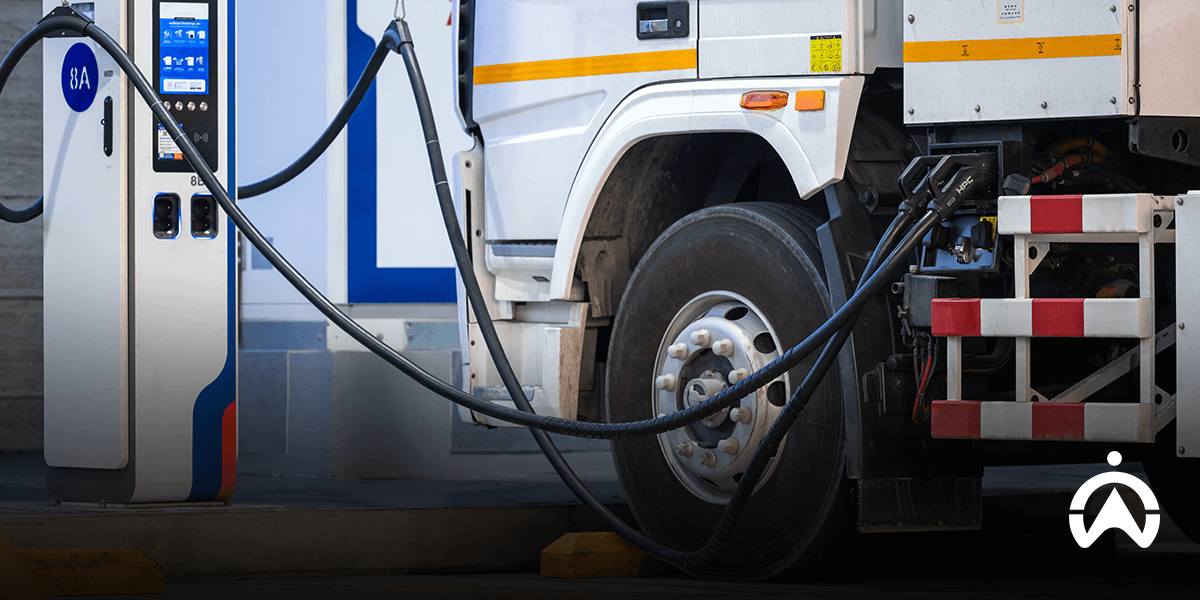
Commercial semi-truck refueling, illustrating the transition to fleet telematics systems that monitor EV battery health.

How is telematics used for EVs?

Telematics is used for EVs by tracking and monitoring your EV in real time; it’ll track energy usage data and charging time slots. But above that, a telematics system can optimise your entire EV fleet, thanks to features like maintenance alerts and energy consumption reports.

How can a telematics system optimise your EV fleet operations?

A telematics system can optimise your EV fleet operations by giving you complete insights into how your EVs are performing. With the insights provided you’ll be able to schedule vehicle charging during quiet periods and identify which electric vehicle in your fleet is best for each trip that’s needed each day.

Real-time GPS tracking lets you adjust schedules on the go, and the detailed reports you receive will provide you with the evidence you need to improve any strategies and productivity. Having a telematics system for your EV fleet not only assists with battery health, but it also transforms the way you manage your entire operation.

Key features of a telematics system for EVs

The key features of a telematics system for EVs include battery monitoring, charging insights, route optimisation, driver behaviour, predictive maintenance and range prediction. If you’re unsure as to why you need a telematics system for the EVs in your fleet, here’s a breakdown of the features you’ll get.

Real-time battery monitoring

The most important thing you need to do if you have an EV in your fleet is that you have to keep track of SoC, SoH, temperature and voltages. Without these insights, the integrity of the batteries is compromised. By monitoring the battery health, you’ll be able to keep them in the best condition for as long as possible. We know EVs are expensive, so this makes sure you get the most out of your vehicle.

Charging status alerts

To power your EVs, their batteries need to be charged. As a fleet owner you need to know the charging status of each and every EV in your fleet. A telematics system will send you notifications for all types of charging statuses (completed, interrupted, and low battery.)

Charging insights

You also need charging insights on your EVs. With telematics you’re able to get insights on each electric vehicle’s charging history, and on top of that you can create a proactive charging schedule. By having a proactive charging schedule, you’ll never be behind schedule because some of your EVs didn’t get charged the day before.

Range prediction

Range anxiety is a real problem for anyone who owns an EV. Telematics is the solution to ease your worries with predictive insights. These insights will let you know how far your EVs can travel by looking at energy use, charging habits, and the terrain that’ll be travelled. This way you’ll know exactly when your vehicle needs to be stopped to get recharged.

Diagnostics and predictive maintenance

Parts for electric vehicles are not exactly cheap. But when you connect your EVs with a telematics system, you’ll get alerts on all exterior, system and battery issues so you can schedule maintenance before they affect your fleet. A simple thing like having underinflated tyres can cause a major decrease in the KMs your EV will get.

Driver behaviour

From the stats mentioned at the beginning of this blog, we see that the longevity of your EV’s battery is directly linked to driver behaviour. Telematics will give you comprehensive insights on exactly how your drivers are handling your EVs; are they speeding, taking corners aggressively or braking harshly? This data will allow you to give your drivers proper coaching to handle the EVs, and you can ultimately improve the lifespan and performance of your EVs.

Route optimisation

You want to get the most KMs out of your EVs, and you can achieve this with a telematics system. Thanks to advanced GPS tech, telematics can help plan the best routes for your EVs to take, making sure they avoid traffic, unkept roads and unnecessarily long routes, all of which contribute to decreased energy use.

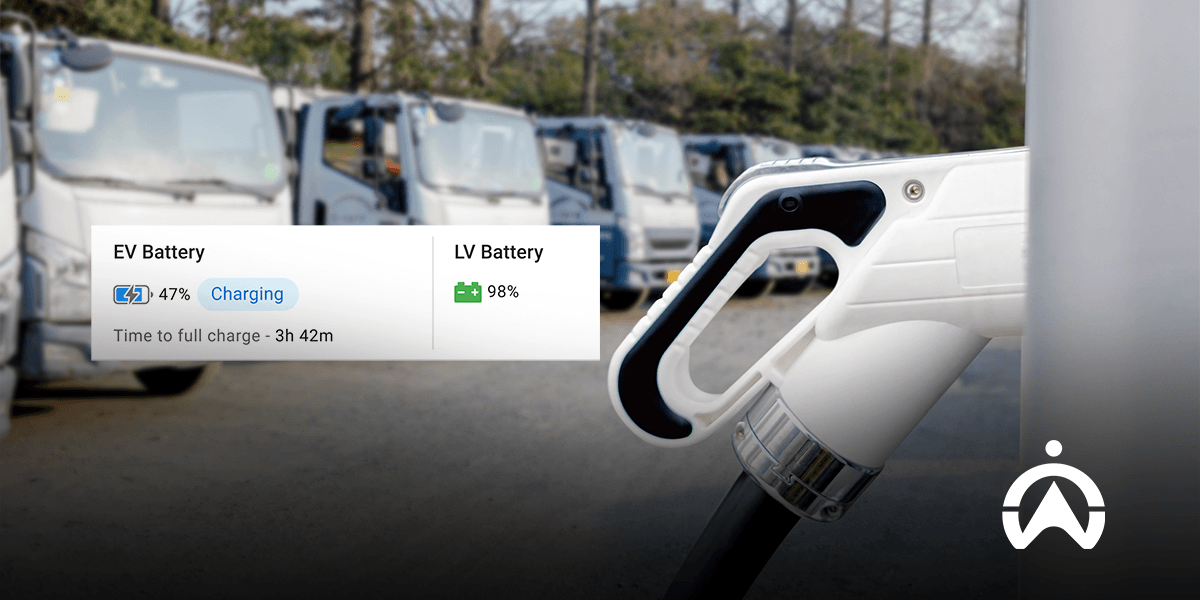
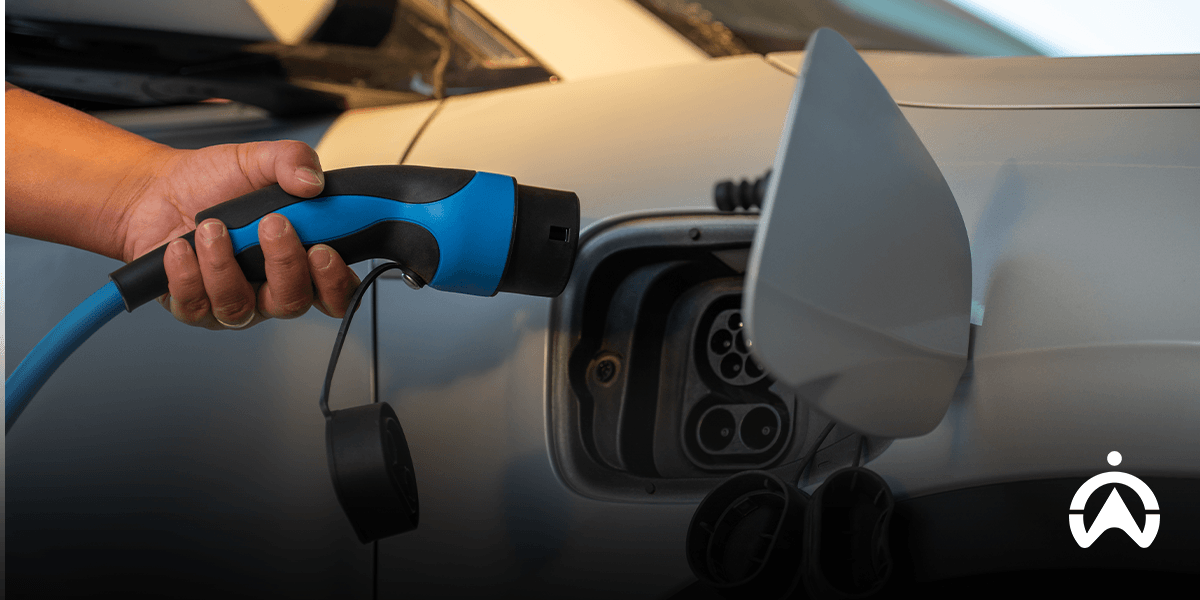
Close-up of an electric vehicle charging connector with a telematics display showing EV battery health at 47% and LV battery at 98%.

How to do an EV battery health check

To do a detailed EV battery health check, there are a few things you need to do, such as check the battery health, the actual EV range, and the SoH and install a telematics system. By following this procedure, you’ll be able to make sure your EV’s battery health is in tip-top condition.

  • Battery capacity: Charge your 400 kWh truck to 200 kWh and see if the SoC goes to 50%. This is how you can check the battery management system in your vehicle.
  • EV range: Monitor if your vehicle’s actual range at a full charge is the same compared to the estimate given by WLTP.
  • Monitor the SoH: Your EV has a built-in battery health monitoring system. To access this information, you’ll need an on-board diagnostic device, which can tap into the BMS and check the overall health of your battery.
  • Telematics system: Installing a telematics system in your EV is one of the most accurate ways to test your EV battery health. It’ll use in-vehicle sensors and GPS to record real-time data on the battery status, charging patterns, and energy utilisation.

Why choose Cartrack Tanzania as your EV fleet partner

You should choose Cartrack as your EV fleet partner because our telematics software is designed to work on any fleet. It doesn’t matter if your fleet is fully EV or if it’s mixed. You’re able to use one single platform for all of them. And we don’t just work with your LMVs or trucks; we can work on your electric scooters, forklifts and buses too.

With Cartrack Tanzania, we’ll provide you with:

  • Real-time battery management
  • Predictive maintenance
  • Mixed fleet efficiency
  • Driver behaviour monitoring and scoring
  • Asset protection
  • ESG reporting

If you’re ready to optimise your EV fleets and improve their battery health, contact us today to help your electric fleets go further.

FAQs

Are EVs and hybrid cars the same?

No, even though they are often grouped together, EVs and hybrid cars are not the same.

  • Electric vehicles are solely powered by an electric motor and a battery pack.
  • Hybrid vehicles are powered by a combination of an electric motor and a petrol engine

What are the negatives of buying an electric car?

There are a few negatives of buying an electric car; these are:

  • A high initial cost to buy the vehicle
  • Limited driving range compared to a ICE
  • Charging times can be lengthy
  • Expensive repairs
  • A lack of charging infrastructure in public spaces

Are there any challenges when implementing telematics?

The possible challenges you can face when implementing a telematics system in your fleet are upfront costs and complete system integration. You’ll also need to train your staff on how the telematics system is going to work and how to use it.

How to use GPS tracking correctly

Use your GPS tracking correctly by maximising its functions and features. With the right company, GPS tracking isn’t just about knowing where your car or fleet is; it’s about strengthening safety & achieving real power and competitiveness in your business.

GPS tracking isn’t only a smart business choice anymore. While businesses are the largest adopters of trackers and are seeing staggering drops in fuel and accident-related expenses, personal trackers now make up 38% of the global tracking demand. People are welcoming tracking and location sharing as a necessary safety measure to protect their cars and loved ones.

Don’t fall behind; stay ahead of your competition by having a clear grasp of everything GPS tracking has to offer. Keep reading to find out more about GPS tracking, the solutions on the menu, and why Cartrack should be your #1 choice for a long-term partnership.

Key Takeaways:

  • Using GPS tracking correctly means going beyond just checking a location and actually using features to stay safe and improve work.
  • Hardwired trackers are the most reliable choice because they use a network of satellites to pinpoint your exact position within just a few metres.
  • For families, sharing your live location and getting instant notifications provides huge peace of mind when loved ones are on the road.
  • Business owners can save a lot of money by using tracking data to plan better routes and stop vehicles from idling or wasting fuel.

What’s the best way to use GPS tracking?

The best way to use GPS tracking is by installing hardwired trackers into your vehicle(s) & taking advantage of the handy features from the connected platform and/or app. Taking this approach is truly using your GPS tracking correctly, reaping benefits like improved safety, a consistent overview, and smoother, more affordable operations.

What is GPS tracking?

GPS (Global Positioning System) is a navigation system that helps you determine the location of your vehicle, but also helps you navigate your way on the road and use the best routes to do so. When you use a GPS tracker, it pinpoints your position by using the signals from a few satellites to narrow it down as accurately as possible.

This is done through trilateration, which takes the latitude, longitude, and altitude from satellites to calculate your device’s position. A GPS network usually has about 24 satellites at any point to work efficiently, although there could be more to ensure even stronger accuracy. This is the foundation of GPS tracking.

Each satellite transmits its own position using radio waves. The tracker then acts as a receiver of signals from the satellites and then transmits that information to get the exact position (within a few metres). This information, i.e., your position, then shows up on your platform, whether it’s your fleet platform, your phone app, your device, etc.

Why should you use a GPS tracking system?

You should use a GPS tracking system because it does wonders for your safety and presents some great applications. As an individual, you have eyes on your car at all times, and if you’re partnered with a reliable tracking company like Cartrack Tanzania, you’re likely to have stolen vehicle recovery (SVR). If you’re stuck in an unsafe situation, emergency response teams can also find you quickly.

As a business owner or fleet manager, fleet visibility is guaranteed. Again, if you’re partnered with a supplier like Cartrack Tanzania, you can monitor your vehicles & ensure your drivers are safe while maximising the benefits of the features of GPS tracking and telematics.

Is GPS tracking actually accurate?

Yes, GPS tracking is actually accurate & reliable, assuming it’s done using a high-quality device and the conditions are clear. Under normal circumstances, a GPS tracker will be rather precise & have a small variance of between 3 and 10 metres. Devices that are higher grade and used for businesses might even be accurate up to 1 metre.

Location reporting loses its accuracy when there’s something that blocks the signal. Disrupted signals are usually caused by very tall buildings, terrible weather, and poor-quality/badly installed devices. Although, thanks to the progression of technology, we’re seeing stronger connections and less interference by these typical signal blockers.

How can GPS tracking improve your personal and business activities?

GPS tracking can improve your personal and business activities by providing live location insights that promote safety improvements and better business choices. On a personal level, you can ensure the safety of your car and the protection of your loved ones. On a business level, you can focus on better workflows and extra protection for your drivers & cargo.

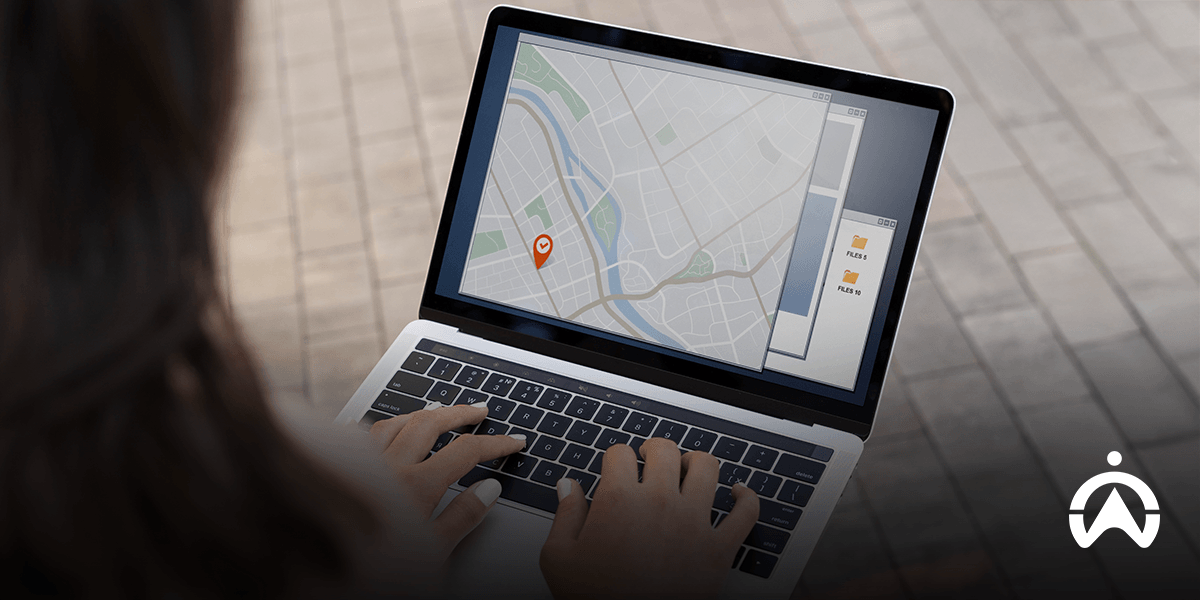
A person using a laptop to monitor GPS tracking software with a location pin and data folders visible on the screen.

Using GPS tracking correctly for individuals

Using GPS tracking correctly for individuals means putting the focus largely on security. Considering that Tanzanian’s worry daily about general safety, it’s likely you’re looking for a simple but effective solution to keep you and your family protected.When you use a GPS tracking solution correctly, you should be getting features like location sharing, immediate notifications, and more.

Take a look:

Location sharing & live tracking: When it comes to elderly family members orteenage drivers,you’re undoubtedly very worried about their movements and whereabouts. When you’re on the road, you probably want to know that you’re protected if the unexpected happens. With the right tracking solution, you’ll have complete knowledge about where your car or loved ones are when they’re on the road.

If you’re the victim of car theft, you can know where your car is while it’s on the move. You can also share your location with family members and vice versa, for peace of mind and easy, quick contact in an urgent situation.

Notifications: If an accident or urgent situation happens, delayed notifications are the last thing you need. The right tracking solution sends notifications immediately, whether triggered by strange activity, a loved one, or you. This means a very quick response by the control room, which is especially important for stolen vehicle recovery (SVR) efforts.

Crash sensor technologies: Many tracking solutions come with some form of sensor technology that detects when a crash has happened. As explained in the point above, if you or a loved one is involved in an accident, the control room will immediately be notified. They’ll call to see if you’re alright and direct emergency services your way if necessary.

Trip histories and reports: Trip reports make it much easier for you to get information and insights for whatever you need. In some cases, you might need the data for tax purposes. This then makes compliance and other matters effortlessly achievable, without hassle.

Using GPS tracking correctly for businesses

Using GPS tracking correctly for businesses means improving safety, increasing operations, and achieving massive cost savings. When you implement tracking solutions the right way, you have the potential to transform the way your business operates.

Let’s see what this means:

Less downtime: When you operate from a proactive instead of a reactive approach, you achieve stronger uptime. Detailed insights can help you spot the issues before they happen and plan for servicing ahead of time. From a real-time perspective,you can also respond immediately if a breakdown or unexpected issue occurs while your drivers are on the road.

Reduced expenses: Through GPS tracking, you can optimise your fleet routes, monitor your drivers, schedule maintenance, and spot general waste of fuel, time, and resources. Because there’s less waste, it means there’s less money being poured into wasteful consumption. Maximising GPS tracking helps you save tremendously.

Risk management: Ensure your drivers & cargo are monitored at all times, and know exactly where they are. Get alerted to route deviations & movement outside your geofenced locations, unauthorised vehicle movement, and other improper vehicle or hardware device tampering. Also expect SVR from a quick and responsive team.

Keep your drivers accountable. Through GPS tracking with telematics, combined with AI-powered cameras, you can keep an eye on your drivers and their on-road habits. Get notified of poor driving habits and use the recorded events to give drivers constructive feedback or coaching.

GPS tracking, together with telematics, means you’ll receive the best, most detailed, and most accurate insights technology has to offer. This way, you maximise your tracking features and get access to automated reports and trip histories. These are the keys to simple regulatory and compliance matters.

Happy customers: This is very simple; smoother operations mean satisfied customers. When processes are running smoothly, communication is effective, and emergencies are handled efficiently, you build a strong relationship with your customers and a solid brand reputation. Happy customers mean loyal customers.

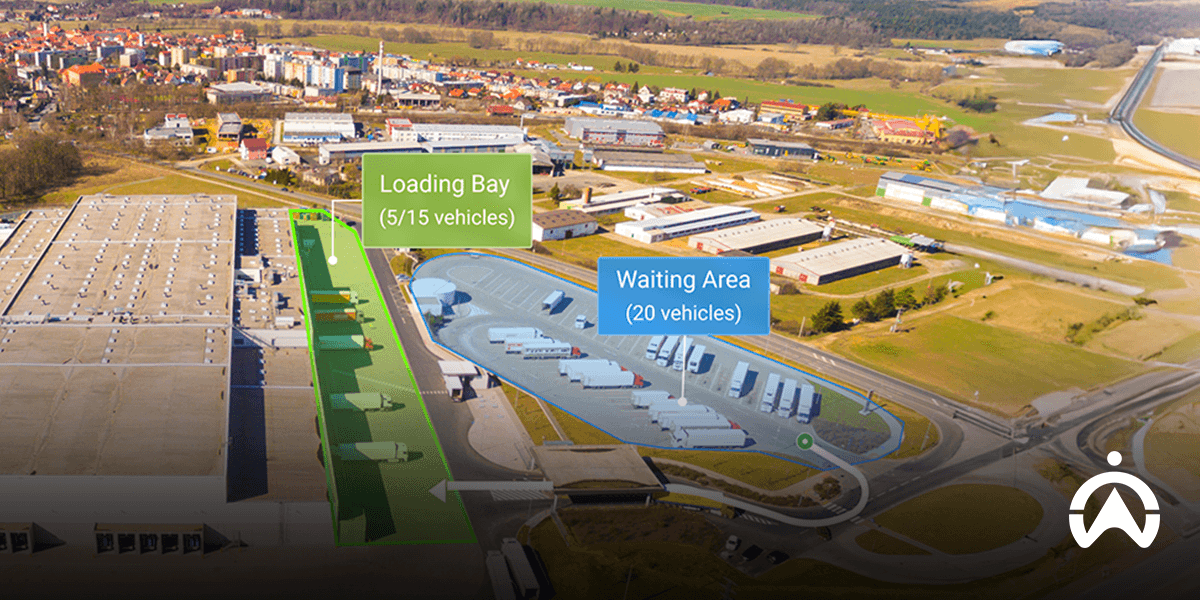
Aerial view of a logistics distribution center and fleet of trucks using GPS tracking for dock scheduling.

How to choose the right GPS tracking solution?

To choose the right GPS tracking solution, consider some important steps like identifying pain points, comparing potential providers, and deciding on your non-negotiable features. These will help you narrow down your options. Always be sure to check the fine print, and remember that the cheapest option isn’t always automatically the best.

These are some considerations and questions to ask:

  • Pain points and the need for a tracker: Take a moment to think about why you want a GPS tracker for your car(s) and ask yourself some important questions.

    As an individual, are you thinking about the safety aspect? Are you trying to keep an eye on an elderly or teen family member? As a fleet manager, are you wanting to maintain better visibility and control of your fleet? Are you trying to decrease operational expenses?

  • Non-negotiable features: Jot down the features and tools that you’re looking for. Are you looking for a passive or active tracker? Is your tracker going to be a hardwired device or a portable tracking device? Will you incorporate anti-jamming and backup technologies? Does the associated platform working with your tracking device allow for third-party integrations?
  • Comparing potential providers: If you have some providers in mind, compare them by looking at offerings, prices, and other variables. Is your preferred option a well-known, highly ranked company? Is local support and training offered? Does the company secure your data according to industry-level encryption standards?
  • After the sale’s been made: The best solutions will have an accompanying support system that goes beyond just the sale. Will the company you choose provide you with regular software updates for the platform or app? Will the partnering company ensure an installation that doesn’t affect your car’s warranty?

Why is Cartrack Tanzania one of your best GPS tracking choices?

Cartrack is one of your best GPS tracking choices because we offer everything you could need at an affordable price. Our reputation precedes us. Thousands of people and companies have put their trust in us to keep them safe, meet their needs, and provide the best in advanced technologies. Whether you’re an individual or a business, you’ll know you’re covered.

Here at Cartrack Tanzania, we understand what using your GPS solution correctly & optimally can do for you, and we’re here to help you achieve the best results possible. Firstly, our solutions are affordable, with packages available for both individual customers and fleet operators. Our hardware installation is FREE, and you’ll have access to round-the-clock, localised support when you need it.

Every single package comes with access to the mobile app, customer support, and SVR. For fleets, you can choose which fleet deal aligns best with your business and customise your package to include all kinds of sophisticated add-ons. From safety, risk management, and admin & compliance to integration and industry-specialised sensors, we have it all. You don’t have to look any further!

Final takeaway:

Getting the most out of GPS tracking and using it correctly means fully embracing and experiencing its features and perks. By doing that, you open up a world of benefits that could change your perspective onsafety andoptimisation.

Cartrack not only provides you with the right GPS tracking package but also helps you use it correctly, offering the best in accompanying tools and software to suit your needs. Whether you’re a business or an individual, we’re prepared to help (down to delivering after-sales support!).

Use your tracking technologies and tools to your full benefit. Join the over 2.6 million Cartrack subscribers globally and secure your customised GPS tracking package today!

Frequently asked questions about proper GPS tracking

What to do if the GPS location is wrong?

If your GPS location is wrong, carry out a few fixing methods to see what could be the cause. You can try to restart the tool or (depending on what device you’re using) select the on/off button for GPS tracking. If you’re in a crowded or densely forested area, try to get somewhere that’s clear and open.

Can a cell phone detect a GPS tracker?

Depending on the tracker type, yes, a cell phone can detect a GPS tracker. If we’re looking solely at GPS transmitting trackers, then that’s far more difficult to track with your phone. You have a better chance of catching a tracker that’s Bluetooth-powered, like an AirTag. These send notifications to your phone and allow you to scan for nearby devices.

What blocks GPS tracking?

Jammers, certain structures and environments, and specific materials can block GPS tracking. Signal jammers can drown out and “impair” satellite frequencies. Structures and environments, like tall concrete buildings or terrible weather, can disturb signal strength. And certain materials, like foil or even silver, can catch or retain radio waves, disturbing how they’re transmitted.

How Digital Twins Are Truly Boosting Your Fleet Management Today

Digital twins are truly boosting your fleet management by offering the best in simulative, virtual technology that helps improve your business overall. It goes a step beyond telematics, offering even deeper analysesand insights into each of your fleet vehicles. Better insights = moreinformed business decisions and bigger cuts on business expenses!

As of early 2026, we’ve seen a powerful infiltration of digital twin technology in logistics. A recent global analysis showsthat 92% of organisations using digital twins are seeing an impressive return on investment (ROI) exceeding 10%. Over half of these users are seeing an increase of at least 20% thanks to enhanced asset performance.

Elevate your fleet with revolutionary technology and maintain your edge over the competition. Keep reading this blog to understand digital twin technology, explore the pros & cons, and discover how Cartrack Tanzania can help you move towards a more innovative future for your fleet.

Key Takeaways:

  • Digital twins are highly detailed virtual copies of real objects that use live data to help you test out changes without any real-world risk.
  • This technology goes a step beyond standard tracking because it lets you run what-if simulations to predict breakdowns.
  • You can use these virtual models to fine-tune your routes and make your customers happier by providing a much smoother service.
  • Setting up these systems can be complex and overwhelming, so it is best to partner with a trusted tech company to handle the heavy data lifting.

What are digital twins doing to improve your fleet management?

Digital twins are improving operational processes and helping you save money when it comes to your fleet management. When you implement this kind of technology, you’re staying competitive and looking towards the future of ingenuity. These technologies allow you to look forward and predict certain issues, improve workflows, and collect enough intricate data for you to confidently make business changes.

What is digital twin technology?

Digital twin technology is a detailed, constantly updated virtual replica of something that exists in real life. This could be an object, environment, or process. It doesn’t matter how intricate or complex the systems are; digital twins can manage them from a minuscule level to a process in its entirety.

Digital twins reflect live behaviours and leverage AI, sensors, collected data, and interactive tools to forecast future performance.

In the case of fleet management, each of your fleet vehicles has its unique virtual counterpart, driven by IoT data transmitted from the actual vehicle. The twin analyses this data against:

  • route pressures,
  • historical failure patterns,
  • driver behaviours,
  • typical operating conditions, and
  • environmental factors

to predict the health of components and test potential changes.

Why is digital twin technology so important?

Digital twin technology is so important because of its impact and growth that propel creative innovation. It’s looking as though this kind of technology is about to soar in popularity, as businesses want to comfortably make changes and see predictive outcomes without facing serious risk.

Looking at this from a fleet management perspective, potential failures in your fleet can be predicted before they happen, and new software, hardware, or any other update can be tested in simulation first.

Think of it this way:

You know how pilots test their flight and safety skills in a simulation before actually flying a plane? Digital twins are the same thing, but for your fleet. In a flight simulation, pilots test out emergency situations, what flying might be like in different instances & weather conditions, and take-off or landing procedures.

With digital twins in fleet management, you’re predicting downtime and maintenance, testing changes in things like routes and schedules, and monitoring operations for optimisation. This highlights the major benefits of digital twins: allowing you to test changes before implementation and making more accurate predictions.

What is digital twin technology used for?

Digital twin technology is used for:

  • replicating intricate situations and scenarios,
  • modelling environments and infrastructure,
  • testing changes,
  • risk management,

and so much more.

It can really open the door for strategic enhancement, encourage positive & predictive change, and cut down on the costly mistake of trying something out in the real world.

Some of the industries that benefit from this technologyinclude:

  • healthcare,
  • entertainment,
  • transportation & automotive,
  • manufacturing,
  • aeronautics,
  • energy, and
  • urban planning.

The 4 types of digital twins

The types of digital twins are:

  1. Component/Part twins: This refers to simulations or copies of single parts within the bigger system or environment. It mimics and monitors a very tiny but important part of something greater. For example, a valve or blade within a machine. This is perfect for monitoring core parts of a greater machine and can help in supporting predictive maintenance.
  2. Asset twins: This refers to copies of several (two or more) parts that are working together. It displays how these parts interact in real time, as they run as part of a bigger, complete system. Asset twins essentially take a closer look at how something works as a complete thing. A good example of this is an engine.
  3. System/Unit twins: This is a reflection of how many parts come together to form something whole, like a car production line. It looks at how these parts interact, making it a perfect opportunity to monitor, identify performance gaps, and see where operational enhancements can be made.
  4. Process twins: This refers to constructions of the entire build or process to achieve complete efficiency. It’s a replica of the whole production, not smaller parts (as we’ve covered in the previous digital twin types). This simulation is the best for maximising operational efficiency, helping your business increase production and generally manage resources better.

How Digital Twins Are Truly Boosting Your Fleet Management Today

Are digital twins actually useful?

Yes, digital twins are actually useful. Telematics is an already powerful systemthat provides crucial information and vehicle diagnostics. Digital twins take it a step further by adding an extra, even deeper layer of monitoring and proactiveness. Real-time hypothetical and “what-if” situations can comfortably be played out without worrying about potential risks.

If we look at it in simple terms, fleet management insights operate more like a dashboard, showing you what’s happening right now (with the ability to access past information). Digital twins have more of a focus on a simulation that communicates what will happen, making it easier for you to test a change before actually applying it in real life.

What are some pain points that digital twins resolve?

Some of the pain points that digital twins resolve include slow & congested operational processes, poorly planned routes & schedules, and inadequate services or products. Thanks to the in-depth data collection & predictive insights, combined with AI and IoT, there’s room for growth, development, and change.

These are some of the tangible benefits:

Improved & accelerated operational processes

By implementing this technology, you can run simulations to check whether any changes you want to make could work in the real world. You can also check for general defects in a product or service you provide, because sometimes there are issues you might overlook when examining it yourself.

This is a great opportunity to use the data provided to improve your business operations.

Optimisation & predictions

You can optimise facets of your business, like schedules or routes. Digital twins give you a complete & total overview of your assets, and the information collected from IoT devices will reflect how the parts of your vehicles are working. Because of this, you can immediately see when there’s an issue and address it immediately, or take advantage of the predictive maintenance.

You don’t have to deal with the fallout once the costly breakdown has happened.

Better products and services

Because you’ve tested and run the product/service through simulation, you know what’s working and what could work. The consistent data means you can take a proactive approach and not allow yourself to be disappointed by potential failures in the real world.

Happier customers & a solid reputation

The evident successes of digital twins will bring about happier, more loyal customers, boosting your business reputation. Optimised processes and improved performances mean customers get the best in the services they receive.

Less downtime

As mentioned earlier, digital twins make it far easier for your business to anticipate potential breakdowns and necessary servicing. You can be far better prepared so that you handle mishaps quickly or even steer clear of them entirely.

Are there downsides to using digital twins in fleet management?

Yes, there are some downsides to using digital twins in fleet management. While the upsides prove to be of massive value to your business, it’s still important to understand that factors like data overload, security concerns, and technical complexity can make this technology daunting.

Consider these challenges:

Data overload

For this technology to work optimally, consistent, high-quality, and complex data is needed at all times. That information is also coming from so many sources at any given time, which adds to its complexity. Being inundated with this level of data can be quite overwhelming, and if you don’t have fleet software that’s organised, this can make data collection a difficult and fragmented process.

Combatting this means ensuring cohesion (i.e., having a comprehensive fleet management platform) and an integration-friendly platform that’ll accommodate this technology.

Security organisation & concerns

When you’re dealing with this much operational data, the topic of sensitivity and security is a major concern. In situations where that data includes people’s personal information, there’s even more pressure to ensure safety policies are fulfilled. Collected information should always be protected and handled with complete care, especially according to industry standards.

Technical complexities

Specialised engineers and professionals are required for the building and maintenance of digital twins. From data analysis & synthesising to rendering and continuous software development, specialised expertise is clearly necessary. Above this, it also means that staff members would need to be trained on this technology and the data management that comes with it.

The best way to tackle this is to team up with a technology company that would provide the best services and support for an implementation of this magnitude.

Flexibility & scalability

You must ensure that you’re confident and stable enough to continually invest in the technology. The more your business grows, the bigger the data and complexity demands will become. Ensure that you have strong strategies and systems in place that will allow that growth to happen smoothly.

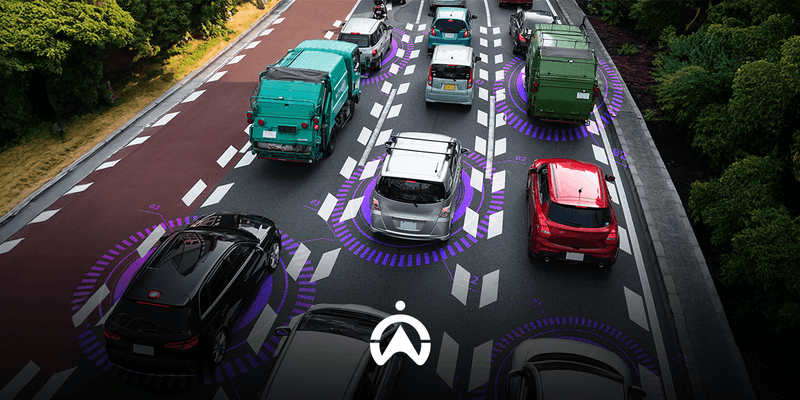
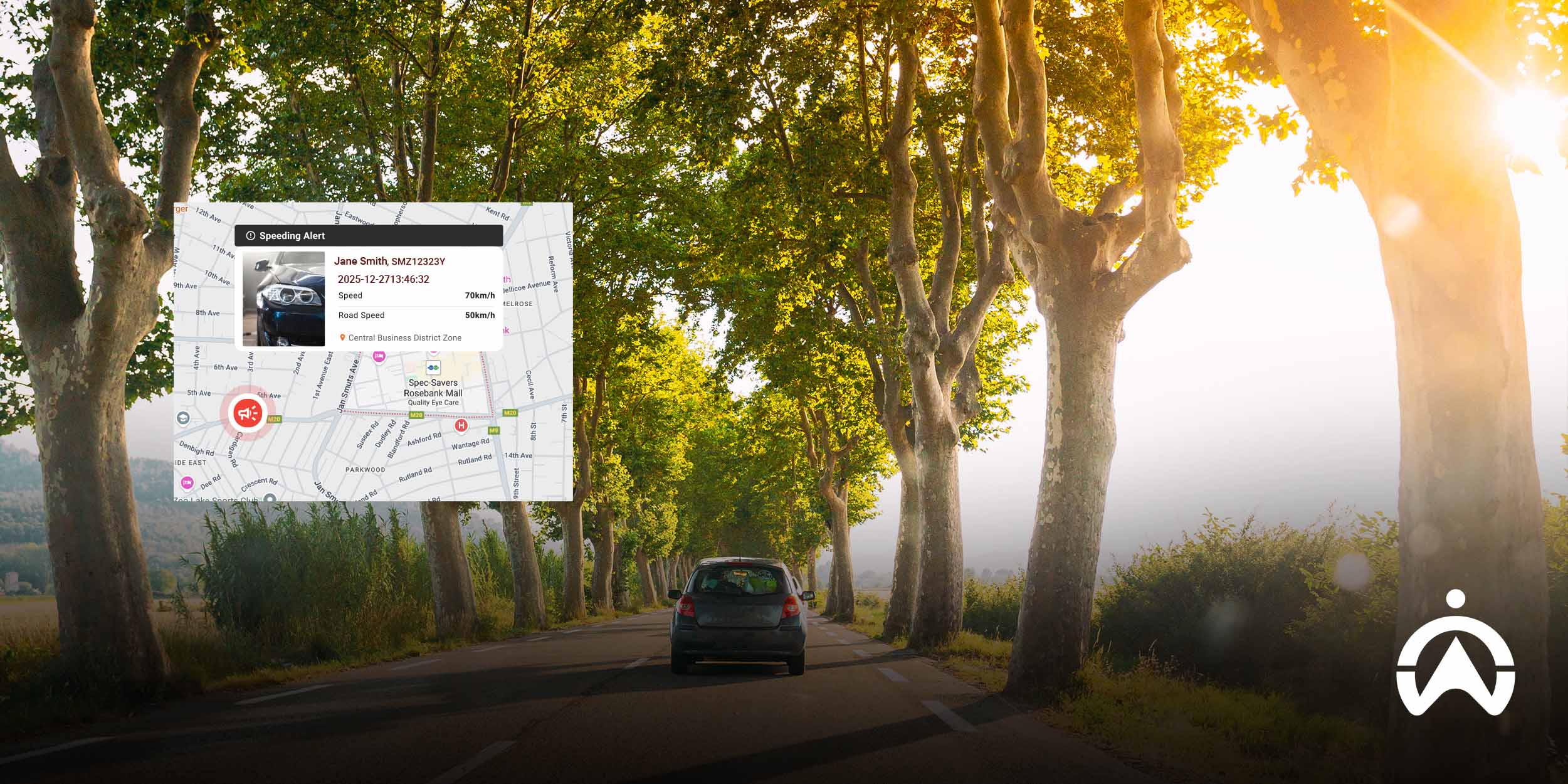
A car driving on a tree-lined road at sunset with a digital twin map overlay showing a speeding alert for fleet management monitoring.

Does Cartrack Tanzania support digital twin integration?

Yes, Cartrack Tanzania does support digital twin integration. We use an API-first approach(making us integration-friendly), although we won’t build the digital twin itself. Cartrack’s API integrations allow you to seamlessly connect to other systems, making it a perfect solution for your fleet management transformation.

What digital twins need is powerful telematics, a consistent stream of vehicle data & diagnostics, and smooth integration. Cartrack meets all those needs, providing the real-time flow of data that’s required while supporting fleet improvement through its SaaS platform. All of Cartrack’s tracking units are IoT devices that are integrated into your vehicle telematics. We can be the perfect source for your twin technology groundwork.

It’s important to note that we’re not a digital twin platform; we’re a twin-ready infrastructure designed to support your fleet management growth and evolution. We recognise the importance of embracing future-forward technologies like these twins, and that’s why we’re prepared to be your long-term partner for steady growth and reliable, accurate data.

Final takeaway: Digital twins as a means to revolutionise fleet management

Fleet data is the backbone of positive change and business growth, and that’s why adopting digital twin technology is the key to even bigger growth. While a giant step forward for your business, you also need a dedicated and supportive partner that’ll provide the necessary framework to keep the twins running.

We have your back. Alongside the required data and insights, we’re also locally focused and available 24/7, 365. You’ll get everything you need to push your smarter decisions and technological growth forward.

With Cartrack Tanzania, you have the solid foundation to explore advanced innovations like digital twins to keep you prepared for what’s next. Speak to one of our professionalsand turn your fleet data into insightful business decisions today!

Frequently asked questions about digital twins

Who is the father of digital twins?

The father of digital twins is Dr Michael Grieves. He was working at the University of Michigan and came up with this technology as part of his concept for product lifecycle management (PLM) in 2002. He initially dubbed this “mirrored spaces model”, then “information mirroring model”, but settled on “digital twin” in 2011.

What skills are needed for digital twins?

Skills needed for digital twins include:

  • Computer programming, preferably Python
  • Familiarity with AI tools and simulation modelling
  • 3D rendering tools, like CAD
  • Data science and analytics
  • (Preferably) Cyber security

There are also other soft skills that are important to consider, like being an active problem-solver and someone who can confidently work in a team.

What is the future of digital twins?

The future of digital twins essentially points towards even better, more automated, and AI-driven simulations that present predictions with more precision. It’s said that digital twins will:

  • become immersive,
  • become widely adopted,
  • become a service (like SaaS) so that businesses don’t have to build from scratch, and
  • be used as a means for job training, so time isn’t wasted.

What is the salary of digital twin engineers?

According to Salary Expert, the salary of digital twin engineers is around TZS 15–25 million per year. It also all depends on what industry you’re going into, your level of experience, and whether you’re in a specialised programme.

How to Start an E-hailing Business and Be Profitable

To start an E-hailing business and be profitable, you first need a solid business plan. When it comes to starting an e-hailing business, you have two options:

  1. Start a new e-hailing business from scratch or
  2. Build a fleet with an existing e-hailing company.

Either way, with the right planning, you can be successful and profitable.

According to Statista Market Insights, Tanzania’s ride-hailing market is experiencing steady growth, driven by increasing smartphone penetration, urbanisation, and rising demand for convenient transportation services. This indicates strong potential for entrepreneurs entering the e-hailing industry. Starting an e-hailing business in Tanzania can be highly profitable, particularly in major urban centres, but success depends on factors such as operational efficiency, technology, competitive pricing, and customer experience.

At Cartrack we can’t get you drivers or cars, but we can offer you all the right technology you need to keep your e-hailing business zooming past all of your competitors. We have GPS tracking, AI dashcams, panic buttons, fuel management and driver behaviour monitoring, to name a few.

So if you’re ready to start your e-hailing business and make a profit, keep scrolling because the team at Cartrack Tanzania is breaking it all down for you.

Key Takeaways:

  • Legals are non-negotiable: As of March 2026, LATRA-compliant vehicle tracking is compulsory for commercial and public transport vehicles. Don’t risk massive fines or impoundment by skipping these basics.
  • Tech is your profit partner: Real-time GPS and AI dashcams aren’t just about safety; they’re about cutting fuel costs and keeping your cars on the road longer
  • Pick your niche early: Whether it’s pet-friendly rides or corporate shuttles, having a clear USP stops you from being just another unremarkable car in traffic
  • Know when to buy or lease: Choose based on your mileage. Buying builds long-term equity for high-volume drivers, while leasing keeps your monthly cash flow predictable

How to start an e-hailing business

To start an e-hailing business, you need to understand the intricacies of this market, specifically in Tanzania. It’s not just about getting a customer from one place to another; it’s about creating a travel experience that keeps customers coming back.

If you want to create long-term success, create a business plan, which is important even if you want to join an existing e-hailing company. In your business plan you need to decide on a few factors that’ll help guide you.

Identify your target audience

You need to decide who your customer base is going to be: are they daily commuters, tourists, students, professionals, or all of the above? When you know exactly who your ideal customers are, it’s easy for you to tailor your services to match their needs.

For example, let’s say you want your client base to be tourists only; you need to make sure you:

  • Are based close to airports and hotels
  • Have a vehicle that’s big enough for big groups and has enough boot space for luggage
  • Have water and local snacks available in your car
  • Have tourists’ attraction pamphlets in the car
  • Know your city well enough to give recommendations
  • Have a decent command of the English language

Set your pricing

If you’re starting your own e-hailing company from scratch, you’ll have to set up a pricing structure. Will you have lower or similar pricing to your competitors? Are you going to have added benefits with premium plans so that you can charge higher fees? All of these factors need to be considered, as this is how you’ll make money.

What’s your USP?

The most important thing you need to determine is what your unique selling point (USP) is. This is what will set you apart from other drivers or other e-hailing services. Without this, you’ll disappear into the traffic of transportation options and are most likely to be forgotten by the e-hailing giants or just be another driver that’s completely unremarkable.

What you provide and how you deliver it will be what you’re remembered for, and this can either make or break your business. So ask yourself, what are you going to do that sets you apart from others?

Here are some niche e-hailing options you could look into:

  • Pet-friendly
  • Elderly-friendly
  • Woman-for-woman
  • Eco-friendly
  • Sober chauffeurs
  • Family-friendly (car seats available)
  • Suitable for disabled people
  • Subscription-based
  • Corporate staff transport
  • School runs

Make sure you’re compliant

The most important thing to ensure your e-hailing business is successful is to make your business compliant with government laws. The National Department of Transport has stated that public transport operators need operating licences.

Additionally, this act states that all e-hailing services must make sure that:

  • Every vehicle is clearly branded or has a sign indicating that it’s an e-hailing vehicle
  • All driver and vehicle details must be visible in the app
  • All vehicles have panic buttons installed
  • Drivers and vehicles are compliant and must have the proper documentation readily available

Vehicles in your business

You need to decide which vehicles you’re going to use in your e-hailing business. Do you own them? Are you renting them? Do they belong to your drivers? Are you using electric vehicles? This information is vital to know how your operations are going to run.

So how do you decide?

If you’re worried about the volatile fuel situation, then perhaps you should look into electric vehicles for your business. EVs have been seen to reduce maintenance costs and completely eliminate fuel costs, boosting net income by 15–20%!

If you want your e-hailing fleet to consist of the latest models, then leasing vehicles will be the best option for your business! Just make sure you adhere to the mileage rules and requirements.

Don’t have the capital to get your own vehicles? Then get drivers with their own cars! Make sure you have each vehicle checked for roadworthiness so you’re still meeting legal compliance regulations.

Joyful woman with curly hair waving while holding her phone on a sunny street, illustrating customer demand and opportunities when learning how to start an e-hailing business

What technology do I need for my e-hailing business?

The technology you need for your e-hailing business, if you’re starting one from the ground up, is a user-friendly app, quick and easy payment systems, and advanced GPS tech. On top of these three things, you should also have AI cameras, panic buttons, advanced fare calculators, analytics and customer-support tools.

User-friendly app

The most important technology you’ll need to have a successful e-hailing business is to build a user-friendly app. This is the first touchpoint for your possible customers, and if they can’t navigate your app, or if it’s slow and complicated, they’re just going to hop off it, delete it and go back to the e-hailing companies they’re used to.

Payment systems

The payment systems you use should be simple and easy to use. You should also give multiple payment options, like PayPal or Apple Pay. Using systems that people already know and trust will make customers feel more confident when they’re paying you.

Real-time GPS tech

Having real-time advanced GPS technology in your e-hailing fleets doesn’t just show your drivers where to go; it gives you, as the owner, eyes on your entire fleet, 24/7. You’ll know where all your drivers are, know where the best spots are for your drivers to wait for possible clients, save on fuel costs, and create safer rides for drivers and passengers.

Having real-time GPS tech in your operations will allow you to provide your customers with accurate ETAs and your drivers with smoother journeys. Real-time GPS tracking can see how a vehicle is behaving on the road (speeding, harsh braking, aggressive cornering). When your drivers know that you have eyes on them at all times, it’ll ensure they make safer driving choices, which ultimately makes your customers feel safer.

You and your drivers can save on fuel with GPS tech because you’re able to find the quickest and most fuel-efficient route.

An added perk of having real-time GPS tracking (from Cartrack Tanzania) is the reassurance that if your vehicle is stolen, we’ll go out to try and get it back for you!

AI cameras

Having dashcams is incredibly important for e-hailing drivers, and having AI ones is even better. A normal dashcam is great; it can record inside, and some of them can record outside the vehicle as well. Dashcams make your drivers and passengers feel safer. These will also assist with any false claims and make insurance investigations go faster.

However, AI cameras take this one step further for e-hailing owners. You’ll have eyes on your drivers, and you can track driver behaviour in real time. Your drivers will get in-cabin alerts if they’re:

  • Fatigued
  • Distracted
  • Smoking
  • Speeding
  • Not wearing their seatbelts
  • About to hit a vehicle in front of them
  • Covering the camera

All these features not only enhance the safety of your fleet and your customers, but you can make sure your drivers are being safe on the road and aren’t giving your company a negative reputation on the road.

Panic buttons

Having a panic button installed in your e-hailing vehicles is a nice-to-have. Panic buttons are great for drivers and your passengers because in an emergency situation (accident or hijacking), they’ll feel safer knowing that emergency services have been alerted.

Fare calculators

You need an accurate fare calculator, because unpredictable pricing is a sure way to turn customers away. Major Tanzanian cities such as Dar es Salaam experience significant traffic congestion, particularly during peak commuting hours. By connecting your fare calculator to an accurate GPS and real-time traffic monitoring system, you can provide drivers with optimal routes and more reliable travel-time estimates. This also enables customers to receive accurate fare estimates before booking, improving transparency, trust, and overall user satisfaction.

Real-time analytics

As the fleet manager, you need insights into your entire fleet—this is where telematics comes in. Cartrack’s telematics system will give you operational intelligence into your fleet. This is what you get:

  • Know which vehicles are idling or speeding
  • Know when a vehicle needs maintenance done
  • Insights into how drivers are behaving on the road
  • Set driver schedules and routes
  • Track fuel usage
  • Spot fuel theft
  • Automate admin
  • Set up geofences
  • See all vehicle trip histories
  • Log book reports

Customer support tools

Last but not least, a piece of tech you’ll need is customer support tools. If your customers experience a rude driver, you’ll want to know about it. If they’ve experienced any issues with any of your drivers or vehicles, they need a platform to voice their issues.

Smiling man driving a car and looking back over his shoulder, representing how to start an e-hailing business with a positive and confident driver experience in a bright, relaxed interior

How does Cartrack Tanzania keep your drivers, fleet and customers safe?

Cartrack keeps your drivers, fleet and customers safe with AI cameras, real-time GPS tracking, panic buttons and driver behaviour monitoring. On top of that, we offer 24/7, 365 support, we have a dedicated recovery team, and we provide you with operational intelligence so you can keep your business safe and compliant.

Here’s how Cartrack Tanzania can help you

Compliance-ready panic buttons

Panic buttons are a great tool to keep your driver and passenger safe. As previously stated, they’re now a legal requirement for e-hailing businesses as well.

At Cartrack you can get a panic button that’s attached to your camera that’ll automatically send live footage to our control room when pressed. Or you can get an in-cabin panic button placed in an easy-to-reach (but discreet) location of your choosing within your vehicle.

Predictive maintenance

E-hailing vehicles will experience significantly faster wear & tear on their vehicles compared to an average driver. This is why you need predictive maintenance for your e-hailing fleet.

Cartrack’s fleet management system gives you immediate alerts for any engine faults, worn brake pads, low oil & water and any other diagnostic faults detected so you can take action before they unexpectedly affect your operations.

Our system also allows you toschedule maintenance for your vehicles so you’re able to easily track maintenance and avoid any unplanned downtime.

Fuel management with MiFleet

One of the major costs to any fleet, especially e-hailing businesses, is fuel. And if you, as the owner, are covering the costs of fuel for your fleet, you need insights into every drop.

MiFleet is a value-added service from Cartrack that can easily cross-reference fuel receipts with the vehicle’s actual location and the tank’s capacity. This allows you to accurately monitor fuel usage and make sure no one is stealing or wasting fuel.

Top-of-the-range cameras

Cameras are a must for every vehicle that’s part of an e-hailing fleet. They provide protection and indisputable evidence in any situation.

Cartrack has a wide range of cameras for you to choose from! Our AI camera systems can give you and your drivers real-time alerts to any dangerous driving habits, use cloud-based storage and allow you to effectively coach your drivers.

GPS tracking and recovery

GPS tracking is the most important thing your e-hailing business needs. And if it comes with a recovery team in case your vehicle gets stolen… even better!

Cartrack’s GPS tracking gives you:

  • Real-time visibility on all your vehicles
  • Smarter and more efficient route planning
  • Insights to when vehicles are being misused
  • Accurate arrival times
  • A dedicated and highly trained recovery team
  • 24/7, 365 support team

Driver behaviour monitoring

Your drivers can make or break your e-hailing business. If they’re driving recklessly and making your clients feel unsafe, your business will fail before you even make a profit.

Cartrack Tanzania can provide you with a full driver monitoring system. This system consists of cameras, GPS tracking and driver scorecards.

  • Cameras: Visually keep an eye on drivers and make sure they’re not using their phone while driving, smoking in the car, or driving fatigued.
  • Telematics: Alerts you to reckless driving like harsh braking & cornering and excessive speeding.
  • Driver scorecards: These work with the telematics and allow you to rate driver behaviour, and then you can coach them on problematic issues.

If you’re ready to start your e-hailing business and be profitable, thencontact our team todayto get your e-hailing vehicle optimised for success!

FAQs

What hidden costs should I budget for when starting an e-hailing business?

The hidden costs you should budget for when starting an e-hailing business are an increase in wear and tear costs, high insurance premiums and operating fees. You should also ensure you have enough capital to keep your business afloat for at least the first three months.

How do I handle dangerous customers in my e-hailing vehicle?

Handle dangerous customers in your e-hailing vehicle by doing the following:

  • Verifying the customer’s name before they get in your car
  • Keep doors locked until you’ve verified it’s the right person
  • Pull over when safe and cancel the trip
  • Don’t engage with rage-baiting clients
  • Press the panic button
  • Report the incident immediately after it happens

Should I buy or lease a vehicle for my e-hailing business?

Buying or leasing a vehicle for your e-hailing business completely depends on daily mileage and cash flow needs. Buying is best if you have a lot of daily trips and if you want complete ownership. Leasing gives you lower monthly premiums, and you’re able to upgrade to newer models, but you have to stick to the mileage limits.

How to Detect and Stop Your Truck Drivers from Moonlighting in Your Fleet Business

Detect and stop your truck driversfrom moonlighting in your fleet business by adopting a comprehensive and sophisticated fleet platform. By having this, you’ll be able to clearly detect any inconsistencies and back up the evidence you present when you approach your moonlighting driver.

Over the years, side-hustle ventures have grown exponentially, leaving fleet owners in quite a bind. Research by Frost & Sullivan shows that exploring the benefits of a fleet system, like GPS monitoring and fuel accountability, can reduce unauthorised vehicle use by as much as 35%. This directly tackles the hidden costs that often arise from employees engaging in side gigs with company resources.

Don’t be left facing a ‘blind spot’. Get a better understanding of moonlighting, understand how to combat it (especially when it involves your company assets), and see how Cartrack Tanzania can help you effectively address it.

Key Takeaways:

  • Moonlighting happens when an employee takes on a second job or side hustle outside of their main work hours
  • Using company trucks for a side business is a major risk because it causes extra wear & tear and can lead to insurance claims being rejected.
  • You can use smart tracking software to get alerts if a vehicle is moved after hours or if a driver travels outside of their allowed areas.
  • The best way to handle moonlighting is to have very clear contracts and to talk to your drivers openly before taking any legal action.

How do I address moonlighting by my truck drivers?

You address moonlighting by your truck drivers by remaining calm, being professional, and refraining from an accusatory tone in your approach. Always collect all the evidence before approaching the driver, remind them of the policies in place, be strict about reinforcement, and give them a chance to speak for themselves.

If moonlighting drivers are using the company’s assets or vehicles for their side gigs, it needs to be dealt with as soon as possible. At the same time, as a manager or owner, it’s important to remain mindful of the fact that some employees might be doing this out of necessity or financial need.

To stop (or better control) moonlighting, you can:

  • review and renegotiate your driver’s salary to encourage them to stay loyal to your company, while offering growth opportunities,
  • require that drivers disclose their other jobs in writing, and
  • ensure that your policies and contracts are clear about not allowing/having strict boundaries regarding moonlighting.

From a legal perspective, you can:

  • launch a formal investigation and give the driver a warning or initiate the process of termination, depending on the level of violation of policies,
  • put together a performance plan if you intend to retain your driver, and
  • ensure you’re in line with local labour laws and not unfairly dismissing your driver.

What is moonlighting?

Moonlighting is when an employee has another job or ‘side hustle’, other than their primary job. This is usually to make more money and is often done after the hours of their 9-to-5. Most people moonlight in order to meet the demands of rising costs, especially post-pandemic, but some even do it to fulfil passions and dreams.

Some examples of moonlighting include a driver working as an e-hailing driver in the evenings after their primary job, or an employee who takes freelancing gigs outside of work hours.

Are there different types of moonlighting?

Yes, there are four different types of moonlighting. When referring to side gigs or side hustles, it’s typically things like consulting, freelancing, odd jobs, e-commerce, and starting a new business venture.

The four types of moonlighting are as follows:

  1. Full moonlighting: This is when an employee is spending a great deal of time on their second job or side hustle, so much so that it might compromise their primary job. This second job could also be full-time, but this isn’t always the case. The side hustle might require just as much energy & dedication as the primary job, leading to an employee who’s burnt out and inattentive.
  2. Half moonlighting: This is when an employee works on their side hustle but isn’t giving as much time and effort as full moonlighting. It still requires a lot of time & dedication and could possibly cause an issue. Again, employees often do this to earn extra so that their needs (rent, food, and bills) are met.
  3. Quarter moonlighting: This is when an employee works on their side hustle after hours, but it doesn’t impact their ability to do their primary job. This is also an approach that many moonlighters take as a means to boost what is perhaps a low source of primary income. You’d see this with employees who maybe freelance in addition to their primary job.
  4. Blue moonlighting: This is when an employee takes on another job or side gig, but it’s not necessarily because they’re unhappy with the amount of money earned from the primary job. They’re likely taking on this gig because they aren’t feeling fulfilled in their primary work. This type of moonlighting usually doesn’t interfere with the primary job.

Fleet driver in plaid shirt taking a selfie by a white truck, illustrating how to detect moonlighting in a fleet business.

What are the ethics behind moonlighting?

The ethics behind moonlighting are quite a heavy topic of discussion, with talks circling the matter of employees and their ability to freely do what they want in their own time. Simultaneously, you as the manager or employer have every right to be concerned about conflicts of interest, whether the moonlighting will affect the work your employee does for you or if your assets are being used.

Your drivers might argue that they’re free to do whatever they like in their own time or grow their skillsets, especially when considering the ever-rising costs of living. But if they haven’t disclosed or are using your company’s resources in their own time without permission, it’s unethical no matter which way you look at it. You have every right to take action.

Ultimately, the best way to manage any moonlighting situation is to work by the book, be as transparent as possible, and ensure that your policies are totally clear. Transparency is the best direction to take, whether it’s from you as a manager or from the employee. If a professional conversation can take place, then there can be a sense of trust.

HR professionals argue that clear policies on regulating moonlighting could be the best route to take, rather than banning it completely. But, if your company takes the complete-ban route, don’t leave space for confusion or misunderstanding. Ensure your policies are airtight and your contracts clearly state that moonlighting is not allowed.

Is there a difference between ‘personal use’ and ‘moonlighting’?

Yes, there’s a difference between ‘personal use’ and ‘moonlighting’. One is usually done for the purpose of commercial/financial gain. In the case of drivers who’re using company assets, ‘personal use’ suggests the vehicle is being used for something small and particular, like driving to the shops. ‘Moonlighting’ suggests that the vehicle is being used to make money, but in the employee’s personal capacity.

What are the financial implications of the ‘side job’?

The financial implications of the ‘side job’ usually centre heavily around the wear & tear, insurance, employee burnout, and (most importantly) brand reputation. Unfortunately, there are rarely positive outcomes for you as the primary employer, so it’s important to understand what the potential implications are.

Let’s look at these further:

  • Wear & tear: This is one of the major tangible costs for your business. If your driver is using your company’s vehicle outside of working hours, it’s likely that those vehicles will have to be serviced or repaired more often. Not only does this add to maintenance costs, but it also depreciates the vehicle’s value.
  • Insurance: If any incident occurs while your driver is using your company vehicle, and you plan on putting in a claim, then you might be out of luck. If your insurer finds that the incident or accident took place while your driver was moonlighting on their own time, they likely won’t cover it. What’s worse? There’s a good chance your company will still be included if this escalates into a court matter.
  • Employee burnout: When your employees are full or half moonlighting, this could massively impact their output during their work hours for your business. This means they’re coming to work exhausted and unfocused, which means they’re not doing their work to the best of their ability. As drivers, this is a big no-no, especially because exhaustion could mean dangerous consequences.
  • Brand reputation: If your driver is using your vehicle for their own side gigs and something happens, i.e., they do a poor job or they behave badly on the roads, then it’s your company’s brand name that’s on the line.

Truck driver inside his cabin using a smartphone to coordinate a side job, illustrating how fleet managers can detect driver moonlighting.

What can Cartrack Tanzania do to help you address moonlighting in your fleet?

Cartrack can provide you with a comprehensive fleet platform that has everything you need to identify and stop moonlighting in your fleet. From detailed reports to immediate alerts, you’ll have everything you need to investigate efficiently and approach your drivers with confidence. If there are policies and rules around moonlighting, especially with company vehicles, you have to approach this carefully.

With Cartrack’s FleetWeb, our GPS tracking and telematicscarefully track the movement of each fleet vehicle. You can monitor the whereabouts of your vehicles, seeing any route deviations and improper use. You can also exportdetailed reports, which will reflect oddities in vehicle use, show longer driving hours, and so much more.

You can set up automated alerts for almost anything to suit your operational needs. In this case, you can get alerted to after-hours vehicle use or even movement in and out of company-set geofenced areas. Fuel monitoring is another way to carefully monitor your drivers; thanks to our fuel probes, you can keep track of fuel use and identify strange patterns or fluctuations.

Our AI-powered camera solutions won’t only catch drivers using the vehicles outside of work hours, but they’ll also detect events like signs of exhaustion (which is typical of moonlighting drivers) or the presence of unauthorised passengers. Our DiD tags, with unique IDs for each driver, also keep track of which drivers are using which vehicles and when.

Final takeaways: Finding a balance between control and trust

We understand that wanting to detect and stop moonlighting is more about safeguarding your business and resources, rather than just being Big Brother. But, with the help of the right tools and platform, you can stay in control and handle moonlighting professionally, even nipping it in the bud before it costs you more than it already has.

Cartrack’s solutions can help you communicate better and let your drivers understand the ‘why’ behind moonlighting policies. When you’ve made your policies strict & clear for your drivers, you can manage and stop drivers from moonlighting, especially with company assets.

Protect your business, conserve your resources, and minimise your liability by keeping improper vehicle use at bay.Book a demo todayto see how our solutions can give you total fleet visibility.

Frequently asked questions about truck driver moonlighting

How can I use telematics to prove a driver is moonlighting?

You can use telematics to prove a driver is moonlighting by checking for irregular patterns or data that doesn’t seem to match. Do this by:

  • carefully reviewing trip histories & checking for unauthorised stops,
  • setting up geofencing,
  • checking the dashcam footage, and
  • implementing a tool like Cartrack’s DiD (driver identification) tag to keep track of who’s using which vehicle and when.

How do you tell if your car is bugged or tracked?

You can tell your car is bugged or tracked by carrying out a careful inspection of your car. You need to look in conspicuous parts of your car, like under the car, below the seats, behind the cubbyhole, or even by the battery. A visual inspection, with the help of a light source, is usually enough to find a tracker.

What is the punishment for moonlighting?

The punishment for moonlighting really depends on the company and how serious the situation is. Some companies might issue a written warning, while others might find these grounds for dismissal. This could even escalate to legal matters and end up in court.

GPS Tracking for Electric Vehicle Companies

According to Auto Evolution, electric vehicles are stolen significantly less often than regular internal combustion engine (ICE) vehicles. So why the need for GPS tracking on these greener vehicles? Cartrack has designed GPS tracking for all types of cars, but why bother with electric vehicles? Isn’t vehicle tracking a theft prevention method?

The answer is, “Yes”, but not exclusively. GPS tracking actually has a vast range of uses other than vehicle recovery, which is why we emphasise the need for it in electric fleets. Let’s have a look at 6 reasons why electric fleets need GPS tracking, and how these vehicles benefit from technology that ISN’T included in their default designs.

Key Takeaways:

  • Thieves might not want your electric car for parts, but they’ll definitely steal it for the cargo inside
  • High-tech GPS tracking is the backbone of modern fleet software and helps you manage your battery life and range
  • You can use smart data to predict when your vans need a service instead of just guessing
  • Smart routing and driver coaching help you hit your green goals and keep your team much safer on the road

Is GPS tracking necessary for electric vehicle companies?

We’ve noted that electric vehicles are less vulnerable to theft, but this doesn’t mean they NEVER get stolen. Most car theft in Tanzania is done with the intention of selling parts rather than having the stolen car. EVs might be less likely to be stolen because the parts aren’t desired on the black market.

But we should mention that this is likely to change in the near future. While car brands like Teslaare among the least likely to be stolen, they are in a sense vulnerable to being ‘hacked’.

How do thieves target electric vehicles?

Thieves that do want to target an EV will do so through a high-tech relay attack. This involves two devices that ‘tie’ a signal together in order to access the vehicle. They can unlock and start the vehicle and easily steal the car.

But if not for the parts, why steal an electric vehicle in the first place?

Why do some electric vehicles get stolen?

This may not seem like relevant information for fleet companies, but it is! EVs will most likely be targeted for their cargo rather than the vehicle itself. If you own EV trucks or vans, keeping your vehicle’s cargo safe with GPS tracking is a MUST!

As more companies undergo electrification of their fleets, GPS tracking becomes essential in keeping cargo AND vehicles safe. But actually, it goes beyond theft prevention. Keep reading.

Beyond tracking: GPS for EV fleet management

Fleet managers mistakenly think that GPS tracking is a service that only pertains to vehicle recovery in case of vehicle theft. While this is how it all started back in the late nineties, GPS tracking has presented multiple other uses like telematics to help make better fleet decisions.

In the case of EVs, GPS also assists with valuable management points like battery data, range anxiety, and vehicle maintenance.

Integration with telematics

Managing an electric vehicle fleet without telematics means going back to the days where fleet managers used a pen & clipboard to assign their drivers. Those days are long gone (or at least they should be), and have made way for digital fleet management.

Telematics is the data you get from your vehicles. Fleet management software is what translates that data into valuable insights that enable you to excel in your decision-making processes. The base for all this data? Yep, you guessed it: GPS tracking.

EV fleets are no exception, as you’ll soon see.

EV battery data

Trip information and battery data go hand in hand. An EV battery status must correspond with how much driving a vehicle has been doing. GPS tracking for electric vehicles is an inseparable part of managing battery data and spotting battery issues.

Charging stations (range anxiety)

GPS tracking is at the core of route optimisation for any fleet. Getting your vehicles to their respective destinations quicker means more efficiency and a stronger reputation for reliability. A nice byproduct of route planning & optimisation for EV fleets is the ability to plan charging sessions by pinpointing charging stations.

This eliminates what’s known in the industry as “range anxiety”. Just one more reason to get GPS tracking for your electric vehicle company.

Maintenance for electric vehicles

Electric vehicles need significantly less maintenance than ICE vehicles. It’s a great selling point, but what about when they DO need maintenance? The truth is, we’re not as familiar with electric vehicle health because this technology is relatively new.

GPS tracking works as an integral part of predictive maintenance scheduling. And yes, it’s exactly what it sounds like: software that predicts when your vehicles will need to go in for a service. So instead of guessing when your EVs need maintenance, you’ll have a booking schedule that’s accurate to the condition of each vehicle—all thanks to GPS tracking and other IoT devices.

GPS tracking is also used for coaching

The third reason EV fleets should adopt GPS tracking is for the purpose of driver training. While GPS tracking might not be the obvious hero in this technology, it works in the background to make it possible.

Driver monitoring for EV fleets

You can’t exactly monitor your drivers for targeted driver coaching if you don’t know where they are most of the time. GPS tracking tells your fleet software where each driver is, and combined with vehicle cameras, tells you what they’re doing.

Vehicle monitoring to save costs

GPS tracking also plays a part in vehicle diagnostics to help you understand what each driver is doing with regards to the vehicle they’re driving. Are they idling too long? Are they driving recklessly? Did they make it to their destination? Thanks to GPS, you can manage your drivers much better and even coach them on driving habits.

Last-mile benefits of GPS tracking for electric vehicles

Cartrack has a superb last-mile application called ‘Delivery’. It’s an optional part of our software offering that helps to finalise deliveries or fleet-related tasks. This application relies heavily on GPS tracking because it helps you manage schedules, locations, and routes for your drivers.

An increase in electric scooter fleets

More and more companies are electrifying their last mile processes with electric vehicles like battery-powered scooters and bikes. As these fleets grow larger to accommodate more customers, the fleet itself becomes harder to manage.

Where does GPS tracking come in?

To keep costs down and productivity up, fleet managers are turning to applications like Cartrack’s Delivery. GPS tracking devices have to be fitted to each vehicle to optimise the function of this application. Not just to keep those scooters safe from theft, but to help manage one of the most important delivery processes of the company—the last mile.

Thanks to GPS tracking for EV fleets, the last mile (notorious for being the most expensive part of the delivery process) can be optimised through:

  • Better route planning for increased range
  • Avoiding traffic and damaged roads
  • Better communication with customers on delivery progress
  • Fewer breakdowns

Maximised ESG goals

If you’ve made the shift to electrify your fleet, you’ve already taken a huge step to raising your ESG score. This puts you ahead of your competitors because you’re leading the way within your industry and making a real difference in the impact fleet companies have on the environment.

But it’s possible to FURTHER enhance your ESG results. Check it out.

Is ESG worthwhile? What’s in it for you?

ESG isn’t just about being compliant with a set of new rules. Pursuing ESG sincerely WILL put your company ahead of its competitors long term, because many companies will (and already do) only do business with those that are perceived as responsible corporations.

ESG is also worthwhile when you consider how it impacts the safety and wellbeing of your staff. This is the social aspect of ESG (the “S”), and this aspect has become a financial strategy that’s continuously paying off in terms of staff satisfaction, productivity, and retention.

The role of GPS tracking in ESG

Where does Cartrack come in? What’s the connection between GPS tracking for electric vehicle companies and ESG?

  • GPS tracking is the basis for conceptualising accountability in your drivers
  • GPS tracking is the starting point in determining your carbon footprint on the environment
  • GPS tracking is what forms the foundation of driver coaching
  • GPS tracking is necessary for better route optimisation (which means less mileage)
  • GPS tracking gives you the data you need to make better decisions and manage corporate risk better

Tracking the safety of MORE than just the vehicle

The 6th and final reason electric vehicle companies should adopt some form of GPS tracking is because it’s not just the vehicle you’re tracking. As a fleet manager or company owner, it’s vital to protect your drivers and their passengers.

Remember: GPS tracking falls into the background when it comes to other driver safety components, so as we consider any fleet safety feature from Cartrack, bear in mind that GPS tracking forms the skeleton for them all!

How does GPS tracking protect EV drivers?

Leaving out important driver safety features like AI cameras and collision detection, GPS tracking further protects electric vehicle drivers as follows:

  • It allows for faster responses in emergency situations
  • It sends you alerts when your drivers are in certain high-risk areas
  • It calculates safer and quicker routes

GPS tracking | The skeleton of EVFMS

It’s safe to say that fleet management software wouldn’t exist as we know it today without GPS tracking.

It’s the lifeblood of so many applications that have become INDISPENSABLE to EV fleets across the globe.

Do EVs in Tanzanian fleets need GPS tracking?

YES, EVs in Tanzania should absolutely implement GPS tracking into their fleets. Not only is it an integral part of almost all other fleet management strategies, but it also keeps your assets & drivers safe in a country where crime is an everyday reality.

Whether you’re electrifying your fleet or already have, contact Cartrack Tanzania todayto optimise your business and get more out of your electric vehicles.

Frequently asked questions about GPS tracking for electric vehicle companies

Should I get a GPS tracker for my personal EV?

Yes, adding a GPS tracker to your personal electric vehicle is an extra layer of security. Even if you have insurance, a tracking device gives you a better chance of recovering your car if it gets stolen. Bear in mind that it’s not just your car you’re tracking, it’s often you and your family too.

Do some EVs come with built-in GPS?

Yes, almost all EVs come with a built-in GPS for purposes of navigation and smart range estimation. The default GPS used in electric vehicles is a mechanical necessity, but it doesn’t come with a recovery service, so getting a tracking device installed from a company like Cartrack is a sure way to recover your car if it does get stolen.

Does Google Maps have an EV mode?

Yes, Google Maps has a mode specifically designed for EV. It prioritises charging stations (and their availability) and AI navigation (for quicker routes to save your battery). As EVs become more popular, Google continues to update their EV Map mode to accommodate new charging stations and other navigational priorities.

What type of tracking device is best for electric vehicle fleets?

The best tracking device for EV fleets is one that collects quality data for the purpose of operational efficiency and informed decision-making. It should also integrate with existing EV technology, other fleet management systems, and built-in EV features. Most importantly, it should come with a vehicle recovery service in case of theft.

The Impact of Fuel Price Volatility and How to Manage It in Your Business

Managing the impact of fuel price volatility in your business is about adopting a fleet management system and smart strategies to help you stay operational. The impact is typically seen in reduced profits and increased operational costs. When you manage fuel volatility, you optimise processes, save on fuel costs, andkeep yourself and your drivers in tune with fuel-saving techniques.

Did you know that Tanzania experienced one of its sharpest fuel price increases in recent years on April 1, 2026? The Energy and Water Utilities Regulatory Authority (EWURA) announced new fuel price caps that pushed petrol prices in Dar es Salaam from approximately TZS 2,864 per litre in March to TZS 3,820 per litre in April—an increase of about 33%. Such a significant rise can add substantial costs to monthly transportation and business expenses. This is why finding ways to cushion the impact is absolutely necessary.

Don’t let your business suffer. Read through our blog to manage volatile fuel prices, empower your staff to implement fuel-saving tips & tricks, and let Cartrack Tanzania help you save more effectively.

Key Takeaways:

  • You can protect your business from sudden fuel price hikes by using fixed-price contracts or fuel cards that lock in a set rate for a long time
  • Smart routing software helps you save money by finding the shortest and fastest paths for your drivers so they use as little petrol as possible
  • Using sensors inside your fuel tanks is a great way to catch fuel theft or leaks immediately before they turn into a huge and costly problem
  • Training your drivers to avoid speeding and unnecessary idling can lead to big savings, because aggressive driving wastes a lot of fuel

How do you handle fuel price fluctuations when they affect your business?

When they affect your business, you handle fuel price fluctuations by maximising the technologies available and implementing smart, practical strategies like optimising processes or implementing fuel hedging. Taking a proactive and cautious approach is the only way to ensure you protect your business, especially in a time when world tensions are causing much uncertainty.

When you’re not prepared, you put your operational costs and profits in serious danger. Fuel, typically being the highest expense in a fleet, will have prices that quickly and unexpectedly shoot up. This then creates a domino effect, driving up overall monthly expenses and ultimately leading you to increase the prices of your goods or services.

What are the best fuel price risk management tools for Tanzanian companies?

The best fuel price risk management tools for Tanzanian companies include:

What impact does fuel price volatility have on your business?

The impact that fuel price volatility has on your business includes:

  • Lowered profits
  • Greater operational costs
  • Disrupted operational processes and pressure on the business
  • The inability to properly plan and budget for the business

Two yellow semi-trucks with red and orange trailers parked on a rural road, illustrating the impact of rising fuel prices on business operations and transport costs

What are some strategies for small businesses to budget for unpredictable fuel prices?

Some strategies for small businesses to budget for unpredictable fuel prices include:

  • Implementing a fleet management solution: This is the first and most important step. There’s a general misconception that fleet systems are only for larger enterprises, but this simply isn’t true. A fleet platform assists with a whole host of things, particularly monitoring, reporting, and detailed insights—all of which are just as important for small businesses.

    A platform, like Cartrack’s FleetWeb, can help you optimise routes, monitor your drivers’ extreme driving habits, and help you schedule maintenance and keep your vehicle in top condition. Carefully managing all these aspects results in actual, visible fuel cost savings.

  • Looking into hedging: Fuel hedging is when a company looks to buy fuel from a supplier and locks into a contract with them instead of buying at the pump every day. This means the price of the fuel is a set price for as long as the contract is in effect.

    Although this can be frustrating if fuel prices decrease, this is an incredible way to protect your business overall and navigate fuel increases when they occur.

  • Taking advantage of tax incentives: Ensure that all expenses that can be filed via Tanzania Revenue Authority (TRA) are logged. This way, you can get tax deductions, and the total you owe overall can be greatly reduced.
  • Using fuel cards with a fixed rate: Much like fuel hedging, fuel cards let you buy fuel at a fixed price, no matter what increases or fluctuations occur. Fuel cards, when integrated correctly, also offer detailed reports on transactions, so you can easily identify any unusual or mismatched transactions.
  • Considering buying fuel in bulk: Buy fuel in bulk so that fuel volatility has less of a negative impact on your business. But, only do this if storage space allows for it.

Are there suppliers that offer fixed-price contracts to reduce volatility risks?

Yes, there are suppliers that offer fixed-price contracts to reduce volatility risks. Fixed contracts are quite common and popular among businesses, especially for clients in sectors like energy, logistics fleets, and farms. These contracts can be designed carefully with your business in mind, offering personalised solutions that work with your specific company needs.

These types of contracts are extremely popular thanks to their nature of effective risk management. They ease out the pressures of price uncertainty and protect your business’ bottom line. This also means you’re more in control of your finances; beyond saving money, your budgeting is far more predictable, giving you total financial foresight.

How do I apply for a commercial fuel card for my business?

To apply for a commercial fuel card for your business, you typically:

  • Select the bank that you’d like to go with, because they’ll be your provider for a card. Most bank-connected fuel cards have their own loyalty programmes and reward structures, so check out each bank’s deals to see which of them work well enough with your savings goals.
  • Collect all the documents you’ll need for a successful application. These documents will include business registration forms, Bank details or proof of payment capability, tax statements & compliance, Taxpayer Identification Number (TIN), Authorized company representative information, and other applicabledocuments depending on your business type.
  • Get your application form online, complete it, and submit it via email or go directly to the bank branch. The bank will then carry out a background check.

Fleet of white trucks parked beside a warehouse with a laptop displaying Cartrack fleet data, showing how businesses monitor operations to manage the impact of rising fuel prices on business

How does Cartrack Tanzania help you save on fuel costs?

Cartrack Tanzania helps you save on fuel costs by providing one of the most comprehensive fleet management platforms with features and resources that’ll keep your fuel savings in place. With FleetWeb, you get access to advanced, automated, and AI-assisted insights & tools. You also have access to numerous hardware and specialised sensors to take your fuel savings even further.

Route optimisation is one of the simplest but most effective fuel-saving benefits of FleetWeb. Our software uses algorithms to determine the best and most efficient route for your drivers, factoring in disturbances like traffic, weather conditions, and delivery priorities. The best routes equal more savings, because you spend less on fuel and ultimately less on maintenance and running costs.

MiFleet is a cost management tool on FleetWebthat takes out the human handling of fuel monitoring and data output. It reviews all transactions and matches them with uploaded receipts, it sends alerts about unusual drops in fuel levels or potential fraud, and it cuts out the need for manual admin.

Linking back to fuel levels, our specialised fuel probes can be placed inside your fleet vehicle fuel tanks to carefully monitor levels in real time. Our readings are accurate, with the results transmitted to our platform so you can keep an eye on them and generate detailed fuel usage reports to analyse costs.

We have smart camera solutionsand detailed driver monitoring features, like driver scorecards, so you can ensure drivers are implementing those fuel-saving techniques. Our AI-enabled cameras keep track of your drivers’ habits and record events like distracted or aggressive driving, so they can be quickly corrected through coaching. Aggressive driving and idling are fuel-wasting driving habits.

Final takeaway: Fight the fuel-increase blues

There’s very little we can do about the world’s tensions and disturbances, but there’s a lot we can do to fight against the fuel volatility that comes with it. Careful planning, combined with partnering with the right fleet company platform, can make a world of difference in your savings goals.

It’ll likely be impossible for experts to accurately predict what’s going to happen in the future, but in the meantime, Cartrack can help you prepare for anything that comes your way.

Stay ahead of the turbulent fuel market; don’t just react to it. In this time of uncertainty, let Cartrack Tanzania help you stay one step ahead. Call us today!

Frequently asked questions on fuel volatility and your business

Who benefits from oil price increases?

Naturally, oil suppliers & companies, governments, and alternative energy source companies benefit from oil price increases. Oil companies excel and profit from demand when prices go up. Governments in most countries receive a fixed fuel tax cut, which rises with price increases. Alternative energy providers see an influx of people looking for other options to fuel use, driving up their profits.

What is fuel volatility?

Fuel volatility refers to how fuel vapourises when it’s being burnt in an engine. This is how traditional ICE (internal combustion engine) vehicles work, and fuel volatility is necessary for petrol cars to operate. Fuel volatility is usually measured in Reid Vapour Pressure (RVP), which measures the pressure. This distinguishes between a slow and sputtered or easy car start.

Is oil going to crash in 2026?

Whether or not oil is going to crash in 2026 is a difficult question to answer because it’s based on geopolitical tensions and whether they continue or resolve. If disruptions continue, it might crash, especially because supply routes (like the Strait of Hormuz) have been blocked for certain countries. This is what leads to volatility and uncertainty.

Car Safety Features That You Should Have Today

Car safety features that you should have today include collision prevention & detection, GPS tracking, high beams, braking systems, and a host of other advanced additional options. While unbelievably important, you can no longer stop at seatbelts and airbags. In today’s world, all car safety features go beyond the traditional ones.

The Insurance Institute for Highway Safety (IIHS) 2026 Safety Benchmark shows that cars with Automatic Emergency Braking (AEB) and Forward Collision Warning (FCW) brought down the number of car wrecks by 50%. The number of injuries is also reduced by just about the same percentage! This shows just how important tech-forward car features can be.

Familiarise yourself with the importance of safety for both you and your car, but also consider key features that are more than just the in-vehicle perks. In this blog, we’ll let you in on the most crucial car safety features, how features have evolved, and what Cartrack Tanzania can do to maximise your car safety.

Key Takeaways:

  • Modern safety features like automatic braking can lower rear-end crashes by 50% because they react much faster than a human can.
  • While airbags and seatbelts are still the most important tools, new sensors now help drivers by watching blind spots and keeping a safe distance from other cars.
  • Special features like louder alerts and larger buttons are a huge help for elderly drivers who might have slower reaction times or trouble seeing clearly.
  • You can add an extra layer of safety to any car with Cartrack Tanzania by using a tracker and getting all the perks that come with partnering with us.

What safety features are important for a car to have?

Safety features that are importantfor a car to have are things like seatbelts, airbags, and windscreen wipers, but also Automatic Emergency Braking (AEB), Electronic Stability Control (ESC), and adaptive cruise control (ACC). The best in care safety should always be a combination of traditional features and newer, more tech-advanced features.

What is a safety feature?

A safety feature is something that’s been created or designed to protect you from harm and prevent potential damage. These technologies are designed to predict potential risks and react appropriately, help you during distressing moments, and ensure the safety of you & your family.

What is the most important safety feature on a car?

This question is a bit tricky to tackle with total confidence. Firstly, there isn’t just one “most important safety feature”, and secondly, you have to look at this question from different perspectives.

Are you trying to measure safety by prevention, survivability, or both? Either way, it’s generally believed that seatbelts and airbags are the most important safety features.

Following this, it’s the headlights and windscreen wipers. And from an advanced tech perspective, look for Automatic Emergency Braking (AEB) systems, which predict a potential crash and slow the car down. Electronic Stability Control is another important modern consideration, which stops you from losing control when your car skids.

Aerial view of a highway with cars and a smartphone interface displaying essential car safety tracking features.

What are the top safety criteria for your vehicle checklist?

Here’s a quick and easy checklist for your new car purchase or car inspection:

Collision protection and impact prevention

  • Seatbelts: Ensure your seatbelts pull and retract easily and that they aren’t frayed. While traditional, it’s still important to mention, especially given how frequently people forget to buckle up before hitting the road. Seatbelts help by massively reducing injuriesand stopping dangerous ejection from the car.
  • Airbags: Verify they’re in place to protect you and your passengers from hard surfaces in the event of an accident. Airbags started with two in the front seats, increasing to about six in the early 2000s. Now, we see anywhere from seven to sixteen airbags installed carefully around the interior of the car.

ADAS (Adaptive Driver Assistance Systems)

  • ACC: Always check that these detection systems are working before you drive off. Adaptive Cruise Control automatically slows down your car to keep a safe distance, usually matching the speed of the car that’s in front of you. It’ll use something like a camera, radar, or sensor to comfortably adapt to the change in speed.

Collision avoidance

  • AEB: Check that your car is equipped with this emergency function and can initiate braking. Automatic Emergency Braking is a system that brakes or slows the car down if it detects that a crash is about to happen. It’ll also detect that you’re likely not responding quickly enough.
  • ESC: Confirm that this is present in your car. Electronic Stability Control stops you from losing control when the car skids. It works by looking at the angle of the steering wheel & the direction your car is going in, then quickly recalculating and adjusting if the car starts to swerve.
  • Blind spot monitoring: Look for sensors or cameras that can give you alerts when there are vehicles in your blind zones. Blind spot monitoring warns you about cars that are out of view. There are different ways for the alerts to show up, but they usually manifest as a beep or an icon that flashes in your sideview mirror.

What cars have good pre-installed safety features?

Cars that have good pre-installed safety features include compact sedans, compact SUVs, and mid-sized luxury cars. Beyond the successes in crash and safety tests, these cars are typically considered the safest because of the advanced tech used in their safety features.

  • Compact sedans: These are usually praised for their rear seatbelt reminders, ADAS, lane assist alerts (lane-keeping & lane departure), high-beam lights, and collision intervention warnings.
  • Compact SUVs: These are praised for their strong structural designs, numerous airbags, and integration of advanced technologies (like ACC, collision warnings, & the like), even in their most basic models.
  • Mid-sized luxury cars: These typically set quite the standard when it comes to high-quality and precise safety features. Most models are pre-equipped with all the safety benefits you could want in a car, with the most recent models also including perks like more airbags (especially side & knee ones), AEB, and driving assist features (distance control & curve management).

How does modern technology support older drivers?

Take a look at how modern technology supports older drivers with this problem vs. solution table:

The pain point The safety solution How does this help?
Fragile bodies in an accident Airbags and extra padding/support on headrests and seats They do much of the heavy lifting, absorbing the impact in a collision and cocooning the fragile bodies of elderly drivers.
Impaired visibility Driver & vision assist features (lane keeping assist, left-hand turn assist, blind spot warnings, and reverse cameras) Visual & audio indications for these features keep elderly drivers vigilant, especially when head turning is difficult.
Disorientation Live GPS tracking This can provide peace of mind and keep family members connected to elderly loved ones while they’re on the road.
Arthritis & mobility issues Convenience technology Larger steering wheels, push-to-start buttons, power boot/tailgate buttons, and power seat buttons remove physical strain.
Slow reaction time or reflexes AEB Most modern cars include pedestrian detection and large animal detection, in case an obstacle suddenly appears.

Although these safety features may be important regardless of age, we must keep our elderly drivers at the centre of the safety conversation.

Natural age-related changes start to happen as time passes, like vision becoming poorer, reaction times becoming slower, and loss of muscle strength. The safety features in a car must accommodate those changes while keeping drivers comfortable.

How can you protect your senior loved ones on the road?Speak to a Cartrack Tanzania professionalabout our safety solutions and perks.

Much like children, the elderly are extremely vulnerable people when they’re on the roads. Their vulnerability makes them prone to serious injury and a loss of direction sense, which is why it’s important to pay attention to and consider certain safety features.

Person in a black mask using a tool to break into a vehicle, highlighting the need for modern car safety features.

EVs vs ICE cars: Which wins on safety?

When looking at EVs (electric vehicles) and ICE (internal combustion engine) cars, it’s EVs that truly win on safety.When you break it down, EVs are less likely to catch on fire, are sturdier and stronger in their build, and their safety technology features tend to be far more advanced.

Here’s why:

  • Extra crumple space: EVs don’t have an engine in the front of the car like ICE vehicles. Because of this, we see an advanced energy-absorbing structure. In the case of a head-on collision, the car crumples in a more effective, less impactful way, ensuring better protection for the cabin and passengers.
  • Stability and anchoring: EVs have heavy battery floors, which create an anchor that has a very low centre of gravity. This design makes EVs nearly immune to rolling over in an accident, which is something traditional ICE vehicles are prone to.
  • Fire hazard chances: Despite popular belief, recent data shows that ICE vehicles are actually more likely to be a fire hazard compared to their EV counterparts, thanks to the former’s highly flammable fuels and hot exhaust systems.

Can Cartrack Tanzania help you keep your car safe?

Cartrack can absolutely help you keep your car safe.We understand that safety extends beyond in-vehicle alerts and warnings, and while pre-installed safety measures are great, they’re not always enough. We take security and protection to the next level, adding onto what’s already existing and giving you complete peace of mind. This is where we excel.

Why should you choose us?

When you choose Cartrack Tanzania as your provider in car safety, you’ll get access to the Cartrack app and its many features.From a low monthly subscription (with free tracker installation), the app will show you where your car is at all times, thanks to our live GPS tracking.

You can location-share with loved ones, and they can reach you quickly if an accident or incident occurs. Our app is easy to use, making it ideal for you and all members of your family.

What Cartrack-specific safety options are available to you?

We have numerous safety and security solutions that go beyond standard features. Our Vision solutions add an extra layer of security, offering Road and Dual Vision dashcams. The Road is a simple road-facing dashcam, while the Dual option is both road- and cabin-facing.

Invest in our backup wireless tracking device, the Cartrack Tag, which is immune to remote jamming. All of our traditional hardwired GPS tracking devices have anti-jamming detection, and in the case of remote jamming, the signal will switch to the Tag, which works on a radio frequency that alerts our control room about your car’s movement. This helps our teams move in to retrieve your car even quicker!

We also offer CarWatch, your personal car guard. You can keep a watchful virtual eye on your carvia the Cartrack app and be notified of any strange or unrecognised movement.

What about accidents and car recovery?

Our safety and security measures for you also extend to the car itself,and in the case of theft, we have extremely responsive stolen vehicle recovery (SVR) teams all across the country that are ready to help you.

Our crash detection featuremeans that in the case of an accident, our control room service agents will be notified immediately and will quickly send help. Knowing your car’s exact location means there isn’t an uncoordinated scramble to get emergency services quickly enough.

Final takeaway: Getting the best protection for your car

When you’re choosing a car, you’ve got to direct your focus towards the latest in safety tech, but for the right reasons. The right tech isn’t just to flaunt; it’s about securing complete confidence and calm. Specialised & sophisticated features that were once seen as expensive extras are now the most crucial tools for you and your family.

Cartrack lifts you to new safety heights. Your car’s features manage some aspects of on-road safety, and we manage the others. We give you all the extra safeguards and benefits that go beyond just driving, giving you total visibility, solid support, and complete satisfaction.

Drive smarter, drive safer, and ensure you and your family are completely protected. Chat with our dedicated professionals today and choose a package that suits your needs!

Frequently asked questions about car safety

Can you drive a car if you have Parkinson’s?

Yes, you can drive a car if you have Parkinson’s; it depends on how far along your diagnosis is and what symptoms you’re exhibiting.

To check if driving is a safe option, look into these important factors:

  • Sleepiness (dizziness, drowsiness from medications)
  • Multitasking (managing many tasks at once)
  • Tremor level (tremors and slow movements)
  • Vision (light sensitivities and impaired vision)

What are things I should always have in my car?

In your car, you should always have:

  • The right paperwork, like your licence and car manual
  • Emergency tools, like your spare tyre, reflective triangle, first-aid kit, etc.
  • Other important safety items, like a petrol can and repair tools (wrench, screwdrivers, etc.)
  • Personal emergency items, like a power bank, blanket, water, etc.

What car is hardest to steal?

The cars that are hardest to steal are certain EVs and luxury SUVs. This is because they tend to have very sophisticated security systems with many layers to them, along with many cameras that can scare thieves away. Some newer models also have remote immobilisation and tamper alerts that get sent directly to the owner’s phone.