What Is The Best Fleet Management Software for Small Businesses?

So, you’re a small business owner. Maybe you have an army of drivers on your payroll or just one very respectable company car. Either way, you have a fleet that is a business investment, and you want to ensure it succeeds.

While profit-draining issues like fuel costs and driver safety may top your worry list, fleet management software is sure to make business breezier. But, how do you know which system is best for your small business?

Let’s find out.

In this article, you will:

  • Learn what small businesses are
  • Find out what the current climate of small businesses looks like
  • Delve into the challenges small businesses face
  • Explore how fleet management can be the solution to these challenges
  • Gain insights into why Cartrack Tanzania is the perfect software for all your small business fleet needs

What is the best fleet management solution for small businesses?

Are you a small business looking for the best way to manage your fleet? Maybe you have everything under control and don’t feel the need for a solution to your fleet management problem yet. But, here’s the thing about small businesses – they think big.

So how can your small business think big? By trusting the industry leaders in fleet management for small businesses. That leader is Cartrack Tanzania.

But before we unpack all that our fleet management system has to offer you and your small business, let’s first cover the business side of things.

What is a small business?

A small business is typically a privately owned corporation, partnership, or sole proprietorship with a small number of employees and less revenue than a regular-sized business. Small businesses can come in different forms and operate in various industries, whether it be a restaurant, a bakery, a plumbing service, construction, online retail, or boutiques.

South Africa is home to a large number of small businesses in different industries. But how does the climate of these unique businesses look in the country, and what does their future look like?

What is the current climate of small businesses in South Africa?

According to Business Partners Limited’slatest SME Confidence Index, the impact of load shedding, a low growth economic path, and high lending rates on the confidence of small and medium enterprises is clear, causing small and medium enterprises (SME) confidence that their businesses will grow this year to decrease by five percentage points.

There seems to be hope though, with the author of the document David Morobe, sharing that small businesses are “gaining some confidence in initiatives implemented by both the public and private sectors… to create a more enabling business environment.”

Although, with these initiatives not being guaranteed, small businesses are still faced with several challenges that can prevent their fleet from achieving optimum success. Let’s explore these.

What is fleet management?

Fleet management is a general term for all the activities and processes that are essential for the efficient running of a fleet.

A fleet can be made up of buses, trucks, or commercial vehicles that are used for business functions. The main purpose of fleet management is to not only streamline driver’s jobs but also simplify a fleet manager’s responsibilities.

What are the responsibilities of a fleet manager in a small business?

Fleet managers have several fleet responsibilities on their shoulders, including:

  • Driver management: Fleet managers are responsible for overseeing driver behaviour and operations, along with providing the necessary coaching to them.
  • Documentation and record keeping: Fleet managers are responsible for maintaining accurate fleet records and documentation, including servicing and inspection documents.
  • Fuel management: Fleet managers are responsible for ensuring their fleet remains fuel efficient by monitoring fuel consumption and spotting fuel wastage.
  • Maintenance and repairs: Fleet managers are responsible for keeping vehicles well maintained by scheduling regular vehicle management and maintenance checkups.
  • Cost management: Fleet managers are responsible for monitoring and optimising all fleet-related expenses, ranging from fuel consumption to vehicle usage, to increase their return on investment.

As a fleet manager, this can be a lot of work for you to do, especially when you have to deal with fleet challenges faced by small businesses too. Let’s take a look at these challenges.

What are the fleet challenges typically faced by small businesses?

Due to their size, small businesses deal with a unique set of challenges that can significantly impact their growth and success. The most common ones include:

  • Limited resources: Since small businesses don’t have a large fleet of vehicles, effectively completing all their tasks, especially when there is high demand, can be quite challenging. This increases the chances of consistent wear and tear on equipment due to overutilization, leading to increased maintenance costs.
  • Unforeseen repair and maintenance costs: Due to limited financial resources, small businesses aren’t able to attend to unforeseen repairs and maintenance costs, which strains their financial resources. These unexpected costs that aren’t budgeted for can also lead to vehicle downtime.
  • Unplanned vehicle downtime: Unplanned vehicle downtime is a problem for every business, but it’s more damaging for small businesses. Small businesses usually don’t have a large fleet of vehicles, so unplanned vehicle downtime can seriously affect the business’s productivity, revenue, and customer reputation.
  • Effectively tracking and managing vehicles and drivers: Small businesses may not have access to the time and the same level of expertise and resources as large businesses, making it difficult for fleet managers to continuously know where their drivers and vehicles are and how they are being operated.
  • Driver safety concerns: Ensuring drivers are operating safely is a major concern for all businesses, but since small businesses typically lack the resources to invest in a robust driver monitoring system, this can pose an even greater challenge for them and the overall safety of their fleet and drivers. This also increases their risk of negatively impacting their fleet’s fuel efficiency.
  • Fuel costs: Fuel costs can be a significant expense for small businesses, especially when they are not closely monitored. Consistently high levels of fuel consumption can negatively impact a small business’s bottom line and profitability.
  • High driver turnover rate: Since small businesses don’t have large budgets, they may find it difficult to compete with the competitive packages that large-scale businesses offer. This means that managers need to find ways to keep their drivers happy and loyal to the company, which can be quite a challenging task.

These challenges may seem daunting, but there may just be a simple, easily accessible, and affordable solution that can help you tackle all of them. That software is a fleet management system.

What are the benefits of using fleet management software?

At its core, fleet management plays a very important role in the successful, convenient running of a fleet. Fleet management software works to streamline all the tasks encompassed by fleet management by bringing you the following benefits:

  • Improving route planning: Route planning is crucial to the successful operation of a fleet because it has a substantial impact on operational efficiency, cost savings, and customer satisfaction. Fleet management software can help fleet managers create routes that are efficient and economical by taking into account factors such as the shortest possible route, traffic conditions, and vehicle capabilities. Efficient route planning reduces fuel consumption and vehicle wear and tear, leading to decreased operational expenses. A poorly defined route equates to travelling unnecessary kilometres to perform the most simple tasks, which increases fuel consumption and vehicle wear. By optimising routes, reducing mileage, and cutting costs, businesses can save time and money.
  • Aiding fleet cost reduction: One of the main benefits of fleet management software is the unparalleled fleet visibility it helps unlock. With greater visibility of drivers, vehicle conditions, fuel consumption, and cargo safety, fleet managers can gain better control of their fleet’s costs. By providing features such as fuel monitoring, route optimisation, and preventative maintenance, fleet management software is important in helping fleets reduce their operational costs.
  • Improving customer satisfaction: Customer satisfaction is crucial to success, especially for small businesses. Studies show that 67% of customers have stopped doing business with a company due to poor customer service. On top of that, 39% of customers who experienced poor customer service said that they would never use the company again. By providing real-time tracking and visibility of their entire fleet, fleet managers can keep their customers informed about the progress of their deliveries with accurate estimated time of arrival (ETA) predictions. Drivers are a crucial aspect of fleets, so by improving safety and compliance through driver behaviour monitoring, managers can not only ensure that their drivers aren’t doing anything that could potentially compromise fleet success but also ensure that goods are delivered without any damage. With maintenance schedules, they can ensure that their goods or services are delivered with little to no delays.
  • Improve and extend vehicle health: Vehicle health and longevity are crucial to success, especially for small businesses that have a limited number of vehicles and cannot afford to replace them frequently. Fleet management software gives you access to preventative maintenance, which helps you quickly detect vehicle damage before it becomes worse and affects the fleet’s efficiency and driver safety. This helps fleets prevent unplanned vehicle downtime, which can lead to costly delays and lower customer satisfaction. Asset utilisation helps fleet managers know which of their vehicles or equipment is being overutilised, helping them evenly distribute workloads and avoid placing unnecessary strain on specific vehicles/equipment.
  • Encouraging data-driven decision-making: Managers need to ensure that all fleet decisions are backed up by data. Fleet management software gives you access to actionable insights through data and analytics, which help you make decisions that are specific to your fleet and can help take its effectiveness to the next level. By providing real-time visibility into the location, status, and performance analytics of each vehicle, fleet management software makes it easier for small businesses to quickly and thoroughly compile data, helping them generate reports and statistics that help streamline operations and make informed decisions.
  • Simplifying fleet scalability: Fleet scalability for small businesses refers to the ability of a fleet management system to accommodate and support the growth and increased demands of a fleet operation. It involves the system’s capacity to accommodate the increasing demands of a growing fleet. A fleet management system simplifies the upscaling of your fleet by streamlining these operations. So whether you’re adding more vehicles or employing more drivers, fleet management software is the key to ensuring your business remains efficient with little to no growing pains.
  • Simplifying remote management: Small businesses need to make the most of the limited resources they have. By gaining an efficient overview of vehicles and drivers from anywhere and anytime, remote management helps fleet managers stay connected with their drivers and provide support through driver and job analysis 24/7, 365, which enhances overall operational efficiency and safety.

How can fleet management software help tackle challenges faced by small businesses?

The purpose of fleet management software is to streamline the various tasks that are crucial to effective fleet management. Here are 4 ways this software can make this possible:

  1. GPS Tracking: Real-time vehicle tracking in fleet management involves using GPS and telematics technology to monitor the location, movement, and behaviour of vehicles in real time. This allows fleet managers to improve operational efficiency, ensure driver safety, optimise vehicle performance, and reduce operational costs. By implementing real-time fleet tracking, fleet managers can make data-driven decisions. This technology offers the following benefits:

    – Real-time, on-demand visibility of your vehicles: By providing continuous live updates, GPS tracking makes it easier for fleet managers to know exactly where each of their fleet vehicles is at any moment.

    – Prevent unauthorised vehicle use: By giving you insights into how your vehicle is being operated, fleet managers can quickly spot if their drivers are using fleet vehicles for personal use instead of the assigned job.

  2. Maintenance scheduling and alerts: Maintenance scheduling and alerts in fleets involve the use of technology to track and manage all maintenance-related activities for vehicles and equipment. By making use of real-time alerts and reminders, fleet managers adopt a proactive approach to maintenance scheduling, allowing them to stay on top of their fleet vehicle’s maintenance, which offers the following benefits:

    – Lower repair costs: By sending alerts the moment an issue is detected, this technology helps you quickly attend to maintenance issues before they worsen and become more costly to repair.

    – Extend your fleet vehicles’ life span: By automating the scheduling of routine check-ups and vehicle servicing, this technology helps extend a fleet’s life span by keeping vehicles operating at their best and preventing expensive repairs and replacements.

    – Keep fleets compliant: By keeping track of maintenance records and ensuring all issues are quickly addressed, this technology helps you ensure that fleet vehicles always meet legal and regulatory standards and that the fleet operates within compliance parameters.

  3. Fuel management: Fuel management in a fleet context refers to the process of monitoring and controlling fleet fuel consumption. A fuel management system makes use of telematics to measure a vehicle’s fleet usage, and by offering automated software for the monitoring, controlling, and optimising of fuel usage, this system automates what was once time-consuming, manual fuel tracking. A fuel management system is important as it helps fleets:

    – Prevent fuel theft: By equipping fleet managers with real-time fuel capacity monitoring, a fuel management system helps managers quickly spot possible fuel theft, ranging from syphoning and fuel card fraud to fuel card cloning.

    – Reduce human error: By automating fuel monitoring, errors caused by human input are eliminated, which guarantees you accurate vehicle and driver data. As a fleet manager, you can now say goodbye to manually recording data, which would typically lead to inaccuracies that harm overall fleet efficiency.

    – Improve driver behaviour: By identifying and eliminating fuel-consuming driver behaviour, fleet managers can ensure their fleet remains fuel efficient.

  4. Driver monitoring: Driver behaviour monitoring works to continuously assess and analyse driver behaviour and actions while they’re behind the wheel. This is done by making use of a combination of cameras, sensors, and GPS vehicle tracking. The system makes use of a set baseline of normal driver behaviour and can issue real-time warnings when deviations from this behaviour are detected. Whether it be drowsiness, signs of fatigue, or distracted driving, this technology helps drivers correct this behaviour in real-time, which has the following benefits:

    – Reduced distracted driving: By detecting signs of distracted driving, such as constantly looking away from the road, this software warns drivers to focus, which ultimately lowers the chances of a road accident caused by distracted driving.

    – Reduced fatigue: By detecting signs of fatigued driving, such as constantly yawning, this software alerts your drivers that it might be time for them to take a break, which ultimately lowers the chances of a road accident caused by fatigued driving.

So how do you find the perfect fleet management system for your business?

All these benefits tell us just how beneficial fleet management software can be for your small business, but how do you pick the right one for your fleet? Finding a fleet management system isn’t a one-size-fits-all approach because businesses face different challenges depending on the industry they operate in and the product or service they provide. However, there are four key questions you should be asking to find the perfect fit for your business:

  1. Is it compatible with your fleet?

    As a small business, you need fleet management software that can be tailored to the specific needs and challenges you face. The challenges that large businesses face aren’t the same as those that small businesses face, so you need to ensure that the fleet management software you choose supports the size of your fleet and caters to its specific industry and requirements.

  2. Does it simplify fleet scalability?

    Your business may be small right now, but this may not be the case forever. Let’s say you want to purchase another vehicle or hire more drivers, but you’re not sure if your current system is efficient enough to keep your fleet functioning effectively. Fleet management software should work to simplify this and make any transitions as seamless as possible.
  3. Does it help you keep track of your drivers?

    Whether you have one driver or a large team, you need software that makes keeping up with their behaviour simple. It’s not enough to give you a monthly report; you need real-time visibility into their behaviour, as this can help you quickly address any behaviour that could compromise your fleet’s success and efficient functioning.
  4. Is it affordable?

    Affordability is a very important part of finding the perfect fleet management software, especially for small businesses. Your business may face financial restrictions that large businesses don’t, so you need fleet management software that understands this and can provide solutions that are tailored to your means and needs.

This may seem like a lot to figure out, but you don’t have to worry, because we have the answer to all these questions and are bringing you a fleet management system that is perfectly suited to your fleet. That software is Cartrack Tanzania.
Elevate efficiency in your small or big business with Cartrack’s advanced fleet management software

Cartrack’s fleet management system gives you access to a wide range of software that caters to your fleet’s every need and helps you navigate the speed bumps you may face along the way. Here are 9 ways we’ll help you boost your small business:

  1. Live Vision AI cameras:

    Unlock real-time alerts on dangerous or distracted driving behaviour withCartrack’s Live Vision AI cameras. Our cloud-connected video management software makes use of in-cabin cameras and AI analysis to give you access to real-time driver behaviour alerts. When dangerous driving behaviours such as speeding, yawning, cell phone use, and smoking are detected, in-cabin audible alerts immediately notify your drivers so they can correct their behaviour in real-time. You can also receive real-time alerts and access the footage via a livestream feed, ensuring that preventative maintenance is immediately implemented.

  2. GPS Tracking:

    Accurately track your fleet vehicles’ location in real-time with Cartrack’s live GPS tracking. As a small business, you can use the data gathered from your GPS tracking data to monitor and improve overall fleet performance by pinpointing any inefficiencies. Real-time GPS tracking also gives you access to enhanced security and safety. Stolen vehicle recovery goes hand in hand with real-time GPS tracking, as the data that is recorded and monitored in real-time helps our highly skilled 23-hour recovery team track and recover your vehicle as quickly as possible.

  3. Geofencing:

    Keep an eye on where your vehicles or equipment are being operated with Cartrack’s geofencing feature. This software allows you to set virtual boundaries around specific areas to monitor the movement of your drivers, vehicles, and equipment. Once a geofence has been set up, you can receive alerts the moment the vehicle enters or exits that specific area, which gives you real-time visibility into the activities of your fleet.

  4. Cargo Monitoring:

    Keep your fleet’s cargo safe withCartrack’s cargo monitoring solutions. Working as a part of our AI-powered SmartCabin system, our cargo cameras help you gain unparalleled visibility of the cargo your vehicles are carrying. This software helps you easily monitor your cargo by live streaming up to four cameras and making it possible to download the recorded footage if potential cargo tampering is detected. Use this in conjunction with our specialised cargo door sensors, which send you real-time alerts the moment your cargo door is opened. If you are handling heavy cargo, you can make use of our tailgate sensors, which work to monitor the safety of heavy cargo by sending live alerts the moment your trailer’s tailgates are activated.

  5. Regulatory compliance:

    Keep your fleet compliant with Cartrack’s SARS-compliant logbook. Easily accessible from our app, this feature helps you log your trips and differentiate between business and personal trips. You can download your SARS-ready reports and send them through to your tax consultant or the SARS eFiling online platform, making your business trip-logging life a whole lot faster. No more lost paper trails or missed tax deadlines.

  6. Vehicle maintenance:

    Keep your fleet vehicles functioning at their optimum with Cartrack’s preventative vehicle maintenance. Powered by artificial intelligence and advanced analytics, our preventative maintenance software analyses vehicle performance and spots potential maintenance issues before they become dangerous and costly. Receive alerts about issues such as damaged brake pads, low water and oil levels, service interval reminders, and more so you can anticipate and avoid costly breakdowns, road accidents, and further damage to your vehicles and create effective maintenance plans.

  7. Fuel monitoring:

    Keep an eye on every litre of fuel with Cartrack’s fuel monitoring system, and make every cent count. Our fuel cost monitoring software works to review your fuel transactions, matches fuel receipts with a vehicle’s advanced telemetry, and provides you with real-time visibility into fuel usage. By making use of a fuel sensor that is installed in your vehicle’s tank, you can closely monitor how much fuel your vehicle is consuming. This makes the system essential to reducing fuel wastage, identifying fuel theft, and improving your fleet’s fuel efficiency.

  8. Route optimisation:

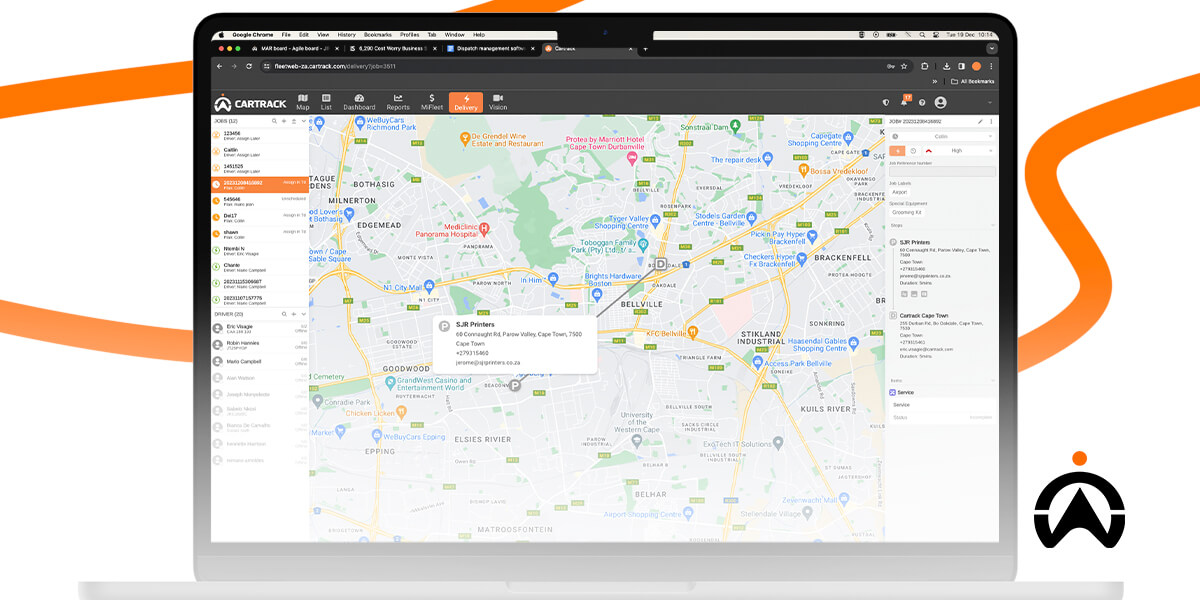
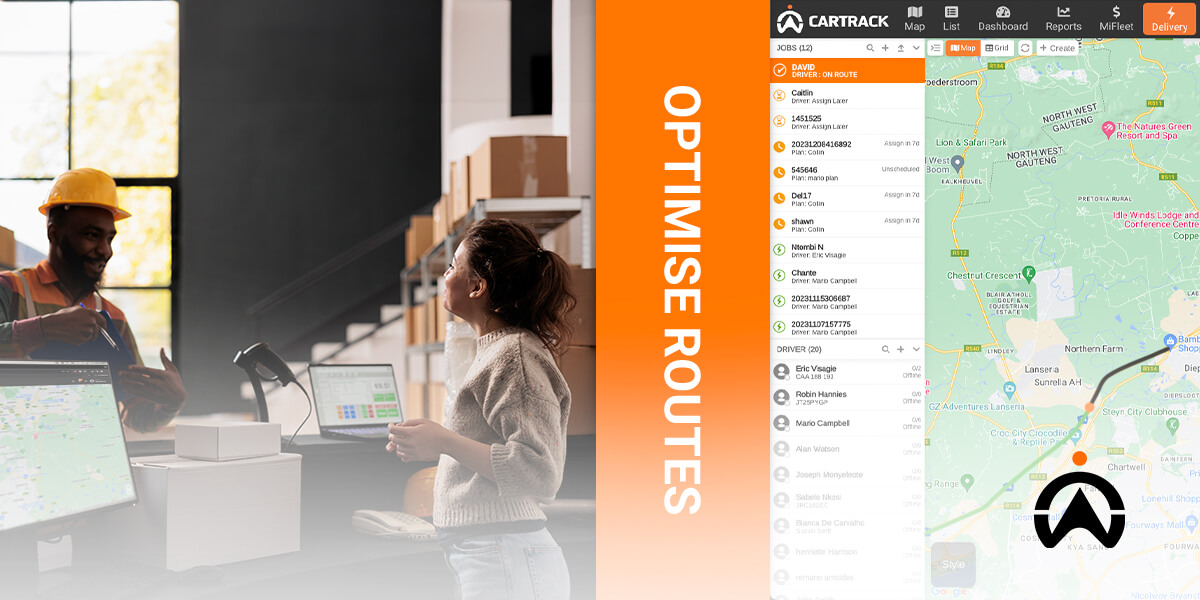
    Determine the quickest and safest routes for your fleet’s drivers with Cartrack’s route optimisation. Accessible via our Delivery app, this feature gives you access to real-time alerts of route deviations and delays, which helps you ensure fast delivery turnaround times and boost customer service. You can also conveniently view driver statuses, which allows you to quickly assign tasks to your nearest available driver.

  9. MiFleet:

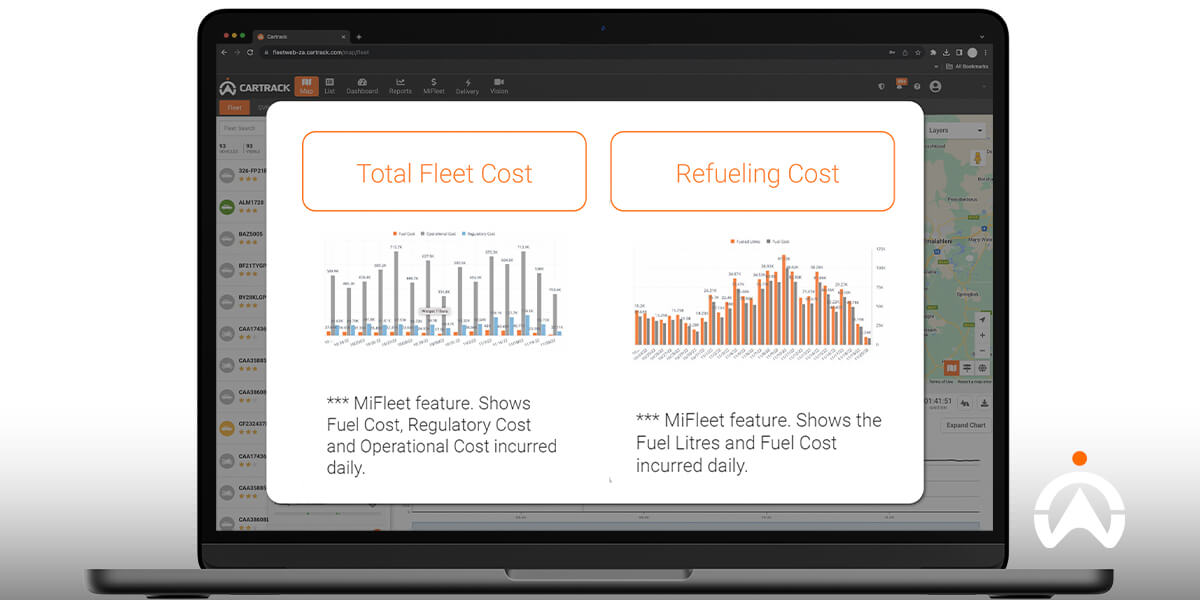
    Know the exact running cost of your fleet with Cartrack’s MiFleet software. Whether you have one or one hundred vehicles, you need to effectively manage your fleet-related finances, and our software works as your assistant. MiFleet is a vehicle cost management software that helps fleet managers keep track of their fleet expenses, ranging from taxes and vehicle permits to finance and fuel costs. By giving you in-depth insight into your fleet’s expenses, you can unlock greater fuel and cost savings and reduce admin time and fees.

Make big moves in your small business with Cartrack’s solutions

Truth is, small businesses need to think big if they want to remain relevant and succeed. No matter the size of your business, let’s get the best out of your fleet and take your company to the next level.

Chat with us heretoday.
Power Take-off: The Complete Guide You Need to Know About for Your Vehicles and Trucks

Knowing how vehicles and equipment in your fleet work is crucial for developing an effective and well-oiled fleet management system.

As a must-have component for fleet vehicles with unique or specific purposes, power take-off is important to understand if you want to get the most from your fleet’s day-to-day activities.

Read on to learn everything about power take-off, how it works, and how to usepower take-off monitoring to transform your fleet operations.

In this article, you will:

  • Get to know the basics of power take-off and how it works
  • Identify vehicle and equipment types that use PTO
  • Familiarise yourself with the different PTO types
  • Get the lowdown on PTO monitoring and sensors
  • Discover how PTO monitoring can transform fleet management
  • Find out more about Cartrack’s advanced PTO monitoring solutions

The basics of power take-off (PTO)

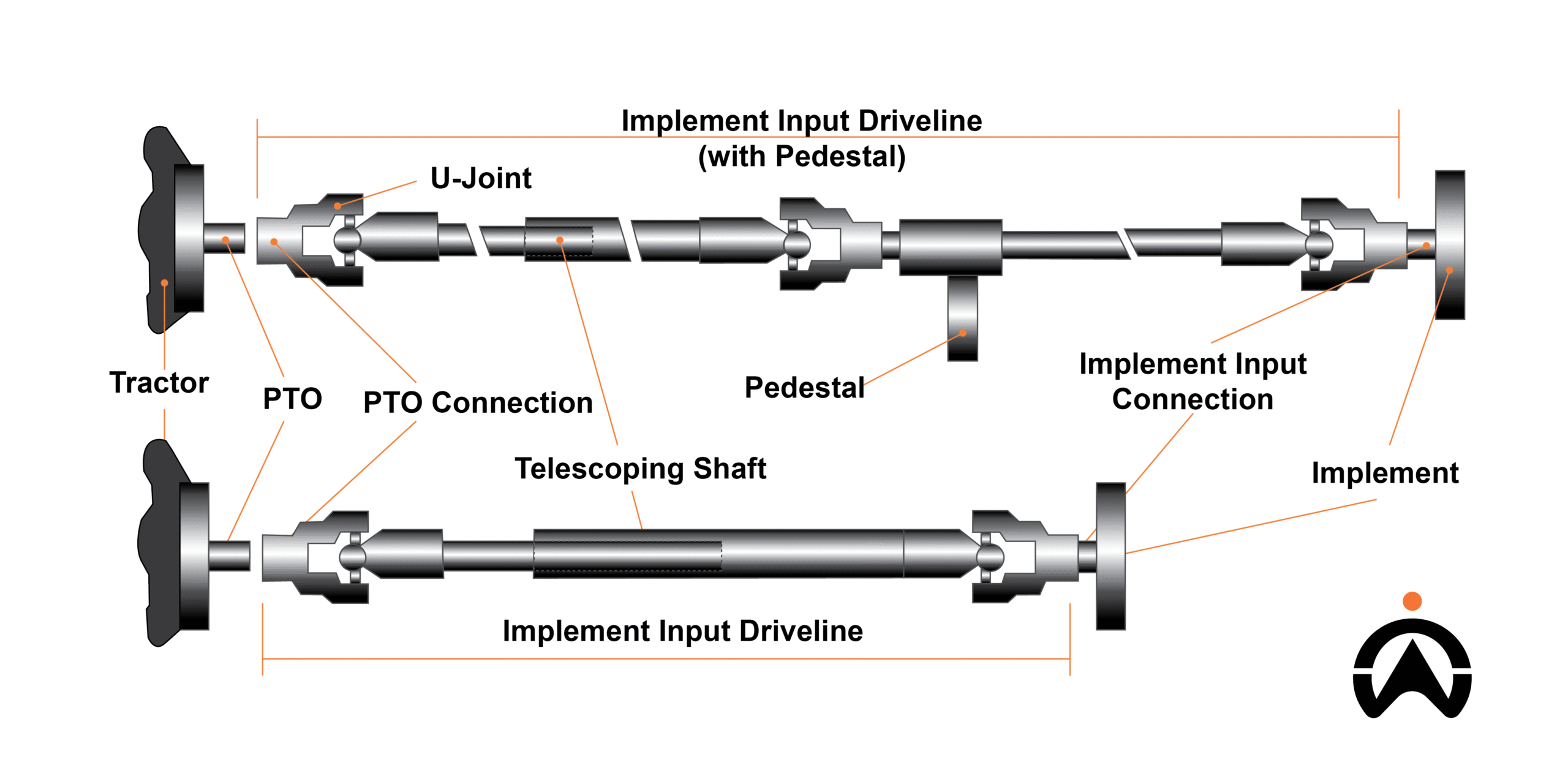
The power take-off or PTO is a fundamental part of many fleet vehicles’ operations, especially those that have additional functions like raising truck beds, cranes, or any other function required without directly using energy from the vehicle’s engine.

What is the principle of power take-off?

Think of PTO as a portable power generator that transfers energy from your vehicle engine to an auxiliary component like a crane or hydraulic pump. Ultimately, it helps transfer energy to other essential parts of a vehicle without using the main power source. This has many benefits like ensuring an even and consistent power distribution that meets a vehicle’s specific requirements.

What vehicles and equipment have power take-off?

With the potential to power a wide range of equipment, PTO is commonly used in fleet, construction, and other industrial vehicles with the following equipment types:

  • Auxiliary Equipment

    These devices use engine power to perform specific functions like pulling heavy loads or operating hydraulic systems on commercial trucks or other industrial vehicles.
  • Commercial Vehicle Attachments

    Accessories like tow arms and compressors use the PTO powered by the vehicle engine to function optimally.

  • Construction Equipment

    Any ancillary attachments like cement mixers, cranes, or concrete pumps work efficiently using vehicle engine power thanks to the power take-off.

Power take-off types and how they are applied

Looking at how many different types of equipment PTOs can power, it’s also important to establish whether there is more than one type of power take-off and identify their advantages and disadvantages.

  1. When taking a closer look at how PTO is applied, there may be a slight difference in application. For example, a mechanical type known as a live-power take-off is linked to the engine with a belt or shaft. However, while its constant power supply makes it a great tool, it can be subject to costly repairs as it’s prone to wear and tear over time.
  2. Another type of mechanical power take-off is called auxiliary or independent PTO. Here, the PTO’s speed is completely independent of the vehicle’s ground speed and can be activated or disengaged while the vehicle is moving.
  3. The hydraulic PTO is the third type. It uses hydraulic fluid to do a power transmission from the engine to the external component with the power requirement. Hydraulic PTO is a great option because of its increased efficiency, but it’s also more expensive than live power and independent PTO.

Overall, hydraulic PTOs are more popular due to their increased efficiency.

How does PTO monitoring work? Unloading everything you need to know

Not only is power take-off a valuable device that provides additional power for a variety of fleet, construction, and agricultural vehicles, but keeping an eye on your fleet’s PTO also has some fantastic benefits for improving its performance.

The power take-off is monitored using a specialised sensor. By being able to keep tabs on the PTO’s activity, you can track your fleet vehicle’s productivity. Let’s take a closer look at how this sensor works and how it measures PTO activity.

How the power take-off sensor works its magic

The PTO sensor is a small device designed to pick up and monitor any auxiliary or supportive activities powered by the vehicle engine, making this sensor a game-changer for checking vehicle usage for working hours and productivity.

The main mechanism in the PTO sensor picks up when a vehicle’s on/off indicator is triggered, which creates an event that can be recorded on a linked telematics system. PTO sensors can pick up a variety of support activities, making them very versatile in a fleet environment across several work settings.

A PTO draws its power from the vehicle engine, and it needs to be engaged before it can start transferring power. As there is more than one type of PTO, there is more than one engagement method; so, for example, it can be via air pressure or hydraulic pressure. After the PTO has been engaged, its output shaft will transfer power to the auxiliary element, activating the function or component linked to the vehicle. A good example here would be moving the mechanical arm of a construction vehicle.

How_the_power_take-off_sensor_works_its_magic

Common types of PTO monitoring data

PTO sensors pick up specific activity depending on the vehicle type and function. For example, a crane’s PTO sensor will pick up the movement of the crane’s arm, while a dump truck’s PTO sensor will pick up the lifting of the truck bed.

Take a look at some of the most common types of data picked up by a PTO sensor.

  1. Trip fuel used
  2. Oil temperature
  3. PTO is engaged, meaning the vehicle is working as it should
  4. PTO idling (productive vs. unproductive idling)

These are all examples ofcrucial information fleet managers need to determine their fleet’s productivity levels and whether they’re over or underperforming.

The link between power take-off monitoring and effective fleet management

Power take-off enables ordinary vehicles to do extraordinary things across industries, simplifying construction, agriculture, waste disposal, and more. PTO monitoring also has great benefits for fleet managers and can transform your fleet’s daily performance by supporting increased productivity during set working hours. Here are some top reasons you should consider PTO sensors for your fleet.

Why you need PTO sensors for your business

There are various ways to track your fleet activities with telematics, but external PTO monitoring adds relevant information with lots of potential value for fleet management. Consider the following pros linked to having PTO sensors in all of your fleet vehicles and how this extra tool can build on your fleet’s overall performance.

  • Improved cost management and fuel usage: An active PTO means a vehicle is busy performing additional activity, resulting in increased fuel usage. Tracking PTO engagement patterns can help develop crucial fuel and cost-saving strategies.
  • Boosted safety and compliance: Some industries require reporting or tracking to ensure regulatory standards are being adhered to, and PTO monitoring can add value here by offering valuable data. From unauthorised to misuse of fleet vehicles and equipment, PTO sensors help promote safety and compliance in the workplace.
  • Accurate diagnostics and troubleshooting: Hit the nail on the head when you’re troubleshooting with useful data like irregularities. Knowing about inconsistencies helps you trace and address the cause or main issue instead of only the symptoms.
  • Optimised maintenance planning: Fleet vehicles have extended active hours, leading to unavoidable wear and tear and an increased need for service and maintenance. PTO data can help provide context on runtime and engagement frequency, helping to estimate smart preventative service and maintenance times.
  • Operational proficiency: PTO monitoring can provide crucial insights into not only when but also how fleet vehicles’ PTOs are used. Fleet managers can use this information to improve overall operational proficiency and prevent unauthorised use of company vehicles, which can have a positive effect on the company’s budgets and annual ROI.

Why_you_need_PTO_sensors_for_your_business

How Cartrack’s specialised sensors helped Concord Cranes level up their fleet monitoring

Concord Cranes provides crane hire solutions in South Africa. With over 180 cranes, their services range from transport to specialised lifting projects and the hiring of mobile cranes; however, they struggled to accurately record their equipment working hours, impacting timely deliveries and overall customer satisfaction.

  • Cartrack’s specialised PTO sensors and IoT device enabled Concord Cranes to track their crane’s on-site working hours and miles travelled, giving them complete visibility of their vehicle activity.
  • With accurately tracked working hours as well as access to advanced predictive maintenance insights, the company was able to ensure timely deliveries while implementing preventative maintenance measures, increasing its fleet’s longevity and reducing costly repairs.
  • Concord Cranes also used Cartrack’s fleet management platform to boost their brand reliability. With software that allows streamlined driver scheduling and proactive service planning tools that ensure their cranes are always in tip-top shape, enabling them to maintain a high level of customer satisfaction.

    “Using Cartrack’s advanced fleet management, we have been able to increase our operational efficiency to deliver a better service to our customers, as well as effortlessly establish a maintenance cycle that reduces our costs and increases our fleet longevity.”

    – Gareth Langley, Concord Cranes operations manager

This is just one of many examples of how Cartrack’s advanced SaaS products can help you gain full control of your fleet.

Cartrack’s advanced sensors can help optimise your fleet’s productivity

Apart from PTO being a crucial component in running many construction, agricultural, and other commercial vehicles, its monitoring potential can transform the way you manage your fleet. Understanding the power of monitoring your PTO is key to having full control and keeping your fleet’s performance on track.

Contract Cartrack today and get the tools to help increase workplace productivity and advance your fleet operations.

Driver Efficiency: 5 Reasons Your Vehicles Need this Vehicle Management System Now

How effective are your fleet drivers?

A simple question that not many businesses can accurately answer. It is crucial to know this, as driver efficiency can hinder your fleet from optimal performance and maximum profit.

This is why every fleet needs an efficient vehicle management solution. Yoursearch for the ultimate, all-in-one solution officially ends here.

In this article, you will:

  • Learn what fleet management is
  • Delve into driver efficiency
  • Explore the key parts of an effective vehicle management system
  • Find out why your vehicles need an effective vehicle management system
  • Discover how Cartrack’s solutions can help you level up driver efficiency

What is fleet management?

Simply put, fleet management refers to all the activities that are crucial for running a fleet operation efficiently, while keeping costs low, and profits high. It involves overseeing everything related to a fleet, including managing vehicles, drivers, fuel consumption, vehicle tracking, and diagnostics.

Whatever the vehicle type, be it cars, trucks, or buses, one or one thousand, if it is used for business operations, fleet management is the solution that helps organise and optimise the running of them and the tasks they need to carry out.

What is a fleet vehicle management system?

A fleet management system is a set of processes and tools used by fleet managers to oversee and optimise the performance of a fleet of vehicles or assets. It is a sophisticated software platform that is designed to streamline and enhance the comprehensive management of a fleet of vehicles.

This system encompasses a wide range of functions that are designed to streamline and optimise the management of a fleet of vehicles. Fleet management software operates through a multifaceted system that makes use of various technologies to efficiently manage and optimise the performance of a fleet of vehicles.

A fleet’s success is heavily dependent on how effectively its operations are managed, especially with the impact these operations have on driver efficiency.

Let’s take a look at what driver efficiency is, and the role a fleet management system can play in it.

What_is_a_fleet_management_system

What is driver efficiency?

Driver efficiency in fleets refers to the ability of drivers to operate vehicles in a way that maximises fuel efficiency, reduces maintenance costs, increases safety, enhances driver performance, and improves customer service.

To sum it up, driver efficiency is all about how well fleet drivers can complete their assigned tasks promptly and effectively, while still adhering to safety regulations and company policies.

It is a critical component of fleet management, playing a big role in fleet productivity, the reduction of fleet costs, and the improvement of customer satisfaction. When drivers operate efficiently, they can get jobs done on time, which saves the company money, makes services more reliable and boosts customer satisfaction.

The key parts of an effective fleet management system

Fleet management systems are quite complex, catering to the various needs of your fleet in one simple solution. However, there are a few key parts that are needed for a fleet management system to be effective for your fleet operation, they are:

  • Vehicle maintenance:

    Vehicle maintenance is a crucial aspect of fleet management, encompassing various elements to ensure operational efficiency, safety, and longevity of the fleet. It involves the process of keeping vehicles in good working condition to ensure that they remain safe and road-worthy. By implementing a regular maintenance and inspection routine, fleets can prevent breakdowns, minimise downtime, and reduce the fleet’s overall operating costs.

  • Vehicle tracking:

    Vehicle tracking is key to an effective fleet management system, providing fleet managers with real-time visibility into the location and activities of their fleet vehicles. This visibility promotes quick decision-making. Real-time visibility allows fleet managers to optimise routes and reduce travel times and unnecessary trips, which leads to cost savings. Real-time vehicle tracking is powered by GPS tracking, which plays a crucial role in the prevention of vehicle theft, and enabling the quick recovery of vehicles if they are stolen.

  • Driver management:

    Driver management plays an important role in an effective fleet management system by focusing on driver performance. This helps you ensure compliance, safety, and productivity through their behaviour. A good driver management system gives you access to real-time alerts for your drivers, and notifications for you, helping you quickly identify areas for improvement and reward drivers for their performance. This is essential in keeping your fleet safe, compliant, and fuel-efficient.

  • Fuel monitoring:

    Fuel monitoring is an important part of an effective fleet management system. By closely monitoring fuel consumption and providing real-time updates, this technology helps fleet managers optimise their fleet’s fuel usage, reduce fuel expenses, and quickly detect fuel theft. This information can then be used to not only reduce fuel waste but also prevent fuel theft.

  • Fleet cost monitoring:

    Fleet cost monitoring is a key part of an effective fleet management system as it allows fleet managers to keep track of all fleet expenses in real time. It enables fleet managers to keep an organised record of their expenses, helping them make informed decisions that can affect every aspect of their fleet management.

5 reasons your fleet vehicles need a vehicle management system today

A vehicle management system is what can help take your fleet from good to exceptional. Yielding a wide range of benefits across the board.

Let’s explore the 5 reasons why your fleet vehicles need an efficient vehicle management system:

  1. It promotes fleet cost reduction:

    Knowledge is power, and vehicle management systems help fleet managers gain this knowledge. By identifying areas of inefficiency and implementing cost-saving measures, these systems provide real-time data on expenses, fuel usage, and other important metrics, enabling fleet managers to make informed decisions and optimise fleet operations, leading to significant cost savings. By cutting maintenance costs, reducing fuel consumption, and streamlining administrative processes, vehicle management systems contribute significantly to lower fleet costs.

  2. It helps increase fleet productivity:

    By providing real-time data on vehicle location, fuel usage, and driver behaviour, vehicle management systems can help fleet managers make informed decisions to optimise their fleet operations, which directly improves fleet efficiency and productivity. Managers can quickly identify areas of inefficiency, and implement measures that boost their fleet’s productivity.

  3. It increases fleet safety:

    Vehicle management systems are equipped with features that monitor and analyse driver behaviour, such as harsh braking and aggressive driving. This information allows fleet managers to address unsafe driving habits through training and coaching, ultimately reducing accidents. Leveraging real-time data on vehicle location and vehicle management systems gives managers higher levels of visibility of their vehicles. This helps safeguard them from vehicle theft and assists with quick recovery if the vehicle is stolen.

  4. It simplifies fleet vehicle maintenance:

    Vehicle management systems are equipped with features that streamline vehicle maintenance by electronically monitoring fleet maintenance. This is essential for automating maintenance scheduling, tracking vehicle health in real time, and providing alerts when vehicles are due for maintenance and schedules. This takes the guesswork out of vehicle maintenance, helping you ensure that unplanned downtime is reduced.

  5. It improves fuel efficiency:

    Fuel costs can account for almost half of a fleet’s total operating budget. Vehicle management systems play a crucial role in improving the fuel efficiency of each of your fleet vehicles, helping managers lower the total amount of money they need to spend on fuel. By providing real-time data on fuel consumption, fleet managers can monitor fuel consumption in real-time, which can help them pinpoint and stop fuel-wasting behaviour.

reasons_your_fleet_vehicles_need_a_vehicle_management_system

Say goodbye to driver inefficiency: Make your fleet safe, cost-effective and productive with Cartrack’s solutions

Are you ready to boost fleet efficiency, lower fuel consumption, gain unparalleled insights on driver behaviour, and lower fuel costs? Then look no further than Cartrack’s solutions, designed to help you boost your driver efficiency, through a powerful vehicle monitoring system.

These solutions include

  1. Stolen vehicle recovery:

    Cartrack’s stolen vehicle recovery is a comprehensive solution that leverages advanced technology and a network of highly trained recovery response teams. By using live GPS location tracking, Cartrack Tanzania can pinpoint your vehicle’s location, aiding swift recovery. With an externally audited recovery rate of over 90%, Cartrack’s extensively trained recovery teams operating nationwide can track and recover your hijacked or stolen vehicle 24/7, 365 days a year.

  2. MiFleet:

    Take control of vehicle maintenance, scheduling, and vehicle issues with MiFleet, a powerful fleet cost management system. This web-based software application consolidates fleet management data on operational costs, (including fuel costs, maintenance costs, and tolls), into a single user-friendly database, giving you insight into your fleet’s running costs and cost-saving measures for your fleet. It provides a dashboard for management to effectively communicate data with drivers, access data analysis, and send on-the-go updates.

  3. Cartrack Delivery:

    Streamline your business’s delivery process with the Cartrack Delivery app designed to empower fleet managers and drivers. This tool provides an intuitive and easy-to-use platform for managing deliveries, from scheduling to tracking and payment. Delivery gives you access to route optimisation, a feature that helps you avoid travel delays and save fuel, reducing fuel costs and increasing efficiency. This feature helps you optimise your driver’s routes by analysing various factors such as real-time traffic and road conditions and route history.

  4. AI cameras for driver monitoring:

    Get 24-hour, on-demand visual access to your fleet vehicles with Cartrack’s Live Vision AI cameras. This AI-powered, live-streaming technology helps you monitor driver behaviour in real time, giving you access to real-time audible alerts when various forms of distracted or dangerous driving are detected (such as speeding, smoking, fatigue, and cell phone use). Pair this cloud-connected video management solution with Cartrack’s Advanced Driver Assistance System (ADAS), a technology designed to enhance fleet safety by alerting your drivers to potential road hazards, and detecting and responding to obstacles.

  5. Fuel management:

    Optimise fleet fuel consumption with Cartrack’s fuel monitoring system. This software gives fleet managers access to real-time data on fuel consumption per kilometre and per job with daily, weekly, or monthly. By utilising advanced sensors installed inside fuel tanks, enabling live monitoring of diesel consumption, you can quickly spot sudden spikes in fuel consumption and pinpoint the reasons, whether it be theft or fuel-wasting driver behaviour. The fuel trend monitoring provides detailed fuel metrics on fuel per km travelled and per job completed for every driver and vehicle, giving you an accurate overview of how much diesel your fleet consumes.

  6. Preventative Maintenance:

    Keep your vehicles functioning at their optimum level with Cartrack’s preventative maintenance. Avoid unexpected downtime and reduce maintenance costs. This system sends real-time diagnostic alerts for mechanical faults, including engine faults and worn brake pads, which help you immediately identify vehicles that need servicing, preventing costly repairs and collisions. The fleet management system looks at each vehicle’s utilisation hours and the time of its last service to automate maintenance schedules, helping you streamline the maintenance process and prevent unplanned vehicle downtime, helping you increase fleet longevity.

Ditch driver inefficiency: Boost productivity and profits with Cartrack Tanzania

If you’re tired of having an inefficient fleet with high fuel consumption, costly unplanned breakdowns, and distracted drivers, look no further than Cartrack Tanzania, helping you level up your driver efficiency, and ensure that your fleet is functioning at its optimum level.

Contact us today, and take your fleet to new heights.

Truck Fleet Management – Here Is The Ultimate Guide For Your Fleet

Managing a fleet of trucks, whether it’s a couple of vehicles or a couple of hundred, comes with a distinct share of challenges.

These challenges can stand in the way of your entire fleet’s efficiency, increasing operational costs, and lowering vehicle lifespan, amongst many others.

That’s why a good fleet management system is the key you need to elevate your truck fleet management.

In this article, you will:

  • Recap what fleet management is
  • Find out what makes a good fleet management system
  • Learn about the challenges truck fleet management presents
  • Discover Cartrack’s solution that will help you elevate your truck fleet management

What is fleet management for trucks?

Due to differences in regulatory compliance, vehicle complexity, and fuel efficiency, managing a fleet of trucks can be more complex than that of ordinary vehicles like cars and vans. This makes specialised systems extremely important for effectively managing them. This specialised approach involves considerations such as load capacity, route optimisation for long-haul journeys, and regulatory measures, helping cater to the unique demands of the trucking industry. Fleet management for trucks is made up of a comprehensive set of practices that are based on the acquisition, maintenance, safety, and monitoring of a group of trucks.

Why is fleet management so important?

As a fleet manager, you’re already under immense pressure, and a fleet management system can alleviate some of that for you. Here are some of the benefits a fleet management system can help you unlock:

  • Remote fleet management: Gone are the days when you had to be bound to an office chair with piles of paperwork and one immovable screen to watch over your fleet. Fleet management systems allow you to remotely keep up with all your fleet operations, enabling you to manage your fleet from anywhere at any time. This helps ensure you have time for other fleet activities, removing all the extra admin.
  • Automated reports: As a fleet manager, having to keep up with your entire fleet operation is already a time-consuming task. Fleet management takes a bit of that stress off your shoulders, generating automated reports that provide insights into your entire fleet operations, ranging from fuel consumption to maintenance reports.
  • Real-time visibility: As a fleet manager, having real-time updates on vehicle location, delivery statuses, and vehicle conditions helps you unlock a new level of proactivity. You can monitor and address issues the moment they are detected, ensuring that they are fixed before they become serious and cost-draining.

With all these, it’s clear to see that fleet management is not only a crucial part of business success, but it also plays an important role in simplifying your job as a fleet manager. But what makes a good fleet management system?

What makes up a good fleet management system?

Fleet management systems make use of two components that are crucial for effective functioning, namely hardware and software. Let’s explain these in detail.

1. The hardware:

Fleet management hardware refers to the physical devices and equipment that are used to collect data from drivers and vehicles. It is essential for recording the data that will be reported to fleet managers and then transmitting this data to a cloud-based platform. The hardware components of a good fleet management system are:

  • GPS tracking technology: Global Positioning System (GPS) is a satellite-based navigation system that provides location and time information from anywhere. GPS is important for fleet management because it provides real-time visibility into the location of fleet vehicles, allowing for route optimisation and improved safety.
  • Sensors: Sensors are devices that work to collect data on various aspects of a vehicle’s performance, location, and driver behaviour. These sensors can be used to monitor tire pressure, fuel consumption, odometer readings, cargo status, and more. Sensors are important for fleet management because they play a crucial role in efficiency and cost-effectiveness.
  • Cameras: Often referred to as fleet dash cams, these are video recording devices that are installed in fleet vehicles to capture real-time footage of drivers, the road, and cargo. These are important tools for fleet management as they provide valuable insights into driver behaviour, road accidents, and vehicle performance. This helps reduce the risk of costly accidents, encourage driver-specific training, and improve overall safety.

2. The software:

Fleet management software works to analyse and present fleet data that was collected by fleet management hardware. This is essential for increasing efficiency and enhancing fleet visibility. The software components of a good fleet management system are:

  • Fleet maintenance software: Designed to streamline maintenance workflows, automate preventative maintenance schedules, and provide real-time updates on vehicle maintenance needs, this software helps you track and manage the maintenance of your vehicle from the earliest stage possible.
  • Driver management software: Designed to monitor and track driver behaviour in real time, this software collects data on various aspects of driver behaviour, such as harsh braking, speeding, and idling. This helps you identify and address unsafe driving habits, helping you improve fleet efficiency, safety, and productivity.
  • Automated reports: These are customised and detailed reports that provide fleet managers with important insights relating to various aspects of their fleet. Covering a wide range of metrics, including maintenance, asset utilisation, and fuel consumption, these reports give you real-time visibility into your fleet operations, helping you identify trends and areas for improvement.

What_makes_up_a_good_fleet_management_system

What are the key components of effectively managing a fleet of trucks?

While fleet management for trucks makes use of the same components that commercial fleet vehicles use, there are a few key differences. Trucks are designed for specific purposes and industries, while commercial fleet vehicles can vary in size, type, and usage. This difference means the usual fleet management solutions won’t cut it for trucks, as they have specific needs in terms of how they are maintained, operated, and managed. These are the areas that typically require specific solutions to cater to trucks in fleet management:

  • Fuel management: It’s no secret that trucks consume more fuel than commercial fleet vehicles. This makes having an effective fuel management system important, as it helps you ensure that your trucks can complete tasks as efficiently as possible without wasting any fuel. Know exactly how much fuel your vehicles are consuming with fuel consumption monitoring, which helps you spot sudden fuel spikes and detect potential fuel theft.
  • Vehicle maintenance: Due to the extent to which trucks are used, they require more maintenance than commercial fleet vehicles. Trucks have to carry heavy loads, travel long distances, and operate in harsh conditions, which puts extra strain on them. Unexpected breakdowns can be quite common considering the long distances they travel, and this can lead to costly downtime, affecting delivery schedules and deliveries.
  • Asset management: Monitoring and maintaining a large number of trucks can be challenging. This is where asset management comes in, helping you keep an eye on each of your assets. An example of this is the tracking of vehicle and equipment performance, which informs you which vehicles are over or underutilised. This helps you ensure that your assets are efficiently utilised and remain in their optimal condition.
  • Route planning: Trucks have to adhere to specific road rules, such as speed limits, which can cause a delay in delivery times, and unlike typical commercial vehicles, they cannot travel on every road. This is where route planning comes in, helping fleet managers optimise routes to avoid traffic congestion, road closures, and other delays, ensuring that you achieve quicker turnaround times.
  • Driver behaviour monitoring: Dangerous driving behaviour doesn’t just lead to financial loss. It also leads to injury and fatal car accidents. A study by the Road Traffic Management Corporation (RTMC) showed that heavy-load vehicles with a gross vehicle mass above 3,500 kilograms account for 9.4% of all fatal crashes on South African roads. Seeing how trucks significantly contribute to annual accident rates, makes it vital for fleet managers to prioritise driver safety and behaviour.

What are some of the difficulties of managing a fleet of trucks?

Navigating the complexities of managing a fleet of trucks presents a range of multifaceted challenges. These include:

  • High operating costs: Trucks, by their nature, burn larger amounts of fuel, especially during long-haul journeys, which translates to higher operating costs. These long-haul journeys also translate to trucks requiring more frequent maintenance to ensure upkeep.
  • Driver retention: Due to the rigorous schedules and demanding nature of fleets using trucks, skilled drivers are very important. Finding qualified drivers and retaining them is a continuous challenge in the trucking industry due to high demand and turnover rates.
  • Data management and analysis: Managing a fleet of trucks comes with the need to record and present large amounts of complex data. Handling and making sense of vast amounts of data collected from trucks, including maintenance records, driver behaviour, and operational metrics, can pose a challenge, especially without effective data management and analysis tools.
  • Driver communication: Fleet managers need to maintain effective communication with their truck drivers to ensure compliance with regulations, safety standards, and company policies, which can be difficult if there are no streamlined methods in place.
  • Driver safety: In the truck industry, driver fatigue and distractions are very common occurrences among truck drivers. Fleet managers need to make sure their truck drivers are employing safe driving habits, as risky driving can lead to unfortunate consequences for drivers and the entire truck fleet operation.

How can you solve these difficulties with a fleet management system?

Navigating the complexities of fleet management involves addressing operational challenges that impact costs, efficiency, and overall productivity. This shows just how important a comprehensive fleet management system is. This integrated solution offers a range of tools and strategies designed to tackle the key challenges faced by fleet managers who are responsible for trucks. These include:

  • A fuel management system

    Fuel management systems are an essential component of fleet management. They help fleet managers control and monitor fuel consumption and costs. With fuel costs being one of the most significant fleet expenses, a fuel management system can minimise these costs by helping you identify inefficiencies in fuel usage. A fleet management system gives you access to real-time data on fuel consumption. This helps you detect when your vehicles experience a sudden drop in fuel levels and identify potential fuel theft, which can significantly impact a fleet’s bottom line and efficiency.

  • Preventative maintenance

    Preventative maintenance is a proactive method of ensuring that fleet vehicles operate safely and efficiently. By making use of vehicle data on mileage, time spent, engine hours, and fuel consumption, it can let you know exactly when your vehicles need maintenance and which parts need replacement. This is crucial to helping you reduce vehicle breakdowns and prevent unplanned vehicle downtime. Unplanned vehicle downtime can be damaging to fleet success, leading to delayed deliveries, customer dissatisfaction, and lost revenue opportunities.

  • Driver behaviour monitoring

    A crucial tool for improving the safety and efficiency of a fleet and its drivers alike. By monitoring driver behaviour, fleet managers can make use of real-time alerts to help drivers correct their behaviour. Driver behaviour monitoring can also provide valuable insights into driver performance, allowing fleet managers to identify areas for improvement and implement training programs to address any issues. By promoting safe and efficient driving habits, driver behaviour monitoring can help reduce fuel consumption, vehicle wear and tear, and maintenance costs.

  • Automated data entry and reports

    Automated reports in fleet management help solve difficulties by providing fleet managers with real-time, customised, and detailed insights into their fleet’s performance. These reports can cover various fleet metrics, including fuel consumption, maintenance, and asset utilisation. By automating the reporting process, fleet managers can save time and ensure that they have access to this information from anywhere, at any time. These reports help encourage data-driven decision-making. The manual reporting of data can lead to increased human error in recording, increased time consumption, and limited visibility and insights.

  • Route optimisation software

    Route optimisation is a critical fleet management tool for improving the efficiency and cost-effectiveness of a fleet. By analysing data and considering factors such as traffic conditions and delivery schedules, fleet managers can develop effective and safe route plans for their drivers. It works to provide real-time updates and adjustments, allowing fleet managers to quickly respond to changes in traffic, weather, or delivery schedules. Unoptimised routes mean increased fuel consumption (due to longer travel distances and excessive idling), reduced driver productivity and efficiency (due to inefficient scheduling and driver fatigue), and increased vehicle wear and tear (due to harsh driving conditions).

What_are_some_of_the_difficulties_of_managing_a_fleet_of_trucks

What are the benefits of fleet management for trucks?

Below are 5 of the many benefits that fleet management brings to the management of truck fleets:

  1. Increased vehicle lifespan: Fleet management systems can extend the life of trucks by implementing preventative maintenance schedules. This helps reduce downtime and ensures that trucks are routinely serviced and maintained.
  2. Improved vehicle safety: Fleet management systems help you know exactly where your trucks are at all times, helping you unlock ultimate visibility and security.
  3. Reduced operational costs: Fleet management systems can help reduce truck fuel consumption, maintenance costs, and overall operating costs by optimising routes, reducing idle time, and improving the overall performance of your trucks.
  4. Improved customer satisfaction: Fleet management systems can help truck fleets improve on-time delivery, route planning, and overall customer service, which leads to increased customer satisfaction.
  5. Improved driver performance: Fleet management systems can provide truck fleets with real-time feedback on driver behaviour, helping drivers improve their performance and reduce the risk of truck-related accidents.

How Cartrack’s solutions help you elevate your truck fleet

As an industry leader in fleet management solutions, Cartrack Tanzania is your ultimate guide to elevating your truck fleet management. Unlock the benefits listed above by making use of the following Cartrack-powered solutions:

1. Vehicle tracking and monitoring

Cartrack Tanzania makes use of GPS technology to pinpoint the precise location of your vehicles in real-time. This gives you access to two solutions that can elevate your truck fleet management, namely:

  • Real-time GPS tracking: Gain unparalleled visibility of your fleet with Cartrack’s real-time GPS tracking system, providing accurate, real-time GPS location through a user-friendly interface. The live tracking of your fleet enables immediate response in case of theft or unauthorised vehicle use, which aids the swift recovery of your truck and minimises potential losses. It doesn’t stop there, though, because the full visibility helps you know where your trucks are at all times. This helps you track drivers and job progress, ensuring that you keep customers updated.
  • Make use of geofencing: Monitor vehicle activity with Cartrack’s geofencing tool. This software acts as an added layer of security, designed to alert you in real-time when your trucks enter or exit authorised zones. This feature helps enhance fleet security and efficiency by increasing the visibility of your vehicle’s activity, helping you ensure that drivers only operate your equipment in assigned areas.

2. Fuel Management

Cartrack Tanzania brings you a comprehensive fuel management system that is designed to help fleets manage and monitor their fuel consumption. Make use of the following features to elevate your truck fleet management:

  • Fuel level monitoring: Monitor your truck’s fuel levels in real time by making use of Cartrack’s fuel sensors. Gain accurate data on fuel consumption per vehicle, driver, and route, which enables precise analysis and specific fuel-saving strategies. Receive immediate alerts for unusual fuel level drops, helping you quickly prevent fuel theft.
  • Fuel efficiency reports: Fuel theft is a big problem, especially for trucks, and since trucks have more than one tank, large amounts of fuel can be stolen in one go. Automatically record and track refuelling transactions, and eliminate manual data entry. The system can review all your fuel transactions and match them with truck telemetry data, ensuring accurate fuel consumption calculations and helping you identify potential fuel theft.
  • Fuel card integration: Simplify fuel expense tracking and enhance your truck’s fuel management capabilities with Cartrack’s fuel card integration. Cartrack’s system automatically collects fuel card transactions, increasing data accuracy and reliability while also reducing the administrative burden and concern about losing fuel receipts.

3. Driver Management

Cartrack Tanzania offers a comprehensive driver management solution that is designed to not only improve driver behaviour but also enhance safety and optimise fleet performance. Make use of the following driver management features to elevate your truck fleet management:

  • Driver behaviour monitoring: Keep an eye on your drivers’ behaviour with our driver behaviour monitoring. Truck drivers typically travel long distances, and the monotonous road environment makes them more prone to driver fatigue. Our technology conveniently addresses unsafe driving behaviours by identifying dangerous driving habits, such as excessive speeding and harsh braking, and distracted driving, such as excessive yawning. With real-time alerts, drivers can immediately correct their behaviour, preventing potential accidents from occurring.
  • Driver training and coaching: Identify and rectify fuel-draining and dangerous driving behaviour in your truck drivers, and establish more fuel-efficient driving habits. Our technology provides insights into driver behaviour that increases fuel consumption, such as excessive idling and harsh driving. This helps you identify which areas your drivers need specific training in.
  • Driver ID-Tags: Improve your fleet’s security by ensuring that only authorised drivers operate your trucks, reducing the risk of theft and unauthorised use. Cartrack’s driver ID-Tags help optimise workforce management by ensuring precise work hours are recorded for every driver, simplifying the management and monitoring of driver behaviour. Also, not every driver in your fleet may have a truck license; this helps ensure that only certain, qualified drivers operate your vehicles.

4. Preventative Maintenance

Ensure that your fleet vehicles are functioning at their optimum levels at all times, helping you proactively maintain your vehicles, minimise downtime, reduce maintenance costs, and extend vehicle lifespan. Make use of the following preventative maintenance features to elevate your truck fleet management:

  • Scheduled maintenance reminders: Trucks are expensive, and this makes servicing more vital for them. Receive automated reminders and alerts to ensure timely fleet vehicle maintenance. These alerts are based on mileage, engine hours, and usage to guarantee timely maintenance. This helps ensure road safety and compliance, increasing your truck’s longevity.
  • Maintenance tracking and history: Keep a comprehensive record of fleet maintenance activities, with data ranging from service history and repairs to the replacement of parts and maintenance requirements for each fleet vehicle.
  • Obtain real-time diagnostics: Receive real-time alerts for vehicle diagnostics, including engine faults, worn brake pads, and oil and water fluctuations. This helps you pre-empt which fleet vehicles require servicing before fleet efficiency is affected.

5. Prioritise fleet compliance and reporting

Gain access to all the features listed above on a simple, easy-to-use platform. This fleet administration platform provides a comprehensive set of tools to simplify fleet management, helping unlock efficiency for all your trucks at the tap of a finger. We provide you with a fleet compliance solution that automates regulatory compliance and keeps clear digital records of fleet logs. Our automated reminders help you keep insurance documents, permits, and other regulatory contracts up to date and help you store them on an easily accessible online platform.

Turn fleet concerns into returns with Cartrack Tanzania

Managing a fleet of trucks can be quite challenging, but with an effective fleet management system, you can turn all your big fleet management concerns into big fleet management returns.

Contact us today, and let’s take your trucking fleet management to new heights together.

Fleet Fuel Card Integration – Empower Your Fleet With Efficiency and Security

When it comes to managing fuel efficiently and reducing costs for your fleet business, fuel credit cards stand out as one of the top solutions.

Explore the intricacies of these cards and discover how they can ease all your fuel expense-tracking headaches.

Is it time to invest in some fuel cards? All your answers are right here.

In this article, you will:

  • Discover the key insights into fleet fuel card integration
  • Understand the steps to integrate fuel cards into your fleet
  • Learn how to combat fuel cost management challenges with fuel cards
  • Explore the perks of using fuel cards in your business
  • Find out how Cartrack’s MiFleet system enhances fuel card monitoring

Fleet fuel cards — your answer to efficient fuel cost management

These nifty cards are used by drivers to quickly refuel company vehicles, alleviating headaches and confusion for fleet managers. Fuel cards help managers effortlessly keep track of all their fuel expenses. You will instantly know which driver fueled up, what vehicle they used, how much they spent and where they fuelled up.

Say goodbye to endless fuel-related paperwork. Now drivers can enjoy the convenience and safety of fuel cards and not worry about handling cash and receipts.

How to get started: Fleet fuel card integration

Empower your fleet with fuel cards, the game-changer for managing your fuel expenses. Equipping your business with this feature comes with a list of benefits but before we dive into those, let’s unpack a quick step-by-step guide on how to get a fuel card:

  1. Explore fuel card providers:

    Investigate reputable fuel card providers in your area such as oil brands like Shell and BP, or companies that specialise in fuel cards. Take into account factors such as coverage, acceptance across various fuel stations, fees, and additional features.

  2. Compare offerings:

    Evaluate the offerings of different fuel card providers. Examine features such as spending controls, reporting capabilities, and any extra services they may offer.

  3. Select a provider:

    Choose the fuel card provider that aligns best with your business requirements and provides the most suitable features for effective fleet management.

  4. Complete the application:

    Most fuel card providers facilitate online applications. Complete the required information, typically including details about your business and fleet.

  5. Receive approval:

    Once your application is approved, and you’ve received the cards, it’s time to activate them following the provider’s instructions.

  6. Assign cards:

    There are two methods for allocating fleet cards, assigning them to individual drivers or each vehicle.

    – Vehicle – If your drivers use different vehicles regularly, assign one card to each vehicle, instructing drivers to leave the card in the vehicle for the next driver to use when needed.
    – Driver – If they primarily stick to one vehicle, provide each driver with a unique PIN that works with every card. This way, you can track which driver fueled which vehicle.

  7. Implement restrictions:

    Fuel cards provide drivers with easy refuelling but it is not without limits, managers can control fuel card usage by setting up some of these limits:

    – Litre or cash limit per transactionLitre or cash limit per transactionLitre or cash limit per transaction
    – Number of transactions made per day for each card
    – Time of day limit
    – Type of fuel

This prevents overspending, empowering managers to decide each driver or vehicle’s fuel expenditure.

Now that you have your provider and your cards, it’s time to integrate them into your fleet, this is done by linking the cards to your fleet management system.

Here are three approaches to make this happen:

  1. API integration:

    Several fleet management systems come with Application Programming Interfaces (APIs) that allow for seamless communication and data exchange with various systems, in this case, the systems would be between your fleet management system and the fuel card provider.

    With API integration, you can automatically bring fuel card data into your fleet management system so that every time a fuel transaction occurs, data seamlessly flows from the fuel card provider’s system to your FMS, giving you real-time updates on all fuel purchases.

  2. Data integration platform:

    If your fleet management system or fuel card provider doesn’t provide direct API integration, you can opt for a data integration platform. These platforms act as the middleman, translating data between two systems. It will regularly check for new fuel transactions from the fuel card provider, translate the data into a format compatible with your FMS, and import it to your fleet system, ensuring smooth communication.

    They offer similar benefits to APIs like automated data import and detailed reports but might involve a subscription fee and a complex setup.

  3. Manual data import:

    Though not ideal, some businesses may resort to manual import of fuel card data through spreadsheets or CSV files.

    While this method is time-consuming and prone to errors, it can serve as a temporary fix for those not ready for advanced integration solutions like those listed above.

Fleet_fuel_card_integration

Why use fuel cards?

Fuel cards offer a range of perks for businesses. Imagine your drivers enjoying hassle-free refuelling at almost every gas station across the country. Not only that, but many fuel cards also bring extra savings at the pump through fuel discounts and VAT savings, putting more money back in your pocket.

Think about the convenience of having an organised system that tracks fuel expenses. Your fuel cost records will always be up to date, making it a breeze to control and minimise financial loss. On the security front, fuel cards act as a shield against unauthorised purchases, safeguarding your budget and your drivers as without cash on hand, the risk of them getting mugged decreases.

Why should you integrate fuel cards into your fleet business?

Similar to credit or debit cards, fuel cards are crafted exclusively for transactions related to fuel. Here’s a breakdown of their advantages:

  1. Fuel purchases: Drivers use these cards to buy fuel at specific stations, linking the expense directly to the business.
  2. Expense tracking: Every time the card is used, it keeps a record, showing a detailed view of fuel costs for each vehicle.
  3. Cost control: Fleet managers can set spending limits with these cards, ensuring fuel purchases stay within the budget.
  4. Data integration: These cards can talk to fleet management software, giving a clear picture of fuel use, efficiency, and costs.
  5. Security: Fuel cards have security features, like PIN codes, making sure only authorised drivers can use them, and since drivers don’t carry cash anymore, they are no longer at risk of being robbed while on the job.
  6. Convenient reporting: Fleet managers can easily generate reports showing all the fuel-related expenses, making money management smoother and more accurate.
  7. Network of acceptance: These cards work with specific fuel networks or stations, so it’s essential to choose the right one for your fleet’s convenience.

Reduced Admin Work: No more hassle with manual record-keeping for fuel receipts and reimbursements. These cards save time for both drivers and fleet managers.

Common fuel theft methods conducted through fuel cards

Fuel theft can have a significant impact on businesses affecting various aspects of operations. There are countless ways criminals can steal fuel from fleet vehicles. One of the most popular fuel theft trends is syphoning (sucking fuel out from a vehicle into a container for personal use), but when it comes to your fuel card, the following methods are more commonly used:

  • False transactions: This type of fuel theft occurs when gas station employees collude with thieves. The employee swipes the fuel card multiple times for a single transaction, resulting in multiple charges on the cardholder’s account. This method is difficult to detect as transactions are coming from a valid fuel card and fuel sensors won’t detect any unusual activity because the tank was empty and needed a refill, justifying the purchase.
  • Fuel card fraud: Fuel card fraud occurs when unauthorised individuals obtain and use a company’s fuel card to purchase fuel for their vehicles. This can be done by stealing a physical card, skimming card data at fuel stations, or using stolen card information to create fraudulent transactions online. These cloned cards can then be used to purchase fuel at any filling station.

Easily manage your fuel cards and overall fuel costs with Cartrack Tanzania

Unlock a wealth of benefits and gain complete control over your fleet’s fuel expenses with Cartrack Tanzania. We provide reliable and trustworthy fleet management solutions that can help you manage your fuel costs and improve operational efficiency.

Here are a few ways Cartrack’s fleet management software and MiFleet can help you in your pursuit of taking charge of your fleet fuel costs:

Effortlessly monitor and manage your fuel card with Cartrack’s MiFleet system

MiFleet is a cost management system that monitors all your fleet’s administration and running costs, including toll fees, maintenance costs, and all fuel expenditures.

In terms of fuel card monitoring, MiFleet can analyse fuel card transactions and automatically cross-reference them with your vehicle’s telemetry data to quickly identify which driver swiped for fuel refilling, for which vehicle and at what time/location.

By just importing your fuel card transactions into the MiFleet system, our MiFleet AI system automatically tracks all fuel card usage and presents the information in an easy-to-understand format on the MiFleet digital platform, making managing your fuel data a breeze.

Easily_manage_your_fuel_cards

With MiFleet you can:

Monitor fuel consumption:

Get information on fuel consumption rates per km, current fuel levels and fuel-wasting events like abnormal idling, speeding and more during a trip, allowing you to pinpoint areas for enhanced fuel efficiency.

Detect fuel theft:

In events of possible fuel card fraud, MiFleet automatically identifies potential fuel-related risks by matching fuel receipts with the vehicle’s location and fuel status, if flagged, it notifies fleet managers so they can start investigating and stop fuel cost wastages.

Generate informative reports:

Paired with our fleet management system, you gain access to detailed reports like fuel usage and risk analysis. These reports allow you to validate, verify, and analyse fuel cost data, identify trends, and make informed decisions to optimise fleet fuel card management.

Why you’ll love MiFleet:

  • MiFleet automatically detects fuel theft, saving you thousands monthly
  • Decreased time spent on manual admin
  • Easily spots fuel cost leakage and stops human error
  • Increased trust and accountability for drivers

Swipe your fleet to fuel cost management efficiency

If you are looking for a way to improve your fleet’s fuel efficiency and save money on fuel costs, Cartrack fuel management solutions are a great option.

Join over 110,000 businesses and trust Cartrack Tanzania with your fleet and your fuel. Start today with Cartrack Tanzania.

Fleet Asset Management – Know the Importance To Make Your Fleet Operations Soar

Late deliveries, time-wasting equipment manhunts, underutilised assets, maintenance downtime delays and endless paperwork – the cost-draining world with no fleet asset management system.

Unravel the importance of fleet asset management software and how it will transform your fleet operations like never before.

In this article, you will:

  • Understand the critical role of fleet asset management in your operations
  • Explore the definition and significance of fleet asset management
  • Learn the benefits of using fleet asset management software
  • Gain insights into creating a comprehensive asset management plan
  • Revolutionise your fleet asset operations with Cartrack Tanzania solutions

What is fleet asset management?

Where ‘asset management’ usually speaks towards wealth and acquired things owned by a person or organisation. Fleet asset management is a method fleet managers use to properly oversee all their business’s assets, ensuring they are all accounted for, in good working condition and are all equally used so they continue to provide a positive return and don’t cost a business more than they should.

This involves monitoring, maintaining, and strategically utilising each vehicle in the fleet. All this is required to enhance operational efficiency, reduce costs, and extend the lifespan of assets.

What is classified as a business asset?

The assets referred to here can be split between tangible assets like physical tools, vehicles, etc and intangible assets, like the software used.

Tangible assets consist of various objects, here are a few types:

Vehicles

  • Cars, trucks, vans, buses, motorcycles, etc.
  • Trailers, semi-trailers, and other towed equipment
  • Construction equipment, such as bulldozers, excavators, and cranes
  • Material handling equipment, such as forklifts and pallet jacks

Equipment

  • Tools used for maintenance, repairs, and various tasks
  • Mobile tech gadgets, like tablets and scanners
  • Communication tools, including radios and GPS trackers
  • Office equipment, such as computers and printers

Infrastructure

  • Garages, workshops, and other facilities like work sites
  • Owned storage and fueling stations
  • Parking lots and loading docks
  • Offices and administrative buildings

Intangible assets are those that don’t have a physical form but still hold significant value for the business:

  • Software and technology like the fleet management software used
  • Data and analytics acquired from vehicle telematics, fuel card transactions etc.
  • Intellectual property (IP) like business trademarks and patents

What is the importance of fleet asset management?

It all begins with your vehicles, equipment, and machinery, the essential assets that keep your business moving forward. Fleet asset management ensures that each vehicle in your fleet operates seamlessly, that your equipment is in top-notch condition, and that your machinery continuously runs smoothly.

Proper management of these assets is not just a task, it’s an important part of driving your fleet to success. Without it, the rhythm of your operations could turn chaotic with breakdowns, delays, increased costs and many other profit-impacting factors.

The benefits of using fleet asset management software

  • Supervision of all assets
  • Management of assets from any location
  • Offers insights for strategic planning for fleet risks
  • Improvement of time management
  • Monitoring fleet performance
  • Tracking fleet asset life cycle and costs acquired

benefits_of_using_fleet_asset_management_software

How does fleet asset management differ from general fleet management?

Let’s think of fleet asset management as the guardian overseeing all your valuable resources, and fleet management as the skilled expert handling the specific challenges of your vehicles and machinery.

Asset management looks at the bigger picture, caring for everything from vehicles to machinery and even office tools. It ensures everything is in the right place, performing optimally, and contributing to your overall success.

On the flip side, fleet management focuses on the unique challenges of your vehicles and machinery. It ensures your fleet operates smoothly, tackling issues like maintenance, fuel efficiency, and driver behaviour.

Together, they create a powerful duo for your fleet where one guides the other.

How to set up an asset management plan?

To better manage your assets, you first have to create an asset management plan. Crafting a carefully devised plan for managing your fleet assets can boost productivity and extend the lifespan of your resources. This strategy empowers you to create a more sustainable and effective business model and unlocks the full potential of your assets.

Here’s a simple six-step guide to optimal asset performance:

  1. First, clearly define your goals for your fleet and make sure they’re specific, measurable, achievable and time-bound. This sets the foundation for your plan.
  2. Next, take a good look at your current fleet, considering things like types of vehicles, their age, condition, and how they’re used. This assessment helps you find areas for improvement and chances to save money.
  3. It’s crucial to track your vehicles, equipment, machinery etc. and make a detailed inventory of all of them. For this, use technology like GPS, telematics and the Internet of Things (IoT) to monitor them in real-time.
  4. Plan regular fleet maintenance to keep your vehicles in good shape and avoid unexpected breakdowns with preventative maintenance. Train your drivers on safety and fuel-efficient driving, and make sure they follow traffic rules.
  5. Control your operational costs by monitoring fuel usage, maintenance, and fleet costs like speeding tickets and insurance expenses.
  6. Be prepared for emergencies with contingency plans. Review and update your fleet asset management plan regularly to adapt to changes and improve it over time to fit the current state of your fleet.

Define the types of fleet asset management

To better put it into perspective, there are several types of fleet asset management, including physical asset management, financial asset management, human asset management, and contractual asset management.

Let’s break these down in a bit more detail:

  1. Physical asset management:

    Focuses on overseeing tangible assets like vehicles and equipment to ensure longevity and efficiency.

  2. Financial asset management:

    Involves managing financial instruments such as stocks, bonds, and cash to optimise investment portfolios.

  3. Human asset management:

    Encompasses the administration of human resources, including employees or contractors, and skills within an organisation to enhance workforce performance and development.

What factors contribute to effective fleet asset management?

Effective asset management is the cornerstone of a successful business, encompassing the strategic oversight of your vehicles, equipment, and machinery. This comprehensive approach ensures that these assets are not just operational tools but vital components contributing to the overall success and sustainability of your enterprise.

  1. Operational efficiency: Skilfully organising and overseeing your vehicles and machinery ensures seamless day-to-day activities. Whether it’s delivery trucks or heavy equipment, a well-structured system minimises downtime and maximises productivity.
  2. Cost savings: By implementing preventive maintenance schedules, monitoring fuel consumption, and addressing potential issues like risky driver behaviour proactively, you can significantly cut operational expenses.
  3. Asset longevity: Regular maintenance and timely repairs contribute to the extended lifespan of your assets. This not only safeguards your initial investment but also diminishes the need for frequent replacements, resulting in long-term savings.
  4. Safety compliance: Asset management involves ensuring compliance with safety regulations. From regular inspections to implementing safety features, adherence to standards protects your assets, employees, and your business’s reputation.
  5. Data-driven decision-making: Employing technology for asset management yields valuable data insights. Real-time tracking, performance analytics, and predictive maintenance empower you to make informed decisions, enriching your overall business strategy.
  6. Resource optimisation: Effectively allocate resources by understanding the usage patterns of your assets. Whether deploying vehicles for optimal routes or scheduling maintenance during non-peak hours, resource optimisation enhances operational efficiency.

What_factors_contribute_to_effective_fleet_asset_management

What is ultimate fleet asset management for your fleet operations?

Cartrack’s industry-leading fleet management software is the perfect fit for any type of business looking to seamlessly manage its assets.

Our comprehensive solution is tailored to meet all your needs and elevate your fleet management to new heights.

Here are five ways Cartrack Tanzania will help you gain full visibility and control of all your assets:

  1. Proactive maintenance: Say goodbye to unexpected breakdowns and unnecessary downtime. Cartrack’s predictive maintenance anticipates potential issues before they become critical. Through advanced analytics, all equipment data is analysed to predict when servicing is needed and swiftly inform you. For example, predictive maintenance can identify a worn-out part in a forklift and promptly inform you to take precautions with replacements. This prevents costly, unexpected breakdowns, minimises downtime and maximises asset lifespan.
  2. Fleet management platform: See usage patterns of assets with Cartrack’s fleet management platform and ensure assets are evenly used by remotely scheduling your assets across your project site. With this, you can see which crane or any asset, is being underutilised, and promptly reallocate it to a more active project.
  3. ID tags: Our driver ID tags help you restrict machinery usage to authorised operators only. This gadget uniquely identifies drivers to fleet managers, allowing them to know which one of their drivers is operating their vehicles/machinery, to ensure only trained and authorised personnel operate equipment and enhance asset security and safety.
  4. Asset Tracking: Cartrack employs GPS and IoT sensors to get real-time location data and information on equipment conditions. This improves inventory management, enhances security against theft, and aids in preventive maintenance.
  5. Geofences: Create virtual parameters around your working sites, no-go zones or any other area of interest with our geofencing technology. Alerts are sent to you whenever assets enter or exit digitally set boundaries. This prevents potential theft and helps you monitor vehicle activity.

Turn your assets into profit-boosting machines with Cartrack Tanzania

Gain complete control and visibility over every vehicle, equipment, and machinery in your fleet. Choose Cartrack Tanzania for fleet asset management and experience a new era of efficiency, cost savings, and peace of mind.

Start today with Cartrack Tanzania.

Vehicle Inspection – Digitise Your Daily Fleet Inspection With A Powerful App

Vehicle inspections can be daunting without a fleet monitoring system in place. Why wait for scheduled, time-consuming inspections to know your fleet’s health when there’s an easier way to keep track of it daily?

Ignorance is bliss, but not when it comes to your fleet’s vehicle health. Poorly maintained vehicles lead to unplanned downtime, increased fleet costs, and worse, driver safety risks.

Here’s how you can gain 360-vision of your fleet fleet’s health with a digitised vehicle inspection system.

In this article, you will:

  • Learn what vehicle downtime is
  • Discover the risk of not conducting vehicle inspections
  • Find out why digital inspections are the future of fleet management
  • Uncover how you can elevate your fleet vehicle inspections with Cartrack Tanzania

What is vehicle inspection?

Vehicle inspection is a procedure mandated by the government to ensure that vehicles conform to established safety and emission standards. It entails a comprehensive scrutiny of a vehicle’s components, functionalities, and adherence to said standards, ensuring the safety and reliability of your vehicles.

This comprehensive assessment encompasses an array of components and systems within the vehicle, from brakes and tires to the exhaust system and the engine. Each of these elements needs to go through extensive scrutiny to ensure they are functioning at their optimum level. Vehicle inspection ensures that fleet managers are always aware of the state that their vehicles are in.

Why is vehicle inspection so important for fleets?

As a fleet manager, you are aware that regular vehicle inspections are essential for keeping your fleet vehicles running effectively and safely. Vehicle inspections are a trackable indicator of the state of your fleet vehicles. Regular inspections help you proactively identify problems with your vehicles, allowing you to rectify any existing or potential mechanical issues.

Here are some of the reasons why vehicle inspection is so important:

  • It promotes safety on the road: Vehicle inspection helps you identify any potential issues in the vehicle that can cause accidents and other safety risks. An example of this is brake failure. According to the National Road Safety Strategy (NRSS), brake failure is the second most significant mechanical cause of car accidents on South African roads, accounting for 11.4% of all car accidents.
  • It prevents unplanned downtime: Maintenance concerns that are left unattended can lead to unplanned downtime. By quickly identifying maintenance needs, vehicle inspection helps you spot potential issues before they become serious and lead to temporary or permanent downtime.
  • It increases driver productivity: Regular inspections translate into decreased downtime, meaning that drivers can stay on schedule and complete all of their tasks with little to no delays. Also, well-maintained vehicles, due to regular inspections, operate more efficiently, which allows for faster task completion.
  • It maximises fleet vehicle lifespan: Regular inspections help extend a fleet’s lifespan as potential problems are identified quickly before they turn into a more serious issue This reduces the need for premature replacements, allowing you to get the most out of each vehicle.
  • It boosts cost savings: Regular inspections can lead to lower maintenance costs by identifying and addressing issues before they become significant, expensive problems.

Why_is_vehicle_inspection_so_important_for_fleets

What’s at risk if you don’t inspect vehicles?

Not conducting vehicle inspections can pose significant risks, affecting both safety and legal compliance. Here are a few risks any fleet manager would desperately want to avoid:

  • Increased accident risks: By failing to properly inspect vehicles, the risk of accidents occurring is increased. This leads to financial repercussions that can negatively impact the running of the fleet.
  • Unplanned downtime: When you don’t frequently inspect vehicles, it leads to unplanned downtime, which not only disrupts schedules but also affects the productivity of your fleet.
  • Poor maintenance and safety: Lack of effective inspection leads to poor maintenance of vehicles, which increases the risk of mechanical failures and safety hazards on the road.
  • Non-compliance and fines: When vehicles aren’t inspected, a fleet may fail to meet regulatory standards, leading to non-compliance fines and penalties. This negatively impacts the fleet’s finances and reputation.

What is the difference between fleet inspections and preventative maintenance?

You might be thinking that fleet vehicle inspections and preventative maintenance sound fairly similar. Well, you’d be right. While they may fall into the same bracket, there are a few key differences that distinguish them:

Fleet Vehicle Inspection Preventative Maintenance
Definition Procedures designed to ensure vehicles meet safety standards and regulations Procedures designed for the proactive, periodic upkeep of vehicles to prevent breakdowns
Focus Safety and roadworthiness of a vehicle Preventing unexpected vehicle failures and unplanned downtime
Frequency Inspection can be frequent (e.g., daily or weekly) Maintenance is typically scheduled based on vehicle usage and fleet schedule

One thing that joins these two aspects of fleet vehicles together is the technological advancements that simplify them. This has led to the implementation of digital vehicle inspection.

What is digital vehicle inspection?

Digital vehicle inspection (DVI) is a process that makes use of digital technologies to inspect vehicles and maintenance processes in the fleet industry. This digital version of vehicle inspections uses digital tools and software to conduct accurate and efficient vehicle inspections.

By replacing traditional paper-based inspection methods such as paper-based checklists and manual vehicle inspections, digital vehicle inspections allow technicians to perform, document, and communicate vehicle inspection findings more efficiently and accurately.

What are the key components of an effective digital vehicle inspection system?

  • Compatible mobile device or tablet: Digital vehicle inspection software should be available for use on mobile devices or tablets. This eliminates the need for paper checklists and enables real-time data entry and reporting.
  • Checklists: Digital vehicle inspection software should provide standardised and customisable inspection checklists and templates that cover various aspects of vehicle health, including engine, brake, tyres, and vehicle fluids. These checklists are tailored to the different vehicles being used, along with inspection purposes.
  • Communication tools: Digital vehicle inspection systems must be able to generate comprehensive reports that are easily shareable amongst managers and drivers.

8 reasons you should consider digitising your fleet’s vehicle inspection process

In a world where everything is going digital, making your fleet vehicle inspections as paperless and seamless as possible, is something worth considering, here are 8 reasons why:

  1. It saves time and frees up resources: Digital vehicle inspection streamlines the inspection process by digitising it. This enables inspection data to be captured in real time, and instantly transmitted to a centralised database. This means faster reporting, quicker decision-making, and reduced administrative time, freeing up resources for more pressing tasks within the business
  2. It improves data quality and accuracy: By making use of standardised checklists and real-time data capture, digital vehicle inspection ensures that all essential components of vehicle inspection are systematically checked, reducing the chances of oversight and human error associated with manual data entry.
  3. It enhances security and accessibility: Digital vehicle inspection minimises the need to physically store documents, a process that can result in the loss or damage of forms. By facilitating the real-time transfer of information, it ensures seamless accessibility to essential inspection documents and data from any location.
  4. It enhances communication: Digital vehicle inspection systems provide real-time access to inspection results and reports, which enables immediate communication of findings to fleet managers and drivers. This open communication streamlines collaboration and ensures timely action on potential.
  5. It reduces fleet expenses: By streamlining inspections, reducing errors, and improving communication, digital vehicle inspections lead to increased cost savings by reducing labour costs, and maintenance costs, and improving asset utilisation.
  6. It improves preventative maintenance: Digital vehicle inspection can analyse historical inspection data to identify vehicle patterns and trends, enabling preventative maintenance practices. This proactive approach can help prevent unexpected breakdowns, reduce repair costs, and extend your fleet’s lifespan.
  7. It enhances driver safety: This data-driven approach collects day-to-day information on drivers and fleet vehicles, making it easy to quickly identify and address potential vehicle issues as soon as possible. This translates to fast, proactive intervention, which helps enhance driver safety by reducing the risk of accidents.
  8. It encourages data-driven decision-making: Digital vehicle inspection enables the centralised storage of inspection data in digital systems. This enables fleet managers to gain valuable insights into vehicle performance, maintenance trends, and potential areas for improvement. This ensures that they can make data-driven decisions to optimise your fleet operations.

Unlock the benefits of digital vehicle inspection with Cartrack Tanzania

Cartrack Tanzania helps businesses access digital vehicle inspections through its automated maintenance scheduling plan, also known as preventative maintenance.

benefits_of_digital_vehicle_inspection

How does Cartrack’s preventative maintenance work?

Our preventative maintenance plan makes use of engine diagnostics, hours of vehicle utilisation, and the time of the last service to predict when your vehicles need servicing. This helps businesses extend their vehicle’s lifespan and reduce maintenance costs.

The platform integrates with various systems, working to not only automate processes but also customise operations. This integration reduces repetitive admin tasks, allowing all team members (drivers and fleet managers alike) to easily access or upload information from one easy-to-use platform.

4 benefits of having a preventative maintenance plan in your business

Cartrack’s preventative maintenance plan is designed to help businesses manage their fleets more effectively, avoid unexpected downtime, reduce maintenance costs, and increase the longevity of their vehicles. It can do this by helping you:

  1. Gain access to real-time alerts: Cartrack can provide businesses with real-time alerts of any vehicle issues, including engine faults, worn brake pads, oil and water fluctuations, and other diagnostics. This is a crucial part of helping fleet managers quickly preempt which vehicles require servicing. Not only does this prevent unplanned downtime, but also helps you see which of your vehicles will be out of service and when they’ll be available again, ensuring you don’t overbook and under-deliver.
  2. Build a seamless, automated maintenance plan: Cartrack’s platform can automate the maintenance schedules for each of your fleet vehicles by using utilisation hours and the time of the last service. You can use this to warn your drivers of scheduled maintenance on equipment they utilise in advance, helping keep workflows undisrupted. By enabling a hassle-free maintenance and servicing routine, you prevent driver frustration, ensuring that they aren’t left stranded with no equipment to complete jobs. If equipment isn’t available, you are then able to assign new tasks or vehicles to drivers who may be impacted.
  3. Obtain customisable reports: Businesses have the option of choosing from hundreds of powerful reports or getting customisable reports that are tailored to their specific needs, and sent to their inbox. This ensures fleet managers have all the information they need at their fingertips. These reports enable businesses to analyse various aspects of their fleet operations (including engine performance, fuel consumption, vehicle utilisation, and vehicle location) to optimise their fleet management and ensure they’re not faced with unplanned and surprised downtime.
  4. Receive automated maintenance reminders: Never miss a maintenance appointment with Cartrack’s automated servicing reminders, helping fleet managers stay on top of their vehicle maintenance game. By using real-time vehicle diagnostics to establish effective maintenance plans, our software sends automated reminders reminding fleet managers that vehicles need to go in for maintenance checks. This helps fleet managers effectively plan for servicing, which minimises unplanned downtime and enables direct communication with drivers.

What’s so incredible about these benefits is that they’re all easily accessible via our app. Talk about convenience, right?

Enter into a digital era of vehicle inspections with Cartrack Tanzania

The world of fleet management is constantly evolving, and with the digitisation of vehicle inspection, you don’t want to be left behind. Unlock time savings, improved driver safety, and reduced fleet expenses for your fleet in a few simple steps.

Contact us today and say goodbye to paperwork, admin, and human error in your vehicle inspection process.

Fleet Logistics Management – Boost Your Supply Chain And Fleet Costs

The logistics industry is constantly evolving. Is your operation equipped to stay ahead?

Fleet logistics is just what the fleet doctor ordered to help you reduce costs, elevate efficiency, and enhance safety in your operation.

Read on to discover the world-class solutions available at the tap of a button.

In this article, you will:

  • Learn what fleet logistics are
  • Understand what the current state of logistics is
  • Find out what role fleet management plays in logistics operations
  • Discover how Cartrack’s fleet management solutions can boost your supply chain

What are logistics?

The logistics industry encompasses the comprehensive process of efficiently managing the transportation, storage, and distribution of goods from production to consumption, playing a critical role in supply chain management. This makes it much broader than the transportation industry, as it doesn’t just focus on the transportation and delivery of goods.

Logistics management is the component that holds the supply chain together, as it works to ensure a smooth forward and reverse flow of goods, services, and related information to meet customer needs efficiently. It involves the coordination of delivery vehicles for optimal efficiency and cost reduction. For these reasons, the logistics sector remains an integral part of every material industry, and as global trade activities continue to expand, they will persist.

What are the key components of logistics management?

While logistics management may seem very complex, it is fundamental for companies to manage their supply chain. The key components of logistics management are:

  • Transportation: This component is considered to be the most important component, as it plans and supports the distribution of goods to their final destination. It revolves around selecting the most efficient, cost-effective transportation modes for different types of goods and distances.
  • Demand Planning: Proper planning is a major component of the supply chain that can eliminate the insufficient or improper supply of goods. It helps you determine all aspects of logistics, helping you maintain a balance between demand and supply.
  • Warehousing and storage: This component revolves around providing a secure and centralised location for the storage of goods until they are ready to be distributed. In a world where demand in markets can suddenly rise, there needs to be a surplus of goods to fulfil sudden customer requirements.
  • Inventory Management: This involves checking inventory levels regularly to monitor the flow of goods in and out of a warehouse. This helps businesses ensure that they maintain optimal stock levels to meet customer demands.
  • Fleet Management: Fleet management involves the management and monitoring of vehicles involved in logistics. It is important for ensuring timely deliveries, cost savings, and optimised resource utilisation, covering all activities related to acquisition, maintenance, scheduling, and route optimisation.

What are fleet logistics?

Fleet logistics refers to strategically planning, organising, and coordinating a company’s fleet of vehicles to efficiently transport goods. Elements of fleet logistics include:

  • Vehicle management:

    This element of fleet logistics encompasses the supervision and coordination of a fleet of vehicles to efficiently transport goods. It also extends to the monitoring and recording of couriers and delivery personnel, aiding in the efficient management of drivers, fuel, and vehicle speed.

  • Fuel management:

    This element of fleet logistics encompasses the management and monitoring of fuel consumption for fleet vehicles. By collecting fuel-related data, including fuel consumption, companies can track and manage their fuel usage and purchases, boosting cost savings and increasing fleet fuel efficiency.

  • Route planning:

    This crucial element of fleet logistics optimises the transportation of goods by strategically planning delivery routes. By considering factors such as vehicle type, road conditions, and driver availability, this helps fleet managers improve efficiency and productivity, lower fuel costs, and adhere to delivery time windows.

  • Driver management:

    This element of fleet logistics involves overseeing the activities of drivers, who are crucial to the delivery of goods. This helps fleet managers spot driver behaviour that is negatively impacting the business’s efficiency and provide specific training to end this behaviour.

What is the current state of the logistics sector?

The logistics sector is seeing fast-paced growth, fueled by technological advancements. The industry has seen a surge in e-commerce, with new markets, such as the clothing, food, and medication industries, experiencing a rapid expansion in online retail and delivery.

Businesses in this sector have made use of various technologies to stay ahead of rapid advancements. Ranging from real-time monitoring to data analytics, these solutions can be summed up in two simple words, fleet management.

What is fleet management?

Fleet management is the process of overseeing and coordinating the operations and movements of a fleet of vehicles. It involves strategic planning, logistical coordination, and operational control aimed at maximising fleet efficiency, productivity, and cost-effectiveness. To do this, fleet management systems include a range of features, such as proactive vehicle maintenance, enhanced driver safety measures, and unparalleled fleet visibility.

What_is_fleet_management?

Why does your logistics company need fleet management?

Fleet management is crucial to the success of your logistics company, giving you the following benefits:

  • It reduces fleet costs:

    By making use of fleet analytics to manage vehicle costs, reduce accident rates, and streamline operations with fleet software, fleet management helps ensure logistics processes run smoothly. A fleet management system can reduce maintenance costs by up to 14%, accidents and their associated costs by 20%, and fuel consumption by 25%, all of which translate to reduced fleet costs.

  • It simplifies real-time tracking:

    Fleet management systems are equipped with GPS vehicle tracking devices, which give fleet managers access to real-time fleet management and tracking. With GPS tracking, fleet managers can easily locate drivers wherever they are in seconds, instead of having to manually contact each driver or play the guessing game when it comes to establishing their estimated time of arrival during deliveries.

  • It aids in effective route planning:

    Fleet management software allows fleet managers to plan routes or time and optimise how to cover the most ground possible in the shortest amount of time. Plus, it enables them to track fuel usage and measure it against their fleet performance, which is necessary to achieve the highest fuel cost savings.

  • It provides you with advanced analytics:

    Fleet analytics give fleet managers better insights into driver behaviour, helping them address safety issues and prevent accidents. By using fleet analytics, fleet managers can identify drivers prone to reckless driving behaviours such as speeding, harsh braking, and excessive idling.

  • It gives you access to fleet maintenance monitoring:

    Fleet management systems make it possible for fleet managers to track vehicle health and servicing dates. This monitoring helps fleet managers lessen the chances of unexpected breakdowns and enables them to forecast vehicle replacements while reducing the need for costly emergency repairs.

All these benefits are tied to the implementation of fleet logistics. But what exactly are they? And how are they different from fleet management?

Is there a difference between fleet logistics and fleet management?

Fleet logistics is the management and coordination of delivery vehicles within the logistics industry to achieve optimum efficiency and reduce costs. While fleet logistics may sound similar to fleet management, it is a broader term that encompasses the entire process of planning, coordinating, and executing the delivery of goods by making use of a fleet of vehicles.

What are the benefits of implementing fleet logistics and fleet management?

We’ve covered what these two are, so let’s uncover what their benefits are for your logistics company:

  • They improve fleet efficiency:

    Combining logistics and fleet management can help streamline operations, optimise routes, and reduce fuel consumption, which leads to an increase in fleet efficiency and reduces costs.

  • They empower real-time monitoring:

    Fleet management systems can provide real-time monitoring of vehicle locations and usage, allowing managers to optimise routes, monitor fuel consumption, and promptly address issues.

  • They enhance driver safety:

    Fleet management systems can help identify risky driving behaviours and implement training programs to improve driver safety, ultimately reducing the likelihood of accidents and associated costs.

  • They improve customer satisfaction:

    Combining logistics and fleet management can lead to improved customer satisfaction by enabling fleet managers to provide customers with accurate and timely delivery of goods.

  • They reduce unplanned downtime:

    Preventative vehicle maintenance, made possible through fleet management systems, can help prevent unexpected downtime and extend the lifespan of vehicles, leading to reduced costs.

Boost your supply chain efficiency with fleet logistics solutions by Cartrack Tanzania

The benefits are endless with Cartrack’s solutions. Here are 6 ways its industry-leading solutions will help your logistics business:

  1. Cartrack Tanzania Delivery Tool:

    Streamline your logistic business’s delivery process with Cartrack’s Delivery tool. Designed for fleet managers and drivers, this tool provides an intuitive and easy-to-use platform for managing deliveries, from scheduling to tracking and payment. Delivery gives you access to route optimisation, a feature that helps you avoid travel delays and save fuel, reducing fuel costs and increasing efficiency. By analysing distance and travel time, this feature helps your fleet achieve quicker turnaround times and increases efficiency. This ensures that your logistics company sticks to the stipulated times of arrival and accomplishes more with less fuel.

  2. Live GPS tracking:

    Unlock ultimate safety for your vehicles, assets, and goods with Cartrack’s live tracking. Make use of GPS (Global Positioning System) technology to know where all your vehicles and drivers are in real time. This level of insight allows for the optimisation of fleet performance by providing key metrics such as distance travelled, speed usage, break durations, fuel levels, and idle time. This information not only enables you to efficiently monitor your assets but also gives you total control over logistics operations, boosting overall safety for both your vehicles and transported goods.

  3. Preventative maintenance:

    Avoid unexpected downtime and reduce maintenance costs with Cartrack’s preventative maintenance. The system sends real-time diagnostic alerts for mechanical faults, including engine faults and worn brake pads, which help you immediately identify vehicles that need servicing, preventing costly repairs and collisions. The platform also looks at each vehicle’s utilisation hours and the time of last service to automate maintenance schedules, helping you streamline the maintenance process and prevent unplanned vehicle downtime, which could negatively affect deliveries.

  4. Fuel monitoring:

    Cartrack’s fuel monitoring system is designed to help optimise fuel consumption. Gain access to real-time data on fuel consumption per kilometre and per job with daily, weekly, or monthly reports. These reports give you full insight into your fleet’s fuel consumption, helping you spot sudden spikes in fuel consumption. Easily spot potential fuel fraud with this system that automatically matches fuel receipts with vehicle locations and fuel status. Identify drivers with excessive idling time, allowing fleet managers to provide training and coaching to improve driver behaviour and reduce fuel consumption.

  5. Specialised sensors

    Unlock the ultimate safety for the goods you are delivering with Cartrack’s specialised sensors. Make use of cargo door sensors to receive real-time alerts whenever your cargo door is opened, which helps you carefully monitor cargo and keep it secure. Make use of temperature sensors to keep your refrigerated cargo fresh and receive live alerts the moment temperature fluctuations are detected. Make use of tailgate sensors to monitor the safety of heavy cargo, and receive live alerts the moment your trailer tailgates are activated, indicating that cargo is being accessed.

  6. Live-streaming camera solutions

    Gain full visibility of your cargo with up to four live-streaming cameras with Cartrack’s Live Vision camera technology. This cloud-connected video management solution makes use of real-time alerts and smart detection to ensure your goods are kept safe, which boosts customer satisfaction. Our cameras are also equipped to detect different forms of distracted and dangerous driving, including speeding, smoking, and cell phone use. The AI-powered technology is equipped with in-cabin real-time audible alerts, which alert your driver the moment any of these behaviours are detected, enabling them to immediately correct their actions and prevent accidents and collisions.

Cartrack’s solutions in action

RichLand, a prominent logistics solutions provider in Southeast Asia, manages over 40,000 deliveries monthly across various sectors such as technology, petrochemicals, consumer goods, manufacturing, oil and gas, and freight forwarding.

They needed a system that could provide fleet and driver updates to help them ensure on-time deliveries, which translates to good service levels. Additionally, they wanted insights that could provide solutions for reducing operational costs and boosting their productivity.

Implementing Cartrack’s fleet management system empowered RichLand to pinpoint and address driver behaviour that could compromise delivery time. By using insightful reports to help drivers rectify their errors, RichLand could foster an environment of accountability, enhancing productivity and customer relationships. The system also automated their fleet updates on fuel consumption, enabling them to closely monitor fuel consumption, which helped them reduce their operational and fuel costs.

“Cartrack’s fleet management system provides us with automatic updates on fleet information that helps us make intelligent business decisions to decrease operational costs and maintain our service levels.”

Frankie Koh, Head QHSSE, Fleet Management and Procurement, RichLand Logistics

Let Cartrack Tanzania help your business like they helped Richland Logistics.

Cartrack’s_solutions_in_action

Integrate fleet management with logistics and optimise your entire operation today

The logistics sector is constantly evolving and needs adaptability, fueled by technological advancements. Make sure your operation is not left behind with an effective fleet management system.

Contact us today and let’s keep your logistics operation on top of its game in an ever-changing climate.

Diesel Management System – 24-7 Real-time Management For All Fleet Vehicles

Do you know just how much diesel your fleet vehicles are consuming?

Drive into excellence today. Learn how an effective diesel management system can give you real-time insight into your fleet’s diesel fuel consumption.

Step into unparalleled diesel management with a world-class fleet management system solution!

In this article, you will:

  • Find out what diesel fleet management is
  • Discover how a vehicle management system powers diesel fleet management
  • Learn why vehicle management is important for fleets
  • Understand the power of a fuel management system
  • Explore how Cartrack’s solutions can help simplify your diesel fleet

What is diesel management?

Diesel management refers to the process of overseeing and controlling the consumption of diesel in a fleet. This is particularly important, as most businesses and organisations rely heavily on diesel-powered equipment and vehicles. Diesel fuel, which is heavier than gasoline, takes longer to evaporate. It also has a greater energy density than gasoline, which means it produces 20% more energy for the same amount of fuel. So in the long run, it’s more affordable for fleets than gasoline, which is why the majority of fleets opt for diesel fuel in their business.

What tasks are typically involved in diesel management?

Diesel management involves covering the following tasks based on diesel consumption:

  • Monitoring fuel levels: Tracking the amount of diesel in storage tanks and vehicles, which helps fleet managers easily spot and address potential fuel leaks or spills
  • Optimising fuel efficiency: Diesel management focuses on improving fuel efficiency by eliminating fuel-wasting activities. This is done through proper vehicle maintenance, route optimisation, and regular training
  • Data analysis and reporting: Diesel management systems collect data on fuel usage. By analysing this data, fleet managers can make informed decisions to help improve fuel efficiency.

Why is diesel management important?

Diesel management is made up of various strategies and practices aimed at maximising the performance and economy of diesel vehicles while minimising diesel consumption and associated costs. Here are 5 reasons why it is crucial for fleets:

  • It helps reduce fuel costs: By optimising diesel usage and preventing waste, diesel management can help businesses save money on their fuel bills and get the most out of their diesel refills.
  • It helps improve fleet efficiency: By identifying and addressing inefficiencies in diesel use, diesel management can improve business fuel efficiency.
  • It helps improve vehicle maintenance: Diesel management keeps track of vehicle maintenance schedules, which helps fleet managers ensure that their diesel-powered vehicles are well-maintained, leading to reduced wear and tear, fewer breakdowns, and longer vehicle lifespan.
  • It enables real-time knowledge: By making use of advanced technologies such as GPS tracking and telematics, diesel management allows for real-time monitoring of fuel consumption and vehicle performance.
  • It helps improve driver behaviour: Diesel management helps you know which driving habits are causing your vehicles to burn more diesel fuel than usual. With this information, you can provide specific training to drivers and help eliminate these habits.

Before we get into the nitty gritty of a diesel management system, let’s break down the vehicle management software that powers it.

What is vehicle management software?

Vehicle management software, also known as fleet management software, is automated software designed for any organisation that makes use of fleet vehicles. Playing a crucial role in diesel management, it is designed to streamline and optimise the various aspects of managing a fleet of diesel vehicles, offering a comprehensive suite of tools that help with fleet-related tasks that can affect overall efficiency. This system enables the recording, storage, processing, reporting, and exporting of data related to fleet vehicles. This is done by making use of advanced technology and software.

Why is vehicle management so important for diesel-powered fleets?

Vehicle management plays a vital role in a fleet’s overall efficiency. Here are 5 reasons why:

  • It enhances fleet efficiency: Vehicle management systems play an important role in optimising diesel-powered fleet operations. This system works to provide comprehensive, real-time insights into important fleet aspects such as vehicle location, performance metrics, and maintenance. On top of providing this data to fleet managers, the system’s automation capabilities help streamline routine fleet tasks, such as planning maintenance schedules.
  • It helps improve fleet safety: Vehicle management systems help fleet managers proactively implement measures and practices aimed at minimising safety risks. By tracking vehicle maintenance schedules, you can ensure that your diesel fleet remains well-maintained and in its best running condition. This helps significantly mitigate the risk of breakdowns and potential accidents that are caused by mechanical issues. This proactive approach to the upkeep of your diesel fleet not only enhances overall fleet safety but also creates confidence for your drivers in the vehicle’s reliability.
  • It helps minimise fleet running costs: A vehicle management system optimises routes, maintenance, and scheduling systems. Optimising maintenance schedules for your diesel fleet translates to reduced repair costs; monitoring fuel usage translates to reduced diesel expenses; and monitoring driver behaviour translates to safer driving habits that reduce the risk of costly accidents. Altogether, this multifaceted approach to cost management not only guarantees financial savings but also fosters an effective and sustainable fleet operation.
  • It aids in the monitoring of driver behaviour and performance: With human error being one of the greatest causes of road accidents, driver behaviour needs to be monitored at all times. Vehicle management software can monitor risky driving behaviour, including harsh braking, cornering, harsh acceleration, and excessive speeding. By identifying these behaviours, fleet managers gain valuable insights into areas for improvement and can provide targeted coaching to improve driver behaviour and boost the overall performance of their diesel fleet.
  • It aids the monitoring of fuel consumption: Vehicle management plays an important role in effectively monitoring and controlling fleet diesel consumption. The software provides comprehensive insights into diesel fuel usage by accurately recording crucial data points such as fuel levels, fuel consumption rates, and refuelling events. This gives fleet managers detailed information to help them analyse diesel consumption patterns and trends across their fleet. This information helps them implement strategies to regulate and optimise diesel fuel usage, contributing to cost savings and fuel efficiency.

What are the different components of a fleet management system?

An effective fleet management system is made up of the following components:

  • Vehicle tracking: Vehicle tracking is a fundamental component of a vehicle management system. It makes use of GPS (Global Positioning System) technology and telematics to help businesses monitor the location, movement, and status of their diesel vehicles in real-time. This unparalleled visibility enables fleet managers to gain valuable insights to optimise fleet operation, improve efficiency, and enhance overall safety.
  • Driver management: Driver management is another crucial component of a comprehensive vehicle management system, helping fleet managers oversee and optimise the performance, safety, and compliance of their diesel fleet drivers. A fleet management system helps keep track of each driver’s habits, performance, and efficiency. By doing this in real-time, fleet managers and drivers alike are alerted the moment dangerous behaviour is detected, which helps mitigate risks and enhance overall fleet safety.
  • Vehicle maintenance management: Vehicle maintenance within a vehicle management system involves all the processes, tools, and practices that aim to ensure the upkeep, servicing, and optimal performance of diesel vehicles. A vehicle management system helps fleet managers reduce mechanical issues that lead to unplanned downtimes, track individual vehicle movements and locations throughout maintenance and deliveries, and identify harsh driving events and potential engine issues. By prioritising maintenance, businesses can minimise unscheduled repairs, increase the lifespan of their diesel vehicles, and effectively manage maintenance costs, contributing to efficient asset management.
  • Fuel management: Fuel is a significant expense for any fleet operation, making fuel management one of the most important components of a vehicle management system. Let’s explore this in detail and find out how it can help businesses achieve 24/7 real-time management of their fuel consumption.

What is a fuel management system?

A fuel management system is a comprehensive set of technologies, processes, and tools designed to manage and improve your fleet’s fuel usage and costs. This system provides businesses with valuable insights into their petrol or diesel usage, helping them identify areas for improvement and reduce fuel costs. The system facilitates effective fuel budgeting, cost control, preventive maintenance planning, and the implementation of strategies to eliminate fuel wastage.

The key components of a fuel management system

Fuel management systems involve the implementation of two key components to track fuel consumption and analyse all forms of data related to fuel usage patterns. These are:

The hardware:

These components are responsible for monitoring and controlling fuel consumption.

  • Fuel sensors: These are installed in fuel tanks and measure the level of fuel remaining in vehicle tanks, along with how it was used.
  • GPS trackers: These track the location of vehicles and equipment, helping fleet managers effectively monitor fuel usage by location
  • CANBus integration: This wireless integration allows for the real-time downloading of accurate vehicle diagnostics such as odometer readings, water temperature, oil temperature, etc., helping fleet managers prepare for their vehicle maintenance and servicing.

The software:

These components are responsible for monitoring and controlling fuel consumption.

  • Data management platform: This platform collects and stores data from the hardware sensors and trackers
  • Fuel management applications: These applications allow users to access data and manage their fuel inventory remotely.

key_components_of_a_fuel_management_system

How does a fuel management system work?

The main purpose of a fuel management system is to determine a fleet’s petrol or diesel efficiency and help fleet managers determine how to improve it. The system does this through the following 3 steps:

  • Data collection: The hardware sensors, which are integrated into the vehicles, collect data in real-time on diesel or petrol levels, engine performance, and flow rates. This data is transmitted to the central data management platform through wireless connections.
  • Data analysis: The software analyses the collected data to identify trends and patterns in diesel usage. This data can be used to calculate a fleet’s fuel efficiency, identify areas for improvement, and generate reports that fleet managers can use to identify solutions.
  • Actionable insights: The system provides actionable insights to fleet managers. These insights can be used to implement steps that work to improve fleet efficiency with diesel or petrol consumption-based solutions, such as optimising routes, reducing idle time, and implementing preventative maintenance programs.

What are the benefits of using a fuel management system for your diesel fleet?

A fuel management system yields multiple benefits for your fleet, including:

  • Reducing fuel costs: A fuel management system provides insights into fuel consumption patterns. By providing accurate monitoring of fuel usage and consumption patterns, fleet managers can spot the source of their fuel wastage and mitigate it, reducing fuel costs. An example of this is making use of route optimisation. It is reported that optimised routes can increase a fleet’s fuel savings by 20%-40%.
  • Improving accuracy in fuel usage reports: Manually recording vehicle and driver data leads to data inaccuracies that negatively affect your fleet’s efficiency. With a fuel management system, your fleet’s fuel consumption data is automatically recorded with telematics, which ensures accuracy in fuel usage reports. This automation of data collection ensures that human input errors are eliminated and that all recorded data is accurate.
  • Reducing fuel theft: Fuel theft is a massive challenge for fleets, whether it be through syphoning, false transactions, or fuel card fraud. If you’re not aware of your fleet’s fuel consumption, then you won’t be able to tell when fuel theft is taking place. A fuel management system works to combat this by giving you full insight into your fleet’s fuel consumption and recording all fuel-related expenses to determine accuracy.
  • Improving data-driven decision-making: Fuel management software provides fleet managers with detailed reports on fuel usage, costs, efficiency, and fuel trends. By tracking these reports over time, you can determine fuel patterns in your fleet and use this information to make informed decisions on optimising fuel management.

Elevate your fleet’s diesel management with 4 Cartrack Tanzania solutions

Take your fleet’s diesel management to the next level with our world-class solutions. Here’s how:

  • Fuel management: The fuel cost monitoring system meticulously cross-references fuel receipts with vehicle telemetry data, effectively detecting potential fuel theft and preventing fuel fraud. With real-time monitoring and customisable reports, irregularities are quickly identified. The real-time fuel level monitoring utilises advanced sensors installed inside fuel tanks, enabling live monitoring of diesel consumption. This helps you pinpoint the reasons for sudden spikes in fuel consumption, whether it be syphoning or fuel-wasting driver behaviour. The fuel trend monitoring provides detailed fuel metrics on fuel per km travelled and per job completed for every driver and vehicle, giving you an accurate overview of how much diesel your fleet consumes.
  • Driver behaviour monitoring: Eliminate fuel-wasting driver behaviour with Cartrack’s driver monitoring system. By making use of driver scorecard data reports, you can quickly pick up on aggressive driving and idling. An idling diesel truck burns about 4 litres of fuel an hour, and speeding has the same negative impact on fuel efficiency. In fact, it has been shown that a truck travelling at about 120km/h consumes 27% more fuel than a truck travelling at 104km/h. Our solution gives you detailed reports on each driver’s behaviour and shows you exactly what caused the sudden increase in fuel consumption, helping you mitigate these issues and lower fuel consumption. Use this to provide driver training or coaching to improve behaviour and stop fuel-wasting behaviours.
  • Preventative maintenance: Preempt vehicle maintenance with Cartrack’s preventative maintenance. This system works by providing real-time alerts and diagnostics for various aspects of a vehicle’s maintenance, such as engine damage, worn brake pads, and worn-out tires, which are all vehicle issues that lead to increased fuel consumption. By receiving real-time diagnostics for vehicle mechanical issues, you can detect and quickly address these issues before they become costly, helping you minimise fuel consumption and maximise fleet productivity.
  • Route optimisation: Make your routes short and deviation-free with Cartrack’s route optimisation. This innovative tool helps you optimise your driver’s routes by analysing various factors such as real-time traffic and road conditions and route history. Traffic conditions not only cause delivery delays but also lead to increased idling, making efficient route planning crucial. An idling diesel truck burns about four litres of fuel an hour, which can be a very costly addition to your fleet’s fuel expenses.

Maximise savings and minimise waste with Cartrack’s real-time diesel management

Keeping an eye on your fleet’s diesel consumption can be quite stressful, but with Cartrack’s fleet management solution, it doesn’t have to be.

Contact us today, and let’s simplify your fuel monitoring together

Dispatch Management Software – Get the Most Trusted Fleet Technology Solution

An uninterrupted movement of goods, services, and personnel is not just a goal for various industries but a necessity, especially in the modern world of fleet businesses. Without proper dispatching, challenges, delays, inefficiencies, and missed opportunities often present themselves.

That’s where implementing the right dispatch management software can transform your fleet into a well-oiled machine. A machine that gives you the power to optimise routes, monitor driver performance, and gain valuable insights into your operations.

Let’s explore how this tool can turn your fleet trials into triumphs.

In this article, you will:

  • Understand the ins and outs of asset dispatch management
  • Learn the benefits of using dispatch fleet management for asset allocation
  • Delve into the responsibilities and role of dispatchers
  • Master manual dispatch methods and dispatch fleet management software
  • Revolutionise your fleet asset operations with Cartrack solutions

You’ve come here with a purpose.

Maybe you’re a dispatch controller keen on refining your task management skills. Perhaps you’re intrigued by the idea of stepping into the world of dispatch control or just seeking a wealth of information on the subject because you like to stay updated with the latest fleet trends.

No matter the reason, you are in the perfect place. This blog is crafted to cater to your curiosity and provide insights into dispatching and the system needed for efficient task management.

Let’s start with the job title: Dispatchers

You might picture dispatchers glued to multiple screens, chugging coffee and giving instructions into a microphone. While this image does capture the fast-paced and sometimes stressful environment, the reality is much more nuanced.

Dispatchers are skilled people with a real knack for keeping the wheels turning from dispatch to delivery. They are strategic planners that assign drivers to tasks, optimise drivers’ routes, track the location of vehicles, collaborate with drivers and communicate with customers.

In a nutshell, dispatcher responsibilities are:

  • Schedule drivers for pickups or deliveries
  • Keep records, monitor driver logs, and track vehicle locations
  • Manage logistics, including supply chains, workflows, and task progression
  • Communicate with drivers, providing updates and instructions, and addressing any issues that arise

Depending on the industry, there are many types of dispatchers:

  • Delivery dispatch: Optimising routes for couriers, truck drivers, or delivery personnel.
  • Emergency dispatch: Managing emergency calls and coordinating responses for police, fire, or ambulance services.
  • Field service dispatch: Assigning technicians or repair crews to service appointments and ensuring efficient completion.
  • Transportation dispatch: Overseeing the movement of public-use vehicles like buses or trains.

What is a fleet dispatch system?

So, say you run a delivery service for an e-commerce company. Your dispatch fleet management system conducts the entire delivery process, ensuring job efficiency, timely deliveries, and cost-effectiveness.

A fleet dispatch system comes packed with tools and features to smoothly assign, track, and manage your vehicles and drivers. Thanks to this system, both fleet managers and dispatchers can stay in the loop with real-time updates on job status, driver availability, and vehicle status.

With this, dispatchers can make smart and efficient vehicle assignments based on location, vehicle type, and availability, not on a whim.

What_is_a_fleet_dispatch_system

What happens when assets are needed? Dispatching occurs

In any business that deals with handling continuous orders, schedules, and deliveries, dispatching plays a crucial role in ensuring the seamless operation of various systems.

Before the widespread adoption of dispatch fleet management software, companies relied on a variety of manual methods to manage their fleets. These methods were often inefficient, time-consuming, and prone to errors.

Here’s a comparison of the old and new approaches:

Old methods:

  • Paper-based systems: Dispatchers relied on handwritten notes, maps, and spreadsheets to track vehicle locations, assign jobs, and communicate with drivers. This was a tedious and error-prone process, making it difficult to optimise routes and respond to real-time changes.
  • Two-way radios: Communication between dispatchers and drivers relied primarily on two-way radios. This method was limited in its range and capabilities, making it difficult to communicate complex instructions or receive detailed updates.
  • Manual route planning: Dispatchers manually planned routes using paper maps and calculators, a process that was time-consuming and often resulted in suboptimal routes.
  • Limited data and analytics: Data on driver performance, fuel usage, and other key metrics was limited and difficult to analyse. This made it challenging to identify areas for improvement and make data-driven decisions.

Innovative new method – Dispatch fleet management software:

The introduction of dispatch fleet management software has brought about a significant shift in how businesses handle their fleets. This software offers a unified platform to oversee various aspects of fleet operations.

  • Stay in the loop with real-time tracking: Thanks to GPS-equipped vehicles, fleet managers can track their every move in real-time, enabling dispatchers to allocate jobs in an optimised way on the go.
  • Job assignments made easy: With the dispatch fleet management system, jobs get assigned to drivers automatically, taking into account where they are, when they’re available, and their specific skills.
  • Two-way communication: Stay connected with your drivers through secure text messaging and voice communication, enhancing efficiency and reducing dispatch time. Give clear instructions and get instant updates in return.
  • Comprehensive data and analytics: The software generates detailed reports on driver performance, fuel usage, maintenance schedules, and other key metrics. This data aids in identifying areas for improvement and making informed decisions.

Don’t forget smart route planning. To get the assets or drivers to where they are needed quickly, route optimisation can lend a helping hand by providing the most efficient routes to take based on the distance needed to travel, traffic conditions, or delivery priorities. With route optimisation in use, this can save you on fuel consumption, travel time and overall efficiency.

How does a dispatch fleet management system work?

For fleet dispatch software to work to improve asset distribution, it needs to be integrated with GPS and telematics systems so they can properly monitor dispatched vehicles and accurately track their vehicle usage.

The key components start with dispatching software. This platform is where all the magic happens, it tracks vehicles, drivers and tasks and allows managers to:

  • Assign jobs: Match driver skills, driver location and vehicle type for accurate task assignment.
  • Plan and optimise routes: Consider traffic, road closure, weather, travel distance and fuel usage to provide optimised and fuel-efficient routes to take.
  • Monitor dispatched drivers/vehicles: Track task progress until completion, if there are delays, managers can swiftly provide support and inform clients to manage their expectations.
  • Communicate with teams: Clearly communicate instructions to field teams while allowing drivers to inform dispatchers of any updates that occur on the job.
  • Analyse gathered data: Access driver reports, fuel consumption reports and vehicle/equipment usage reports and use the information to improve future dispatching.

Must-have features for your dispatch fleet management system:

Before finding the right dispatch software for your business, there are a few key elements every business would benefit from having when it comes to dispatching software.

  1. Driver and vehicle profiles

    You have to be able to keep all essential information about your drivers, vehicles, and assets in one place.

  2. Easy availability tracking and scheduling

    Simplify tracking availability, scheduling, and assigning drivers to specific vehicles effortlessly.

  3. Real-time tracking for better control

    Monitor your fleet’s location, status, and progress in real time for effective management. With knowing your asset’s location and status, proper dispatching can be achieved.

  4. Streamlined process automation

    Automate routine processes to boost operational efficiency and save time, so dispatchers can allocate their attention to other elements like job progression or any issues they have to address.

  5. Effective communication tools

    Facilitate clear and timely communication between dispatchers and drivers for a smooth workflow.
  6. Smart route planning and optimisation

    Plan routes smartly, considering factors like traffic, distance, and delivery priorities for cost-effective operations.

  7. Data-driven analytics and reporting

    Leverage analytics to generate detailed reports and gain insights into your fleet’s performance.

  8. Seamless integration with other systems

    Integrate smoothly with other essential systems to avoid data entry hassles and ensure consistency.

In the realm of dispatching, these features aren’t just checkboxes; they’re the essential features that could drive your fleet forward in dispatching efficiency.

What’s the difference between dispatch and fleet management systems?

Doesn’t this system remind you of the capabilities of another smart fleet system? Dispatch fleet management is under the same umbrella as fleet management systems, but their differences lie in their focus and functionality.

Here are the main differences:

1. Fleet management system

Fleet management is a powerful toolkit designed to enhance your vehicle fleet’s efficiency and performance. From keeping tabs on vehicle locations to managing fuel usage and scheduling maintenance, it covers a spectrum of tasks crucial for seamless operations and seamless dispatching.

Key features:

  • Dispatch excellence: Enjoy all the benefits of a dispatch system, ensuring your operations run seamlessly.
  • Proactive maintenance: Schedule and track vehicle maintenance to prevent breakdowns and keep your fleet performing optimally.
  • Fuel efficiency: Keep a close eye on fuel usage, identify improvement areas, and enjoy cost savings along with environmental benefits.
  • Compliance made easy: Navigate regulations effortlessly, ensuring your fleet operates legally and mitigating risks.
  • Insightful analytics: Dive into detailed reports on fleet performance, fuel efficiency, driver behaviour, and more, guiding your strategic decisions.
  • Smooth integration: Seamlessly connect with accounting, vehicle diagnostics, and fuel management systems for streamlined operations and efficient data exchange.

Where fleet management focuses more on the management of the fleet internally, e.g., asset location, maintenance needs, usage rate, etc., dispatch fleet management systems are more about the planning, coordinating and optimisation of delivering goods, services, or personnel.

2.Dispatch fleet management system

Dispatch management is a complex system comprising various interconnected elements working together to achieve seamless resource allocation. These essential components include:

  • Dispatch planning: This marks the beginning of the dispatch process, where planners prioritise tasks based on factors like customer orders, delivery deadlines, and available resources. It involves assessing workload, determining task order, and allocating resources accordingly.
  • Routing and scheduling: Routing selects the most efficient path for each task while scheduling assigns specific time slots. This minimises travel time and optimises resource utilisation.
  • Vehicle and driver management: Dispatchers assign the appropriate vehicle and driver to each task, considering factors like capacity, skills, and availability. This also includes managing vehicle maintenance and inspection schedules.
  • Communication and tracking: Effective communication is vital. Dispatchers relay task assignments, updates, and instructions to drivers. Real-time tracking enables quick responses to changing conditions.
  • Resource allocation and optimisation: Efficiently allocating resources involves assigning the right vehicle, driver, and equipment for each task. Optimisation considers factors like route efficiency, fuel consumption, and workload balancing.
  • Data analysis and reporting: Data analysis is crucial for identifying trends, areas for improvement, and cost-saving opportunities. Reporting tools offer valuable insights for decision-making.

How do you know when your business needs dispatch management?

Beginning to witness the inefficiencies of navigating the operational landscape without a robust dispatch fleet management system?

From losing track of dispatched assets to underutilised fleet resources, the challenges are mounting. Brace yourself – the scenario could escalate further without the investment in this innovative solution:

Delivery delays:

Ineffective dispatch systems often result in delayed deliveries, jeopardising customer satisfaction and triggering financial penalties for missed deadlines. This causes negative customer experiences, potential loss of clients, and increased operational costs.

Implementing a dynamic dispatch system with real-time tracking and route optimisation capabilities will ensure timely and efficient deliveries.

Resource underutilisation:

Poor optimisation leads to underutilisation or overloading of resources like vehicles and personnel. Reduced productivity, inefficient allocation of assets, and increased operational expenses.

A dispatching software would effectively consider factors like vehicle capacity, driver skills, and workload balancing and assign tasks accordingly, leaving space for no over or underutilised assets in your fleet.

Rising operational costs:

Ineffective routing and scheduling contribute to higher fuel costs and increased wear and tear on vehicles, escalating operational expenses, financial strain on the business, and reduced profitability.

Utilising dispatch systems that incorporate advanced algorithms for optimal route planning, minimising fuel consumption and maintenance costs.

Communication breakdowns:

Lack of real-time communication between dispatchers and drivers creates misunderstandings, errors, and delays in task execution, affecting overall operational efficiency.

Implementing two-way communication features within dispatch software for seamless and instant communication between dispatchers and drivers.

Inaccurate tracking:

The absence of accurate real-time tracking hampers monitoring and responsiveness. Inefficient task progress tracking hinders quick adaptation to changes or unexpected events.

The solution is deploying GPS-enabled tracking systems to provide accurate, real-time location data for all vehicles and equipment, enabling precise monitoring.

Customer dissatisfaction:

Delays, missed appointments, or incorrect deliveries result in dissatisfied customers causing a negative impact on the business reputation and loss of future opportunities.

Implementing customer notification features and providing real-time delivery updates will enhance transparency and manage customer expectations.

Limited scalability:

Inefficient systems struggle to handle the demands of business growth, hindering performance and increasing challenges in accommodating expansion.

Choose a scalable dispatch solution that can adapt to the evolving needs of a growing business.

Lack of adaptability:

If your business doesn’t embrace new technologies or strive to step into an evolving business environment it might find it difficult to address emerging challenges and adapt to market trends.

Opt for dispatch solutions that are agile and easily adaptable to changes ensuring future-proofing against evolving business landscapes.

Now that you know the common telltales of needing a dispatching system and what your business is missing, let’s switch to the benefits your business can start enjoying if modern dispatching methods are used.

Benefits of proper asset dispatching

An all-in-one dispatch and fleet management software isn’t just a game-changer for transportation logistics providers. Industries like delivery, food and beverage, oil and gas, construction, and more can also reap the benefits of fleet dispatch software, which are:

  • Boosted efficiency: Trimmed travel time, optimised routes, and lighter driver workloads result in quicker deliveries, more completed tasks, and reduced costs.
  • Enhanced customer service: Punctual deliveries, real-time tracking, and effective communication contribute to heightened customer satisfaction and loyalty.
  • Improved compliance: Automated monitoring and alerts assist in mitigating risks and ensuring adherence to regulations.
  • Cost reduction: Lower fuel consumption, decreased maintenance needs, and improved operational efficiency can lead to substantial cost savings.
  • Data-driven decision-making: Insights from data reports empower managers to make informed decisions regarding fleet size, resource allocation, and overall strategy.

As these benefits can positively influence any business fleet dispatching, it’s essential to understand how choosing the right fleet dispatching system can have a significant impact on how effective these benefits can be.

Benefits_of_proper_asset_dispatching

How do I choose the right fleet dispatching system?

When looking for a system to upgrade how you organise your assets, it’s best to first look at your business and assess what it needs.

Identify your business’s needs and set goals; then ask yourself the following questions:

  1. Is your fleet large or small?
  2. What industry do you operate in?
  3. What types of vehicles does your business use?

After taking a close look at the essentials of your business, consider these factors that could potentially make deciding which dispatch software to choose that much easier and narrow down your options.

  • Scalability and customisation:

    Choose software that can grow with your fleet and adapt to changing business needs. Customisation options ensure the software is aligned precisely with your fleet’s unique requirements, promoting flexibility and efficiency.

  • Integration:

    Opt for software that seamlessly works with other fleet management systems to ensure a smooth transition and avoid disruptions. This cohesion, whether with telematics, fuel tracking, or maintenance software, streamlines operations, making decision-making more efficient.

  • Ease of Use:

    Look for a user-friendly interface that’s easy to navigate and understand. This boosts adoption rates and minimises training requirements, ensuring a smoother implementation of the software solution.

  • Mobility:

    Embrace cloud-based dispatch software for its mobility advantages. This allows dispatchers and drivers to stay connected and access vital information on the go, enhancing operational flexibility.

Why is dispatch management important?

Dispatch management is essential for businesses, as it ensures that resources like vehicles and drivers are used efficiently. By planning tasks and assigning them based on factors like location and availability, dispatch management helps complete jobs on time, saving fuel costs and preventing unnecessary wear on vehicles.

Clear communication between dispatchers and drivers is crucial for a smooth process, and efficient routing algorithms contribute to optimal travel routes, reducing both time and expenses.

The key factors that push many businesses into investing in a dispatching fleet management system are plenty, a few of which are:

Cost efficiency: By optimising routes, reducing fuel consumption, and minimising overtime for drivers, dispatching can lead to significant savings. This not only benefits the company’s bottom line but also promotes sustainability.

Customer satisfaction: Providing timely and accurate deliveries or services is essential for customer loyalty.

Resource optimisation: Ensures resource optimisation by efficiently managing vehicles and drivers, reducing idle time, and maximising overall productivity.

Real-time decision-making: Dispatchers play a pivotal role in making real-time decisions to adapt to changing conditions such as traffic, weather, and unexpected delays.

Compliance and safety: Dispatch management aids organisations in adhering to safety regulations, managing driver hours, and maintaining compliance with industry standards, ensuring a secure and reliable operation.

This not only satisfies customers by ensuring timely deliveries but also provides valuable data for decision-making and continuous improvement. In a dynamic environment, dispatch management allows businesses to adapt quickly to changes, ensuring a streamlined and effective operation.

How do dispatch management systems add value to fleet operations?

Legacy dispatching programs (not to mention spreadsheets) don’t come close to the location-aware, analytics-driven dispatch and scheduling software available today.

A digital dispatching system is more than a convenient interface for doing fleet tasks the old way. Modern systems rely on vehicle telematics data to supply dispatchers with real-time information about:

  • Track locations and cruising speeds
  • Average route travel speeds
  • Current road conditions
  • Estimated vehicle ETAs
  • Driver behaviours
  • Cargo transportation conditions

Using this data, fleet managers can develop dynamic schedules to maximise asset usage and adjust schedules in real time.

Also, dispatch tools can automate redundant tasks. For example, they can automatically generate regular routes and schedules based on historical records, codified rules, or real-time information. Such a degree of automation reduces the volume of human errors and increases overall workforce productivity, both among managers and drivers.

An hour of idle time is the equivalent of 40 kilometres of driving. By composing better schedules and adjusting for cancellations in real time, you can plan better driver shifts and prevent overwork.

As we wrap up dispatch management software, only one driver and vehicle management software solution stands out: Cartrack Tanzania.

Dispatch easily with one smart fleet management system

Cartrack is a leading provider of vast fleet management solutions that can assist CEOs, business owners, fleet managers and dispatchers with their fleets. Cartrack Tanzania equips dispatchers with solutions to transform dispatching from a reactive method to a proactive process of efficiency from dispatch to delivery.

Here are some of the ways Cartrack Tanzania can be a valuable asset for dispatchers:

  1. GPS tracking for real-time visibility

    Cartrack’s GPS tracking offers real-time insights into vehicle locations. This empowers dispatchers to enhance operational efficiency and cut costs per job by helping you intelligently dispatch the closest driver with the right vehicle and skills for each task.

  2. Delivery tool for streamlined task management

    Cartrack’s Delivery tool simplifies task assignment and real-time tracking from dispatch to delivery. This tool automates processes, offering full visibility into task progress and allowing easy job allocation to drivers. Through route optimisation, Delivery also provides quicker route options for your dispatched drivers to cut down on lengthy trips, save fuel and boost turnaround times.

  3. Geofencing for increased fleet movement knowledge

    Set virtual boundaries around any location to gain wider visibility of your vehicle activity with our geofencing feature. You can zone off warehouses, dispatching sites, delivery drop-off locations or any area you want to monitor and receive alerts when your vehicle enters or exits these zones. This is a great way to see if your drivers are on schedule and keep your customers updated on the delivery progress.

Cartrack’s dispatching success story

Diag is a Vietnamese medical laboratory committed to providing fast and affordable human blood testing packages, samples, and health kits. When it came to delivering their samples, they faced challenges in driver and vehicle tracking.

Through delivery, Cartrack Tanzania helped with smart dispatching, simplifying task allocation and enhancing fleet productivity.

“Delivery enabled Diag to scale their business by over 1,200%, whilst decreasing their logistics admin costs in half.”

said Diag.

With Cartrack Tanzania, dispatchers can rely on a trusted partner for enhanced communication, route optimisation, and overall fleet efficiency.

Elevate your dispatching and delivery operations with Cartrack Tanzania

From monitoring your drivers and vehicles, to accurately dispatching your assets to clients, Cartrack Tanzania provides the ultimate fleet management solution that does it all. Use Cartrack to efficiently get your assets to where they need to go without hassle or confusion. Streamline the dispatch management in your business today. Visit Cartrack — your industry leader in fleet management solutions.