The future of vehicle tracking

Over the last 20 years, vehicle tracking has developed in leaps and bounds to the point where it is an integral part of both vehicle security and the modern management of vehicles within a fleet. As GPS technology develops even further, vehicle tracking is bound to become an even more important aspect of both the vehicle industry and modern commerce.

Here’s a glimpse into what the future holds for vehicle tracking:

Automated Driving

With automated driving soon to become ever-more present, GPS-enabled vehicle tracking systems will ensure that this new industry is more efficient and reliable. Vehicle tracking will allow you to simply enter the coordinates of the destination you’re going to and determine the best route of travel. In the meantime, as you travel without having to steer the vehicle, you will be able to concentrate on more important things such as preparing for your presentation or even getting a much-needed nap to re-energise yourself.

Geofencing features

Geofencing is already an important feature of vehicle tracking, and in future, its use and importance will only grow. Geofencing allows you to define the areas that vehicles within your fleet can travel to and from, with instant alerts provided when vehicles stray from this geofenced area. Areas are measured and geographical limits are marked using an advanced GPS vehicle tracking system, with certain systems utilising web mapping services such as Google Maps and others basing their calculations on the latitude and longitude defined by users.

Augmented Reality

The way we engage and interact with our car will change significantly in future, and GPS tracking will play a vital role in this regard. In particular, augmented reality will become ingrained in the functioning of many vehicles, which will help create a more seamless, safer and stress-free driving experience. Sensors that can recognise the presence of pedestrians near the vehicle and alarms that are issued to signal over-speeding and the entry of a vehicle into a restricted area are some of the features that will be created and integrated into the GPS-based vehicle tracking system. Thanks to technological improvisation, you will also be able to view directions on your windshield, eliminating the need to glance down at a GPS screen.

Vehicle Sharing

Ridesharing has become increasingly popular over the last few years. In the future, this service will become even more sophisticated thanks to the development of vehicle tracking technology. It is predicted that there will be an integrated approach between different fleets, which will make it easier for each cab service to allow for the sharing of passengers. Further, two or more passengers will be able to share a vehicle on the same route, which will result in a cheaper fare for rides. These trends have already been implemented in major cities around the world.

Cartrack will be there for you into the future

As a leading vehicle tracking and fleet management company that is on the cutting -edge of the latest technology, Cartrack is perfectly primed to help provide leading vehicle tracking solutions that are in line with the latest developments. Contact us today to find out more.
Is your car talking to you?

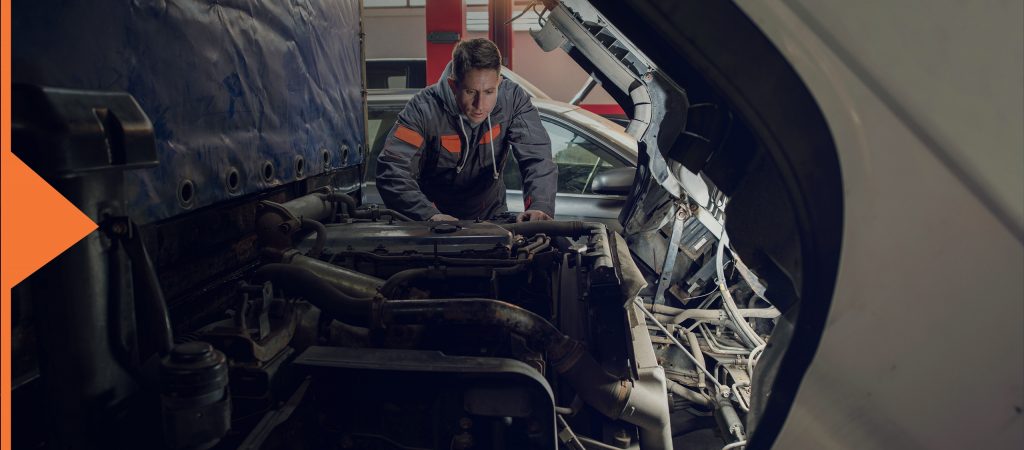
Rally and racing car drivers will tell you they “drive by the seat of their pants”, listening to every nuance of the vehicle with an almost extrasensory perception. And while they may have that gift, the reality is that the average driver may often either ignore or misinterpret what their car is trying to tell them.

Even though most new cars have sensors and a CAN bus system that can relay information directly to you and the manufacturers, being able to pre-empt an issue before it becomes a major problem can save you money in the long run.

Here are signs that your car is trying to tell you something is wrong.

Puddles of stuff

If you drive an air-conditioned car, more often than not, the puddle under your parked car is caused by condensation However, don’t assume that, and check that puddle every so often as it could indicate one of the following:

  • Cooling system leak – the puddle is green, orange or yellow
  • Power steering fluid – the liquid is clear but feels oily
  • Sump/oil drainage plug – the liquid is brown and feels distinctly oily
  • Automatic transmission problems – liquid is reddish-brown and lightly oily.
  • If it smells burnt, the chances are that you’ll need to get the transmission (gearing system) overhauled.
  • Brakes not working – there is oily fluid on the inside of the tyre wall
  • Heavy, sticky oil under your truck’s rear axle – get the differential checked out.

Hight-pitched squealing

Back in the day, this problem was usually the fan belt, and you could’ve fixed it with a pair of pantyhose. These days, cars use a multitude of belts to drive a multitude of systems in the engine, from power steering to the alternator. So, don’t wait until the belt snaps; rather, deliver your car to the mechanic ASAP to get it sorted.

If the squealing occurs when you brake, it’s probably the brake pads that need to be replaced – again, don’t slouch on this, get them replaced ASAP before you have to skim the discs and drums.

Grinding noises

If ignored, the squealing brakes become grinding brakes as the metal backing plate of the pad makes contact with the brake disc. In this instance, braking is no longer as effective and the chances of an accident occurring have increased in leaps and bounds. Once again, get your car to your mechanic ASAP!

If your car grinds, clicks or rumbles when completing a tight turn, then the constant velocity joint is no longer effective – ignore this problem at your own peril.

If the grinding takes place while changing from first to second gear, then the synchronisers are probably wearing out and it is worth getting it checked by your mechanic unless you are a rally driver who can change gears without having to use the clutch.

Grinding noises should never be ignored. whether it’s the alternator bearings on their last turn or a pebble stuck in the braking system. Keep your costs down by taking your car for inspection as soon as you can.

Tyre noises

  • Regular smacking sound that gets louder as you speed up
    • This could be something in a tyre such as a nail or bolt. Pull over and change the tyre. If you’re unable to, slow down and drive to the nearest garage or tyre centre where they can remove the cause and patch the hole.
  • Wet, grinding noise – flat tyre.
    • Drive slowly to a garage and get the tyre pumped. Once there, also check the tyre for screws, bolts, nails etc lodged in the tread or tyre walls.
  • Slapping Sound – this is the tread coming off the tyre.
    • Pull over and change the tyre. Purchase a new spare tyre as soon as possible.

Blowing raspberries

If your car sounds like its blowing raspberries or laughing at you, especially from underneath the body, then the exhaust may need to be thoroughly checked. It’s a good idea to do this sooner rather than later to ensure that the exhaust fumes escape through the proper channels.

Going off course

If you struggle to drive your car in a straight line, you immediately need to get the alignment and balancing checked, especially if you’ve hit a few potholes or some nasty speed humps. If the problem persists, then chat to your mechanic about issues such as steering columns and ball joints.

And while you take care of what makes your car tick, let Cartrack take care of you and your car’s security and efficiency with our superior vehicle safety and telematics solutions. We’ll keep a virtual eye on your car, inform you if it moves without your permission, and recover it for you if it’s stolen or hijacked. Chat to us today to find out how we can give you #PeaceOfMind.

Why geofencing is a crucial part of fleet management

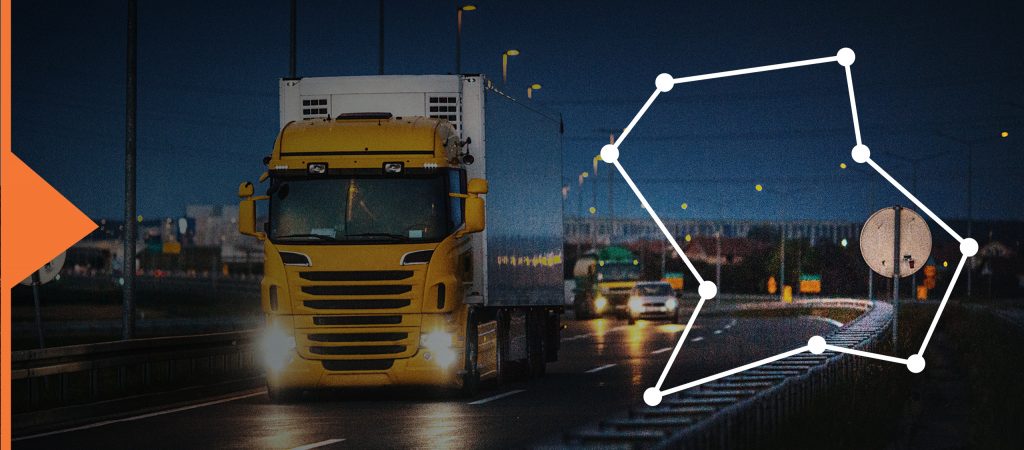
Modern fleet management offers many features that give you much better control of your fleet. One of these modern technological wonders is geofencing, which allows you to create a virtual perimeter for a real-world geographical area in which your vehicles are allowed to travel, ensuring that you always know exactly what is happening with your drivers.

Let’s unpack some of the key features of geofencing:

How does geofencing work?

A geofence can either be created as a pre-defined set of boundaries or dynamically generated as a radius around a point location. Geofencing works as a location-based service, with an app or other software using either GPS, wi-fi, Radio-Frequency Identification (RFID) or cellular data to trigger a pre-programmed action whenever a mobile device or RFID tag enters or exits the virtual boundary. A geofence can trigger text messages or prompt mobile push notifications to alert fleet owners and managers of any transgressions.

How do you use geofencing for fleet management?

To successfully use geofencing, a fleet administrator or developer must first establish a virtual boundary around a specified location in GPS or RFID-enabled software. This action can be as simple as drawing a circle 100 feet around a location on Google Maps. Once this has been done, the virtual geofence will trigger a response whenever an authorised device enters or exits that area, as specified by the developer or administrator. The fleet manager will then receive an automatic notification should their vehicles leave the geofenced area.

How geofencing can benefit you:

  • Prevent vehicle theft: should your vehicle be stolen and leave the geofence area that you created, you will be alerted and can take appropriate action to try to retrieve the stolen vehicle.
  • More intelligence for your business: by pairing up the data created by geofences with other information relating to driver performance, your fleet managers and drivers can ensure that they’re paying attention to the right key performance indicators, improving the way that you utilise resources in your business.
  • Keep your business on track: geofencing can inform you when someone arrives at a site and leaves. This ensures that there is driver accountability, and allows you to make sure your drivers are on schedule.

Using different formats, Cartrack enables you to implement world-class geofencing for your fleet. Contact us today to find out how our expert fleet management solutions can boost your business.

How fleet management is helping the vehicle financing industry

With fleet management and telematics solutions rapidly evolving in terms of its effectiveness and use within the automotive industry, both vehicle financers and those using vehicle financing have begun to reap the benefits that this sophisticated, web-based technology can offer. Here’s a breakdown of these benefits:

How fleet management is used in the vehicle financing industry

While most organisations use telematics solutions for specific purposes such as fleet management and cargo tracking, the requirements in the vehicle finance industry are a bit simpler. The devices used for vehicle finance telematics solutions can either be hardwired into the car or inserted in a more flexible way. The solution that companies (financers) choose depends entirely on the amount of information and control that an operation requires. Either way, it’s a chance for companies to grow a fleet for business use while simultaneously ensuring the security of the asset in hand at the most affordable rates possible.

Why vehicle financers benefit from telematics technology

The fully-fledged smart solutions that telematics technology offers ultimately allows vehicle financing companies to have better financial and operational control. For example, alerts can be provided whenever a vehicle is being towed or driven out of a geofenced area, which is set, virtual boundaries that cars are allowed to travel in, while companies will also be notified should a vehicle be taken to an impound lot and which lot the car has been taken to. This information allows companies(financers) to save money as they only have to travel to one location to retrieve vehicles, while their staff are freed up to sell or process loans rather than deal with administrative hassles.

Why companies using vehicle financing benefit from telematics technology

Telematics technology provides companies using vehicle financing with the resources to save money and be smarter about how they handle the financing process. Knowing exactly where their vehicle is located is sometimes the only information required to activate an internal process that is required. Further, some more sophisticated tracking device allows companies to either trigger payment reminders or even disable the starter of the car, providing further control and peace of mind.

Vehicle Financing made easier with Cartrack

Cartrack Tanzania works with asset financers to ensure that vehicles are kept on track for the period of contract with the financer, with our services emerging as the solution for most financers, especially banks.

Upon full payment of the loan, individuals can continue with Cartrack services at affordable prices to optimise and secure their vehicles. Now, individuals and businesses can leverage the chance to grow and expand through asset financing from banks partnering with Cartrack.

Tracking devices put you in control of your safety

Amongst the many advantages of vehicle tracking devices, the one that stands out most is that of peace of mind knowing that should something happen to your vehicle, it can be located and recovered.

Having been in the market for over 15 years, Cartrack has seen the rise of tracking devices as well as the advances made in the field, from pure tracking to the provision of sophisticated telematics and mobility solutions. The company has become a global leader in the industry offering the best, most technologically advanced tracking devices, designed for both individual and commercial clients.

For the private individual, vehicle tracking devices with live tracking functionality is a great way to keep an eye on loved ones and precious possessions. This functionality is often provided via an internet enabled app on a smartphone or computer.

Cartrack’s app now even features a trip share function so that people at your destination can follow your journey and know when to expect you. This is a great safety feature as it reduces time waiting in driveways, or at gates where a large majority of hold-ups and hijackings occur.

Another advantage to the tracking device is geofencing. This allows you to set up no-go-areas, specially for your older teenagers who are just finding their party feet, or au pairs who look after your children, or anyone who uses your vehicles. Once established, the device will alert you when the vehicle enters a no-go-area, and you can take the necessary action. So, you can let your teen have the car and still keep a watch on their every move.

Of course, stolen vehicle recovery remains at the heart of a vehicle tracking device and with a 92% recovery rate, Cartrack leads the world in ensuring that stolen vehicles, and even goods, are returned. And we’ve just added another layer of trust by raising our recovery warranty to R1 Million – the first tracking company ever to put this much skin in the game.

In addition to vehicle tracking and recovery, insurance providers also use the advanced telematics in the device to provide driving and vehicle stats. This helps them reduce premiums where possible, and provide a better risk assessment for their clients. Several insurance firms even use the stats to reward the good driving behaviour of their clients.

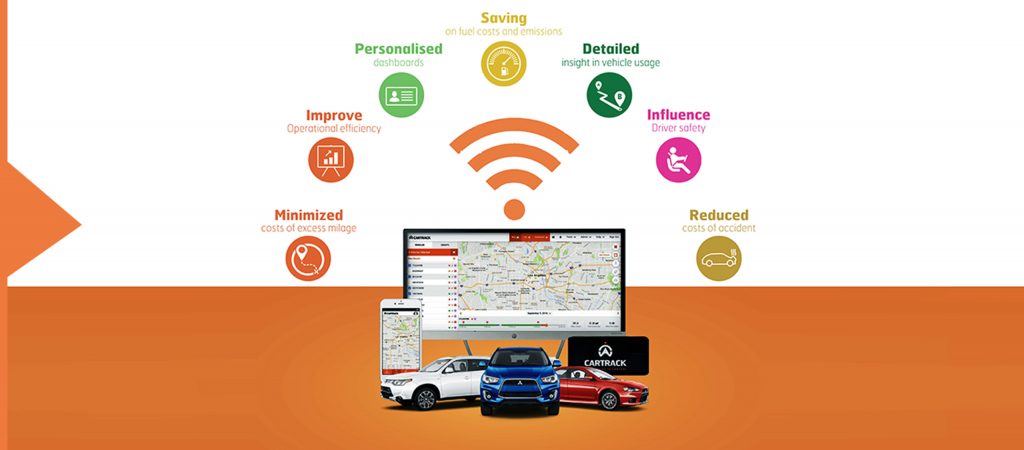
From a commercial perspective, vehicle tracking has proven hugely effective in improving workforce efficiency. Through Cartrack’s super-powerful, web-based software that includes an administration and accounting element, fleet owners and managers can, amongst other functions:

  • Pinpoint the exact location of their vehicles
  • Determine how long trips should take
  • Redefine routes for better delivery
  • Improve driver habits and behaviour
  • Keep an eye on the administrative aspect of running a fleet
  • Ensure proper fuel usage
  • Reduce misuse of the vehicles

Cartrack’s host of tracking and telematics features and services are designed to work as stand-alone options or as part of the vehicle eco-system, all based on the tracking device in the vehicle and the incredible software in our arsenal.

Contact Cartrack today to see how we can make tracking devices work for you.

Tanzania on the road greatness

With the second largest economy in Africa and a strong commitment to improving its investment climate, Tanzania is well set to become a powerhouse in Africa. Some of the commitments made by the current dispensation included redrawing tax codes, floating the exchange rate, licensing foreign banks, and creating an investment promotion centre to cut red tape.

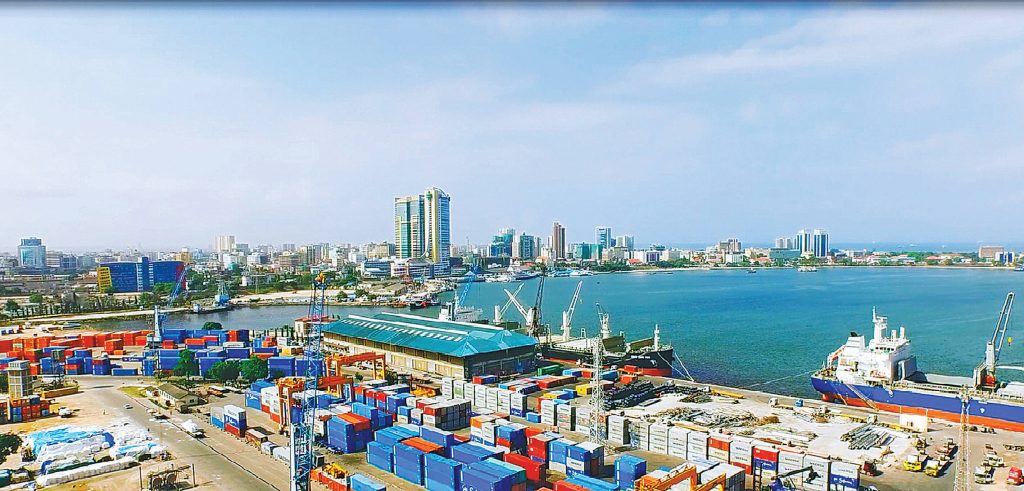
However, possibly one of the biggest commitments is the $154 million improvement project at the Dar es Salaam Port, that will see improvements in the physical infrastructure of the port and institutional strengthening and implementation assistance.

The port accounts for 90% of Tanzania’s trade and also services Malawi, Zambia, Burundi, Rwanda, Uganda and the eastern part of Democratic Republic of the Congo (DRC). In 2014, the World Bank found that inefficiencies at the port was costing Tanzania and her neighbours $2.8 billion every year.

Aimed at doubling the port’s current capacity, the project involves installing a new multi-purpose berth at Gerezani Creek, dredging of the port’s entrance channel, and intermodal improvements to both rail and road links. This will translate into 28 million tonnes of import and export going through the port by 2020, while berth waiting times will be reduce from 80 hours to 30 hours.

A huge growth indicator for Tanzania, the Dar es Salaam Maritime Gateway Project (DSMGP) is as ambitious as it is exciting, and is expected to be completed by 2023.

It’s a two phased project with the first phase being the construction of a new pier to offload roll on/roll off (ro-ro) vessels and the consolidation and upgrading of berths one to seven. This ro-ro pier means that large tonnage vessels can dock and off-load easily using their own or a platform specific vehicle.

The second phase will see the deepening of the berths from 8m to 15m.

In addition to this, the country also plans to improve its inland services with a dry dock to be built in the Kigona region. This dock, which will be located at Lake Tanganyika, will be linked to Dar es Salaam via a 2 500km long railway. It will serve the Great Lakes region, including Uganda, Burundi, Rwanda, the DRC and Zambia.

These are truly exciting times for Tanzania and her people and represents some great opportunities. At Cartrack, we are looking forward to being part of this project and partnering with all the various stakeholders in providing fleet management and telematics for the workforce and equipment that will be involved.

If you’re looking for a forward-thinking vehicle tracking and administrative partner, contact us today.

The history of ridesharing

Ridesharing services such as Uber and Lyft have truly revolutionised passenger services around the globe, giving citizens a level of convenience and empowerment not experienced previously and eliminating many of the frustrations associated with other forms of transport, including public transport.

Read on below to find out more about the fascinating history of ridesharing:

What is ridesharing?

The aim of this service is described in its name: it literally means to share a ride. Whether you decide to share a ride with a family member, a friend or even a stranger, the principle remains the same: helping people who don’t have their own vehicles get from point A to point B. Ridesharing in the modern context specifically refers to commercial ridesharing, otherwise known as peer-to-peer ridesharing. This refers specifically to the aforementioned services such as Uber, which rely on web applications and mobile technology.

History

General ridesharing has actually been around for almost as long as cars have. However, historically, when individuals wanted to use a rideshare service, they were beholden to transit systems such as busses, which were generally developed by companies and the government. Any regular commuter will know that public transit options are beset by problems and inconveniences such as stops, inconvenient schedules, and unexpected rider problems. Another way to rideshare was to carpool, which has always been more effective and cost-saving than public transport.

The Evolution of on-demand ridesharing

Taxi cabs were the first major shift in ridesharing and date back hundreds of years to the time of carriages, long before cars or vehicles were even invented. In the 1990’s and the early 2000’s, there was an effort to establish real-time ridesharing outside of the taxi industry. However, a lack of sophisticated technology such as fast internet and social media networks were obstacles at the time.

With technology now more advanced, rideshare companies began to launch in the late 2000’s, and companies such as Lyft and Uber began to experience phenomenal growth, driven in large part by substantial driver bonuses and the large amount of free ride credit that these companies were giving away.

New Competitors come onboard

With the rideshare industry currently experiencing unprecedented growth, more and more competitors are emerging, with even Amazon getting its piece of the action through its Amazon Flex service, which intends to vertically integrate its delivery operations through the use of on-demand couriers in its own network.

Cartrack Tanzania

No matter what type of ridesharing you undertake, Cartrack Tanzania will provide you with a world-class recovery team and tracking services that will ensure that you, the other riders and the vehicle you’re traveling in are protected against theft and hijackers.

Brace yourself for record petrol price

Motorists will have to brace themselves for even more bad news, with petrol set to rocket to a record high price on Wednesday.

The Department of Energy (DoE) announced that both grades of petrol, 93 and 95 (ULP and LRP), will increase from midnight on Tuesday by 99 cents and 100 cents a litre (c/l) respectively. This will result in an overall retail price of R17.08 c/l for 95 ULP in Gauteng and R16.49 c/l at the Coast, while Diesel 0.05% sulphur and diesel 0.005% sulphur will both increase by 124c a litre.

While we have all gotten used to fuel price hikes this year, this hike is particularly steep, and a bad body blow for both motorists and the economy in general. The DoE apportioned blame to the weak rand exchange rate.

“The average rand/US dollar exchange rate for the period 31 August 2018 to 27 September 2018 was 14.7899 compared to 13.9430 during the previous period. This led to a higher contribution to the basic fuel prices on petrol, diesel and illuminating paraffin by 48.72c/l, 51.03c/l and 50.62 c/l respectively,” the DoE said.

The price was also heavily influenced by the rising global oil price, with Brent crude surging to over $85 a barrel –its highest price in four years. This time around, the DoE was unable to intervene as they had in September when they temporarily provided some relief against a major fuel hike [Link to previous article]. With the South African economy currently in a recession, things are unlikely to turn around in the near future, so we will all have to “tighten our belts” and economise s much as we can in the foreseeable future.

To give you an idea of the impact that the petrol price hike will have on your pocket, here are some food items that are priced equivalent to a litre of petrol:

  • A cooldrink
  • Three packets of 2-minute noodles
  • One long-life milk
  • Two packets of chips
  • A loaf of bread
  • A 750 ml bottle of tomato sauce
  • A 1kg bag of sugar

While things may seem bleak when it comes to the petrol price, things can get even worse if you don’t protect your vehicle against theft. Give yourself peace of mind by purchasing a tracking device from Cartrack, where we have an audited recovery rate of over 90%.

Most fuel-efficient cars in SA

With the petrol price escalating at a rate of knots, all motorists have been looking for new ways to save a Rand or two.

One of the best ways to ensure that fuel costs don’t drain your pockets too much is to save fuel. While the amount of fuel that you save will depend on a number of factors such as the road conditions, your driving style and the mechanical condition of your car, it is also important to drive a car that consumes as little petrol as possible.

As such, if you happen to be in the market for a new car, it would make sense to consider buying one of these highly fuel-efficient cars, all priced as of 2018. The Fiat 500, which is offered either as a convertible or a hard-top, is considered to be a particularly efficient vehicle, with its 63kW/145Nm 0.9-litre, two-cylinder turbo petrol engine claiming a fuel consumption figure of 3.8L/100km. This car can also be enjoyed in either manual or automatic mode, while there are three trim levels to choose from, namely, Pop, Pop Star and Lounge.

While the Smart For Two city car may be a little smaller, it packs a punch in terms of its fuel savings, with fuel consumption claimed at 4.1L/100km. It’s three-cylinder 1.0-litre petrol engine will still get you from A to B, while it also has 52kW and 91Nm of torque that is paired with a standard, five-speed manual transmission. It also has three trim levels of Base, Passion and Proxy. The Fiat Panda boasts low fuel consumption figures of 4.2L/100k. This five-speed manual transmission is powered by the same engine that is found in the Fiat 500, which has a two-cylinder, 0.9-litre turbo-petrol engine and torque outputs of 63kW and 145Nm.

The Audi A1 is the most expensive car on this list, but it is also quite fuel efficient, with its entry-level, manual A1 Sportback and three-door derivatives claiming a fuel consumption figure of 4.2L/100km. Its also packed with power thanks to a turbocharged 1.0-litre petrol engine that offers 70kW and 160Nm of torque. This five-speed manual transmission car is the most fuel-efficient within the 208 range thanks to a claimed fuel consumption of 4.3L/100km. It’s unsurprising that it is so fuel efficient, with an aspirated 1.2-litre petrol engine with 60kW and 118Nm naturally suited for economical driving.

Another good way to maximise fuel efficiency is to invest in fleet management solutions. Contact Cartrack today to find out how you can improve fuel savings with sophisticated vehicle telematics.

Top tips on how to save money

The economy has been struggling of late, and consumers have been badly affected by the financial crunch. Everything seems to be more expensive, from petrol to food to entertainment, and it is becoming harder and harder just to get by on our salaries. In these tough times, the only viable solution is to work out ways to save money and cut costs wherever and whenever you can.

Here are some handy tips on how to save money:

Make a budget

The first step towards financial relief and independence is setting out clear limits for yourself regarding what you spend each month. As such, it is of vital importance to devise a budget and then adhere strictly to that budget. In order to achieve this goal, you should start by working out what you spend each month, and organise your recorded expenses into a workable budget. This budget must outline exactly how your expenses measure up to your income, which will allow you to limit overspending. When putting together your budget, it is also important to consider expenses that can occasionally occur such as car maintenance.

Put money aside

No matter how tight things are, it’s always advisable to put away between 10% and 15% of your income as savings. Should your expenses be so high that you find it difficult to save that much, then you might need to reconsider your budget and try to cut back on unnecessary expenses such as entertainment and eating out. If you bracket savings as an expense in the same way that you consider groceries to be an expense, you will reinforce good saving habits. To ensure that you stick to a plan that factors in savings, you can set up an automated transfer to a savings account. In this way, you won’t think twice about saving and won’t be tempted to rather spend the money.

Set a goal of something to save for

As you are putting savings away for future use, it can sometimes be tempting to not want to commit to this practice, as you won’t receive immediate rewards from doing this. It is therefore essential to set a specific goal in mind when saving – whether you are saving for a TV, a car, a holiday or a home. Having an end goal in mind will help motivate you and focus your efforts.

Consider a smart investment

While it may seem against your best interests to add an expense on to your expenses, putting some money into a reputable investment could reap great financial rewards in both the short and long term. While investing presents a certain risk and could result in you losing money, it also creates the chance to gain compounded returns, and help create financial relief as well as a retirement nest egg. It is best to speak to a qualified financial advisor about this option

Be smarter with your service providers

Not every service provider is equal in terms of their price. Shop around and find a service provider that can offer you a lower price while still offering quality service. For example, Drive and Save can provide you vehicle theft insurance for only R9.99 a month (terms and conditions apply ).