
Top Telematics Use Cases That You Need to Know

The top telematics use cases speak to the efficiency and savings that technology has brought to the industry. This includes fuel savings, asset safety, and company growth (the ultimate goal). Technology isn’t a decision-maker—that’s your job. But it does give you everything you need to make more informed decisions that help your company EXCEL!

Cartrack Tanzania has gathered some case stories about how our telematics devices & software have impacted the operations of people around the world. Since our products are available in 23 countries, there are a lot of use cases we can refer to so you can make up your mind about integrating telematics into your own business fleet.

But first, let’s look at why we use real life examples in the fleet industry and how this should influence your decision-making process.

Key Takeaways:

  • You should study real life examples because making decisions based on facts and data helps your company grow
  • Looking at what your peers say about new tech is a smart way to avoid making the same mistakes they did
  • Using smart software helps you manage things like keyless car sharing and electric vehicle fleets without any extra stress
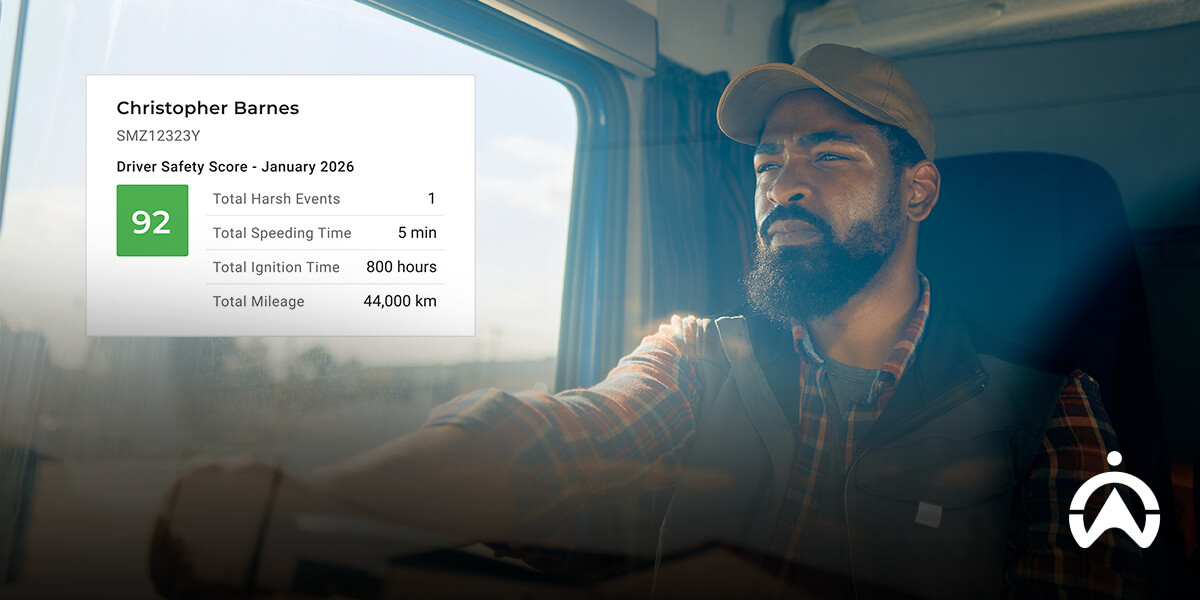
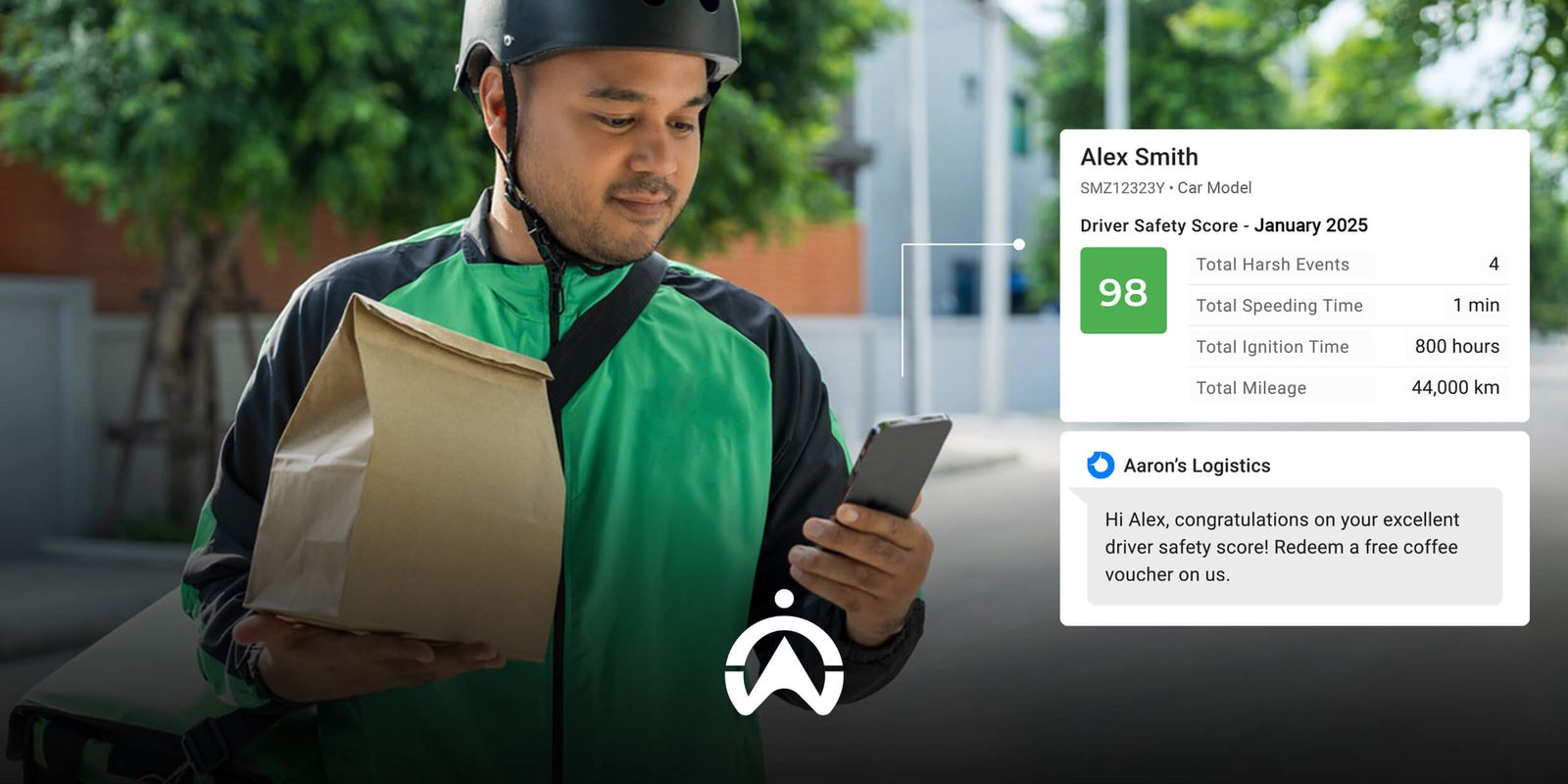
  • Scorecards support training and rewards and build a strong, safe driving culture
  • You choose your own demerit system based on what’s important to your business

Why should you as a fleet manager study telematics use cases?

As a fleet manager, you should always study real life examples of how telematics influences the industry because your decision making should be based on facts & data. As others try new technological methods to improve their operations, it’s helpful to analyse what might work for your company, as well as what should be avoided.

Knowledge is power, and the more you learn about the fleet industry, the more you can grow your company, save on insurance, and so much more.

Trial & error

When a new method gets adopted, there’s often a risk of it failing. But many companies (both large & small) have already taken these risks on your behalf. So instead of repeating the same mistakes these companies have already made, look to them for wisdom and discernment, and adopt what actually WORKS.

Testimonials

Look at what your peers in the industry are saying regarding a particular technology. Their feedback is invaluable to companies like yours because they’ve experienced the same challenges you have. Whether it’s Google Reviews or JamiiForums, get some insight into how other fleet managers have overcome common obstacles.

Troubleshooting

Your problems won’t go away by themselves. Problem solving is a vital part of being a fleet manager, and you can learn from others how to troubleshoot issues that plague you on a daily basis.

At Cartrack Tanzania, we try to think from YOUR perspective, providing you with solutions that will save you money and streamline your operations. Other fleet managers have trusted our solutions for decades, and so can you.

Growth

When you take all these and put them together, you ultimately want to be a good decision maker as a fleet manager. It’s your career and the success of your company that benefit here.

Imagine putting some improved stats on your CV for the next time you apply for a fleet management position! We can help you do exactly that. Improvement from one week to the next is what you and we are aiming for here, so let’s make it happen.

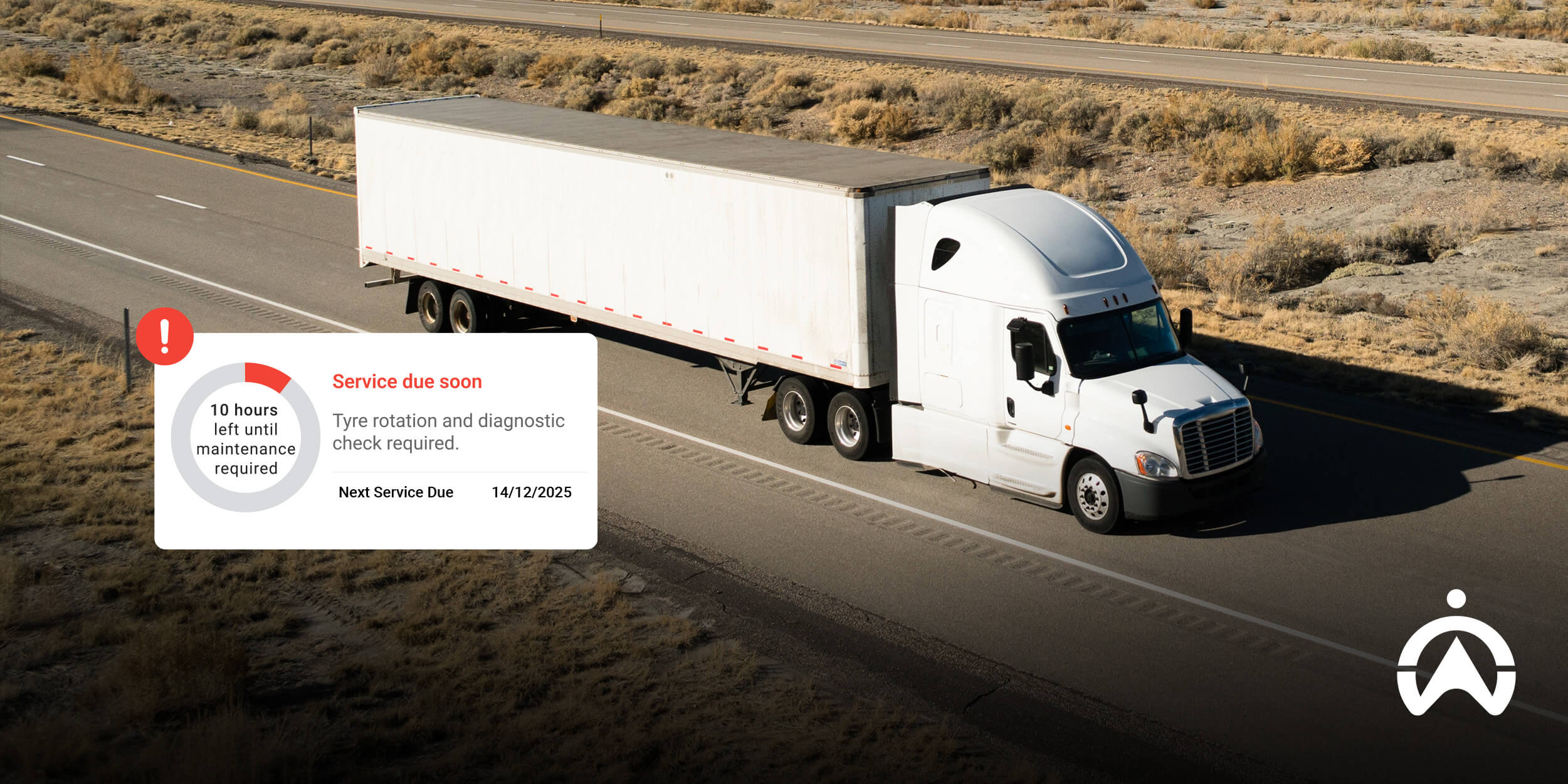
Telematics system displaying driver behaviour and performance insights

Top 4 telematics use cases and why they matter

Real life use case #1: GetGo in Singapore

Imagine turning a fleet of over 1000 cars into a car-sharing business. That’s exactly what GetGo did. But they also had a few challenges during this transformation, which is where Cartrack’s technology came to the rescue.

Using keyless technology, customers, staff and cleaning crews could access specific cars using their mobile phones. In short, their business went completely keyless, making it much easier to manage those 1000+ vehicles.

This made growing the business a lot quicker, and the risk during the scaling process was lower because they had data to back up their decisions. Their customer base soon grew, and more vehicles were added to the fleet without more admin or strain being added to the staff. That’s because everything could be managed from one central point.

AI also played a huge part in giving GetGo predictive analytics. Things like heatmaps, graphs, and reports were used to grow in the right direction and at the most opportune times. They could also manage their vehicle maintenance rather seamlessly thanks to Cartrack’s predictive AI maintenance software.

Best of all? During the Covid-19 period, GetGo achieved record-breaking profits. They did this by using our scheduling software for their cleaning crew, which added reassurance to their customers that the vehicles were safe to drive after being used by others.

Why it matters

In a country like Tanzania, thought leaders are always trying to come up with unique business ideas to improve the economy. Public transport is one of the most prosperous industries to get into, as can be seen by so many springing up over the past decade. It’s also true that many of the public transport companies we currently have are poorly run, or hardly profitable.

Here’s a question: Could a car-sharing company be a viable business idea in Tanzania?

Using Cartrack’s fleet management technologyto consolidate and streamline your transport business is a MUST if you want to succeed. Also remember that if our technology can help launch & run an entire lift-providing service in Singapore, we can help you run your company fleet with the same efficiency!

Real life use case #2: EV Transformation for EVme in Thailand

Thailand is making some reasonable headway in EV transformation. Many fleets are converting, but one company has always seen the gap in the market and taken advantage of it. That company is EVme. They rent out electric vehicles to private motorists AND large businesses that need vehicles temporarily.

Keeping track of these vehicles was hard enough, not to mention keeping track of their respective conditions and mileage. Delivering vehicles became a challenge, because EVme wasn’t always confident that the vehicle they were delivering was in good condition, or that it was sufficiently “ready” for its upcoming tasks.

Cartrack solved this dilemma by helping EVme keep track of each vehicle, automatically scheduling deliveries, servicings, and bookings. Deliveries of fully charged vehicles happened quickly, and EVme had a bird’s eye view of what vehicles were being used, and which were available (and ready). They also always know the condition of their vehicles so that they can book them in when necessary.

Today EVme manages 1 327 electric vehicles, and their admin is automated. Customers are flocking to EVme, because so many companies want to test the efficiency of electric vehicles within their businesses (and do so relatively risk free).

Why it matters

Tanzania (along with hundreds of other countries) are beginning to clamp down on Environmental, Social, and Governance (ESG) compliance. The mandate is simple: “Lower your company footprint as much as possible.” While these accompanying regulations haven’t been made mandatory yet, it’s likely they will be in the not-too-distant future.

Quick fact: Even now, insurance companies, banks, and retailers are favouring fleet & delivery companies that are seen as environmentally responsible.

EV fleets have a bright future in Tanzania. But that transition from petrol/diesel to EV is a complicated one. Without the help of a telematics service provider that’s familiar with EV transformation, it’ll take you years to reach full ESG compliance.

Food for thought: If you partner with a company that has a track record of pioneering fleet industry trends, you’ll already have access to the best advice when you DO decide to go electric.

Real life use case #3: Concord Cranes

Let’s look at a use case: Concord Cranes is a crane hiring company that has many high-profile construction clients. Keeping these clients happy is their highest priority, but they were sometimes forced to meet this priority at the expense of their own machinery.

The cranes they delivered to customers often came back after a long day of operation, but Concord Cranes had no way of knowing just how long their cranes had been operating for (or at what capacity they’d be able to operate in future).

Cartrack installed special IoT “power take-off” sensors onto each crane, giving Concord Cranes the ability to monitor each one’s operating time by the minute. They also had eyes on their cranes when they were hired out, thanks to our tracking devices.

But above all of that, Concord Cranes always knows the health of each crane, because our AI keeps tabs on their performance and real-time condition. Their cranes only get serviced when necessary, extending the longevity of each unit for maximum utilisation & profitability.

Why it matters

You might be thinking that this use case is only applicable to construction companies. But did you know that Cartrack can implement this same technology for vehicles as well as equipment? Think trailer hire, farming equipment, high value cargo, etc.

While the construction industry is a booming one, delivery trucks & vans fill our roads every day. By monitoring the condition of each of your vehicles, you can proactively service them when it’s needed. This is so much better than keeping to a calendar-based schedule, often servicing vehicles unnecessarily or incorrectly.

The beauty of AI predictive maintenance software: Our technology pinpoints exactly what needs servicing and when that service should take place. Using AI, it then auto generates a maintenance schedule for your convenience, and tracks everything accurately so you can keep your vehicles on the road.

Real life use case #4: Homegrown Juice in New Zealand

The story of Homegrown Juice in New Zealand is a simple one. This innovative company delivers healthy organic fruit & veg juices to various retailers. They have very strict guidelines about the temperature these juices must be transported at.

Temperature monitoring is where Cartrack really shines! We help Homegrown Juice to deliver their stock at a much lower risk, because their refrigeration units use our door sensors and cargo cameras. These alert their fleet managers every time a door is opened, and our temperature monitors want them when temperatures deviate from the ideal level.

Cameras also serve to help them understand who is responsible for temperature deviations, which makes training their staff a whole lot easier! The software we provided them with also generates graphics that record and archive their temperature fluctuations, helping them manage their stock more closely.

Why it matters

Tanzania loses significant amounts of food every year due to poor transport and storage infrastructure. Much of this waste happens while produce is being moved from farms to markets, warehouses, and urban retailers. Truck accidents are sometimes to blame, but more often than not, it’s because food spoils on its way to warehouses or retailers.

Cold chain logistics is an essential part of any food delivery fleet. Cartrack offers several solutions for your cold chain logistics operations, like vehicle & cargo cameras, cargo door sensors, and temperature control strategies.
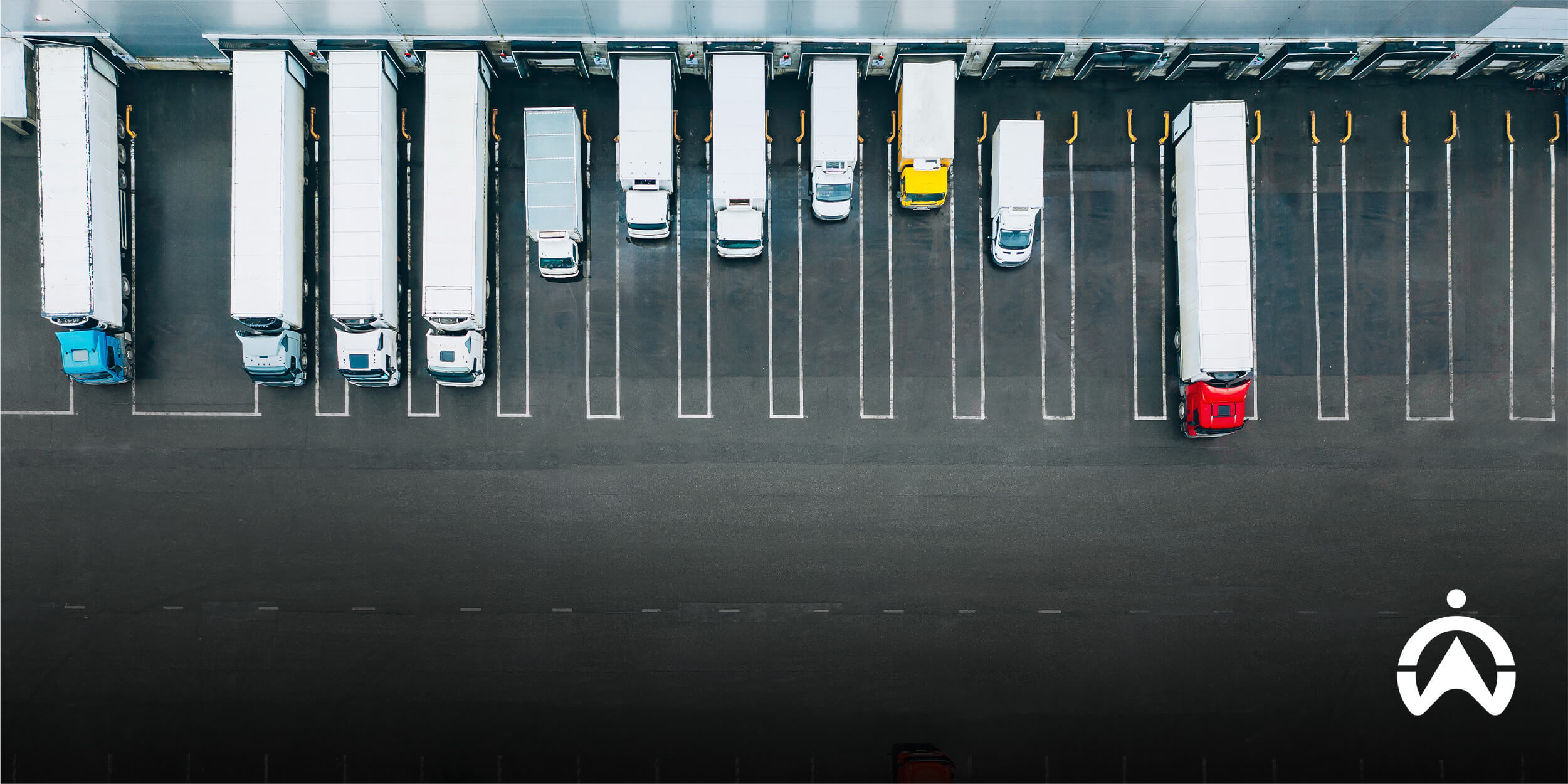
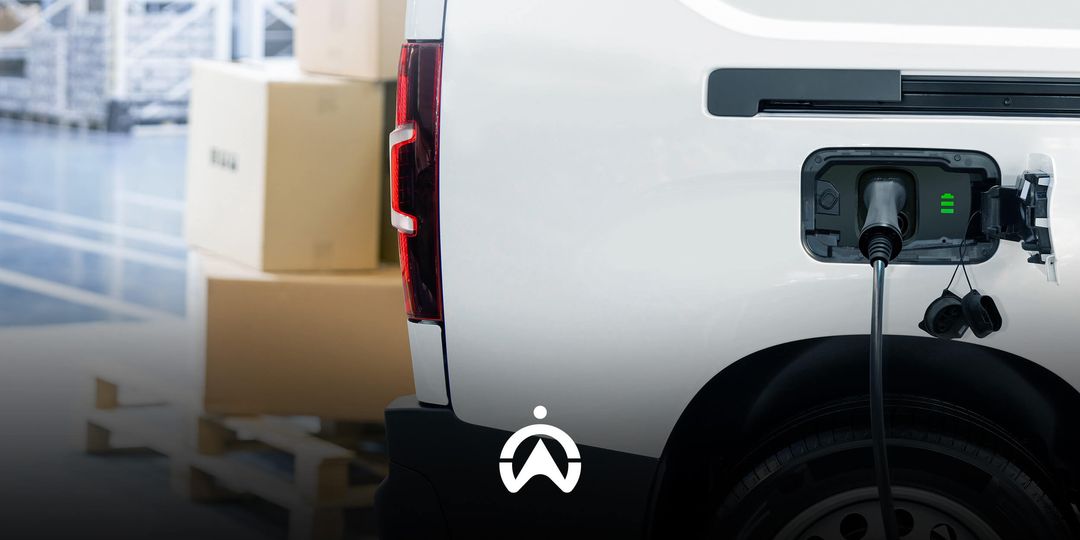
Business vehicles monitored using GPS tracking and telematics technology.

Use case categories to consider

The real life use cases above cover construction, food transport, public transport, and car hire. But what about YOUR industry? Let’s look at some ways Cartrack’s technology helps industries like yours to optimise their operations.

Personal motorists

One of the most interesting use cases to take note of involves a large number ofvehicles Cartrack recovered over the past 10 years. People’s lives have been significantly improved because of our gold-standard tracking capabilities, and thousands of criminals are sitting behind bars because of our tracking technology.

Mining

Cartrack’s technology has been instrumental in keeping mining workers safe from vehicle accidents. Our vehicle safety cameras work tirelessly to prevent fatigue and distraction from causing devastating incidents that could likely cost someone their life.

Emergency services

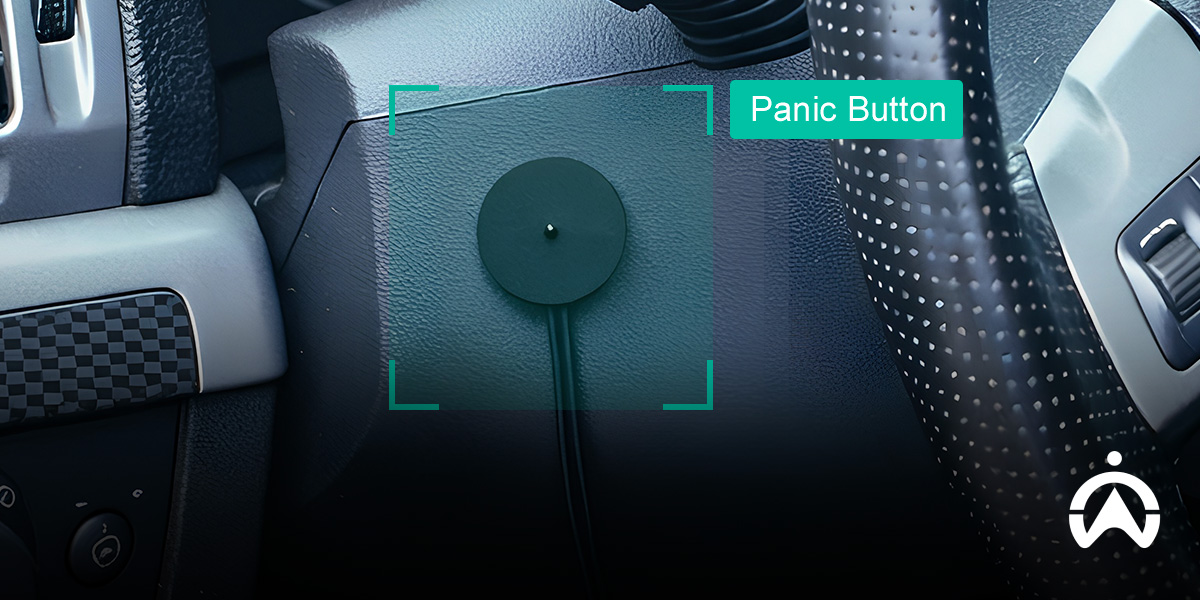
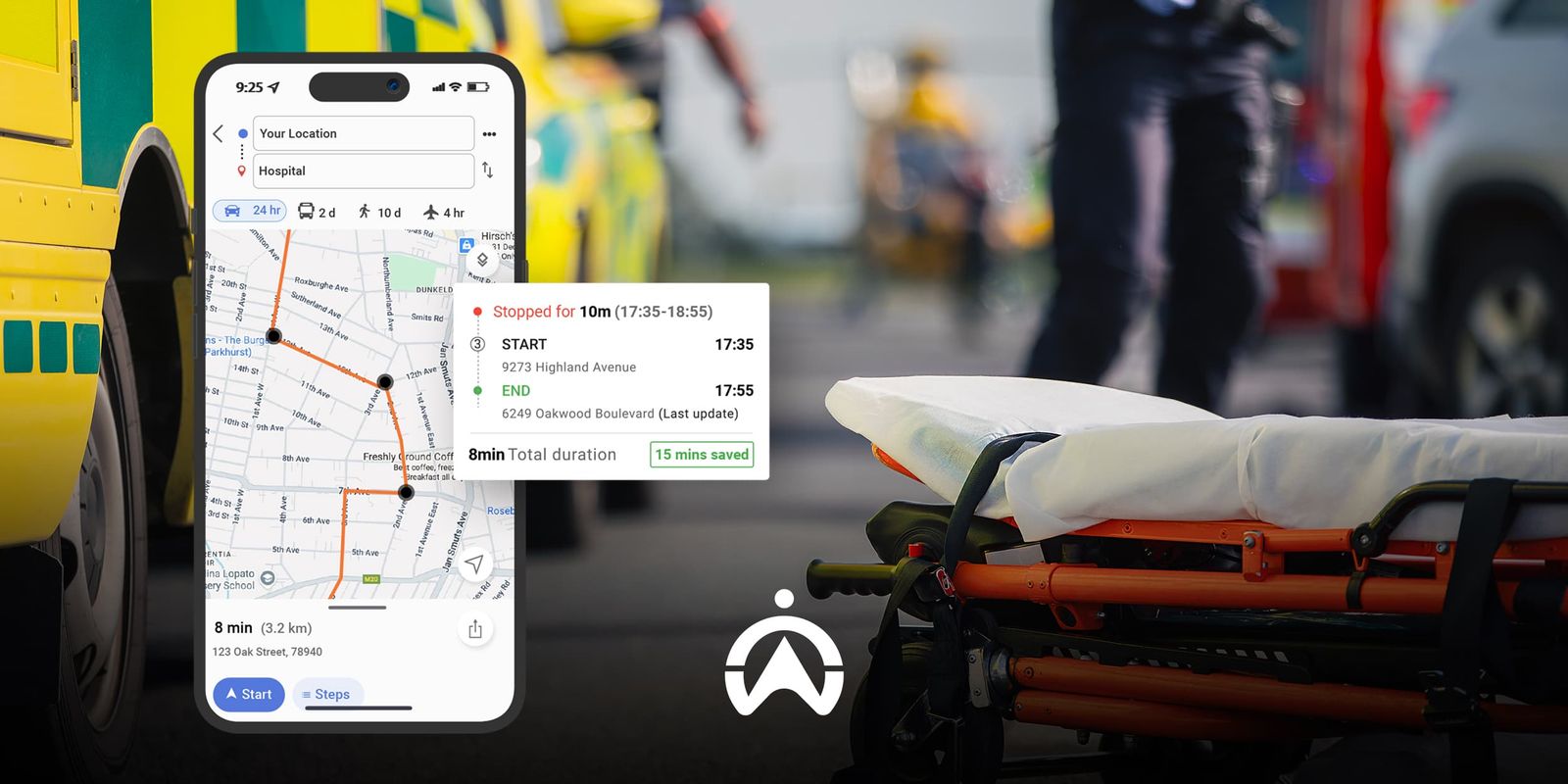
Getting a security guard or an ambulance to a scene on time is an often vital necessity. Cartrack helps your emergency responders avoid heavy traffic, bad roads, and road blocks to assist your drivers to make good time on their arrivals.

Agriculture

Whether it’s farm vehicles or farm equipment, Cartrack has a device to help those in the agricultural industry optimise their operations. Read about our non-powered asset trackers and how they help farmers keep track of their equipment on a large piece of land.

Couriers

Courier companies handle hundreds of deliveries every day. Keeping track of each one (not to mention the stock they carry) is an essential part of keeping customers happy.

Utilities

Government workers need the fleet management software we offer to perform more tasks per day to meet their tight quotas. If efficiency is top of your priority list in the utilities sector, then give Cartrack Tanzania a call today!

Trades

Electricians, plumbers, painters, tilers… if you’re in the construction or home repair industry, why not strategise business growth by expanding your fleet and managing your service technicians the easiest way there is.

Frequently asked questions about telematics use cases

How many countries does Cartrack operate in?

Cartrack currently operates in 23 countries worldwide. These countries include New Zealand, Singapore, Indonesia, Tanzania and South Africa. Different road laws and various cultural aspects call for a variety of products that fit the needs of motorists and fleets in different countries. You might find that some of the products available from Cartrack elsewhere won’t necessarily be available here.

What makes a tracking company better than the rest?

Factors that distinguish one tracking company from its competitors include:

  • Vehicle recovery rate
  • Superior service
  • Technological relevance
  • Training

Cartrack has its bases covered when it comes to all four of these factors, which is why we’re among the top fleet solution companies in the world.

How can I use telematics to make better business decisions?

Telematics should be used to make better business decisions because it’s raw data that’s been processed into valuable, actionable business insights.

These same insights should give you the statistical information you need to make purchasing, hiring, and operational decisions more focused and informed.
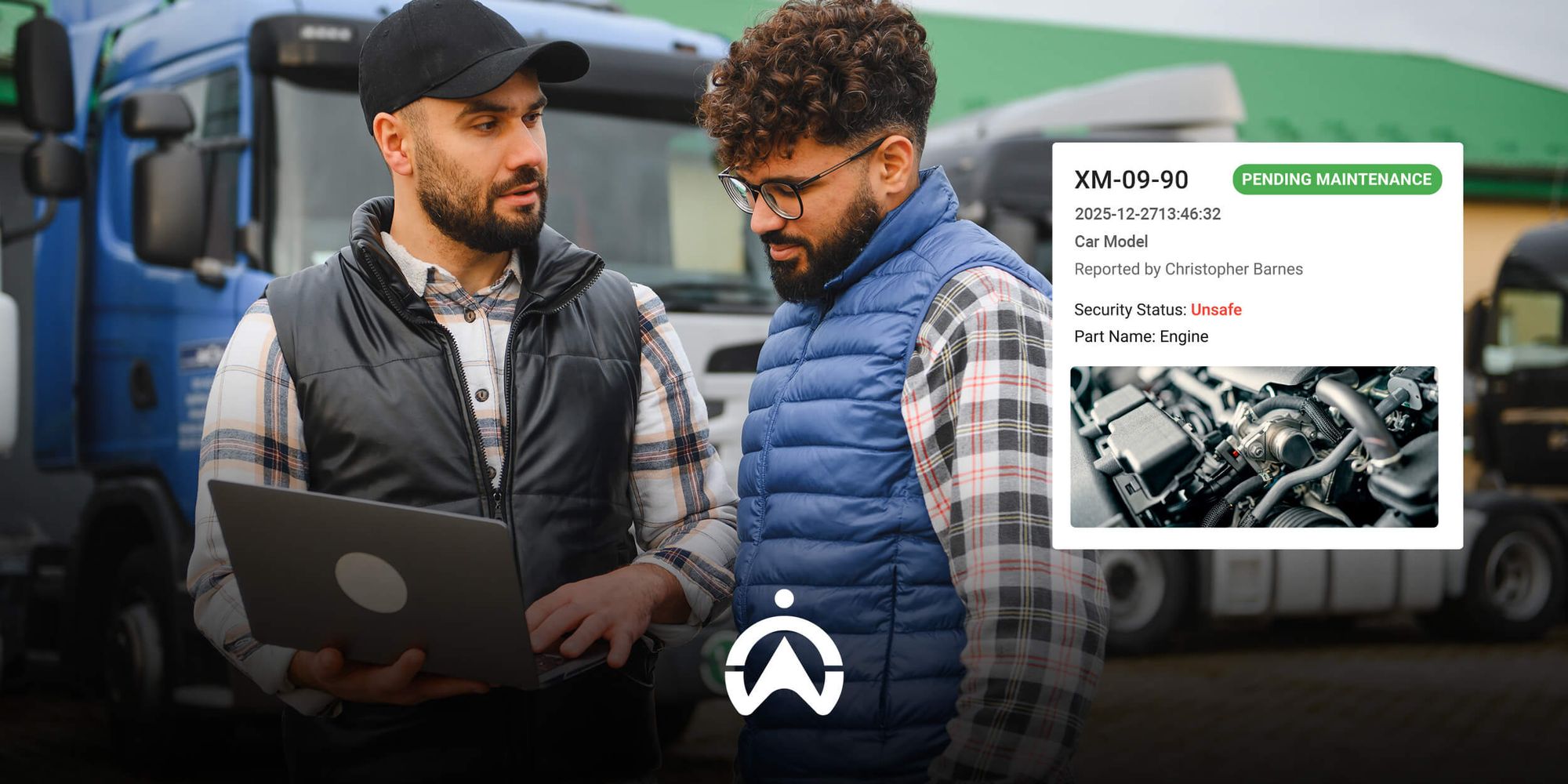

Get Predictive Maintenance Software that Uses AI for Your Business

While it might sound a tad futuristic, making the decision to alter your fleet operations with the influence of AI predictive maintenance is a wise one. Companies that do this are sure to remain relevant in an industry that’s currently going through an evolutionary phase.

There are many ways Cartrack Tanzania has helped companies make better business decisions regarding their fleets, but this one has been a big money saver:

AI-powered software that predicts your vehicle’s maintenance needs.

Yes, it’s been here for some time now. Does it sound too good to be true? Well, it’s not. Here’s everything you should know about predictive maintenance software and how to integrate it into your fleet TODAY!

Key Takeaways:

  • You’ve got to do your homework first to find a software partner that’s actually there for you when things get tricky
  • Getting started is a team effort where you’ll need to sort your vehicles by how much they’re worth to your daily operations
  • Training is a huge deal because your drivers and managers need to trust the AI’s data over their old paper calendars
  • This tech doesn’t just save you a packet on repairs, it keeps your drivers safer and helps your hard-working vehicles last much longer

The 5 Stages of implementing AI predictive maintenance software

The five stages of implementing AI predictive maintenance into your own business are making an informed purchase, installing the IoT devices & software, training your staff how to use it, testing & tweaking operations, and scaling. If you’re about to make this very beneficial decision for your own fleet company, here’s how to go about it.

The consultation

Do some research first. You’ll want to choose a software company that has a good track record for implementing AI predictive maintenance software. But you’ll also want to choose a company that’s known for good after-sales service.

It’s important to get the right advice from the start. A consultant should be able to gauge your fleet situation and offer you a package that works best for the size, type, and operations of your fleet.

From there they should always offer you a solid customer support structure that gets you through the teething stages, testing phases, and initial implementation. And when we say “Do your research,” we mean REALLY do a deep dive on what other users have said about the company you’re considering.

  • Read through their Google reviews
  • Note how they educate their customers through blogs and articles
  • Call them to see how friendly & helpful their service is

All these steps will help you make an informed decision about which predictive maintenance software is the best one for your company, your drivers, and your fleet of vehicles.

The implementation

Now comes the hardest part. Implementation is a collaboration process between you and the software company you’ve selected. At Cartrack Tanzania, we’ll walk you through the installation of IoT devices and the software itself, but there are a few things you need to do on your side.

First, get the logs of all your vehicles and their maintenance history. You can feed this into the new system for a more accurate reading from the AI-powered software.

Second, rank your vehicles from high to low priority. Priority shouldn’t be based on just how much they cost, but also how much you’d lose if they stopped working (even for a short time).

The testing

Check if it works. Do a quick test run to see how the AI interprets your manually fed data with its own diagnostics of your vehicles. You should get an easy-to-read schedule that more or less corresponds with which vehicles should be tended to first, and which can run service-free for a while longer.

At this point you should start seeing some early warning alerts that’ll turn your attention to the most important issues. These will be based on the priority list you created, the historical data you fed into the system, and the AI’s diagnostics of each vehicle.

The training

Which staff need to know what? Your fleet managers are the most important people to educate on this new software. They should discard any ‘calendar-run’ maintenance schedules and trust the predictive AI to give them a more accurate reading of which cars, trucks or buses need attention.

Your drivers should also know that the vehicles they drive are now being monitored for things like harsh braking, speeding, excessive idling, and aggressive cornering. Brake pads, engine health, and tyres will now be diagnosed according to how your team drives!

Important tip: If you really want to get the most out of this stage of your AI-driven predictive maintenance software, combine it with fleet coaching software and vehicle cameras. These will further save you money on vehicle repairs and unwanted road incidents.

It would also be helpful to share this information with your regular maintenance staff. If they’re in-house, they should know when to expect vehicles being booked in for repairs. If you outsource your vehicle maintenance, share your schedule with them so they too can make time & space for your incoming vehicle repair needs.

The updating

Keep tweaking as needed. Some fleets change and reshape regularly. Your software should be able to scale with your fleet. It should be flexible.

This is where Cartrack’s predictive maintenance software really shines. It’s designed to be tweaked quickly. It also does well with small fleets that get larger, and large fleets that get smaller.

IMPORTANT! Always use this software to measure your ROI. You want to be able to print reports that show the usefulness of the software so that you can justify it to your company stakeholders.

How does predictive maintenance software that uses AI actually work?

AI-powered predictive maintenance software works with IoT devices (the hardware) to read pertinent vehicle information (the data) and feed it onto your computer screen (the software). Good predictive maintenance software will also auto-generate a servicing schedule so you don’t have to.

What hardware is used

The hardware used to read the data of each vehicle is called IoT (Internet of Things) devices. These come in the form of sensors, clamps, and tracking devices.

  • Sensors can be installed into your fuel tank to give you accurate fuel readings and alert you to sudden fluctuations.
  • Clamps are attached to your vehicle CANbus system to keep a detailed record of speed, idling, mileage, and more.
  • Tracking devices provide real-time locations and record trips to more accurately determine the workload of your vehicle.

Not all of these devices are always necessary, but together they form a powerful pool of data.

How it diagnoses your vehicle

From here that data is interpreted into information you can easily digest. Some algorithms and equations run in the background and alert you to vehicles that are on the brink of needing a service.

It looks at things like:

  • Time since the last service
  • Engine health
  • Trip durations and vehicle strain during those trips
  • Tyre health
  • Brake pads and disks
  • Vehicle handling

Now the AI takes these and other important factors to do some serious maths. The result? A neat maintenance schedule that’s been automatically generated for the convenience of your managers and the health of your fleet.

How it translates information

The software itself is what translates this information. It organises it into reports, alerts, and overviews. This helps you to manage your fleet better. More importantly, it gives you the leverage to make better decisions based on accurate data.

Why should you consider AI predictive maintenance software for your fleet?

Taking this from a problem/solution angle, let’s look at 5 reasons you should consider this revolutionary software for your own business.

Current & future compliance

Vehicles that are in good, consistent health are more likely to comply with road laws. This means fewer fines for your company and better overall compliance with regulating authorities. It also saves time at road stops or border crossings.

Use example: The software accurately predicted that two of your truck tyres needed replacing. The truck was stopped at a roadblock on its way to perform a delivery. Police officers examined the tyres and found them to be in good condition in terms of safety standards.

Streamlined operations (managed downtime)

With a schedule in place, you can plan around vehicle downtime. If one vehicle needs a service, you can book another one to take its place if the job or delivery is an important one. You’ll also have a good idea of when the vehicle is set to be back in action.

Use example: It’s Monday. Your technicians have six tasks scheduled for Wednesday. But their regular vehicle needs its brake pads replaced on that same day. You have two days to arrange an alternative vehicle so that your technicians can carry out their tasks without any delays. This keeps your customers happy and keeps workflow on schedule.

Savings

How many times do you think you’ve scheduled unnecessary vehicle maintenance? Probably more often than you think! When you follow a set calendar schedule, you’re relying on guesswork to maintain vehicles. Basically, you’re fixing what isn’t broken. You’re preventing breakdown, but you’re not sure if it was actually necessary.

Predictive AI maintenance software can save large and small fleets thousands of shillings by ONLY booking in vehicles that actually need it.

Use example: Steven is one of your drivers. In fact, he’s the best driver you have. He drives your delivery van carefully, obeys the rules of the road, and always gets packages to customers on time. He drives that van so well that it’s still running long after its last service over a year ago. Cartrack’s software predicts it can go another long while without needing a service. The result? You save on maintenance costs.

Safety improvements

It’s obvious—vehicles that are maintained PROPERLY keep your drivers safe. A calendar-based vehicle maintenance schedule can’t predict what maintenance actually needs to be done. All you can do is hope & pray the mechanic will pick up everything they should.

But with an accurate system that’s constantly reading and diagnosing your vehicles, it’s like having a built-in mechanic that alerts you to problems as soon as one comes up!

Use example: One of your trucks is up for an oil change. But three days before it’s booked in, our system alerts you to something way more important. The gearbox of the truck is damaged and needs replacing too! Had this not been checked by the mechanic, it could have caused endless delays and even an accident after the service.

Vehicle lifespan

Ultimately you want to get the most out of your vehicles. They’re workhorses after all, and squeezing as much work out of them is how you get the highest ROI out of each vehicle. That’s why smart maintenance is so important, because you don’t want to spend money on unnecessary services… But at the same time, you want your vehicles to run for as many years as possible.

Predictive maintenance does exactly that! It maximises the lifespan of each vehicle and ensures optimal health no matter the age or mileage of your vehicle.

Use example: One of your vehicles is 15 years old. Because it always gets maintained IF & WHEN it needs it, it still runs like a dream. Your staff have even nicknamed it “Old Faithful”, because it’s got an engine that just won’t quit.

Why choose Cartrack Tanzania as your AI partner in predictive maintenance?

You should choose Cartrack Tanzania as your AI maintenance software partner because our software is designed to save you as much money on your vehicle maintenance as possible. It does this without compromising on the importance of driver safety, vehicle health, and vehicle longevity.

We’ve explained what’s important in your predictive AI maintenance software.

We’ve done that because we know the industry.

We talk to fleet managers like you every day.

Cartrack Tanzania is leading the industry when it comes to predictive AI maintenance software for fleet companies. Partner with us and we won’t let you down.

Still need to know more?Talk to a consultant at Cartrack Tanzania todayand learn how AI predictive maintenance software can change your fleet from reactive to proactive overnight.

Frequently asked questions about AI predictive maintenance software

Is predictive maintenance software only for large fleets?

No, predictive maintenance is for smaller fleets too. The point of this software is to save you money, and those savings are relative to how much money you spend on vehicle maintenance right now. So even a fleet of two vehicles can benefit from predictive maintenance using AI.

How else is AI influencing the fleet industry?

AI is influencing the fleet industry through AI cameras that can detect driver behaviour, and fuel management that highlights fuel waste. As the technology develops it’s being more integrated into fleet management systems through IoT devices and algorithmic software that can streamline operations and perform predictive analysis in different areas.

Can predictive AI maintenance software predict something as small as an oil change?

Yes, predictive AI maintenance software predicts small things like the need for an oil change. It can also predict the need for more serious vehicle issues like engine services, brake systems, and tyre health. By adding additional IoT devices (cameras, fuel sensors, etc), even more accurate readings can be derived for the software to process.

How To Become Fleet Safety Certified Today

To become fleet safety certified, you must look for a reputable skills development provider and see what courses they offer and their requirements. The course you choose needs to align with what you want to improve on. Ensure that you have enough resources available to complete the programme and make time for studying and assignments.

It’s no secret that Tanzania faces high road fatality rates and as a fleet manager, you must have the skills to mitigate the risk. A fleet safety certificate can help with that, but you’ll also need to have the right technology in place.

Today we discuss how to get fleet safety certified and how our fleet management system makes the process easier for you.

Key Takeaways:

  • A fleet safety certificate gives you the skills to meet compliance requirements
  • Fleet safety courses differ depending on your needs
  • Fleet management technology makes it easier for you to meet fleet safety certification requirements
  • Cartrack Tanzania solutions like ADAS, DID tags, and Coaching can help you acquire your fleet safety certificate

How to get a fleet safety certification

To get a fleet safety certification you must find a credible learning institution, check what the requirements are, and choose the training course that best suits your preferences. The courses normally differ depending on your job position and the things you need to focus on.

Some fleet safety courses can be carried out by fleet trainers because they know more about the topic and have the necessary material. They’ll also know which course will best suit you.

What exactly is fleet safety certification?

Fleet safety certification refers to completing an accredited programme with a series of courses that will help you effectively manage fleet safety. The courses teach you the skills you need to ensure driver safety and roadworthiness.

The courses typically include things like how to:

  • Drive defensively
  • Reduce traffic violations
  • Prevent vehicle wear & tear
  • Develop and implement policies
  • Handle cargo load limits
  • Manage driver conduct

Fleet safety certifications are issued by several accredited institutions, like the LATRA (Land Transport Regulatory Authority) and the OSHA (Occupational Safety and Health Authority). Each programme differs depending on what you need.

What change will the certification bring to your fleet?

A fleet safety certificate will bring many changes to your fleet because you’ll know more about:

  • Meeting compliance requirements
  • Encouraging a safety culture
  • Ensuring roadworthiness
  • Maintaining your fleet better
  • Reducing fleet running costs
  • Maintaining a good company reputation

This changes our entire outlook on running your fleet, helping you make more informed decisions.

Here’s what we mean.

Meet compliance requirements

Failing to meet the standard rules set by governing bodies in your industry means your fleet is not fit to operate. Compliance is not just about dodging fines and penalties; it’s about ensuring your vehicles are safe for use and that drivers are protected. It’s also about ensuring that your cargo or people are transported under favourable conditions.

Fleet safety certification courses give you a detailed breakdown of the building blocks of compliance. They show you what you should focus on and how to maintain your fleet better.

Mechanic inspecting truck undercarriage as part of fleet safety certification requirements and compliance checks.

Reduce accident rates

With a fleet safety certification course, you’ll better understand the amount of damage each accident can bring to your business. It breaks down things like liability, calculating the cost of repairs, and the cost of injuries. You’ll also know how to respond to accidents and develop a plan for such.

The courses also equip you with the skills to develop an accident reaction plan and teach you how to conduct accident investigations. You’ll also know what precautionary measures to take to reduce the chances of vehicle accidents.

Enforce driver accountability

The programme teaches you how to develop or implement safety and compliance policies. Through your training, you’ll be able to better explain the policies to your drivers so they know exactly what’s expected of them. This ensures your drivers are held responsible for their actions and know the consequences.

Better fleet maintenance

A fleet safety certification programme gives you all the tips and tricks for ensuring good vehicle health. You’ll learn the importance of preventive maintenance and better understand what you need to do. They’ll teach you things like tyre management, handling vehicle load limits, creating inspection checklists, and preventing road damage.

The information you’ll get from these courses will give you better fleet maintenance skills, resulting in a longer fleet lifespan and less downtime.

Reduce fleet running costs

By reducing the frequency of accidents and improving vehicle health, you’ll save on the overall fleet running costs. How? Reduced vehicle wear & tear means less fuel consumption, and fewer accidents result in lower insurance premiums.

Maintaining a good company reputation

Your drivers are your company’s frontline representatives, and how they behave directly affects the company’s image. The more your vehicles are involved in accidents, the less trust your clients will have in your services. Obtaining a fleet safety certificate means you’ll enforce a safety culture within the company, which will then translate into a good company reputation.

How can a fleet management system assist you with getting your fleet safety certification?

A fleet management system assists you with getting your fleet safety certification by equipping you with the technology that helps you monitor and assess the risks that come with running a fleet business. This makes meeting fleet safety requirements easier because you’ll have solutions that specifically focus on safety, like:

  • AI cameras
  • Driver behaviour reports
  • Predictive maintenance alerts

The practical assessments that are done when doing the course will be quicker to finish when you have a fleet management system. For example, they might ask you to create a detailed report about all the accidents that’ve occurred during a set period. With a fleet management system, this becomes an easy task, as all the information you need will be in one place.

You’ll understand your practicals better when you have the right technology at your fingertips. This also helps you complete the course in record time.

What Cartrack Tanzania solutions help you with getting fleet safety certified?

The Cartrack Tanzania solutions that help you get fleet safety certified are:

  • ADAS
  • Telematics reports
  • DID tags
  • Driver Scorecards
  • Driver coaching
  • Preventative Maintenance

Together, these solutions enhance your fleet’s overall safety and make completing your assignments easier, bringing you closer to earning your certificate.

Advanced Driver Assistance System (ADAS)

ADAS is a system that we provide to help you reduce the chances of accidents by enhancing driver awareness. The system consists of cameras, sensors, and artificial intelligence (AI) technology. Together they help your drivers avoid distractions that could lead to accidents, and also assist with things like lane departure and identifying blind spots.

For instance, if one of your drivers is texting while driving, the AI cameras will identify it as a distraction and then release a distinct alert so the driver can put the phone away and focus. At the same time, you’ll also receive a report of the incident, ensuring that you also address the matter. When you install our system in all your vehicles, you ensure that all drivers are safe and avoid accidents, saving you from the cost of downtime, repairs, and legal disputes.

Telemetrics reports

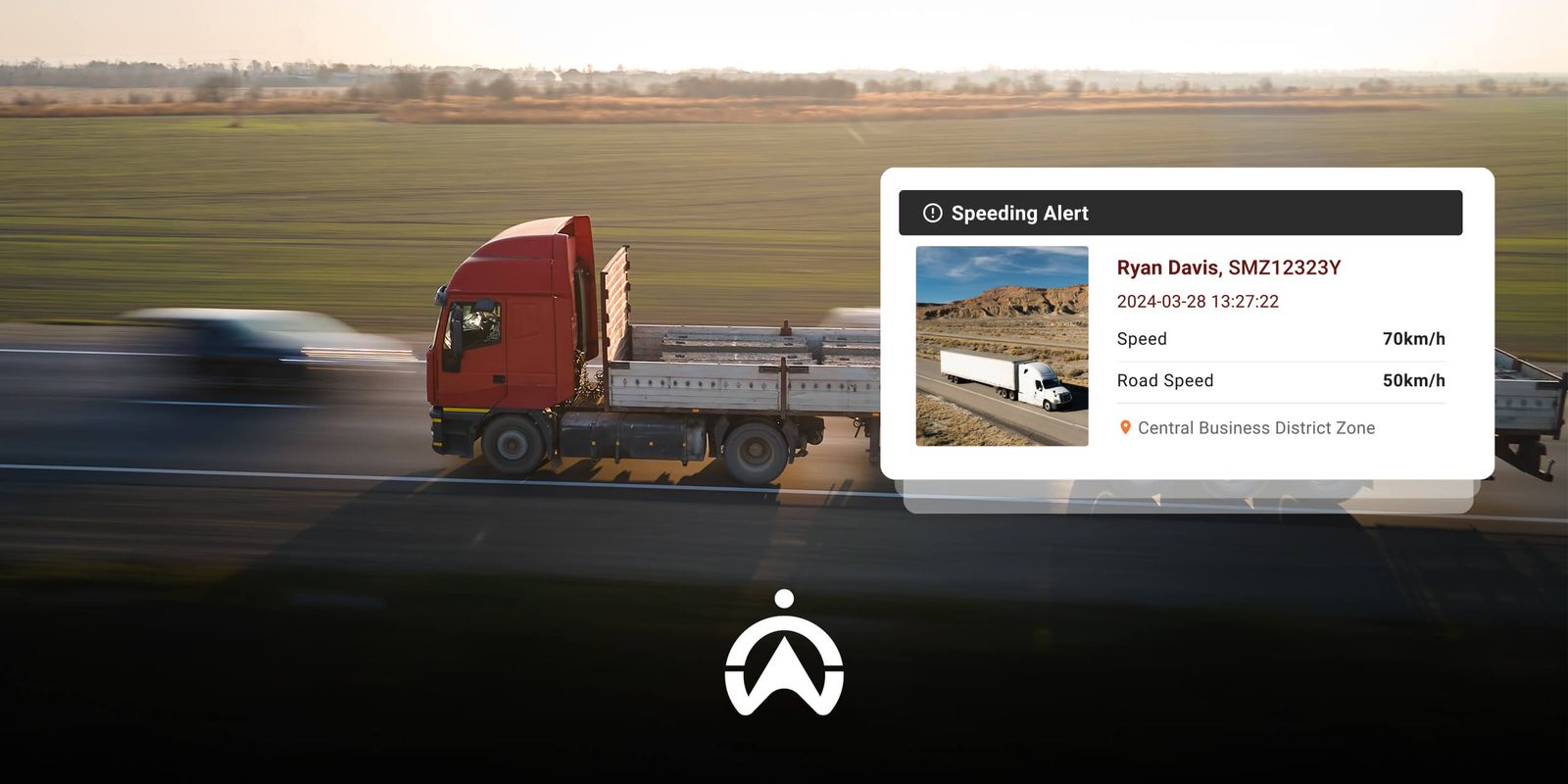
Through our telematics-powered GPS tracking units, you’ll get detailed reports of incidents where drivers are speeding, harshly cornering, harshly braking, or excessively accelerating. The reports will help you see the common risky driving habits that need to be addressed.

Driver viewing Cartrack safety score report on dashboard, supporting steps to become fleet safety certified.

DID tags

We’ve also got Driver Identification (DID) tags, which help you see exactly who’s driving which vehicle. You’ll assign a tag to each driver that’ll be linked to their identification number, and they’ll have to tag the vehicle every time they use it. If anything goes wrong, you’ll know exactly who did it and investigate the matter.

You can also prevent unauthorised vehicle use by choosing the “start prevent” option, which simply means the ignition won’t go on unless there’s a tag. You can also ensure that the tags are linked to specific vehicles so that only drivers who are licensed for that specific vehicle can use it. This further enhances safety and compliance, bringing you closer to being safety certified.

Coaching

Our Coaching platform is your solution to better training for fleet safety. This feature monitors all the risky events from each driver, like distractions and speeding violations. It shows you exactly how many times a driver repeated the same incident, and you can use this data for targeted coaching sessions. Coaches can save the outcomes of these sessions on the platform, so the next coach can see what was discussed with the driver in the last session and if there’s been any change.

Driver Scorecards

Another way to encourage safer driving is by motivating your drivers and giving them incentives for good behaviour. Our Driver Scorecards feature helps you better execute your incentive programme and shows you who needs to improve their driving. It rates each driver based on the number of violations they’ve committed. The driver with the highest rating will get recognition and incentives, and those who are not performing can be sent for more training.

Preventative maintenance

Since proactive maintenance is one of the things you’ll learn about in your fleet safety course, we’ll get you ready for it with our preventative maintenance solutions. Using our platform, you can create an inspection checklist that drivers can use to inspect vehicle components before and after their trips. You’ll immediately see the feedback and identify which parts need to be replaced.

Another solution that’ll help you see the difference proactive maintenance makes is our vehicle diagnostics. Our advanced technology can detect certain mechanical failures, like when there’s an issue with the engine. We’ll give you an early warning of such issues so you can quickly fix them before they cause a breakdown or an accident. This ensures your vehicles remain roadworthy and that you don’t get penalised.

You can also import each vehicle’s service records onto our platform, so we can give you timely reminders of upcoming service dates.

Bringing you closer to being fleet safety certified

With our solutions, you’ll be at an advantage once you start your fleet safety courses. You’ll have a better understanding of the importance of each topic, and you’ll easily implement what you learn through our fleet management system. So join us, and let’s help you enhance your fleet’s safety.

Frequently Asked Questions about fleet safety certification

How much does it cost to get fleet safety certification?

The price of fleet safety certification depends on the programme you take. Some institutions provide courses that cover everything fleet management-related and not just the safety aspect of things. You must research the various courses available and choose which one best suits your needs and budget.

How long does it take to get fleet safety certification?

Acquiring a fleet safety certificate can take you anywhere from a few days to several weeks. It depends on what they cover and how soon you’ll be able to complete the tests and assignments. With a fleet management system (like Cartrack’s) in place, you’ll be able to complete the course more quickly.

What technologies enhance fleet safety?

The technologies that enhance fleet safety, are AI cameras, sensors, and other IoT devices. Together, these technologies help drivers avoid accidents and help you monitor their driving habits. They ensure you have a safer fleet and less to worry about.

The Only Fleet Electrification Roadmap You Will Need

Fleet electrification is the process of gradually transitioning your fleet from traditional ICE (internal combustion engine) vehicles to EVs (electric vehicles). You’ll need a roadmap for this process because of the scale of the transition. You’ll also want to successfully manage the uncertainty of this change without taking an unnecessary hit to the pocket.

According to the International Energy Agency (IEA), the end of 2024 showed that we can expect the number of EVs to triple by 2030. It’s a clear indication that there’s a demand for EVs in businesses to be met, and delivery & logistics companies are moving toward greener operations.

In this blog, we’ll help you tackle the unknown and put you at ease about taking the first step to electrification. Let us guide you through what electrification means, give you a practical breakdown of the step-by-step roadmap, and explain how Cartrack Tanzania can help you take the electrification leap.

Key Takeaways:

  • Switching to electric vehicles is a massive task, so you’ll need a clear roadmap to keep costs down and stay organised
  • You should start by looking at your current vehicles and asking why your business wants to go green
  • Moving to an electric fleet takes a long time because you’ll need to install chargers and train your drivers on new tech
  • Using smart software like Cartrack helps you track battery life and find the best routes so you don’t run out of power

What is fleet electrification, and why does it need a roadmap?

Fleet electrification refers to the process of transforming your fleet of ICE vehicles to EVs. This is typically a gradual process, taking up to years at a time, and usually resulting in a mixed fleet. Fleet electrification needs a roadmap because roadmaps are a meaningful, step-by-step process of what you need to do.

Have you ever written an essay for a school English exam and been asked to produce a mind map with it? An electrification roadmap is the same line of thinking. Your English essay’s mind map needed to show proof of structure, the direction your essay was going to take, and demonstrate to the exam marker that there was thought & effort put in before executing.

When you have a roadmap in place, there’s little room for surprise. Not all plans will be 100% foolproof, but it’s much better to operate from a place of confidence and preemptiveness than insecurity.

What steps are needed for a successful transition to electrification?

The steps needed for a successful transition to electrification include:

  • assessing your fleet
  • creating a detailed plan
  • examining resources and infrastructure
  • showing transparency, and
  • monitoring your fleet post-implementation.

A successful approach includes these five key steps, as they tackle the preparation and execution of a smart transitional period.

1. Look at your current fleet’s standing and needs

Your first step is to assess your fleet. Get comfortable with where your business is and what your existing fleet looks like. Take stock of factors like vehicle utilisation, the kind of vehicles you’re using and what they’re being used for, as well as high-emission vehicles that could possibly be the first to replace. Most importantly, examine your expenses.

The next part of this step is asking yourselfwhy. Why do you want to transform your fleet? Are you trying to keep up with trends and what’s popular? Are you noticing a change in the seriousness of regulatory and compliance matters? Is there pressure from your clients to go green? This is a pivotal step to take, so be honest about the ‘why’.

Finally, weigh up the pros and cons. See what will and won’t work for your fleet, if you’re financially capable of making the transition, and whether this change will be a benefit to both you and your clients/customers.

2. Create a detailed plan and rollout

Perfect; you’ve tackled the pre-planning and highlighted the intentions of your transition. Now it’s time to think about what the electrification process would actually look like. First, research, research, research! Support your plan by looking at data and insights from other companies that have already put electrification into action. Check out factors like costs, distance travelled, and carbon emissions.

Next, understand that this is going to be a gradual and phased approach. Be patient and understand that the delivery of EV vehicles can easily take months, maybe even years. Choosing the phased approach gives you time to stick with your financial timeline while also carefully going along with your operational and compliance objectives.

This also ensures a strong and strategic electrified move that has room for steady growth.

We previously mentioned vehicle utilisation. You could examine which vehicles are reaching the end of their lifespan or have the potential to be sold. Those vehicles will be the first to get replaced. Most importantly, look into purchasing options. Aim to buy EVs locally, especially if there’s a chance the dealership has in-house knowledge and assistance for your fleet.

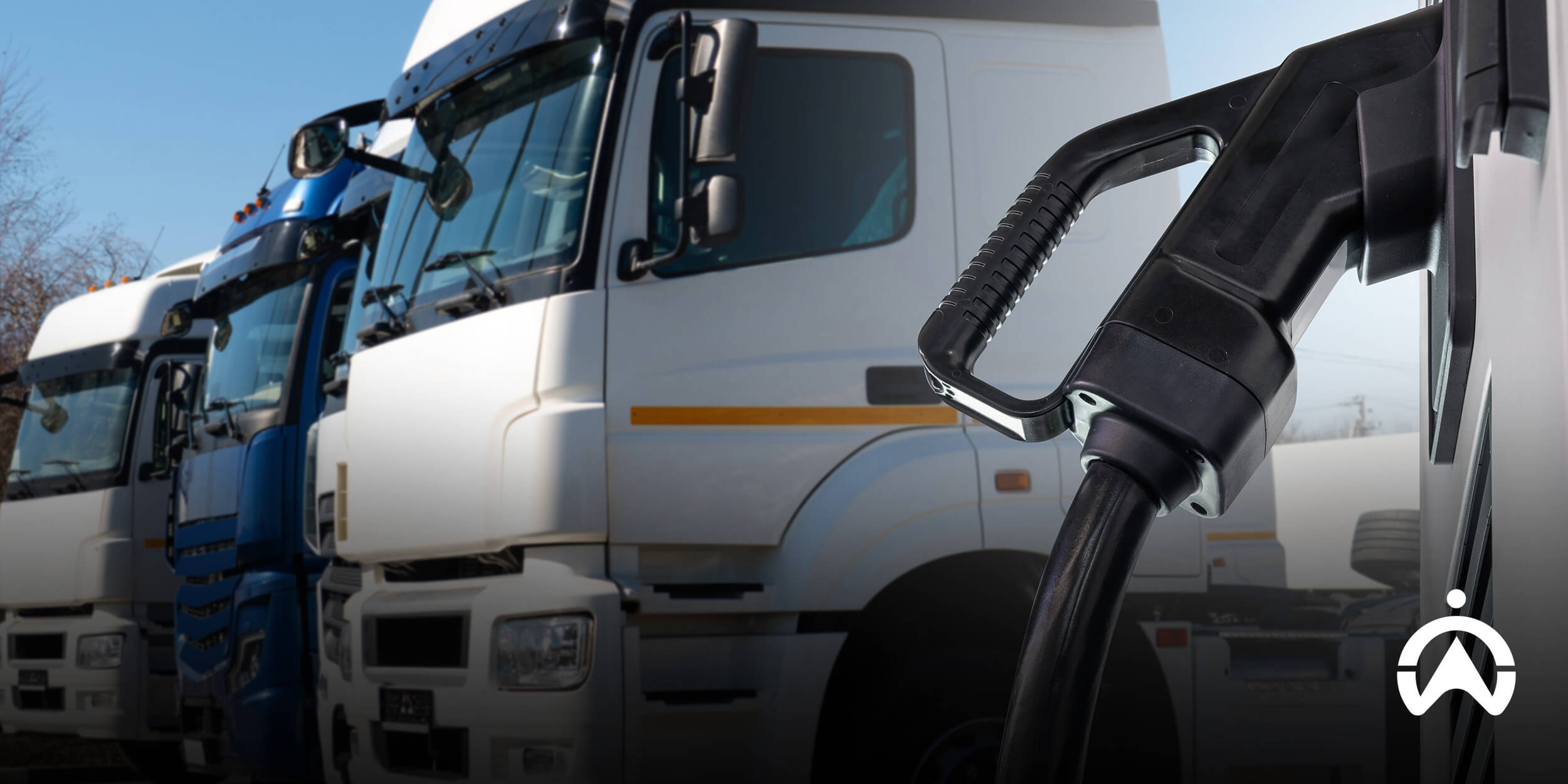
Close-up of a fuel nozzle in the foreground with multiple commercial trucks lined up under a clear blue sky, illustrating the transition phase within a fleet electrification roadmap from traditional fuel vehicles to electric fleets.

3. Ensure you have the right resources and infrastructure

EVs come with their own unique sets of challenges, which is why matters must be clear for you and your drivers. Your concern is no longer petrol and fuel cards, but charging stations and potentially charging cards (which help you top up and pay for your vehicle’s electricity). You’ll have to install chargers on the work premises, especially because stations are relatively limited.

Consider installing solar panels as a sustainable way to keep chargers on the work premises powered. Compare the types of chargers available; remember that what’s cheapest isn’t always the best option. Above price, evaluate charging time (and so downtime) and the impact it has on vehicle batteries and their degradation rate.

Don’t forget about software! Yes, the hardware is important, but it’s the software that helps you effectively manage your fleet and all the information that’s put out by the devices. Your lifeline is powerful fleet management software (FMS), like our FleetWeb. Our FMS helps you navigate the unique challenges that EVs face, like range anxiety, charging schedules, and predictive maintenance.

4. Create necessary regulations and remain transparent

If you’re a manager, talk to your company’s supervisor or boss. The higher-ups need to know what you’ve been planning. Keep detailed records of all the research you’ve done, and consider presenting it to them in an easy and comprehensible way so that they feel just as confident as you do.

Continuing from step 3’s point about new infrastructure and on-site charging stations, develop and adjust policies that accommodate these new challenges. Explain to your drivers why this step has been taken and what it means for the business. Finally, ensure that drivers are caught up on new regulations and necessary training, and make ongoing training available.

5. Keep an eye on your fleet and its changes

Any business change demands close monitoring. Keep an eye on what electrification has done for your fleet, from mileage and charging patterns to carbon emissions. Stay in touch with your dealership to get professional tips on any concerns or questions you may have. With all this information, you can potentially continue to plan a wider electrification adoption strategy.

Don’t leave your drivers out of the bigger picture. Chat to your drivers and get feedback on how they’re experiencing operating EVs. This will help your drivers feel included and their voices heard amidst the big-scale changes taking place.

What can Cartrack Tanzania do to make your electrification process easier?

Cartrack Tanzania can make your electrification process easier by introducing telematics under a smooth, seamless FMS. With telematics, you ensure your battery remains carefully monitored and that running costs are lowered. You have access to your fleet’s trip histories, which is key to optimising routes and keeping batteries in good shape. This reduces energy and saves on expenses.

We also help ease your stress regarding range anxiety. Our system not only helps manage and plan better routes, but also monitors vehicle batteries in real time and quickly detects charging stations along the way. Our predictive maintenance via vehicle analytics helps avoid downtime, giving you information on battery health, brake health, and tyre conditions.

Overall, we offer a platform that works just as smoothly for EVs as it does for ICE vehicles. This makes the transition and change even easier, because you won’t have to worry about using multiple platforms. We also have all the tools necessary to keep your new mixed fleet in tip-top shape, with a dedicated team ready to answer any questions along the way.

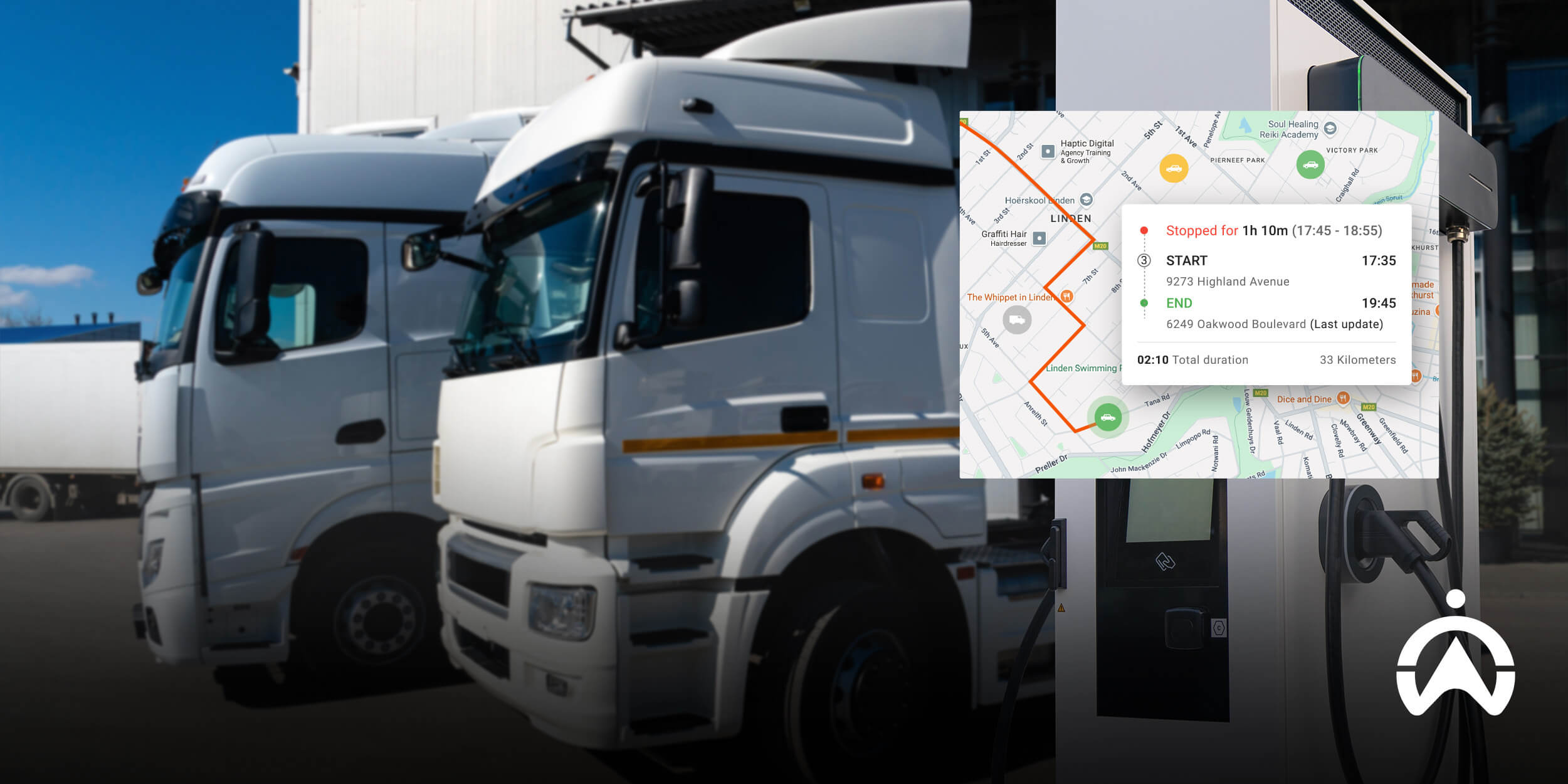
Two trucks at facility with route and charging map overlay, supporting a fleet electrification roadmap.

Final takeaway: Electrification roadmaps are the key to smooth sailing

Fleet electrification is about taking a slow and steady approach, which is why roadmaps are essential for your complete confidence. If you have a solid plan and transparent communication, you’ll have a better chance of succeeding in your electrifying efforts.

Cartrack Tanzania gets you the most out of your electrification process. We support your management of changes, progress, and challenges, while also helping you meet your sustainability goals. We’re here to guide you to a greener, cost-saving fleet that’s secure for the future.

Willing to take the leap and make a greener change to your fleet?Reach out to any of our Cartrack Tanzanian professionalsand get complete guidance on your electrification process.

FAQs

What is fleet processing?

Fleet processing is essentially in line with the definition of fleet management. It’s processing the steps of managing your fleet vehicles, ensuring that they’re being used correctly & fairly, and that tasks are being distributed effectively. It’s also about being able to have full fleet visibility, which allows you, as a manager, to react quickly in cases of delays and emergencies.

Where will EVs be in 5 years?

In 5 years, it’s likely that EVs will have grown quite rapidly in popularity, and we’ll see many more mixed fleets. It’s well known within the fleet industry that carbon emission regulations are getting stricter by the year. Businesses are looking to EVs to leave a greener print, as well as ease the stresses of meeting stringent compliance.

What are the 4 major components of a fleet management system?

The 4 major components of a fleet management system are:

  • live GPS tracking
  • maintenance & vehicle servicing
  • driver monitoring, and
  • telematics

All of these components come together to form the core of a successful and fully operational FMS. Without them, you’d be struggling to act early in cases of emergencies and maintain full control.

How to stop your motorbike drivers from having accidents

To stop bike drivers from having accidents, establish negligent driving habits and roll out effective strategies to improve business and driver safety. Motorbike riders rank among the most vulnerable on the roads because riders are a whole lot more exposed and at risk out on the roads than the average car driver.

In Tanzania, motorcycle riders account for a disproportionately high number of road accidents and fatalities, despite representing a relatively small share of total registered vehicles. Motorcycle crashes remain one of the country’s deadliest road safety threats, with hundreds of riders and passengers killed each year. In 2024 alone, Tanzania recorded 435 motorcycle crashes, resulting in 378 deaths and 395 injuries. Road traffic accidents remain a top cause of deaths globally, with motorbike riders and vulnerable road users making up a significant share of these fatalities. In Tanzania, the rapid growth of bodaboda transport has further increased the exposure of riders and passengers to road safety risks.

For fleet managers like yourselves, there’s a clear need for safety strategy and smart technology that anticipates risk rather than only reactive action. In this blog, we’ll look at useful steps and management techniques, as well as the role of fleet visibility tools provided by Cartrack Tanzania that can help your business meet everyday safety objectives.

Key Takeaways:

  • Motorbike riders face higher risks on the road, so fleets need strong safety systems that prevent accidents early
  • Spotting risky riding habits early helps managers act fast and avoid serious crashes later
  • Safer routes, regular coaching, and clear accountability reduce pressure and improve rider behaviour
  • Real-time data and visibility help fleets move from reacting to accidents to stopping them before they happen

Practical ways to reduce motorbike accidents in your business

Practical ways to reduce motorbike accidentsin your business include improving rider awareness & accountability, managing risk, and identifying risky driving patterns. Tackling the issues of negligence and accidents is all about a careful, consistent, step-by-step approach that solves the small issues before they turn into big ones.

Identify unsafe riding patterns early

Recognise those dangerous driving habits that are being repeated, including behaviours like consistent speeding and taking corners sharply. Nipping these habits in the bud, especially once they’ve turned into a pattern, lets you take proactive steps to avoid a costly reaction.

Rather act immediately and potentially save on time and expenses, than deal with the chaotic aftermath of an accident later.

Improve rider awareness and accountability

The most important thing to do is to approach corrective conversations and dialogue with coaching, not through punishment. This fosters better, more constructive growth among drivers and encourages them to quickly adopt safer driving habits. With recorded events and insights, you can also easily support your coaching efforts.

The key to maintaining safer habits is to do regular check-ins and coaching sessions when necessary.

Manage risk through smarter route planning

Smarter route planning involves preparing routes that avoid traffic congestion, high accident zones, and dangerous areas when possible to keep the drivers safe. This also eases the pressure of rushing deliveries, with drivers remaining realistic andprioritising safety without sacrificing efficiency.

motorbike driver doing deliveries

Why are motorbike drivers at higher risk of accidents?

Motorbike drivers are at a higher risk of accidents because of their job demands and generally limited visibility while on the roads. Vehicle drivers might not notice bikers that are on the road or in traffic, potentially leading to collisions or violations of right-of-way. Plus, the pressure to make timely deliveries tends to increase dangerous driving habits.

These are some of the unique risk factors:

  • Not being visible to other road users: Bikers are usually harder to see, especially because they’re operating a smaller vehicle, and can get caught in blind spots.
  • Lack of physical protection: Bikers really don’t have much in the way of physical protection, especially for their bodies. This means that even the smallest accidents can cause significant damage.
  • Urban delivery pressure and time constraints: Pressures to deliver on time, combined with congested routes, lead to bike drivers who perhaps feel like they need to take chances while on the road.

What are the most common causes of motorbike accidents in fleets?

The most common causes of motorbike accidents include factors like limited visibility and distracted driving.

Here are some of the most frequent explanations:

  • Speeding and aggressive manoeuvres: This is a result of the pressures of timely deliveries, meeting customer expectations, and ducking and diving through heavy traffic.
  • Poor danger anticipation: This is because of blind spots and tricky, high-accident areas like four-way stops.
  • Distraction and fatigue: This is because motorbike drivers typically work long hours; that, paired with intense pressure to deliver and meet growing customer demands, can lead to dangerous events.
  • Poor route planning and unsafe delivery zones: These are the biggest contributing factors for motorbike riders finding themselves in very high-risk areas and situations.

What does defensive driving look like for motorbike riders?

Defensive driving for motorbike riders looks like always staying alert. Riders must ensure others can see them, and they must anticipate potential risks by scanning the road ahead, positioning themselves wisely in their lane, and maintaining a safe driving distance. Defensive driving for motorbike drivers is a unique strategy, because a two-wheel drive needs to tackle its own unique concepts.

These concepts include:

  • Space and escape routes: It’s always important that the motorbike driver keep 3-6 seconds between themself and the vehicle in front of them. A good trick is for them to pick a fixed object and start counting when the car ahead goes by. If they reach that object in less than 3 seconds, they’re too close or speeding.
  • Anticipating driver blind spots: Motorbike drivers should always assume that they’re not clearly seen by other drivers, especially because they’re usually caught in vehicle driver blind spots.
  • Reading traffic patterns early: Much like the first point, this is about your motorbike drivers staying aware and alert while on the roads. It’s important they slow down at turns or when trying to switch lanes, and avoid sudden movements to keep themselves and other drivers safe.

The motorbike safety triangle: Rider, route, and real-time visibility

The motorbike safety triangle relies on the 3 connected factors: rider, route, and real-time visibility. The chances of an accident increase when one of these factors breaks down. Motorbike fleets that combine these 3 factors ultimately move from reactive incident management and shift to a preventative safety strategy, lowering the chances of road dangers.

Safety should be an ever-evolving and dynamic system that values your business and riders, not a one-time session that fails to grow with you.

Let’s take a look:

  1. Rider: behaviour, skills, and decisions
    Motorbike riders are the biggest wild card when it comes to safety. It’s all about their awareness, reaction times, and ability to respond with a clear head in an emergency. The key with motorbike drivers is to nip bad driving habits in the bud. As a fleet manager, always focus on gentle guidance instead of harsh discipline.
  1. Route: exposure to risk on the road
    In the end, it won’t matter how safe and skilled your motorbike drivers are if the routes they’re taking are not optimised for safety and efficiency. The risks that present themselves, including blind spots, traffic jams, and pressures to deliver on time, are all factors that increase the chances of an accident happening.

    Carefully planning and maximising routes improves overall safety, keeping your motorbike riders much safer and helping them make better, wiser decisions throughout the day.

  1. Real-time visibility: the insight that ties everything together
    Live and consistent visibility brings together rider behaviour with route risk, creating a simple, controllable system. Thanks to driver behavioural insights and standard data, you can identify patterns and problems early and intervene before they worsen. This is about ensuring fair accountability and offering informed support, not about helicopter managing.

How technology helps prevent accidents before they happen

Technology helps prevent accidents before they happen by giving you, the fleet manager, the ability to carefully monitor and collect insights into rider driving behaviours. These extensive insights allow you to enact preventative measures way before the accidents happen, protecting your riders rather than dealing with the fallout of an unfortunate and dangerous event.

Technology strongly supports a better safety environment rather than creating an imposing policing tool. Live GPS tracking features not only allow you to see where each motorbike and rider is at any time, but can also assist in route optimisation and task redirection if necessary. Decisions are made on the fly without pressure or uncertainty.

As previously mentioned, driver monitoring features give much-needed context to rider behaviours. Repeated dangerous habits can be quickly addressed through training and coaching—before they morph into something potentially fatal.

Compliance featurescan also have their hand in prevention through providing reliable information for investigations or insurance disputes. Plus, they foster a culture where safety expectations are clear and continually upheld.

motorbike driver ensuring timely deliveries with Cartrack route optimisation software

Motorbike safety without data vs motorbike safety WITH data

When looking at motorbike safety without data versus motorbike safety with data, you’ll clearly see that data is the key to achieving optimal safety—especially from a preventative angle. Without data, you’re left in the dark, relying on only what you see and learn after a dangerous incident has occurred.

Look at the comparison below to better understand how each approach differs:

Safety approach Without data With data
Risk visibility Blind spots, guesswork, and complaints after incidents Live insights into rider behaviour and road conditions
Driver habits Unknown until something goes wrong Early alerts for speeding, harsh braking, and other risky patterns
Intervention Reactive discipline after an accident Preventative coaching and improvements before incidents
Route planning Manual planning and higher exposure to congestion and danger zones Smart routing avoids hazardous areas and delivery pressure
Insurance and liability Limited evidence in disputes or claims Digital proof, incident reconstruction, and stronger defence

How Cartrack Tanzania supports safer motorbike fleets

Cartrack supports safer motorbike fleets by offering the appropriate technology and tools to ensure you improve and maintain that safety. We gather the necessary insights, interpreting and transforming them into measurable feedback so you can gain better control across your fleet.

Our driver behaviour toolsshow you how your motorbike riders are behaving on the roads, keeping track of their habits and locations. This means you can keep an eye on their movements (and see if they’re travelling in and out of high-risk areas) while also checking if they’re driving aggressively. This fosters honest, fact-driven conversations and promotes safer habits without making assumptions.

Our insights regarding routes and their potential risks help your fleets reduce unnecessary exposure. By detecting gridlocked areas, areas that are high risk, and poor routes, Cartrack can lessen the pressure on your riders and help them to avoid accident-prone areas.

Finally, our comprehensive reporting brings data together in a simple and digestible format for you. Information that’s clear means that you can make better and more informed decisions while also strongly backing any changes and coaching methods you make going forward. Andshould an incident occur, you have the right, precise documentation in place to support insurance claims and investigations.

Through Cartrack Tanzania, you can cultivate a working environment that embraces a supportive safety culture for your riders, steering clear of harsh control and micromanagement.

Final takeaway: Safety is a system, not a single rule

Preventing motorbike accidents isn’t about putting all your eggs in one basket and relying only on one policy. It involves the right behaviours from riders, careful planning from managers, and total visibility—all working together every day. With these multiple factors combined, risks will be identified sooner, and the number of accidents will decrease significantly.

Cartrack Tanzania promotes safer and more responsible operations of motorbikes by supplying businesses with insights that help maintain control without the need for micromanagement. The result of this approach is a fleet that operates more safely and efficiently, and with increased accountability for both riders and managers.

Build a safer motorbike fleet for your business.Talk to our teamand start reducing rider risk with proactive monitoring and alerts.

FAQs

Who is at fault in most motorcycle accidents?

It depends and typically varies, but it’s often other drivers who are at fault in most motorcycle accidents, only because they usually can’t see bike riders in their blind spots. This is why it’s important that motorbike riders make themselves visible to other drivers and observe the 3-6 second rule.

Can telematics reduce insurance costs for motorbike fleets?

Yes, telematics can reduce insurance costs for motorbike fleets by providing data that supports strong risk management and precise insights for reporting. Insurance providers typically favour fleets that display accountability and safety compliance. Reduced insurance isn’t guaranteed, though, and it’s always important to check with your provider.

What’s the biggest mistake businesses make when trying to improve motorbike safety?

The biggest mistake businesses make when trying to improve motorbike safety is approaching safety as a one-size-fits-all, one-time task. Safety’s an ongoing commitment that lasts over time. Skills can diminish, and that’s why riders ought to frequently update their knowledge and take opportunities to practise every safety measure.

The Accelerometer in Your Fleet Management: What It Is and Why You Need It

Most fleet owners understand that GPS tracking is crucial, but very few realise the power of the accelerometer, the small sensor inside modern tracking units. That sensor tracks movement in three directions: up/down, left/right, and forward/backward. This is important because how your vehicles move reveals how your drivers behave—something GPS alone can’t provide.

According to reports from the Tanzania Police Force and government officials, road crash statistics show that the overwhelming majority of fatal road accidents in Tanzania are caused by human error. In 2024, about 97% of road accidents were linked to human behaviour, with negligence, reckless driving, and speeding accounting for nearly 73.7% of all crashes. This highlights the urgent need for accurate, real-time driving insights and stronger road safety interventions to help reduce risky driving behaviour, improve driver accountability, and ultimately save lives on Tanzanian roads.

Now this is where a quality accelerometer—like the one in Cartrack’s tracking unit—truly shines. It offers fleet managers and owners clarity, safety data, and practical insights that help protect your drivers, lower operating costs, and shield your fleet from unnecessary risks.

Key Takeaways:

  • An accelerometer shows how your vehicles are being driven, not just where they are
  • It helps reduce accidents by identifying risky driving behaviour early
  • Accurate movement data supports faster insurance claims and incident investigations
  • Cartrack’s accelerometer technology improves safety, reduces costs and strengthens fleet performance

What exactly is an accelerometer?

An accelerometer is a compact electronic sensor that tracks a vehicle’s movement in three directions. It detects every bump, brake, turn, and jolt. For fleet owners, this movement data serves as a powerful safety tool, because it reveals exactly how a driver managed the vehicle before and during any incident.

How an accelerometer works—in plain english

  • It tracks movement in three directions: up/down, left/right, and forward/backward.
  • It notices sudden shifts like hard braking, rapid acceleration, or sharp turns.
  • It then converts physical movement into straightforward data for your analysis.
  • These logs can then help you piece together what occurred just seconds before and during the event.

Why the accelerometer matters in fleet management

The accelerometer matters in fleet management because simply knowing where your vehicles are isn’t enough; you need to understand how they’re being driven. The accelerometer bridges this gap by providing accurate, real-time insights into driver behaviour, enabling early intervention and enhancing overall safety for the fleet.

Helps you understand driver behaviour

  • Spot high-risk actions like abrupt braking or sudden acceleration.
  • Identify drivers who could benefit from coaching.
  • Foster a strong safety culture throughout your fleet.

Plays a critical role in accident reconstruction

  • Detect sudden force increases during a collision.
  • Record the vehicle’s exact movements before impact.
  • Help fleet managers and insurers get to the bottom of what really happened.

Reduces costs from wear and tear

  • Reveal which driving habits put unnecessary strain on vehicles.
  • Coach drivers to sidestep costly repairs.
  • Maintain vehicle health over the long haul and lower operational costs.

Supports your safety and compliance strategy

Aerial view of busy highway overpasses with moving vehicles, showcasing vibrant traffic patterns and road structures.

How the accelerometer keeps your drivers safe on the road

The accelerometer keeps your drivers safe on the road by detecting sudden changes in a vehicle’s motion and position. It empowers you as a fleet manager to take proactive measures against sudden movements and potential dangers, ensuring your drivers stay safe while showing you care about their well-being.

Driver protection benefits

  • Spots early signs of fatigue and distraction through movement patterns.
  • Alerts fleet managers instantly when hazardous driving occurs.
  • Helps address habits that could lead to accidents.
  • Provides solid evidence to support drivers in case of false claims.
  • Promotes a safer and more confident driving environment for your entire fleet.

The accelerometer’s role inside Cartrack’s fleet ecosystem

Cartrack Tanzania doesn’t just gather data; it transforms accelerometer insights into clear, actionable information. Forget the days of guessing what happened on the road—this tool reveals exactly how drivers behave, empowering you to respond in real time and manage your fleet confidently.

Real-time driver safety alerts

Get instant notifications for harsh braking, rapid acceleration, sharp cornering, and impact events. Be the first to know when something serious occurs. Take proactive steps to prevent future accidents.

Rich, accurate insights for analytics and reports

Enjoy rich, accurate insights that fuel your analytics and reports. Easily view driver behaviour trends on user-friendly dashboards. Access historical data for thorough investigations. Track performance improvements and training outcomes over time.

Works seamlessly with ai camera solutions (if installed)

It integrates flawlessly with AI camera solutions if you have them installed. Add context to events with an accelerometer and dashcam. Discover what triggered sudden braking or swerving, and gather undeniable proof for insurers and incident analysis.

Why your Tanzanian fleet needs an accelerometer today

Your Tanzanian fleet needs an accelerometer today because the roads can be a bit of a nightmare. With potholes, sudden stops, and reckless drivers, fleet managers need a clearer view of what their teams face every day. That’s where accelerometer data comes in, giving you the insights to reduce accidents, keep drivers safe, and trim operational costs.

Tanzanian Road conditions demand better monitoring

  • Bumpy roads, potholes, and unpredictable bodaboda and daladalas make driving a challenge.
  • Movement data reveals the real risks on the road.
  • Get real-time insights to keep your drivers safe.

Helps lower accident rates

  • Early warnings highlight dangerous behaviours.
  • Coaching drivers becomes simpler and more effective.
  • Safer driving means less downtime and more savings.

Helps you handle insurance claims easily

Protects your business from liability

  • Solid evidence helps resolve disputes.
  • Prove your duty of care compliance.
  • Minimise your legal and financial risks.

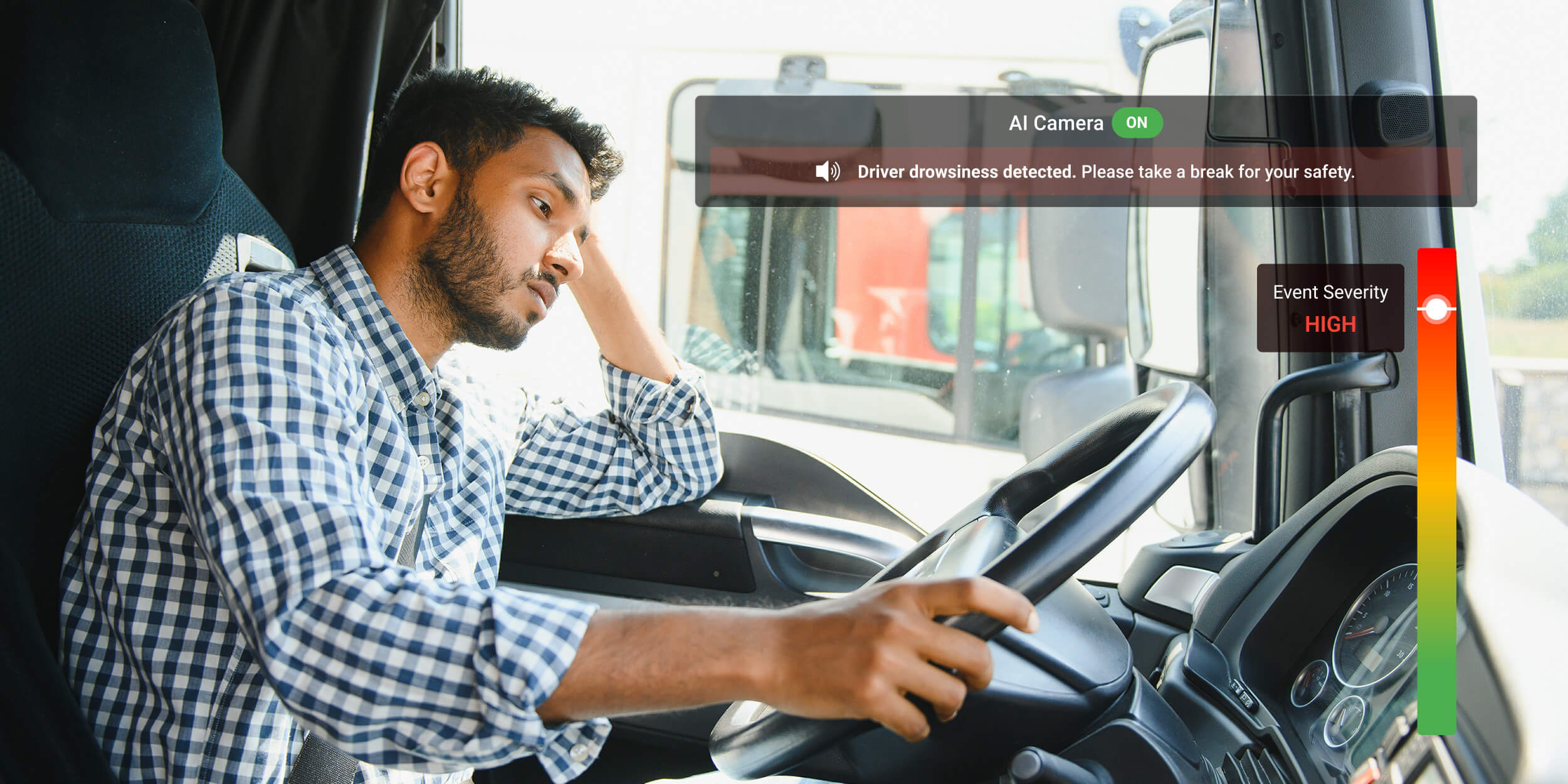
Cartrack AI camera displaying a notification for driver fatigue

What accelerometer data looks like in action

In action, accelerometer data tells the story of what happened on the road. It is often the only reliable means to understand why the vehicle reacted the way it did. Here’s what these events look like in real-world Tanzanian driving situations.

Examples:

  • Harsh braking: A driver brakes hard to avoid a taxi stopping abruptly.
  • Harsh acceleration: Pulling off too quickly from a busy junction.
  • Sharp cornering: Taking a rural bend at speed.
  • Impact detection: Accident forces are instantly and precisely recorded.
  • Vehicle tilt: Informs about the risk of rollover or tipping on uneven surfaces.

What to expect when using Cartrack’s accelerometer features

Using accelerometer data from Cartrack Tanzania is a breeze; it operates seamlessly in the background. There’s no extra setup or technical hassle. Once it’s installed, data flows directly into your platform, providing immediate insights into driver behaviour and event history.

What to expect:

  • No extra hardware needed—it’s built right into your tracking unit.
  • Instant syncing with the Cartrack platform.
  • Real-time event notifications.
  • Easy-to-download reports for insurers or management.
  • Enhanced insights when paired with dashcams.

Final thoughts — it’s a small device with a big impact

Though compact, the accelerometer significantly boosts fleet safety. It equips Tanzanian fleet owners with the tools to minimise risk, enhance driving behaviour, and protect their business. Combined with Cartrack’s powerful platform, it becomes an indispensable tool for safer, smarter fleet management.

FAQs

Can an accelerometer detect if a driver is using their phone while driving?

No, an accelerometer cannot directly detect the use of phones because it only measures movement. However, it might show some pattern—it might be drifting or delayed braking—that could suggest distraction. Confirmed phone-use detection would be required with an AI dashcam paired with the data from your accelerometer.

Will the accelerometer drain my vehicle battery?

No, an accelerometer will not drain your car battery. It’s a low-power sensor built into a tracking device and is designed to operate efficiently without having a great impact on the electrical system of a vehicle, even when its engine is turned off.

Can accelerometer data help with driver training programmes?

Yes, indeed, the accelerometer data proves to be very effective in driver training. It pinpoints all the risky habits a driver has, such as harsh braking, aggressive acceleration, and sharp cornering, which show you exactly where drivers need coaching. That makes training more targeted and easier to measure over time.

How to Start a Logistics Company Without Money and Manage It Successfully?

Starting a logistics company in Tanzania might seem daunting and just a game for the big players with deep pockets. Trucks are expensive, fuel prices fluctuate, and regulations can feel overwhelming. Despite these operational hurdles, the logistics sector remains highly active, representing a cornerstone of the regional economy with massive market value.

What you may not realise is that many successful logistics businesses didn’t start with trucks, warehouses, or huge budgets. They started with something much simpler: the right niche, strong operational control, and the right technology.

If you want to launch a business without breaking the bank, you’re going to have to swap capital for smart strategy, careful planning, and operational savvy.

Think of this blog as a manual that provides a step-by-step procedure on exactly how to achieve that in the Tanzanian market.

Key Takeaways:

  • You can start a logistics company in Tanzania without money by using subcontractors, choosing a focused niche, and avoiding upfront vehicle ownership
  • Operational visibility and cost control matter more than fleet size, especially when fuel, maintenance, and margins are tight
  • Technology such as real-time vehicle tracking and driver behaviour monitoring helps small logistics businesses stay efficient and competitive
  • Sustainable growth comes from data-driven decisions, not rapid expansion or guesswork

Is it possible to start a logistics company with no money?

Yes, it’s possible to start a logistics company with no money, but let’s clarify what “no money” really means. Starting your logistics business without funds doesn’t mean you’re running without expenses. It just means you’re avoiding large upfront costs like buying vehicles, hiring full-time employees, or renting warehouse space.

In Tanzania, many logistics start-ups focus on managing transport rather than owning it. They handle everything from delivery planning and routing to client communication and delivery reliability, with subcontractors handling the actual transportation. Using this method allows you to enter the market faster while reducing risk.

Remember that when you run your operations well, clients respect dependability more than whether or not you own the car.

Understanding the Tanzanian logistics market

Before you start your logistics company, it’s important for you to understand the Tanzanian logistics market. The logistics sectors in SA, like retail, eCommerce, healthcare, and construction, encounter challenges like rising fuel prices, vehicle-related crime, and lower profits. Companies that can effectively manage their routes, control fuel consumption, and monitor driver behaviour are more likely to stay successful.

At the same time, regional operators face their own unique challenges. Fuel costs rank as one of the biggest operational risks. Carjacking and vehicle theft are real threats, while irresponsible driving can lead to an increase in maintenance expenses thanks to aggressive driving and poor vehicle handling.

Choose the right logistics niche to minimise costs

Choosing a logistics niche can significantly help in ensuring fewer risks and expenses when starting your logistics operation. The logistic niches—which new companies can use to earn money without necessarily investing in vehicles—include courier services, freight broking, contract logistics, and transport services.

Courier and last-mile delivery

Last-mile delivery often serves as a great starting point into the logistics world. You can team up with independent drivers who use their own vehicles, allowing you to concentrate on managing routes and delivery schedules.

Freight brokerage (no trucks required)

Freight brokers make their money by linking shippers with transport providers. You’ll handle the loads, schedules, and paperwork without actually owning any trucks. This approach is perfect if you have strong organisational skills.

Contract logistics for SMEs

Small businesses often rely on regular transportation, but may not have the budget for their own fleet. Contract logisticsoffers a solution, providing predictable income while keeping asset exposure low.

Specialised logistics (medical, retail, construction)

Logistics in the medical, retail, and construction sectors focus more on reliability and compliance rather than quantities. By specialising, you’ll be able to charge more per delivery while handling fewer jobs.

Legal and compliance requirements in Tanzania

To operate legally in Tanzania, establishing a logistics enterprise requires formal registration with local business registries and complete compliance with national revenue authorities. Your operations must comply with transport regulations, obtaining operating licences, and ensuring vehicle roadworthiness. Starting with compliance not only protects your business from potential fines but also enhances your credibility with clients.

Business registration and structure

Start off by registering your company with the CIPC and choose a structure that offers the least amount of liability.

Tax, VAT, and SARS compliance

Make sure to register with SARS and keep a close eye on your income. Once your turnover exceeds the specified amount, you must register for VAT. Planning ahead is essential in these situations.

Transport-specific requirements

Depending on the services you offer, you’ll need to get an operating licence and ensure your fleet of vehicles meets compliance standards. You need to remember that a lack of regulation can lead to fines and missed contract opportunities.

Logistics company operations and transport workflow

How to start a logistics company without owning vehicles

You can start a logistics business without having to own any vehicles by teaming up with owner-driver transport providers. Many startups in Tanzania thrive using an owner-driver or subcontractor method, where drivers supply the vehicles and you take care of all related expenses. While this approach carries a higher financial risk, it keeps operational risks relatively low.

So, while you won’t need your own cars to run a logistics business, having control is essential. A way to ensure you have some sort of control is through a portable tracking device. With it, you’ll be able to track all activities in real time, ensuring your transport runs smoothly and your customers remain happy.

Building a logistics business plan on a zero budget

Building a logistics business plan on a zero-to-little budget will need to emphasise key services with reasonable pricing and mindful spending. It’ll have to prioritise financial growth and operational efficiency, focusing on cash flow, fuel expenses, and overall effectiveness. This strategy will help new logistics companies stay profitable and grow.

Remember that a budget-friendly logistics plan centres around realistic expectations.

Be specific about the services you offer. When quoting jobs, make sure to consider the costs of fuel, administration, and any unexpected expenses. Be cautious of subcontracting jobs at really low prices, because this is a common scam that will end up costing you more money to fix.

Your plan should focus on maintaining steady cash flow rather than rushing into immediate expansion.

Finding your first logistics clients with no marketing budget

You can find your first logistics customers without spending a cent on advertising. Logistics startups can land clients without a marketing budget by tapping into personal networks, teaming up with established transporters, and joining online freight platforms. In Tanzania, what truly counts in securing those initial logistics contracts is not branding but reliability, communication, and consistency.

Leveraging existing networks

Retailers, suppliers, and contractors often urgently need transport and place a high value on referrals.

Partnering with established transporters

You can offer overflow support or cater to specialised routes.

Online platforms and marketplaces

Tanzanian freight marketplaces connect loads with available vehicles, enabling startups to generate revenue quickly.

At this stage of the journey, reliability and communication are far more important than branding.

Managing operations efficiently from day one

To manage your operations effectively from day one, there are a few things you should focus on, such as solid scheduling, clear visibility, and quick delivery updates. Inefficient processes often lead to communication issues and delivery delays. Smaller logistics companies should implement tracking systems to improve coordination, reduce mistakes, and build trust with their customers.

Operational efficiency plays a key role in the success of start-up companies in logistics. Relying on manual processes, spreadsheets, and WhatsApp for communication can lead to misunderstandings, leaving your clients feeling frustrated by missed calls and delays in updates.

Even small businesses can really benefit from knowing where their vehicles are at all times.

Using technology to run a lean logistics operation

Technology allows small logistics companies to operate just like their larger competitors. It helps smaller logistics firms run smoothly without needing lots of staff or vehicles. With real-time data on vehicle locations, routes, and driver behaviour, businesses can reduce fuel consumption, enhance accountability, and make informed choices. This gives startups an advantage over established businesses in the logistics sector.

Real-time tracking indicates where vehicles are and how deliveries are progressing. The trip history feature highlights any inefficient routes, and the driver behaviour report shows where drivers might be wasting fuel.

Managing a small logistics company efficiently

Managing fuel, maintenance, and driver behaviour without big budgets

Logistics companies can manage fuel and maintenance costs by keeping an eye on their drivers’ driving habits. Regular maintenance of vehicles lowers the chances of sudden breakdowns, which helps Tanzanian entrepreneurs maintain their cash flow in a transportation market that is expensive.

Fuel expenses consistently represent the largest ongoing operational drain on the regional logistics industry. Behaviours such as speeding, quick braking, and long periods of idling lead to higher fuel costs and increased repair expenses. So, tracking these driving habits really pays off!

Preventive maintenance shouldn’t be overlooked once you have your own vehicles. It helps keep your business operational by preventing unexpected breakdowns, not only saving you money but time as well.

Scaling your logistics business sustainably

For sustainable growth in logistics, you should rely on data rather than assumptions. It’s essential to analyse performance data to identify the most profitable routes and drivers before expanding. Keeping a close eye on your growth helps you avoid cash flow issues.

Utilise performance reports to find lucrative routes, reliable drivers, and loyal customers. We should be aiming for growth wherever possible.

Common mistakes new logistics businesses make in Tanzania

There are common mistakes new logistics businesses make in Tanzania, like underpricing their services, overlooking compliance, and running their businesses without clear visibility of vehicles and drivers. This typically leads to increasing costs and failures in service. Logistics companies that are successful understand that it’s important from the start to focus on efficiency in operations, accountability, and having control.

It’s common for new businesses to set their service prices too low, overlook compliance requirements, or delay putting money into systems that are needed. These mistakes can result in smaller profit margins and a chaotic environment for operations.

How Cartrack Tanzania helps you manage and grow a logistics business from day one

Cartrack Tanzania helps you manage and grow a logistics business by providing you with real-time insights into vehicle locations, delivery processes, and driver behaviour from day one. With better routes, lower fuel costs, and increased accountability, Cartrack Tanzania supports smaller logistics startups in managing increased demands while growing sustainably.

In Tanzania, Cartrack gives logistics businesses immediate visibility from the first vehicle. With GPS tracking, you can easily monitor locations, trip histories, and delivery progress without having to make calls or chase updates from your team or subcontractors.

Using GPS fleet tracking also helps logistics companies improve visibility and gain better operational control from the very beginning.

Often, fuel and maintenance costs are crucial for survival. Cartrack Tanzania helps you spot inefficient routes, excessive idling, and risky driving habits that drain your finances. Addressing these issues early on protects your cash flow.

Monitoring driver behaviour, generating trip reports, and setting up geofence alerts boost accountability and service reliability. This level of transparency builds trust with clients, giving you a strong edge in competitive markets.

At Cartrack Tanzania, we grow alongside your business. Data analysis will guide you on when to scale, optimise routes, or adjust pricing based on actual operating costs.

Conclusion: Turning a zero-capital logistics startup into a profitable business

To sum it up, it’s definitely possible to start a logistics business that can make a profit without having any cash by simplifying processes, choosing the right niche, ensuring compliance with regulations, managing subcontractors in an effective way, and utilising technology to reduce expenses.

In a competitive environment, success depends less on having assets and more on factors that arekey, such as visibility, efficiency, and accountability. With proper systems set up, even the smallest logistics start-up can compete and grow and thrive.

Frequently Asked Questions

Do I need insurance to start a logistics company in Tanzania?

Yes, you definitely do need insurance to start a logistics company in Tanzania. It’s crucial to cover your vehicles and goods, as well as any third-party risks. Even if you’re subcontracting, having insurance helps you manage risks and keeps your clients happy.

How do logistics companies protect vehicles and cargo from theft and hijacking?

Logistics companies can use GPS tracking, geofence alerts, driver monitoring, and recovery services from companies like Cartrack Tanzania to protect their vehicles and cargo from theft and hijacking. This tech allows for quick detection of unauthorised movements and fast responses, especially in high-risk areas.

When is the right time to invest in fleet management technology for a new logistics business?

The best time to invest in fleet management technology is right from the first active vehicle. Getting real-time tracking, fuel data, and insights into driver behaviour from the beginning helps you manage costs, boost accountability, and set up efficient fleet operations, which can save you from expensive mistakes down the line.

Active Tracking for Emergency Services Fleets Keeps Your Responders Safe

Active tracking for emergency fleets makes sure that your responders stay safe with real-time visibility and location data, enhancing routing and response times. Emergency vehicles operate under a lot of pressure daily. Whether it’s ambulances racing to medical emergencies, fire trucks weaving through traffic, or police cars responding to crises, these vehicles need to move quickly and safely.

That’s why, in these complex environments, knowing the location of all vehicles at all times is essential. According to the World Health Organization, road traffic accidents have become the major cause of death among people in the 5-29 years age group, proving the risk involved in travelling by road, especially in fleets moving at a fast pace that are under pressure.

In Tanzania, emergency responders encounter multiple dangers on the road every day, and with thousands of road accidents reported each year, it’s clear that real-time vehicle tracking is crucial. Cartrack Tanzania supports emergency responders with top-of-the-line active tracking, camera connectivity, and smart vehicle analytics, ensuring a safe response from start to finish.

Key Takeaways:

  • Active tracking enhances emergency fleet safety by providing real-time visibility and behavioural insights
  • Connected cameras and sensors improve situational awareness for control rooms and crews alike
  • Intelligent routing and alerts reduce response times, helping to save lives and improve outcomes
  • Cartrack Tanzania provides an integrated platform that keeps emergency fleets connected, protected, and ready

What is active tracking in emergency fleet management?

Active tracking keeps an eye on vehicles in real-time using live telematics data, like GPS location, vehicle movement, and driver behaviour (all of which are necessary in emergency fleet management). So unlike passive systems that simply store data, active tracking consistently streams information onto a central platform. Letting fleet managers and control rooms react instantly to situations as they happen.

So what role does active tracking play in emergency fleet management? Active tracking uses GPS trackers tosend vehicle data to a cloud-based platform that’s easily accessed by fleet managers and control teams. This way, dispatchers can track every vehicle’s position, speed, and direction all in real time, while also getting instant alerts for critical events like speeding, sudden braking, and route changes.

Active tracking is crucial for emergency fleets because it:

  • Provides live updates that enable dispatchers to coordinate quicker responses.
  • Ensures safety monitoring during high-speed driving.
  • It improves your awareness and helps you make better decisions.

At Cartrack Tanzania we use AI-powered GPS tracking solutions that provide your emergency service fleets with accurate and real-time visibility.

Why emergency services need active tracking now more than ever

Emergency services need active tracking now more than ever because of factors like the constant presence of congestion in cities like Dar es Salaam and Mwanza. Unpredictable traffic jams and critical calls mean emergency response teams don’t have time to spare. A second or even a millisecond can be costly when lives are at stake.

Faster, smarter dispatching

Active tracking lets dispatchers see the nearest unit in real time, so they can assign it to an incident right away. This tech speeds up response times and improves coverage in busy areas.

Improved responder safety during high-risk driving

Emergency response vehicles operate under intense pressure, navigating congested roads at high speeds to handle life-threatening situations. Cartrack’s active tracking system boosts safety by monitoring speeding, braking, and turning during these emergencies. This allows control rooms to respond effectively to any detected unsafe driving.

With the aid of data-driven insights, emergency services can promote safe driving practices and prevent crashes, ultimately keeping emergency service providers and citizens safe without delaying emergency response times.

Protecting crew inside the vehicle

Active tracking goes beyond just pinpointing your location. By using AI cameras as well, you’re able to improve safety both inside and outside the vehicle. These systems can provide live footage to your platform, which allows managers to make quick assessments in real time. This is particularly useful during emergencies when circumstances can change quickly.

Cartrack panic button inside emergency services vehicle

The role of connected cameras in emergency fleet safety

Connected cameras improve emergency fleet safety because they allow access to exactly what’s happening in and around a vehicle in real time. Although GPS tracking systems can share information regarding a vehicle’s location, cameras allow control centres to see exactly what’s happening.

Real-time visibility

The cameras transmit live footage straight to your control room. This allows operations managers to spot any distracted driving and track the distance to the vehicle in front of the emergency vehicle, preventing possible accidents.

Protecting responders from public threats

Ambulance paramedics, emergency medical service providers, and police officers can often be at risk in situations that go beyond road safety. Situations such as aggression, obstruction, or civil unrest can arise during emergencies.Video evidence then not only serves as a preventive measure, but is also vital in post-emergency investigations.

Automatic incident detection

The latest systems (like the ones used at Cartrack Tanzania) use sensors and AI technology to capture event-driven data, like collision events and sudden movements. These systems boost response times for support and offer solid evidence in case anything goes wrong.

With these features, active tracking turns into a comprehensive safety monitoring service, ensuring the protection of responders both on and off the road.

Smarter routing

Intelligent routing cuts down emergency response times by using real-time data on vehicle locations and traffic conditions to prioritise the fastest route. Control room staff can quickly redirect vehicles during emergencies like congestion, accidents, or road closures, ensuring they reach incidents as swiftly as possible.

In short, real-time tracking not only shows where vehicles are but also helps fleets arrive faster.

Real-time traffic data

Active tracking systems combine real-time traffic data with GPS, enabling your emergency service vehicles to be rerouted instantly around congestion, road closures, or other delays. This optimisation is critical in cities like Joburg and Cape Town, where every second counts in life-or-death situations.

Geo-fencing for faster operations

Geo-fencingcreates virtual boundaries around specific areas, sending alerts when vehicles enter or exit these zones. This tech helps to boost resource allocation in the required areas, making your operations more efficient.

How active tracking improves accountability and reporting

Active tracking improves accountability by recording trip details, driver behaviour, and incident timings. This information is vital because it helps emergency services create accurate reports, which can assist in investigations. By maintaining a thorough database, it’ll help drive regular improvements in safety policies and training programmes.

These logs can:

  • Automate trip records with dates.
  • Provide an efficient way to report incidents.
  • Assist with insurance claims and legal documentation.

Active tracking helps control rooms respond to emergencies in real time

Active tracking helps control room operators respond to emergencies with real-time alerts, vehicle data, and driver behaviour insights. This means that they can swiftly respond to crises, reroute vehicles as needed, collaborate with emergency responders, and maintain a comprehensive record of all vehicle activities.

Live alerts to control centre staff

The control room can send out alerts for speeding, sudden manoeuvres, or sensor triggering. These alerts enable quick action or task reassignment, keeping the fleet safe and organised.

Two-way communication

Enhanced systems enable real-time communication between control rooms and responders. Dispatchers and fleet managers can not only issue commands but also adjust routes or provide directions based on the latest road updates.

GPS tracking technology used to monitor first responder vehicles during emergency response

How Cartrack Tanzania supports emergency services fleets

Cartrack provides emergency services vehicles with intelligent active tracking, camera connectivity, and fleet intelligence capabilities. All these tools can assist in enhancing safety for emergency response teams and ensure that control rooms have enough information to manage safety-critical tasks effectively.

24/7/365 monitoring and support

At Cartrack we provide continuous monitoring and support for you and your team. Our control room agents are available to assist you 24/7, 365 days of the year.

Industry-leading tracking accuracy

Cartrack’s GPS tracking systems will give you instant updates and provide reliable & accurate real-time visibility, even at high speeds.

Seamless integration with existing emergency systems

Cartrack’s technology seamlessly integrates with dispatch tools, communication apps, and command centre solutions, enhancing emergency response services without disrupting your current operations.

Active tracking plays a vital role in emergency service fleets because it boosts safety for rescue teams, improves coordination, and ensures a swift response to emergencies.

So contact Cartrack Tanzania todayto set up active tracking for your emergency service fleets, and keep your responders safe!

Frequently Asked Questions

How does active tracking improve emergency response times?

Active tracking improves emergency response times by providing real-time locations of vehicles, traffic conditions, and their availability. This helps the control rooms to always know where the nearest unit is, diverts the vehicle instantly around congestion, and eliminates wasted time during life-critical emergencies.

What types of emergency fleets benefit most from active tracking?

The types of emergency fleets that benefit most from active tracking are ambulances, fire services, police units, rescue teams, disaster response vehicles, and private medical fleets. These fleets have to operate under time pressure and high risk, which makes real-time visibility a crucial part of their safety and efficiency.

What is the difference between active tracking and GPS navigation?

The difference between active tracking and GPS navigation is that active tracking provides you with real-time location updates, insights into driving behaviour, and event alerts, while GPS navigation simply offers turn-by-turn directions. Control rooms can view, manage, and respond to fleet events in real time, something GPS navigation doesn’t allow.

The Only Solution to Managing Your Mobile Healthcare with Field Service Software

Field service management software (FSM) is the only way you can manage your mobile healthcare effectively. It combines scheduling, dispatch, routing, and real-time tracking all in one platform, giving healthcare teams full visibility and control. This ensures on-schedule visits, optimal use of staff and vehicles, accurate service records, and a consistently reliable patient experience at all levels.

Mobile healthcare has completely changed how healthcare services are delivered. Now, nursing care happens at your home, diagnostics are accessible via mobile, and medical devices and health programmes are serviced within your community. Healthcare has truly stepped out of hospitals and clinics, thanks to the mobility of health professionals.

And while this shift benefits patients, it unfortunately presents tough operational challenges for healthcare organisations. Managing healthcare professionals, transport, schedules, and patient visits is no walk in the park—especially with cancellations, delays, and emergencies thrown into the mix. Ensuring operational efficiency is crucial; otherwise, inefficiencies pile up.

Technology plays a key role in operating these mobile healthcare services effectively. According to Persistence Market Research, 70 to 80% of companies adopting mobile-driven solutions report improved productivity. Proving that field service software will allow mobile healthcare providers to complete more jobs each day, directly enhancing patient satisfaction

This is where field service management software comes in—by integrating employee collaboration, scheduling, routing, tracking, and reporting. Cartrack’s FSM software delivers the visibility and control your mobile health services need to operate smoothly without compromising the quality of care.

Key Takeaways:

  • FSM software is essential for mobile healthcare operations—manual and disconnected tools cannot scale or adapt to mobile care demands
  • Operational efficiency and patient experience improve together—real-time scheduling and tracking reduce delays and missed visits
  • Data from FSM supports smarter decision-making—visibility into performance helps control costs and plan growth
  • Cartrack Tanzania unifies mobile healthcare management—workforce, vehicles, and service data are managed in one platform

Why field service software is the only viable way to manage mobile healthcare

Field service software is the only viable way to manage mobile healthcare because without it, your mobile healthcare will end up with missed appointments, poor routing, limited visibility, and a heavy admin load. Manual systems struggle to keep up with cancellations, emergencies, or traffic issues, which negatively impacts patient experience, staff productivity, and compliance.

Mobile healthcare isn’t just healthcare on the move; it’s a sophisticated, distributed operation that requires seamless coordination of people, vehicles, time, and patient needs. Traditional methods like spreadsheets, manual planning, or basic GPS tracking simply can’t cope with this level of complexity.

FSM software transforms how mobile healthcare operations run by serving as a central operational platform. Instead of juggling schedules in one system and routes in another, along with piles of paperwork, everything integrates into a centralised real-time operation.

FSM software offers significant advantages for mobile medical service providers in several essential ways:

  • It brings together clinical staff, transport resources, and patient visits into one cohesive system.
  • It adjusts seamlessly to urgent situations, cancellations, or last-minute schedule tweaks.
  • It provides real-time visibility for distributed healthcare teams.
  • It captures accurate service data right at the point of care.
  • It helps manage expanding operations while ensuring consistency and accountability.

You simply can’t achieve that level of responsiveness with standalone tools. For a rapidly growing mobile healthcare business, adopting a field service management tool becomes the backbone of an operational system that ensures reliable and efficient care.

The challenges of managing mobile healthcare without FSM software

The challenges of managing mobile healthcare without field service management software are factors such as missed appointments, inefficient routing and inaccurate records. FSM software helps you streamline and centralise mobile operations by handling job scheduling, dispatching, real-time tracking, mobile reporting, and performance analytics.

For mobile healthcare teams, it’s essential that clinicians know precisely where to go, when to arrive, and how to capture service data accurately on the spot. Without the right field service solution, mobile healthcare teams encounter various challenges, such as:

  • Missed or rescheduled appointments due to manual scheduling.
  • Difficulty tracking team activities and locations.
  • Inefficient routing that increases travel time and fatigue.
  • Slow paper-based reporting systems.
  • Compliance risks from inaccurate or incomplete records.

These issues disrupt the facility’s efficiency and compromise confidence among patients and staff, leading to poor service delivery. If these inefficiencies persist, they’ll continue to escalate the costs of running the facility.

What field service management software actually does

Field service management software simplifies how you manage mobile operations. Essentially, this tool links the entire service cycle, from planning and dispatching to completing and closing jobs. FSM software plays a vital role in mobile healthcare, where timely care delivery is essential, patients are the main focus, and regulations are strict.

In contrast to generic scheduling tools, FSM software—such as the one offered by Cartrack Tanzania—adapts in real time to accommodate urgent visits. It aligns practitioners’ skills with patient needs while maintaining precise service records for accountability and compliance.

Here’s what it offers:

  • Job scheduling and prioritisation.
  • Smart dispatch based on availability and location.
  • Real-time tracking of vehicles and staff.
  • Mobile access for field personnel.
  • Centralised reporting and performance analysis.

For mobile healthcare service providers, this means less manual effort and improved coordination and oversight.

Why mobile healthcare needs FSM — not just any software

Mobile healthcare needs FSM software because healthcare services are time-sensitive, and rescheduling visits can lead to delays in treatment, discomfort, or even risks to your patient’s health. While traditional businesses might prioritise this, mobile healthcare must strike a balance between efficiency and care, speed and sensitivity.

Field service management software makes this balance possible by offering:

  • Shorter wait times for urgent care.
  • Smart scheduling that matches practitioner skills with patient needs.
  • Real-time adjustments for changing conditions.
  • Better communication between office staff, field teams, and patients.

Generic scheduling or fleet management tools fall short when it comes to providing this level of integration. In mobile healthcare, it’s crucial to manage people, vehicles, and services effectively.

Managing patient experience at scale with field service software

You can manage your patients’ experience with field service management software by ensuring guaranteed arrival times, proactive communication, and consistent service delivery. It effectively eliminates delays and no-show appointments, fostering trust and ensuring quality care in mobile healthcare services, even as your patient numbers increase.

The patient experience kicks off well before your clinician arrives. It relies on reliability, communication, and trust—key ingredients for smooth operations in mobile healthcare.

This field service management tool improves your patients’ experience in multiple ways:

  • It offers precise arrival time estimates.
  • It minimises missed or late appointments.
  • It encourages proactive communication during scheduling.
  • It guarantees proper service documentation.

As mobile healthcare delivery grows, keeping a consistent patient experience becomes more challenging without automated systems. FSM software is designed to ensure that your patients’ care remains exceptional, even as operations expand.

Key features that make or break a field service solution for healthcare

The key features that make or break a field service solution tailored for the healthcare sector include mobile workforce apps, smart scheduling, route optimisation, real-time tracking, digital proof of service, and comprehensive reporting. This setup allows healthcare professionals to focus more on patient care while giving managers full visibility, control, and accountability over mobile services.

Not all field service solutions are the same. When it comes to mobile healthcare solutions, you’ve got to keep a few key factors in mind:

  • Mobile apps that allow access to physicians’ schedules and enable work status updates.
  • Efficient scheduling based on skills, location, and priority.
  • Route optimisation to minimise travel time and delays.
  • Real-time job status updates for enhanced visibility.
  • E-proofs,digital proof of service, including signatures and timestamps.
  • Reporting solutions that are ready for compliance, ensuring audits and accountability.

These features build a strong system that genuinely backs operations.

How Cartrack field service management software simplifies mobile healthcare

Cartrack’s field service management software makes mobile healthcare easier by uniting workforce coordination, vehicle tracking, scheduling, and reporting all in one place. You gain real-time insights, smarter routing, faster response times, and accurate service records, enabling healthcare providers to offer seamless patient care without sacrificing quality.

With Cartrack Tanzania, you’ve got everything you need on a single user-friendly platform. It empowers healthcare organisations to oversee jobs, teams, vehicles, and data from a central dashboard.

With Cartrack, mobile healthcare providers can:

  • Assign and adjust jobs in real time.
  • Track vehicles and field teams live.
  • Optimise routes to cut down travel time.
  • Digitally capture service data.
  • Access performance insights with reporting.

Cartrack Tanzania combines fleet intelligence with workforce management, allowing healthcare teams to stay responsive and efficient while maintaining accountability, even as operations become more complex.

Using field service data to make smarter healthcare decisions

Using field service data helps you make smarter healthcare decisions by providing insights into visit durations, travel times, workforce utilisation, and service demand. Mobile healthcare administrators tap into this data to allocate resources wisely, minimise inefficiencies, anticipate demand, and make strategic choices that foster sustainable growth and outstanding results.

Every mobile healthcare interaction provides valuable business intelligence. Without FSM software, a lot of this intelligence might just slip through the cracks.

The field service software offers information on:

  • Visit durations and service efficiency.
  • Travel time versus care time.
  • Workforce utilisation and capacity.
  • Missed or rescheduled appointments.
  • Regional demand trends.

These insights help managers make smart choices about staffing and service delivery. Over time, leveraging data to inform decisions cultivates more sustainable practices and enhances patient care outcomes.

How does field service management software improve your mobile healthcare?

FSM software brings a variety of benefits to your mobile healthcare business, including a direct return on investment, boosted productivity, reduced travel and fuel costs, and fewer service errors. For mobile health providers, this means better service delivery, smarter cost management, and standardised services.

Investing in field service management software pays off in several ways:

  • Boosted productivity with improved scheduling.
  • Lower fuel usage and transport costs.
  • Reduced admin workload.
  • Fewer errors in documentation.
  • Greater consistency in services.

For mobile healthcare providers, these perks mean they can handle more, keep costs in check, and deliver outstanding service.

Remember that lower costs, happier teams, and more satisfied patients.

Real-world workflow — before and after using FSM

Without field service management software, mobile healthcare processes can feel manual, reactive, and scattered. Once you implement the software, everything in your business becomes automated and integrated, offering real-time updates and improved routes that allow your team to respond swiftly.

Before FSM software, operations often reacted to issues:

  • Manual dispatching
  • Limited visibility
  • Paper-based documentation
  • Delayed reporting

After implementation, workflows shift to being proactive and connected:

  • Automated job assignments
  • Real-time updates
  • Mobile reporting
  • Actionable insights

Remember, the change isn’t just about efficiency—it’s about taking control.

Implementation tips for healthcare providers

To successfully implement field management service solutions for mobile healthcare, start with clear goals, give your teams solid training, roll it out in phases, and keep an eye on those early key performance indicators. By embedding the solution into the daily routine of your mobile healthcare fleet, you’ll guarantee a smooth adoption and lasting improvements.

Here are the best practices:

  • Set clear operational goals
  • Train your teams well
  • Integrate with what you already have
  • Roll out in phases
  • Keep an eye on KPIs from the start

A structured approach guarantees adoption and long-term success.

Common myths about field service software

There are many people who mistakenly believe the common myth that field service management software is only for logistics or large organisations. However, in reality, smaller healthcare professionals with mobile units can find tailored field service management solutionsthat suit their needs perfectly.

Let’s clear up some common myths about FSM software:

  • It’s just for logistics.
  • It’s too complicated to set up.
  • Only big providers need it.

The truth is, FSM software can enhance visibility, efficiency, and accountability for organisations of all sizes.

Wrap-up—a strategic investment in mobile healthcare

Investing in field service management software is a strategic investment for mobile healthcare because this software boosts scalability and efficiency and puts patients at the centre of service delivery. It combines real-time visibility, resource management, and intelligence to ensure you’re delivering top-notch care, all while keeping control of your costs.

As mobile healthcare takes off, the need for better coordination, visibility, and control is at an all-time high. You really can’t manage mobile healthcare operations effectively without FSM software. It’s essential!

Cartrack’s field service management software empowers healthcare facilities to deliver reliable and efficient care to patients, no matter where they are. By integrating workforce management solutions, real-time tracking, and valuable insights, it transforms how care is provided.

Contact us to get your mobile healthcare fleet optimised today!

FAQs

Can field service management software integrate with existing healthcare systems?

Yes, field service management software integrates effortlessly with existing healthcare systems. This includes electronic health records, billing systems, and patient management systems. This integration eliminates duplicate data entry and ensures smooth information exchange between office-based and mobile health service systems.

How long does it take to implement field service management software in a mobile healthcare environment?

Implementing field service management software in a mobile healthcare environment typically takes several weeks to several months, depending on the scale. You can opt for a staged rollout, enabling workers to benefit quickly while more complex features are refined.

Is field service management software suitable for both clinical and non-clinical mobile healthcare teams?

Yes, a field service management solution is suitable for both clinical and non-clinical mobile healthcare teams. It efficiently manages various staff roles, including nurses, technicians, drivers, and support staff, by streamlining job allocation, activity monitoring, and organisation on a single platform.

Custom Fleet Management Software Made Just for Your Business

Having custom fleet management software that’s made just for your business means you’ll have a system that’s shaped around your daily operations, your workflows, and your fleet structure. A fleet management software that isn’t customisable will limit you, resulting in some of your business needs not being met.

According to the Global Fleet Management Market Report 2024–2032, fleet operations usually make up about 20–35% of a company’s total operating costs. As delivery deadlines tighten, businesses need smarter, data-driven systems to boost fleet productivity and cut unnecessary costs. Fleet management software that’s made just for your business ensures that you get the exact tools you need to achieve your business goals.

In today’s article, we explore the features and benefits of custom fleet management solutions and help you choose one that’s best for you.

Key Takeaways:

  • Custom fleet software lets businesses get a system that fits their exact needs
  • You can add features like live tracking, driver alerts, and maintenance reminders
  • The software helps companies save money by only paying for what they use
  • Businesses of all sizes, like rental fleets and security companies, can work more safely and smarter

Why custom fleet software matters today

In today’s fast-paced business environment, custom fleet software matters because it offers solutions that are tailored for businesses with special operational requirements. One-size-fits-all solutions often fall short when it comes to giving each business what it truly needs to meet industry demands.

Let’s have a look at the characteristics of custom fleet management software:

Types of customisation

Custom fleet monitoring software allows you to design a dashboard with features that are tailored around your operations. You can set up alerts based on what you need to be highly aware of and the type of information each staff member with dashboard access is allowed to see. This way, all managers and supervisors only get reports on what they should solely focus on.

With custom fleet management software, you also get advanced system integration capabilities. You can connect your existing business tools with the system. This is called Application Programming Interface (API). With API capabilities, you can connect various systems, for example, integrating fuel cards to track fuel transactions on your fleet platform.

Growth-ready (scalability)

A ready-made fleet management solution might require you to get a new system later as the business expands. But with custom fleet management software, you can adjust as the business grows. A scalable setup lets you easily add more vehicles, users, and assets while still keeping everything running smoothly. It also helps you easily adjust to any new regulations, ensuring your fleet remains compliant.

Real cost efficiency

A customisable fleet monitoring system can save you costs in many ways. You choose what you need and therefore don’t pay for what you don’t use. For example, there’s no need for you to have a temperature monitoring system if your drivers aren’t transporting any fresh produce. It also helps you cut down on paying for multiple subscriptions to keep your fleet running.

Team approaching truck while reviewing site report using custom fleet management software.

Which businesses benefit most from custom fleet software?

Businesses that benefit the most from custom fleet software are:

  • Logistics and last-mile delivery
  • Mining and construction
  • Cold chain logistics
  • Companies withmixed fleets
  • Corporate fleets

These industries gain the most value because custom software fits their specific workflows, addresses their operational challenges, and helps them perfectly meet their compliance needs.

Here are examples of how each industry benefits from fleet software that’s tailored for them:

Logistics and last-mile delivery

The online shopping boom has made this industry more complex and in need of solutions that help speed up the delivery process. With a customisable fleet management solution you can choose features that are delivery-focused. For example, you can add route optimisation software to your fleet management platform so it can help you plan faster and more efficient routes.

Mining, construction, and yellow machinery

The mining and construction industries come with many safety hazards, and for that reason, the fleet management solutions they go for are usually safety-focused. They need fleet maintenance software to check if all vehicles and machinery are in good condition and safe to use. The maintenance software also helps with tracking equipment utilisation, which helps them avoid overworking certain assets, resulting in breakdowns.

Fleet managers in these industries also need to know how operators behave to ensure they don’t put themselves and fellow workers in danger. Advanced technologies like AI-powered cameras are needed, as they can spot potential danger and alert drivers in time. This also helps with training staff on safer habits.

Refrigerated transport and cold-chain

The cold chain logistics industry mainly focuses on tracking vehicle locations and ensuring that the goods they carry are delivered in perfect condition and on time to avoid penalties. They need solutions like temperature monitoring sensors, cargo door sensors, and route optimisation software. They can set up the system to get detailed records of every step in the delivery process to ensure compliance.

Mixed fleets

A customisable fleet management software service allows businesses with mixed vehicle categories and assets to have settings for each category. For example, the maximum speed you’ll allow for a van is not the same for a truck, meaning you need to set up different speed alerts for each vehicle type. Custom fleet management software makes running a mixed fleet less complicated.

Corporate fleets

Many companies that aren’t in the fleet industry have vehicles they use to get to clients and perform their duties. Most staff members share vehicles, which can get complicated when it comes to knowing who’s taking which vehicle, on which day, and what other vehicles are available. A typical vehicle tracking system helps company fleet managers locate each vehicle and ensure that they aren’t misused.

With a customisable fleet solution, they can add a carpooling solution, which helps them simplify vehicle bookings. Each person who uses the vehicles can see which vehicles are in use and for how long, as well as which dates have no bookings.

Features you can customise in the Cartrack fleet management system

On the Cartrack fleet system, you can:

  • Make live tracking configurations
  • Set custom driver behaviour rules
  • Create fleet maintenance settings
  • Choose what users have access to
  • Tailor reports
  • Add safety and security automations

Our solutions are designed to give you full control over how you run your fleet, with a system that works the way you prefer.

Here’s a breakdown of how you can customise each of these solutions:

Live tracking configurations

To have better control of where your vehicles go, you can set up geofences. These are virtual boundaries that help safeguard your fleet and make it easier to keep up with vehicle whereabouts. You’ll get alerts whenever your vehicle enters or exits those boundaries. The boundaries could be for safety reasons, like ensuring drivers don’t go to high-risk areas, or you can use them to keep up with operations, like when drivers enter or leave warehouses.

Another tracking feature that you can add to your fleet platform is our route optimisation software tool. All you have to do is enter the locations each driver has to go to and all relevant information, and the system will suggest the best way to get there. This software factors in things like historical traffic patterns and road conditions to help you find the most efficient routes.

Custom driver behaviour rules

With our customisable driver management tools, you can set up alerts for risky or fuel-inefficient driving habits. For example, you can set up speed limitations for each vehicle type and get alerts when drivers have gone over the limit. You can also customise the camera alerts you’ll receive based on what’s most important to you.

Maintenance settings

Our fleet system allows you to import your fleet’s service history and recommended schedules. This way, you’ll have all your fleet maintenance information on one platform, and you can set up reminders so you don’t miss schedules. Our customisable platform also gives you the option to create digital vehicle inspection checklists based on the compliance requirements for each vehicle type.

You can also set the system to alert you when a vehicle reaches a certainmileage or engine hours, which might mean it’s time for an oil change, tyre rotation, or other maintenance services.

Permissions and user access

With the Cartrack fleet management platform, you can decide who gets to see what data. We know that some information should stay private from other team members. You can customise main user and sub-user settings to limit access to specific dashboards and tailor the data for each department.

Team discussing truck data and locations using custom fleet management software.

Proven results for fleets of all sizes | Cartrack case studies

Over the years, we’ve partnered with businesses from various industries and have seen how our custom fleet management software has helped transform operations and boost profits. This proves that no matter the fleet size or industry, our tailored solutions can drive efficiency, improve safety, and provide clear results.

Here are two case studies of companies from different industries who use our service:

Case study: AVIS

Avis is one of the world’s largest vehicle rental companies in the world. They first opened in 1946, and today they have a fleet of rentals in over 5,000 locations in 165 countries worldwide. Their business success is dependent on providing customers with a reliable, efficient and safe vehicle rental service.

Avis needs a simple system to keep an eye on their big fleet of rental cars. They wanted insights and data to track and enhance vehicle usage, health, and longevity. They were on the lookout for a reliable vehicle tracking service to ensure the safety of their vehicles and clients from theft and hijackings. Here’s how we helped them:

GPS tracking

Our GPS and tracking software allows Avis to monitor vehicle activity and provide accurate mileage data. This helps them ensure their rental vehicles are maintained at the right mileage milestones so they remain in good working order for their clients. These preventative maintenance measures minimise fleet breakdowns and downtime.

Data-driven fleet decisions

Avis can access historical data on vehicle usage from the Cartrack dashboard, giving them a clear view of trends and performance. This insight helps them spot which vehicles are cost-effective and in demand for rentals. With this information, Avis can make smart choices about buying or selling vehicles for their fleet.

Vehicle protection

Through our professional installation techniques, vehicle safety tools and 24-hour recovery team, Avis is able to reduce the risk of vehicle theft and increase their chances of vehicle recovery within their fleet. In turn, this reduces Avis’ costs associated with vehicle loss and allows the company to offer competitive rental rates.

Geofencing

With our geofencing feature, Avis’s fleet managers are able to set virtual boundaries to mark no-go or high-risk zones. They get alerts if customers are about to enter these areas with their rentals, adding an extra layer of risk management.

“We chose Cartrack largely due to their strong brand, track record of delivery, and commitment to customer service. We are thrilled with the benefits this partnership has delivered for our business.” Armour Gittings | General Manager, Investigations Department, Avis.

Case study: BCI Security

BCI offers a full range of private security protection services, including armed response, guarding, canine solutions, and technical teams, covering the whole security spectrum.

They had no way of ensuring their response units remained within their assigned areas. They also needed a way to instantly locate their vehicles and monitor driver behaviour. Not having a fleet management system prevented their driver response times and control room from being as quick and efficient as possible in emergencies. Here’s how we helped them:

Geofence alerts

Our geofencing feature allows BCI to set virtual parameters around assigned areas. They get alerts whenever drivers enter or leave those zones, helping them ensure their response units are always active and present in their assigned areas. This ensures that they respond to client emergencies as quickly as possible. The geofence reports are also useful in giving BCI’s clients an accurate indication of patrol activity in their areas and making drivers more accountable.

Live location tracking

BCI Security can pinpoint exactly where reaction officers are with Cartrack’s live GPS tracking and can quickly locate their nearest response unit to the location in need of a response, allowing them to improve response times. This also boosts accountability and service delivery as BCI can verify that response units were at the scene.

Driver behaviour alerts

Their fleet managers can easily keep an eye on driver behaviour and get custom alerts for risky driving habits like harsh braking and cornering. They can also set guidelines for when speeding is acceptable during emergencies.

This information helps educate drivers, reducing avoidable incidents that could harm them, their vehicles, communities, and BCI’s reputation. It’s a smart way to reduce unnecessary wear and tear on vehicles, helping the fleet last longer.

“Cartrack suited and understood our business from the start. We feel much safer with the Cartrack system, and their service is great; you are not just a number with them. Without them, we just wouldn’t be as efficient.” Johnny Loots | CEO, BCI Security

Upgrade to a fleet solution designed around your operations

Cartrack fleet solutions are designed to specifically cater to your fleet operational requirements. With us, you get a system that helps you cut costs, improve vehicle performance, enhance safety, and scale operations.Reach out to us to get a fleet consultant who can help you choose solutions that’ll work best for your business.

FAQs

What is the best fleet management software to choose?

The best fleet management software to choose depends on your needs, but Cartrack is a strong contender, as it offers customisable solutions that you can tailor for your specific needs. We offer a range of features, including live tracking, preventative maintenance, route planning software, and fuel monitoring tools.

What are fleet tools?

Fleet tools are software and hardware solutions that help you manage your fleet operations. They include GPS tracking systems, fuel monitoring systems, vehicle maintenance software, and driver solutions. Fleet tools are essential for fleet management as they help improve operations, enhance safety, and reduce costs.

Is fleet software hard to implement?

No, implementing fleet software is not hard, but it also depends on the service provider you choose. The Cartrack fleet management software is designed to be user-friendly, making it easy to understand. We also have fleet consultants who are always there to assist you if there’s anything you don’t understand.