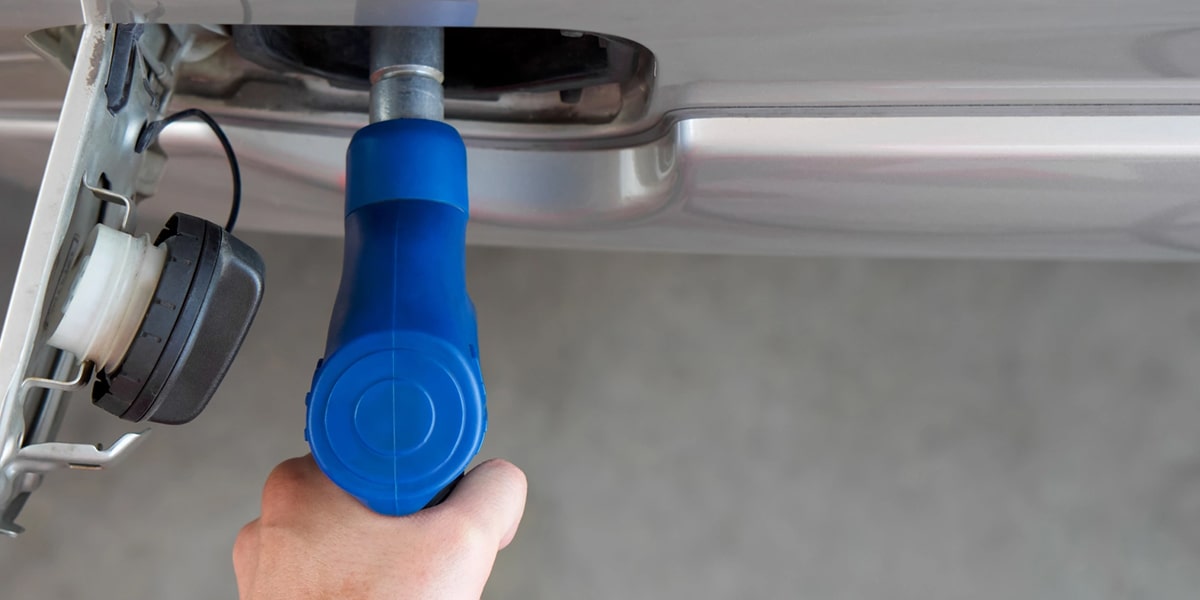
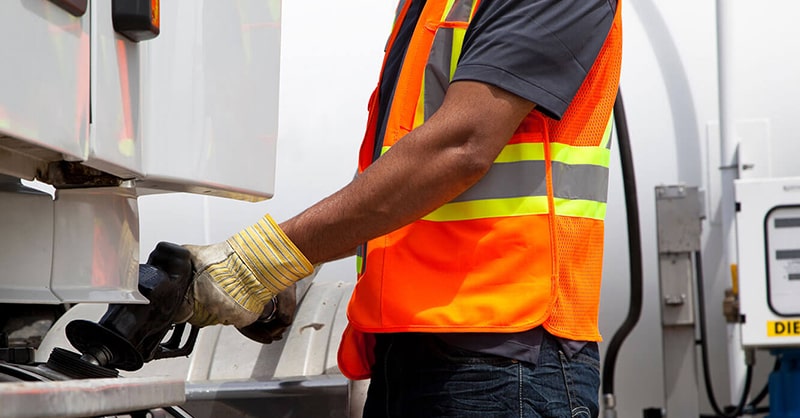
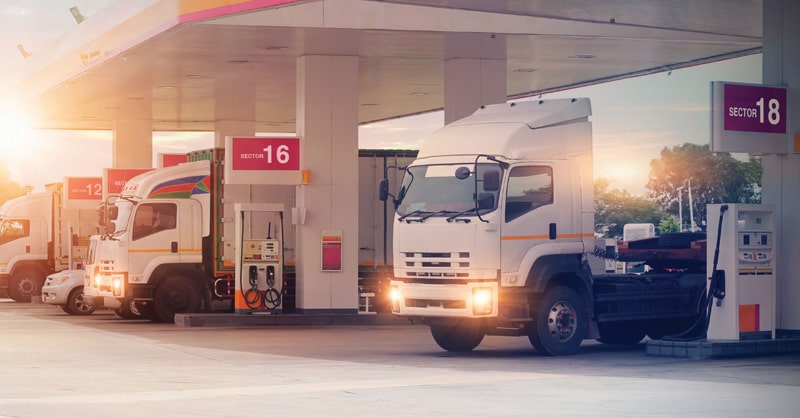
Benefits of fuel management and fuel consumption techniques for fleet businesses

Managing vehicle fuel consumption doesn’t need to be a time-consuming task. For reliable fuel tracking, use fleet management systems to their fullest potential through fuel management and see the difference.

One of the biggest responsibilities managers take on is finding ways to minimise the costs associated with running a fleet. Fuel management just makes this process a lot easier.
Here’s how fuel management can help you calculate the average fuel consumption rate in your fleet.

Fleet management and your business’s fuel economy

Fleet management fully monitors vehicles and gathers data on each vehicle as they run. With each trip taken, the system automatically tracks fuel consumption levels and notes the speed at which the fuel is burned.

With this information, telematics gathers all vehicle data and translates it into easy-to-understand information, and compiles it on the manager’s fleet platform.

The type of information gathered for prime fuel efficiency includes:

  • Speed
  • Full history of vehicle usage
  • Vehicle routes
  • Maintenance issues
  • Idle time
  • Driving behaviour

Now, managers will have full access to fleet diagnostics and valuable insights that will allow them to make informed decisions about how to improve their fleet for a greater, greener business.

How to boost vehicle performance

Managers are constantly looking for fresh and inventive ways to keep up with their fleet and get the most out of their work operations. With fuel being one of the most valuable resources in use, managers need to take the necessary steps to ensure it is not being wasted.

Fuel management is a subdivision of a fleet management system that uses fleet telematics to:

  • Read fuel levels in real-time
  • Keep track and improve fuel efficiency
  • Reduce fuel consumption
  • Instantly notify managers of fuel change

Fuel management systems can give you detailed information about your fleet’s fuel economy. You can determine whether your fuel usage has increased as a result of incorrect tyre pressure, misaligned tires, or vehicle weight.

All this ultimately helps managers better handle their fleets’ fuel consumption performance automatically, making fuel monitoring a crucial component of fleet management.

Fleet_management_and_your_business’s_fuel_economy

How to boost vehicle performance

Fuel economy defined

Fuel economy is the distance vehicles travel with a given amount of fuel, meaning it’s a form of vehicle thermal management that measures how much a vehicle consumes energy in fuel and turns it into kinetic energy to travel.

Fuel economy technologies show that vehicles with reduced fuel consumption burn less fuel than other vehicles and produce lower levels of carbon emissions.

So, how does a fuel management system work to preserve energy?

With GPS technology, fuel management systems automatically create different graphs comparing fuel usage based on previous trips taken. These graphs give business owners operational insights that aid in identifying a variety of technical and usage-related problems.

Fuel consumption management is extremely beneficial to fleet managers for the simple reason of its ability to reduce operational costs. Fleet management also provides a complete overview of transportation to manage your fleet operations and business logistics in the current economy with ease.

A fuel management system provides you with accurate data on:

  • Cost per mile
  • Fuel theft
  • Driver behaviour (risky driving, overspeeding, Idling)

How to reduce fuel consumption with fuel monitoring

Fuel expenses seem to grow with each passing year, so when it comes to planning, budgeting, and managing fuel costs, fleet managers use a few tips to give their tanks a break.

1. Driving Behaviour
They investigate how their team of drivers operate their vehicles and, through training, can change their driving behaviour for the better. Poorly driven vehicles use up more fuel than expected and contribute to maintenance issues in the future.

2. Vehicle inspections
Bad driving habits result in damaged vehicles, so frequent vehicle inspections for any maintenance issues that could contribute to excessive fuel usage and increased maintenance costs are recommended.

3. Route management
Finding the most fuel-efficient route avoids excessive fuel consumption and cuts down on overall delivery time.

For more fuel-saving tips, click here.

How_to_reduce_fuel_consumption_with_fuel_monitoring

How to reduce fuel consumption with fuel monitoring

The cost impact of fluctuating fuel prices

Among the ups and downs of fuel prices in the South African economy, motorists finally got some good news from the Automobile Association of South Africa (AA) just in time for the new spring season.

Because of fluctuating fuel prices, fleet managers might find it difficult to plan out a fuel budget and manage costs, especially if they don’t have a strong tracking tool to help keep up with fuel price changes.

Benefits of fuel management

A great fleet manager can split their focus between all the factors that affect their fleet. If you manage a fleet efficiently, you’ll notice that fuel economy is just one of the many obstacles you have to tackle.

There’s also:

  • Fuel consumption management
  • Internal and external fuel fraud
  • Unnoticed fuel leakages
  • Complex and time-consuming fuel reporting

How do fuel management tools help tackle these issues?

  1. Improve accuracy – Get the data that is travelled by your fleet and calculate the amount of fuel consumed with fuel monitoring systems. You can also save the data for later analysis with the help of an automated fuel control system.
  2. Improve fuel efficiency – With this, you can track your vehicle maintenance and driver routes. Implementing efficient driving routes is necessary to make cost-effective decisions so that misuse of excessive fuel consumption can be eliminated.
  3. Reduce fuel theft – Fuel theft is considered a big issue in the fleet industry. Using a fuel monitoring system can reduce fuel theft attempts by recording fuel consumption, fuel-related expenses and identifying security issues within your fleet to implement solutions.
  4. Automated reports – Reports can be received on events in real-time, like fuel levels, unauthorised vehicle usage and frequent engine idling so that you are able to investigate what your mileage is, as well as any irregular fuel economy.
  5. Maintain compliance – Fuel consumption software will make sure that your fleet adheres to emission standards. There are many places where CO2 emissions are heavily regulated.

Managers can access information from their laptops or phones since the software allows for remote usage. With this and an internet connection, you don’t have to deal with outdated stocktaking or tank management from the office. You can do it all from virtually anywhere.

Benefits_of_fuel_management

Benefits of fuel management

Reduce fleet costs with a trusted fleet management company

Cartrack’s smart dashboard provides swift fleet monitoring for your whole fleet and many more benefits for fellow managers.

Learn more about fuel consumption, and use Cartrack fleet management solutions to fix it.

Contact Cartrack Tanzania today to start saving on fuel.

How a dispatch controller can benefit from task management in trucking companies

Due to the behind the scene nature of their role, the job of a dispatch controller may be undermined. However, dispatch controllers are the bedrock of trucking companies. This means they need to be efficient and effective task managers. In this article, we discuss the role of dispatch controllers, task management and how dispatch controllers benefit from the software.

You are probably reading this for one of three reasons. One, you are a dispatch controller looking to improve task management. Two, you would like to become a dispatch controller or learn more about task management. Or three, you are simply looking for all the information on dispatch controllers or task management.

Whatever the reason, you are reading the right blog! After this, you will know what exactly the job of a dispatch controller entails, the challenges faced, and the task management tools and benefits that come to save the day from all the dispatch controller challenges.

Firstly, what is a dispatch controller and what is their task?

As a dispatch controller, there may be an assumption that your job entails sending drivers around while you sit back, relax and let time pass by. That’s a high underestimation of what a dispatch controller does.

A dispatch controller is an individual who oversees and supervises the business operations from dispatch to delivery. This entails assigning drivers to tasks, optimising drivers’ routes, tracking the location of vehicles, collaborating with drivers and communicating with customers.

So, although truck dispatch controllers are not on the frontline on the road all day in a big rig, they work hard behind the scenes coordinating and managing the schedules and routes of truck drivers to ensure cargo is dispatchedand delivered in a safe and timely manner.Basically, dispatchers are the bedrock of the trucking industry.

Let’s see what being a truck dispatch controller really underpins.

There’s no such thing as a “typical” day in the life of a dispatch controller but here are eight things that truck dispatch controllers do every single day:

  1. Manage operational costs: Daily, dispatch controllers are responsible for coordinating and managing the fleet operation to achieve set goalsat the highest productivity while at the lowest operationalcosts. A dispatch controller needs to quickly find creative ways to solve problems and optimise routes to save time, resources, and money.
  2. Proactively solve ‘the challenge of the day’: As mentioned, no two days are the same in the trucking industry, and neither are any of a dispatch controller’s deliveries. Each delivery has a unique need, for example: shipping food and beverages is much different than shipping car parts or chemicals. Dispatch controllers need to identify any special considerations, proactively solve challenges, and foresee and resolve future challenges.
  3. Stay organised and focused: A typical day in the life of a dispatch controller is busy. Coordinating deliveries, taking calls, and managing drivers, vehicles, and routes all day makes time fly. In between all the busyness, dispatch controllers need to be highly focused, stay organised with a task list, and be able to manage the high customer expectations and high-stress levels of drivers.
  4. Optimising technology: Technology is a tool used by dispatch controllers on a daily basis, from GPS tracking devices to smartphones to fleet management systems. Dispatch controllers in the trucking industry use technology daily to keep operations running smoothly, safely, and timely.
  5. Collaborate with drivers: As a dispatch controller, communication and collaboration are essential. Each day as a dispatch controller includes constant communication and frequent check-ins with drivers.
  6. Ensure fleet compliance: It is the responsibility of the dispatch controller to ensure that operations are fleet compliant. Daily, dispatch controllers ensure that drivers are well-trained and well-rested, and vehicles are safe and roadworthy.
  7. Oversee the entire operation: It is the daily job of an effective dispatch controller to have a bird’s eye view of the entire fleet operation, from the location of each truck to the driving performance of each driver.
  8. Keep clients happy: Unhappy clients could result in dispatch controllers losing out on work and damaging the company’s reputation. Ensuring customer satisfaction is a huge part of a dispatcher’s job. The good news is that fleet management systems help dispatch controllers reach customer expectations.

Yep, it’s a handful! With so much to do, it is obvious that dispatch controllers face challenges daily. Let’s take a look at the challenges faced by dispatched controllers.

what_is_a_dispatch_controller

Firstly, what is a dispatch controller and what is their task?

What is task management?

Task management refers to the process of scheduling tasks and managing them with milestones and deadlines to ensure tasksarecompleted on time. A dispatch controller needs to be responsible for ensuring that the fleet operation is as productive as possible by planning out how and when tasks are executed, from beginning to end. Task management is a leading challenge for dispatch controllers.

Task management involves creating, prioritising, delegating, and monitoring tasks to ensure they are completed within set deadlines. For this, dispatch controllers need to organise the fleet operation workflow to ensure efficient task completion.

Project management features task management but they play two different roles. While task management mainly focuses on getting tasks off the ground, executed and completed on time, project management software focuses on reaching overall project milestones and deadlines. Therefore, project management is a core component of task management.

But why must dispatch controllers go through all this hassle?

Why is the management of a task even important?

Dispatch controllers have to know what, how and when tasks need to be completed. This is called task tracking, it is the main reason why project management plans are important.

Let’s break it down.

Task management is pivotal for a fleet operation’s success as it helps dispatch controllerskeep everything in flow. All fleet operations from planning to reporting, analysing, evaluating, creating, and executing require task tracking so that dispatch controllers can efficiently control fleet operation, access real-time reports, and make strategic decisions.

Task management is what allows dispatch controllers to track tasks closely and know everything they need to about each and every task to ensure they can manage customer and business expectations perfectly.

Why_is_the_management_of_a_task_even_important

Why is the management of a task even important?

3 ways to manage a task with project management software

Now that it is obvious that project management is crucial for a smooth running fleet operation, let’s find out how a project manager can effectively manage tasks. Below are three key categories, features and ways to manage tasks ensure teamwork:

  1. Manually using to-do lists: This is a basic form of task management and is made up of physical components such as manually writing tasks down on a planner, whiteboard or chalkboard in order to track tasks and scratch-off once completed. This way of managing tasks is best for people or teams who are dealing with a small number of tasks on a task list that rarely changes.
  2. Electronically using apps or spreadsheets: With the rise of technology, computing has allowed for a shift from manual task management to electronic via software. Electronic task management can be done in various ways from the basic use of spreadsheets to using task management apps. Unlike manual forms of task management such as to-do lists, this form of project management is not confined and can therefore be taken with dispatch controllers anywhere they go with their computer, laptop, or even smartphone.
  3. Online or cloud-based tools: This is an extension of electronic task management which is inclusive of the unlimited expandability of the internet, so dispatch controllers can create and manage tasks online. This form of task management comes in the form of software tools or online applications allowing dispatch controllers to organise and monitor tasks from any location. With the use of the internet, online or cloud-based tools allow information, metrics, reporting, analytics, or any other files to be easily stored and shared. These tools work on the Cloud, this way dispatch controllers can assign storage space and even backup any critical information source.

Planning is a project management task, we already know that failing to plan is planning to fail. If tasks are not well planned and managed the business will be set for failure.Trucking companies need to use the most efficient task management method to ensure success and the best performance. Let’s find out moreabout task management tools.

What is a task management tool?

Task management does not have to be as complicated as it sounds, especially with selected work management tools. These task management tools are basically the answer to the challenges faced by dispatch controllers, the dream and basic need of every dispatch controller!

A task management tool is software used by an individual, team, or organisation to complete projects efficiently by organising and prioritising tasks. This software is used to streamline all the processes involved in creating, delegating, and completing task lists.

Task management tools are built to help task managers and even dispatch controllers get the best out of their teams by empowering each employee to work faster and collaborate better. Task or project management tools combine every necessary feature a dispatch controller needs to create and manage tasks. These features include the next:

  • Creating, sharing and assigning tasks
  • Identifying and labelling dependent tasks
  • Creating subtasks from larger deliverables
  • Tracking task progression and completion
  • File storing and sharing
  • Collaboration, teamwork and communication tools

With project management software, dispatch controllers can create a suitable workflow for the team. Whether dispatch controllers need to create simple to-do lists, assign tasks to each team member or create a complex schedule to complete large deliveries, task management tools make the process effortless.

What_is_a_task_management_too

What is a task management tool?

8 benefits of using task management tools for trucking companies

Whether it is a business in the trucking industry or not, every kind of business can benefit from using task management tools to manage employees, teams, assets, tasks and other resources such as time and budget. Task management tools allow you to bring life to new and successful processes by:

  1. Organising all tasks on a single platform: With the right task management tool, dispatch controllers can have the entire workspace on one platform. Dispatch controllers can delegate tasks with ease, monitor them at a single glance, and immediately address any delays or issues.
  2. Prioritising tasks based on importance: Yes, all tasks are important but not all tasks take priority. With a task management tool, dispatch controllers and teams can focus on the most critical tasks first and then turn their attention toward less urgent ones.
  3. Boosting team collaboration: ‘Teamwork makes the dream work’ might be a cliche, but it holds true for the trucking industry. Task management tools consist of features to boost collaboration such as user mentions and in-task comments and help teams communicate efficiently.
  4. Breaking down complex tasks and managing multiple tasks: Managing multiple tasks at the same time can be back-breaking. Task management requires a lot of planning and seamless execution or else minor delays or mistakes can lead to major issues. Task management tools make the process of creating and completing multiple tasks easier and effortless to manage.
  5. Automating tasks: Some tasks such as monthly reports or weekly meetings happen on specific dates throughout the year. Rather than manually setting up repetitive tasks, task management tools use automation to create tasks every month or week, based on the dispatch controller’s needs.
  6. Access to task progression in real time: Dispatch controllers have multiple drivers, vehicles, clients and deliveries on their plates, at the same time. Manually trying to keep up with the progression and completion rate of tasks is time-consuming and daunting. With a task management tool, dispatch controllers can oversee all their tasks on one platform.
  7. Clear task delegation: When the entire team can look at an up-to-date project board with all their tasks on it, they don’t have to go looking for crucial information or bug their manager or team members for it. This is especially crucial for remote or hybrid teams where team members have different time zones and work schedules.
  8. Making more profits: Profits are a benefit embraced by any business in any industry. Customer satisfaction and business profitability will be positively affected by task management software like Cartrack Tanzania which offers the above benefits.

With the right task management tool in place, businesses can reap each of the benefits. A good task management tool encompasses features that set the business up for ongoing success.

There are a few task management tools on the market, but trucking companies need to make sure they choose the best.

benefits_of_using_task_management

8 benefits of using task management tools for trucking companies

The best-of-the-best task management tool

Cartrack Tanzania has industry-leading fleet and task management software that empowers fleet managers or dispatch controllers to seamlessly assign jobs to their entire fleet and empower teams to successfully, efficiently and productively complete and deliver tasks.

Let’s take a look at Cartrack solutions and features that dispatch controllers can use to exceed customer expectations, grow the fleet operation and boost efficiency and profits:

  • Easy-to-use, all-in-one platform: Cartrack Tanzania is a complete fleet management platform, not only for transportation and logistics businesses but all businesses that require fleet or task management. Cartrack’s easy-to-use platform empowers trucking companies (amongst others) to streamline the entire operation from task management to operational costs, all in one platform.
  • GPS tracking: GPS tracking is essential for effective task management. With Cartrack’s telematics technology devices, dispatch controllers can stay in the know of the real-time GPS location and movement of any of the company’s trucks. This feature will help dispatch controllers monitor vehicles, know driver and vehicle schedules, reduce unexpected downtime and time taken between jobs.

That is not all. GPS tracking does not only allow dispatch controllers to track trucks and assets but also time and tasks. With GPS tracking, dispatch controllers can optimise routes and ensure that tasks will be completed in time. Time tracking helps dispatch controllers meet deadlines and anticipate any delays. Additionally, with GPS tracking, dispatch controllers can also track tasks allowing them to oversee accountability, the team members’ dedication, and the task completion progress.

Now, customers can enjoy the experience of better service and faster deliveries.

  • AI-powered Cameras: Cartrack’s AI-powered and live-stream camera technology has up to eight internal or external cameras to help dispatch controllers monitor driver behaviour and keep drivers, fleet and cargo safe. With this feature dispatch controllers can gain insight into which drivers speed, get distracted, drive harshly or become fatigued. This can help dispatch controllers improve drivers’ road behaviour with safe-driver training and reduce accidents and cargo damage, as well as unnecessary maintenance and penalty costs.
  • Actionable insights: With Cartrack, dispatch controllers can instantly pinpoint challenges, know how to tackle them and increase the fleet’s operational efficiency with actionable insights that help them keep the business growing. This includes seamless automated reporting and insights on:
  • Fleet size optimisation
  • Fleet costs
  • Driver scorecards
  • Driver productivity
  • Fuel consumption
  • Cost per job and km

Reports can be sent straight to dispatch controllers’ inboxes, ensuring that they have all the information that they need, when they need it.

Choose the best, choose Cartrack Tanzania

With Cartrack Tanzania, you can manage tasks, track progress and collaborate seamlessly, all from one platform.

Contact Cartrack Tanzania today, and have the best task management tools right at your fingertips!

Empower and improve your construction business with smart fleet management software

The buildings, homes, bridges, iconic structures and the very cities we live in today, are all made possible thanks to construction companies.

In this article:

  • Find out what makes a good fleet manager. Ensuring quality supervision and making safety a priority is an example.
  • We will focus on how fleet management can benefit the construction industry.
  • Learn how to improve and empower your construction business with a fleet management software platform from Cartrack.
  • Uncover the five major benefits of implementing construction fleet management for your business.
  • Find out some important tips to grow an efficient construction company from scratch.

To bring these masterpieces to life and ensure operational success, effective fleet management features are a must-have.

If you are in the construction industry, you’ve come to the right place.

We will inform you about ways you can empower and improve your construction business, and how smart fleet management software will help you do this.

Empower_and_improve_your_construction_business

We will inform you about ways you can empower and improve your construction business, and how smart fleet management software will help you do this.

What does a fleet management software platform do?

This can be referred to as a fleet software platform.

All kinds of businesses or industries can use the tool to manage all aspects of their operations, from the powerful data insights it provides. For example, gain insights about maintenance, driver behaviour, fuel expenditure, fuel consumption and so much more.

For a fleet manager, time is money.

A lot of tasks can be automated to cut time spent on admin and create more time for growing the business.

Certain managerial qualities are also needed, to add the cherry on top of a good fleet management process.

What skills do you need to be a fleet manager?

  1. Create quality supervision

Construction fleet managers need to make sure they have an overview of their operations, drivers, and vehicles all day. No matter the time of day, if their vehicles are not working, they need to give reasons why they are not working, react fast, and find immediate solutions. Or perhaps there could be an issue on-site, they need to identify who is in charge of what construction project or which driver is responsible for using certain vehicles or equipment.

  1. Make safety a priority

Necessary measures should be taken to secure his/her fleet. They need to know the location of their vehicles in real-time to prevent or identify any theft, and to protect their assets during a construction project. Fleet managers also need to make sure their vehicles are driven well and set performance standards for drivers to meet. This will ensure the drivers, vehicles, and assets are all safe, while at the same time, unnecessary fleet costs won’t be incurred. Another safety measure is to ensure rules and regulations are being followed, where drivers should be encouraged to avoid distractions and safety hazards. In this case, managers should be aware of no-go zones for their fleet, and create geofences or barriers stopping drivers from entering any unsafe or unauthorised areas.

  1. Make sense of data

Fleet managers need to analyse, interpret and react fast to software data, to make instant decisions that will safeguard operations. If they receive data alerts such as a vehicle has broken down, there’s bad driving or a vehicle is not where it should be, they will need to respond. For instance, there could be a non-functioning vehicle, and then maintenance will need to be carried out to prevent costly repairs on construction vehicles.

  1. Manage vehicle maintenance and make better decisions

A manager needs to be more strategic about the data received from the software platform, and use it to plan and be more organised in the future. They can make predictions or forecasts for newly purchased or old vehicles and maintenance plans. Questions like are more vehicles needed? Or which vehicles are being used the most and which are the most efficient? Can be answered by the software platform service to plan ahead. Ultimately, to reduce fleet costs and do operations more efficiently.

What are the types of fleet management industries out there?

  • Vehicle rental & leasing
  • Cold chain logistics
  • Construction
  • Taxi
  • Transportation & logistics

In this article specifically, we will dive into what fleet management involves for construction businesses, and give you construction fleet tracking and telematics solutions.

What_are_the_types_of_fleet_management_industries_out_there

In this article specifically, we will dive into what fleet management involves for construction businesses, and give you construction fleet tracking and telematics solutions.

What is construction fleet management?

It involves the planning and oversight of all vehicles, drivers, and assets to ensure productivity and effective workflow in the business.

It is a process where fleet managers gain full visibility and control of their operations using route planning, vehicle fleet monitoring, data collection, and reporting.

Managers of construction fleets need to see what’s working and what isn’t, so there are fewer project delays and cost impacts on the entire business.

A smart fleet management platform is the answer to effective construction fleet management– here’s how.

Why you need Cartrack’s fleet management solution to improve your construction fleet business

  • GPS vehicle and equipment tracking: Easily locate your vehicles and assets to keep them safe, and acquire information about their condition. And monitor if they are being utilised efficiently.
  • Maintain your construction assets: Get maintenance alerts when your vehicles and machinery need a service to reduce costs and increase the lifespan of your vehicles. Also, reduce downtime and improve productivity.
  • Construction fleet safety: AI-powered tech cameras give insight into driver behaviour, making sure they are not easily distracted and are driving correctly.
  • Driver management and training: Promoting safe driving habits and training will help save you time and money. This will improve road behaviour and reduce wear and tear on vehicles.
  • Keep your assets and cargo protected: Ensure they are where they should be, and receive alerts when they enter or exit unauthorised zones.
  • Timestamps: Know when teams arrive and leave job sites to ensure working hours align so can pay your team’s wages accordingly.
  • Less admin: Less paperwork, as all fleet processes are automated and documented electronically.
  • Manage costs: Understand your project costs and ensure your pricing keeps you profitable and competitive. Our actionable insights help you spot cost inefficiencies, empowering you to focus on growing your business.

Equipment fleet management in a construction fleet

Not only is vehicle management important for your construction fleet vehicle or vehicles, but heavy equipment fleet management plays an equal role.

The breakdown of this equipment could be severely costly to the business, limit projects getting done on time, and cause a lack of delivery to clients.

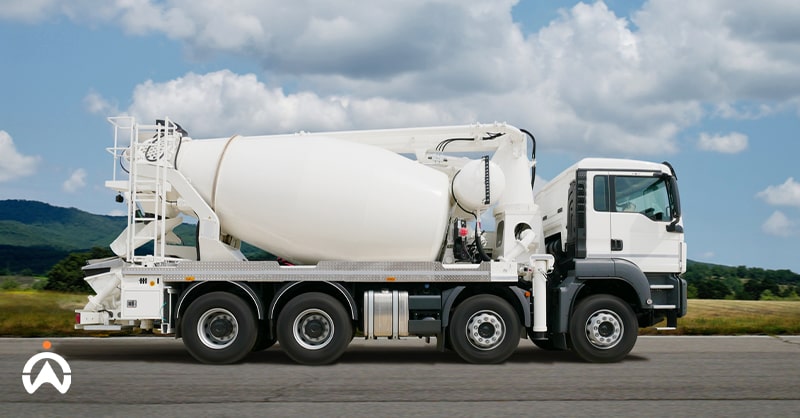
Let’s look at a concrete mixer, as an example.

They allow you to produce your own batches of mixed concrete that can be transported directly to where it’s needed on the construction site. It’s also a money and time saver as you won’t have to rely on a concrete batch plant to deliver and you can control the quantity of what is used.

Let’s say you have ten cement mixers on site, do you know if they are being utilised effectively and if they are protected? Monitor them with GPS tracking technology, and get data insights on the platform.

They could be left on without supervision, and are turning unnecessarily without cement in them– thus are not being used efficiently. You could have some that are underutilised, so then you’ll save by not buying more where there’s no need.

Also get live alerts if they are stolen, or are being used without consent and if they are due for maintenance.

Equipment_fleet_management_in_a_construction_fleet 

Equipment fleet management in a construction fleet

4 major benefits of fleet management software for construction fleets

  1. Optimise fleet and operator performance

Successful fleet management systems involve analysing vehicle and operator data to the max.

Data insights such as fuel consumption, mileage, mechanical diagnostics, maintenance and driver performance– all allow managers to understand fleet operator history and performance thoroughly.

Fleet managers can then refine daily operations, save on costs and make informed business decisions.

For example, truck breakdowns and service maintenance can also be extremely costly. Managers can use the data to develop and manage a vehicle maintenance schedule, resulting in a drop in repairs and extending the lifespan of vehicles. They will also operate at full capacity, which means a reduction in fuel running costs.

In addition, data about the best routes to take and safe driving methods to use can be implemented to improve driver safety and fuel economy.

  1. Increase productivity and workflow

When fleet management software is in place, there’s less room for errors, issues, delays, or anything that could disrupt workflow, resulting in more efficiency overall.

Fleet managers must coordinate vehicle and equipment dispatch efficiently to keep construction projects on schedule. They can plan efficient routes, find the best routes and send the nearest available drivers to fulfil site requirements. The right people are assigned to the right jobs, and get tasks done better and on time. Projects are planned accurately and the team is accountable and on top of task deliverables needed to keep projects moving forward.

As a result, the company will have more time to respond to urgent requests and adapt quickly without delays.

  1. Improve invoicing

Automated reports tell you exactly when your construction teams arrive or leave their assigned project sites.

This lets you see their actual working hours so you can bill your clients and pay your team’s wages accurately, helping you avoid cost wastages.

Managers should consider their invoicing and transactions to be done digitally, which will also improve data security and safety.

Also to implement financial record-keeping on a digital platform to improve accuracy and minimise payment errors and/or misses.

This will allow construction companies to look back at payment history and send accurate invoices to clients.

  1. Better budgeting & forecasting

The whole objective of running a successful construction operation is to see if there are capital gains. Companies can thus leverage valuable fleet data to get an overview of expenses and an understanding of what projects are making or losing money.

Get reports to predict expenses and revenue, and generate more accurate budgeting and projections for the future. For example, they can assess how much money has been spent on fuel within a certain period and budget accordingly.

Overall, the business should understand where they stand financially, to take the right measures to keep their doors open and finances healthy.

How to grow an efficient construction business

We know a fleet management platform will give you more control of your business, but as with any business, other elements are important to your success.

We’ve got some additional tips for your toolbox.

  1. Create a great team: You need the right people in your corner to ensure the work gets done right. And you should also be rewarding them for great work and empowering them to do better.
  2. Build a strong network: Attend events and network to build your customer base. Build a report with existing clients, and create a space for positive referrals.
  3. Launch a website: Your website should include valuable information about your company and services, and answer questions your customers often ask. You should list how your services will solve their problems.
  4. Build effective sales and marketing channels: Having an engaging website and social media accounts is a good starting point for an online presence. But to take it a step further, you should consider using effective digital strategies like SEO, analytics, content marketing, and advertising as part of your overall growth strategy.
  5. Invest in the right construction fleet management software: As mentioned, a saas platform will assist with much smoother operations, and give fleet manager’s more control of their fleet through accurate reporting and data insights.

The best fleet management for construction businesses is out there. Get started with fleet management software from Cartrack Tanzania. Grow and improve your business with a tech-powered platform today.

Supply chain and logistics: How to start a cold chain business

As the seasons change from one temperature to another, cold chain logistics provides a temperature-controlled environment that ensures fresh produce from storage to delivery.

In this article:

  • Cold chain logistics are temperature-controlled networks that ensure the preservation of medicines, pharmaceuticals and food products.
  • Run an efficient cold chain business by balancing the link between temperature, perishability and transportation
  • Explore the key elements of cold chain logistics and learn how to maintain them in your business.
  • Learn about the future of the cold chain industry and how it’s grown into a multi-million dollar market
  • Cartrack provides a complete fleet management solution where, cold-chain monitoring, real-time visibility and streamlined compliance are within reach from one platform.

The fresh produce at your local market, the skin care products you use daily, along with those important meds in your cabinet, all have one thing in common, they were moved from one location to another through cold chain logistics.

You might be asking yourself, “what is cold chain logistics?” Many of the products you buy are a part of cold chain logistics in one way or another. Without the use of this innovation, fresh produce wouldn’t survive the trip to wholesalers or even to your doorstep.

Supply chain management explained

For smaller operations or local deliveries, cold chain transportation management occurs in-house and is simpler to operate, but for a larger company that works internationally, globally delivering temperature-sensitive products becomes complicated. This creates an opportunity to partner with third-party logistics companies that have expertise in cold chain transportation.

This is where supply chain management comes in. A cold chain is a temperature-controlled cold chain network. It’s a system that takes preservation seriously and treats products with recommended cold temperature levels. This allows customers to receive the highest quality products regardless of the season or weather.

Practical use for cold chain storage

Cold chain logistics (also known as chill chain logistics) is the technology and process that allows for accurate planning and safe transport of temperature-sensitive goods and products along the supply chain.

Some standard products requiring cold chain transportation are:

  • Meat
  • Seafood
  • Produce
  • Dairy products
  • Medical supplies
  • Pharmaceuticals
  • Floral industry

Efficiently starting a cold chain business means using certain technologies and science to evaluate and accommodate the link between temperature, perishability and transportation.

Practical_use_for_cold_chain_storage

Practical use for cold chain storage

The future of the cold chain industry

This industry has grown to be a multi-million dollar market valued at USD 209.2 million in 2021. With an increased demand for product sustainability, the global cold chain logistics market size is forecast to reach staggering heights of USD 464.0 million by 2028, all thanks to the pharmaceutical and food industries’ expansion in 2022 due to the global pandemic we faced.

When to use cold chain logistics

Cold chain involves a process that isn’t just used when transporting or storing goods. It impacts every step of the cold supply chain, from procurement, storage, and delivery right down to end users.

Even after the goods have been safely delivered, many products are further kept at a constant temperature and stored in refrigerators or cool areas to preserve the item until consumed, used or expired.

A rise or fall in temperature during any of the supply chain phases can be bad news for the goods and the customers who have consumed/used them, particularly with expiry-sensitive produce. The shipper and their client have a lot on the line and might lose money when cold products go bad.

Key elements of supply chain management

To keep everything running smoothly, a cold chain business needs hands-on logistics managers who oversee each part of the cold chain process and receive crucial insights.

To maintain the shipment’s integrity and avoid product losses/damage, key elements of the cold chain have to be constantly monitored.

1. Packaging

Packaging is mainly used to protect products while in transit. Packaging for cold chain products should keep them from getting damaged while allowing storage containers to maintain the goods at their required temperatures.

2. Temperature monitoring

Products that need constant cold conditions also require regular temperature tracking. Temperature monitoring does more than maintain a constant degree. It can keep track of humidity levels and show when and for how long a package was kept at different temperature levels.

3. Transport

Products are kept at their appropriate temperatures from the time they leave the manufacturer until they reach their destination using various types of refrigerated transport units.

4. Storage

To keep food or medication at the proper temperature along the supply chain, cold storage rooms are equipped with insulation against outside temperatures.

When_to_use_cold_chain_logistics

Key elements of supply chain management

How do you provide a temperature-controlled environment?

Since different food cold chain products have different temperature requirements, cold chain logistics can provide you with temperature-controlled facilities like warehouses and transportation that can cater to different temperature needs.

These are the standard degree settings recommended:

Deep freeze meat and seafood -30° C and -18° C (-22° F and -0.4° F)
Frozen meat and seafood -18° C and 0° C (-0.4° F and 32° F)
Pharmaceutical drugs etc. 2° C and 8° C (36° F and 46° F)
Chill fruits, veggies, and dairy products 7° C and 14° C (44.6° F and 57.2° F)
Ambient fresh produce etc. 14° C and 24° C (57.2° F and 75.2° F)

Although these are the recommended safe temperatures for certain foods, there is some leeway as some goods can handle the slight temperature change. If the change is steep and frequent, that’s when items get spoiled.

Cold chain technologies in the supply chain

So, to make sure goods don’t get compromised and stay in pristine conditions no matter the phase in the supply chain, the pharmaceutical, medical and food industries all heavily rely on cold chain logistics.

There are several methods to keep goods at proper temperatures. To determine the right refrigeration method, these factors are used:

  • Duration of transit
  • The size of the packaged shipment
  • The weather/outside temperature

After the right method has been chosen, the following modern cold chain solutions can be applied.

1. Shipping containers

To ensure shipments don’t experience fluctuating temperatures, businesses have to swiftly move shipments through the supply chain using shipping containers to ensure the products won’t experience undesirable temperatures.

Shipping containers (reefer containers or vehicles) are refrigerated units with a temperature-controlled onboard cooling system. These are insulated vans, semi-trucks or standard ISO containers that can also be modified to keep products warm if needed.

2. Cooling technologies

These are methods used to keep already cold products at the same temperature.

Gel packs: Frequently used in medical and pharmaceutical deliveries.

Dry ice: It can keep items frozen for a long time, particularly used for food, pharmaceuticals, and hazardous materials. Instead of melting when exposed to air, it sublimates.

Liquid nitrogen: Used primarily to transport biological cargo (organs, tissues, etc.). The extreme cold keeps things frozen for a longer time.

Eutectic plates: Also called cold plates, they are used similarly to gel packs, but cold plates are reusable.

Quilts: Insulated quilts can be wrapped around or placed over freight and are used to keep temperatures constant, so frozen items will remain frozen for a longer time.

Common cold chain logistics challenges

Despite all the tips, tricks, and devices mentioned above, running a cold chain business efficiently is not easy. Maintaining a constant temperature throughout cold chain storage is not always as easy as it sounds.

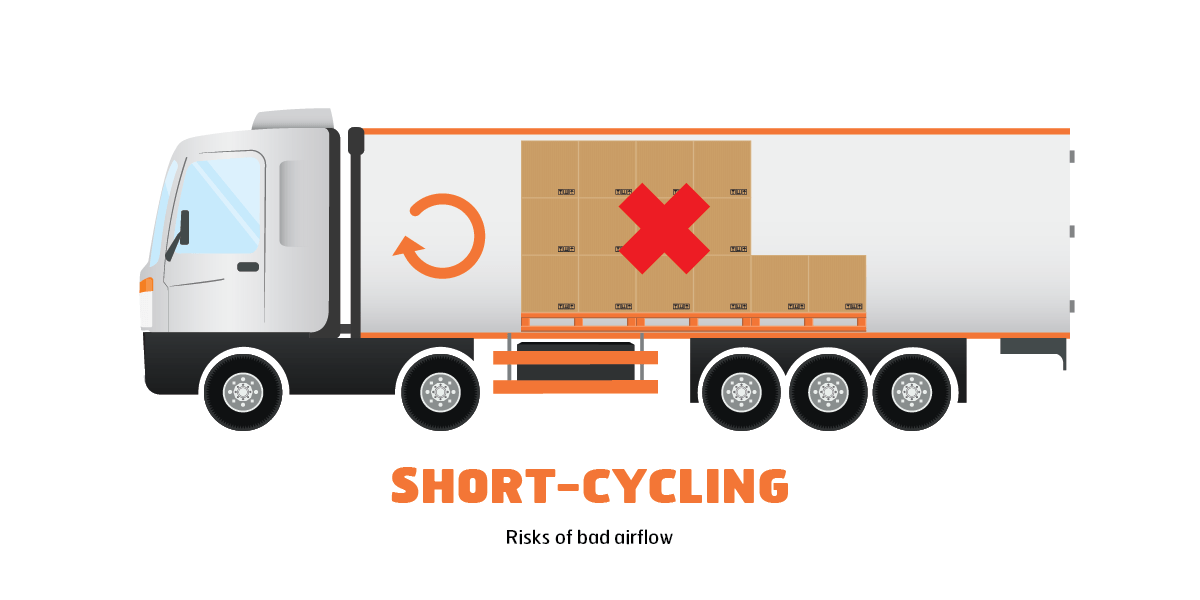
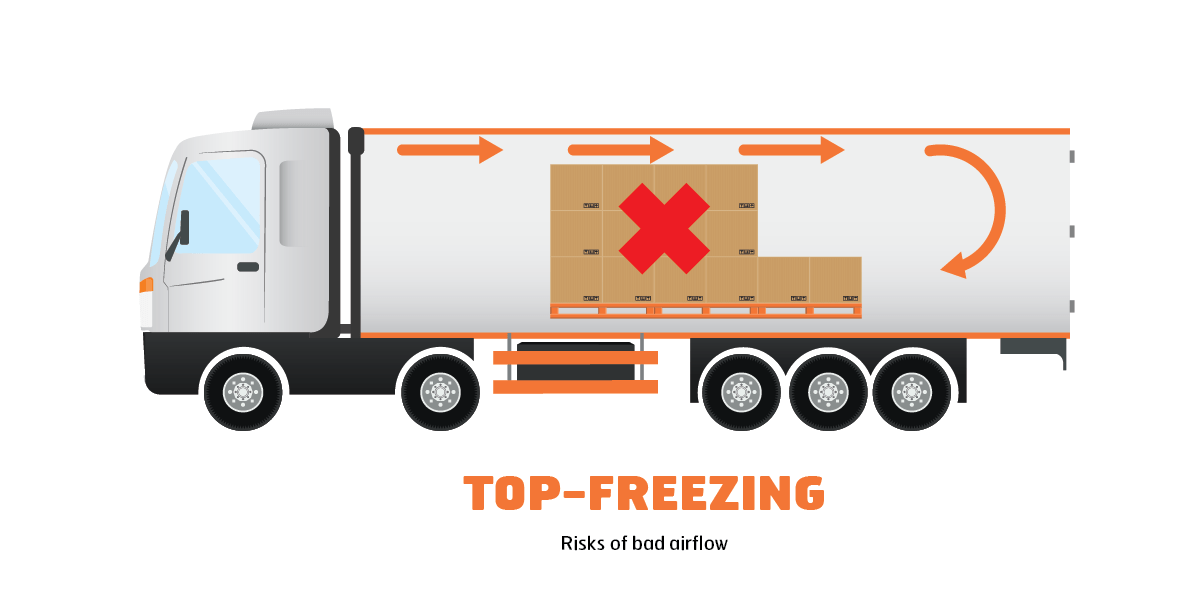
Bad airflow
While good airflow maintains a uniform temperature in your freezers, trucks, and trailers, and distributes air evenly within the area, bad airflow, however, can cause issues like short-cycling, promote humidity, and might have different temperatures throughout the storage and more.

(mock images)

Hot spots
Appear when a shipment is not cooled throughout at a uniform temperature, and certain parts of the shipment are at different degrees.

Short_cycling

Hot spots

Top-freezing
Is when your shipment is placed too close to refrigerated air in a storage or transportation unit. It can cause frost damage to your products.

Top_freezing

Top-freezing

Why is cold chain logistics important?

This allows customers to experience and purchase different goods that come from all over the world. The more customers demand to experience otherworldly products, the more the cold chain logistics companies grow.

While some products can withstand environmental shifts, others can’t. While transporting, quality, flavour, consistency, and safety are all on the line.

The end customer might not notice the prime wagyu beef they bought spent two hours in the wrong temperature range, but they may be at risk of food poisoning or associated illnesses if products are not treated accordingly by the cold chain.

With goods coming from all over the globe, cold chain management simply minimises the risk of temperatures exceeding safe levels during storage or transportation and provides manufacturers and suppliers with better control over their products.

Starting different cold chain jobs in the industry

Want to know how you can start a cold chain logistics business? Or want to join a cold chain logistics startup? If this topic has piqued your interest and you’re looking into different careers within this industry, here are some career paths in cold chain logistics you could partake in:

  • Rent out cold storage to companies selling perishable products
  • Cold chain consulting
  • Provide cold/refrigerated transport services for road, rail, air, and water
  • Manufacturing refrigerated trucks and vans
  • Construction of cold storage
  • Equipment manufacturing or supplying to cold store owners
  • Technology suppliers to temperature-controlled logistics services

Starting_different_cold_chain_jobs_in_the_industry

Starting different cold chain jobs in the industry

Smart cold chain management

Leave your on-the-ground cold chain operations to Cartrack Tanzania.

Get 24/7 protection with temperature sensors that remotely monitor temperature, automated alerts on temperature variations sent via email/SMS and our AI-camera system will help with real-time visibility of your cargo and drivers while on the road.

For optimum control over your fleet and the goods you transport, get Cartrack.

Let’s get in touch today.

Practical use for cold chain storage

Truck logistics play a significant role in our economy and daily lives.

In this article:

  • Get an overview of what truck logistics entails
  • Learn how to start a truck logistics business step by step
  • Why truck logistics is such a rewarding business to venture into
  • How Cartrack’s fleet management platform can help run an efficient, safe and compliant transportation and trucking company

According to the Commodity flow survey (CFS) trucks transported 71.6% or $10.4 trillion of the $14.5 trillion worth of all goods shipped in the United States in 2017. Clearly, starting a truck logistics business comes with a lot of rewards but it is hard work too.

What is logistics and how has it evolved to truck logistics?

The word logistics originates from the French term loger or logistique which means shortage. Historically, logistics was a term associated with the military where the function of logistics was supplying troops with suitable equipment for war.

With the rise of consumerism and the growth and complexity of supply chains, the word logistics evolved in the 1950s. Logistics became a term used in the business sector to refer to the process of planning, implementing, and controlling the transportation of goods, resources and information from the point of origin to the point of customer consumption. The focus of logistics shifted from the war to meeting customer expectations and reaching customer satisfaction in the most timely and cost-effective manner.

What_is_logistics_and_how_has_it_evolved_to_truck_logistics

What is logistics and how has it evolved to truck logistics?

Today, the industry logistics markets have further developed as a concept that is utilised for business analysis and planning to help businesses achieve strategic competitive advantage by considering all possible factors involved in the business operation.

Truck logistics, therefore, refers to the research and planning of trucking operations. The logistics of trucking take into consideration all the factors involved in the transportation of goods and resources with the use of trucks, to boost productivity and efficiency. Trucking logistics include:

  • Planning and optimising the most efficient routes for truck drivers
  • Improving fuel consumption through fuel management
  • Ensuring trucks are in good condition to complete tasks
  • Hiring an excellent staff of truck drivers
  • Applying effective fleet management

In today’s industrialised world, trucks are one of the primary means for commercial transportation and the transportation of goods. Efficient trucking logistics not only helps a trucking company achieve success but also contributes positively to the economy. It is therefore safe to say that the trucking industry plays a large role in the economy.

Let’s take a closer look at how this important and large industry operates.

How does the transport business industry work?

A truck logistics company falls under the transportation business industry which is made up of businesses that transport goods, resources, or even passengers from one location to another. These businesses provide services to different target markets, from individuals to companies and even global trade partners. This means that businesses in the transportation industry can specialise in various niches and activities from e-hailing or hauling customer goods to international shipping of supplies and products.

Businesses in the transportation industry are commonly classified into different categories based on their target customer, the type of routine, and the service provided, namely:

  • Personal transport: This is catered to individuals and small groups of people and includes one-on-one services such as taxi services, bus services, and most recently e-hailing services.
  • Local transport: This category provides services to regional markets by transporting cargo such as livestock, materials, consumer goods, and more. Local transport may be commercial or private, depending on the distributed materials.
  • Global transport: Global transport offers services for sea shipping or air-based delivery of cargo. These services consist of aspects of the personal and local categories but on an international scale.

Truck logistics focuses on local services. In providing these services, truck logistics prioritise road safety to ensure the secure transportation of cargo and the safety of both truck drivers and individuals as well as the preservation of specific goods, products, and loads.

What trucking logistics does is examines factors such as trucking routes, types of loads and delivery times to best facilitate the different types of transport services and determine the best means of transport. For example, heavy hauling and long hauling are more demanding aspects of trucking than e-hailing personal services.

How_does_the_transport_business_industry_work

How does the transport business industry work?

The role of truck logistics in transport supply chain businesses

A supply chain refers to a network of individuals and companies who are involved in creating a product and delivering it to the consumer. Truck logistics is an aspect of the supply chain that plays a role in delivering goods or services to customers, manufacturers, distributors, or consumers.

Simply put, the supply chain covers the production and distribution of goods and services to all types of customers while truck logistics focuses on the movement and storage of products in the supply chain. When efficiently implemented, both supply chain management and truck logistics work together to give companies a competitive advantage and bring value to their customers.

The goal of truck logistics is to get goods and services delivered on time. To achieve this goal, truck logistics follows a logistics flow that entails the movement and direction of goods, resources, products, or information within a supply chain network between the point where the goods, resources, products, or information originate to where they are consumed by customers.

The three types the logistics flows are:

  1. Inbound logistics: Raw materials, tools, machines used for manufacturing, consumable items needed for fuel, or various spare parts and other elements for production inputs are moved, transported, or stored from suppliers to manufacturers for processing and production. Being the first stop of the supply chain, effective inbound logistics allows for a swift and integrated supply chain.
  1. Outbound logistics: Finished products from manufacturing are moved to the next stop of the supply chain. These finished products are shipped and delivered from the warehouse to the logistics business customers. All the products that move through this outbound logistics flow are intended for consumer consumption and satisfaction- this is also referred to as the order fulfilment process.
  1. Reverse logistics: This involves returning, servicing, repairing, refurbishing, reselling, recycling, recovering, or properly disposing of products. Reverse logistics, therefore, refers to moving items or goods from the consumers back through the supply chain. This process is most common in the automobile and electronics industry.

3 reasons why you should start a trucking company

With the current shortage in the logistics industry, starting a truck logistics business can be rewarding. Here are three reasons why you should start a truck logistics business:

  1. You can make money

Amongst other reasons, people start businesses to make money. So yes, you can make money from a truck logistics business, however, only if you manage it efficiently. This is because the profit made in the trucking logistics business is heavily affected by the costs. Fuel costs are one of the factors that can lead to high costs, especially in trucking and logistics- fuel costs eat up your profits.

  1. You can work from home

Working from home has become a new norm. Today, the basic needs of managing a truck logistics business are a computer, phone, and internet. With these gadgets, starting, owning, and managing a truck logistics business from home is possible. Trucks can be busy on the road all day while you use fleet management software to monitor the activity of your fleet with the use of GPS location software.

  1. You do not need to own trucks

Most people have the assumption that to start your own trucking business you need to invest in a truck or trucks- this is not the case. As an owner of a truck logistics business, you do not need to be the owner of the truck or trucks. A start-up trucking business can be started with another person’s truck- just like Uber and Bolt. This is called an owner-operator and you can simply register the owner-operator’s truck under your authority.

Thinking of starting your own logistics company? Let’s get you started with the following steps!

3_reasons_why_you_should_start_a_trucking_company

3 reasons why you should start a trucking company

6 actionable steps to plan and start a truck logistics business

  1. Complete the required training

Truck logistics requires the right set of training and skills, therefore it is important to acquire the right training suitable for the job. The form of training will vary based on the type of service the trucking business will provide- whether global, local transportation, or both. The following are some of the training requirements:

  • Transport Management Systems: This training gives an understanding of how transport management systems (TMS) work and why it is vital for transport systems. The training equips you to manage and track all the different aspects of transport management such as vehicle maintenance, warehousing, communications, cargo handling, and more.
  • Management and Inventory Operations: The ability to handle and control inventory plays a vital role in the transport and logistics business. Inventory management is integrated with warehouse management to inform and educate you on how products move through your operation.
  • Transportation Regulations and Law: To run a trucking logistics business that provides both domestic and international services, training should include regulations on interstate commerce and global shipments and carriers.

There may be additional training or courses that may have to be acquired depending on the type of service your truck logistics provides and local government regulations.

  1. Do your research

Before you get into truck logistics it is important to research the industry. Research helps you understand the business and how viable it is, even before entering the market. Here are some research points that could give you an overview of the business:

  • Costs: As mentioned above, the purpose of owning a business is to make a profit. It is important to find out the costs of the business and whether the business is profitable.
  • Competitors: Researching competitors will help you understand what other service providers are doing right or wrong. This way, you will gain an understanding of what the customer’s expectations are.
  • Niche: The truck logistics business is a big industry. Find out what goods and services you would like your business to specialise in. Successful businesses pick a lane.
  1. Set it up

Starting a truck logistics business will take a lot of time, money, and energy, this is because it involves planning, making key financial decisions, and completing a series of legal activities. Here is a guide to setting up your truck logistics business:

  • Create a business plan
  • Choose a business entity
  • Open a business account
  • Ensure fleet compliance

actionable_steps_to_plan_and_start_a_truck_logistics_business

6 actionable steps to plan and start a truck logistics business

  1. Get funding

Transport tools and different road and cargo shipping requirements are some of the capital needed to start a track logistics business. Therefore, you need start-up capital to start a truck logistics business. Luckily, there are many funding and financing options accessible, based on the type of service a truck logistics business provides as well as the geographical location of the business. There are traditional financing options such as loans and private financial aid. However, if you have no money, you can opt for financing that can help you start a trucking logistics business with no money. The trick is doing the research and finding the funding that is ideal for you.

In South Africa, truck logistics presents a major business opportunity with a few good funding options- these include both government funding options as well as private funding.

  1. Put together a team to operate your fleet

A truck logistics business without truck drivers is non-functional. There are many things to take into consideration when hiring employees:

  • Do they have a history of safe driving?
  • Check the applicant’s compliance, safety, and accountability profile (CSA)
  • They must have a commercial driver’s licence (CDL) or road test certificate
  • Make sure the applicant’s medical certification is up to date
  • Have a road test

Finding a suitable employee will take a lot of time and effort but hiring the right applicant for the job will positively impact the business.

  1. Invest in fleet management software

Finding the best fleet management software will help you ensure the success of your business. A good fleet management software will help you optimise routes, track truck drivers and cargo, ensure your fleet is compliant, help you manage fleet-related costs, protect you from fuel fraud and ensure you keep your truck drivers safe.

Oversee your logistics company and save time with Cartrack’s software as a service (SAAS)

Cartrack’s fleet management software allows you to streamline your entire fleet operation from monitoring driver behaviour and using GPS tracking to pinpoint drivers and assets to managing vehicle usage and fuel usage.

Contact Cartrack Tanzania today and kick-start your successful trucking company with us.

How to improve environmental fleet sustainability with vehicle maintenance

Improving the environment, becoming a more sustainable business and reducing your fleet’s fuel and CO2 emissions sounds pretty good, especially when it means cutting your fleet costs and attracting more customers.

In this article:

  • Learn how to transition into a cleaner, greener business with fleet management systems and telematics
  • Receive helpful tips on how to reduce your fleet’s carbon footprint
  • Implement healthy habits that promote fleet sustainability such as being up-to-date with vehicle maintenance and improving driver behaviour
  • Find out how Cartrack’s complete fleet management solution can cut fuel costs, monitor fuel consumption and create a cleaner fleet

Implementing green initiatives is becoming an increasingly appealing business approach for many fleets. Green fleet practises not only generate a positive public attitude. They also take advantage of “green” government laws and incentives that cut fuel expenses and increase the profitability of your fleet, doesn’t sound like a bad deal does it?

Like most things worth having, transitioning into a cleaner fleet isn’t easy. Fleet managers have to research, plan, and finally, implement the many changes that come with achieving fleet sustainability.

A manager’s role in sustainable fleet management

Fleet management is simply a manager’s day-to-day. They oversee all movements and activities of fleet vehicles and drivers, to ensure deliveries are made and jobs are done on brief and on time. Additionally, they ensure drivers are kept safe, practising good driving behaviour and are compliant with regulations.

Overseeing all fleet operations is sometimes a stressful and overwhelming task. To efficiently be on top of everything, fleet managers use fleet management systems to increase visibility and allow for better management of their assets.

With fleet management systems, fleet managers can achieve:

  • Reduced overall fleet costs
  • Track vehicle movement
  • Streamline deliveries
  • Improve fleet safety
  • Increase driver retention
  • Keep vehicles up to date with scheduled maintenance
  • Comply with regulations

With fleet management systems, fleet managers can achieve:

What is the most important aspect of fleet management?

With all the responsibilities that fall towards fleet managers, the most important part of their job is being able to see the bigger picture and make informed decisions that will bring the business closer to reaching its goals.

With the help of technological innovation within the fleet industry, fleet managers can now do much more than they could in the early 2000s. Technology has paved the way for fleet managers to optimise operations and coordinate their systems and employees.

Fleet management systems do their part of automating all administrative tasks to equip fleet managers with the necessary insights to efficiently run their fleets.

Almost every decision managers make, they decide in favour of the business. Creating a balance between tightening capacity and increasing demand while dealing with driver shortages, fluctuating fuel prices, and keeping up to date with the industry’s regulations, all contribute to improving the business.

Fleet sustainability

Many businesses are now prioritising sustainability, pushing managers to add one more thing to prioritise – fleet sustainability.

Reducing the fleet’s carbon footprint goes hand in hand with lowering fuel usage and costs. So, to achieve favourable and lowered fleet costs, the first thing to do is to determine how much carbon a fleet contributes.

How do you calculate your fleet carbon footprint?

The amount of COI2 emissions your fleet produces solely depends on how much fuel gets burned, so how much CO2 does your business actually burn? This calculation will help you find an answer.

There are two ways to efficiently calculate the environmental impact of our fleet.

1. Mathematical estimation.

Find out how many litres of fuel your business buys every month, if you don’t have this information, you can take the number of miles your fleet completes in a month and your average miles-per-gallon (MPG).

With the miles and MPG, you can calculate the number of litres of fuel your fleet burned.
Alternatively, one litre of diesel is 2.68kg, while petrol is 2.32kg. You can multiply your litres by 2.68 or 2.32 and get your kilograms of CO2.

2. Accurate measurement.

This is a more precise method that involves telematics. Telematics is used along with fleet management systems to monitor and track all your vehicles, gathering information from their location and speed to their idling and fuel usage.

Either than estimating, you can see the real MPG of each vehicle at any point in time with live fuel consumption rates and reports that highlight options to improve fleet health and easily get your fleet monthly emission.

Fleet_sustainability

How do you calculate your fleet carbon footprint?

Creating a sustainable fleet management strategy

After deciding on ‘going green’, a sustainable fleet management strategy is created. This is a method that aims to positively impact the environment and reduce the environmental harm your fleet is causing.

This method ultimately promotes efficient driving and minimises a fleet’s carbon footprint through healthy driving practices such as optimised routes, proactive vehicle maintenance and looking towards integrating electric vehicles (EVs) into a fleet.

All activities a fleet can partake in to reduce environmental, social and economic impact are included in these six key areas:

  • Prioritise cleaner vehicles
  • Utilise electric vehicles
  • Improve staff behaviour
  • Practice effective and timely maintenance
  • Utilise route optimisation
  • Get Cartrack’s fleet management solutions

Electric vehicles for fleets

Electric vehicles have been a trending topic of previous years and still seem quite relevant. These vehicles can be of service in light-duty, medium/heavy-duty and even off-road applications. EVs can match or surpass the performance of their gas-fuelled counterparts plus they’re much quieter.

There are a variety of plug-in vehicles that you can choose from.

Standard electric vehicles (EVs) are fully equipped with a battery rather than a tank and are powered by rechargeable batteries that power multiple motors.

Hybrid vehicles are the best of both. Hybrid vehicles are powered by two engines, one petrol and the other electric. They can use both petrol and electricity to run.

Electric vehicles produce 0% of gas emissions while hybrids produce very low emissions and increase fuel efficiency.

Paint your fleet green

With the sustainable fleet management strategy in hand, it’s time to turn your intentions into actions. A “green fleet” is not so different from a normal one. It can be simply defined as a fleet with sustainable goals of reducing its greenhouse gas emissions and plastic waste.

Every stage of the supply chain, from manufacturing to distribution, can have technological improvements by going green. Creating win-win situations for business, the environment and residents.

Paint_your_fleet_green

Paint your fleet green

Step 1: Reduce your fleet’s fuel usage

Fleet management systems and telematics play a huge part in studying a fleet and compiling all the good and bad information. A report can be sent to a manager detailing not just problematic insights into your fleet but also solutions you can implement to improve fleet operations.

Both speeding and idling waste more fuel than most people know, to combat this, there are a few things recommended.

  • Positive driving behaviour
  • AI camera technology
  • Driver scoreboard
  • Driver training program

These features can be advantageous not only in reducing the cost of speeding and idling but also in encouraging drivers and ensuring driver safety.

Step 2: Improve vehicle maintenance

Fleet platforms can track the mileage your vehicle has travelled since its last maintenance and create maintenance schedules to keep up to date with vehicle servicing. Maintenance notifications help managers stay informed about their fleet’s maintenance checks.

The benefits of a healthy vehicle go beyond having a longer service life cycle, burning less fuel and reducing overall fleet costs. Avoiding unforeseen breakdowns saves the business more money than having a vehicle out of service and paying more to repair what’s damaged.

Tips to easily turn your fleet green

It all starts with reducing your fuel consumption and associated emissions. The extensive amount of carbon waste produced does more damage to the environment than most. Depending on the size of your business, you might find that the number of vehicles in your fleet makes a difference in how long you will need to completely change your business for the better.

Go electric
One of the easiest ways to dramatically boost your fleet’s sustainability efforts is to utilise electric or plug-in hybrid vehicles. Even if you choose hybrid vehicles and don’t fully go electric, hybrids will still have a significant change in your monthly fuel consumption and fuel costs.

Vehicle selection
Choosing the right vehicles for your business makes a difference. Bigger might not always be better, it all depends on which products are being transported and which vehicles are making the deliveries.

If your fleet only consists of 18-wheelers yet they are delivering small furniture, it might be wise to use a smaller vehicle that uses less fuel. Selecting green vehicles not only assists with sustainable goals but also reduces the overall running cost of your fleet.

Track fuel consumption
With vehicle telematics, you can see fuel consumption info on your fleet platform automatically. Telematics is considered a go-to in green fleet technology, it can give you some well-needed insight into your fleet and drivers.

Sometimes it may be difficult to improve all of your drivers’ driving behaviour as they may not be facing the same issues. The best option here might be to train your drivers and teach them useful habits, such as how heavy acceleration uses more fuel than gradual acceleration.

Log and report everything
To create a green fleet system, you must keep track of everything that happens in your fleet. Use fleet technology to track emissions, idling, and other metrics as part of your green fleet operations. Only through tracking data will you be able to assess how successfully your green fleet goals are being met.

These are the building blocks to creating a more sustainable fleet.

Tips_to_easily_turn_your_fleet_green

Tips to easily turn your fleet green

How does a green fleet help environmental sustainability?

The major objective of a green fleet should be to improve environmental sustainability and reduce the fleet’s carbon footprint. This can be performed in several ways:

Improving driver behaviour – From rapid acceleration to hard brakes and vehicle idling, driver conduct influences your fleet’s green activities, which can be good and bad.

Reduce your carbon footprint – By collaborating with companies like Cartrack, you can have your fleet’s full activities on one platform and achieve lowered carbon emissions. Using Cartrack will not only benefit the environment, but it could also have positive tax implications for your business.

Electric vehicles – While not every fleet will be able to replace all their gas vehicles with electric ones, it doesn’t hurt to start considering the option and perhaps implementing it in small ways like having a few electric vehicles that drivers can use once in a while.

Reward your drivers – Rewards aren’t practised in many businesses, but they have been proven to work, especially in boosting driver behaviour and encouraging safer driving.

Use telemetry data – Your telematics already gathers and compiles all the data you need to understand your fleet. This is a treasure trove of viable information on how to increase the sustainability of your fleet.

Promote fleet sustainability

We are the no. 1 telematics solution that can help better monitor and improve your on-the-ground fleet operations.

  • Cut unnecessary fuel emissions
  • Understand your fleet’s fuel consumption
  • Achieve fleet sustainability with healthy vehicles

Our technology can be used for much more than just tracking your fleet.
Interested? Contact Cartrack Tanzania today.

6 ways to improve driver behaviour and driving skills with fleet telematics software

Do you need data insights to train your drivers on the dos and don’ts? Are your fuel costs through the roof due to poor driving behaviour?

No matter your challenge as a fleet manager, there are ways to monitor driver behaviour with the help of telematics software.

In this article:

  • Understand what driver behaviour is exactly
  • Identify the factors that affect driver behaviour
  • Discover various driver assessments to help you hire the appropriate drivers
  • Find out six ways to improve driver behaviour and safety
  • Learn how to shape driver behaviour through a fleet telematics management platform
  • Know the benefits of a driver behaviour monitoring system

This article is all about what you can do to empower your drivers and improve driving behaviour in your fleet – all of which give numerous business benefits you can’t overlook.

On top of that, you will discover some factors that affect driver behaviour and driver assessments that can assist you in ensuring you hire the right drivers.

ways_to_improve_driver_behaviour_and_driving_skills

Do you need data insights to train your drivers on the dos and don’ts?

What is driver behaviour?

Driver behaviour can be defined as the actions a driver performs while operating a motor vehicle. It’s essentially driving methods and a driver’s characteristics, either intentional or unintentional. Typically, driver behaviour is characterised on a spectrum from normal to risky and aggressive.

If you are a fleet manager, it’s useful to understand the factors that can influence your driver’s driving methods, as they can affect your driver’s ability to assess risk and make decisions on the road.

Take a look at some pointers:

Factors that affect driver behaviour

  • Distractions: Any action that takes your driver’s eyes off the road is considered a distraction. A common distraction is the use of smartphones for text messages and calls while driving.
  • Reckless driving: Actions such as speeding, going through a traffic light, changing lanes without indicating, or driving too fast can put other road users at risk, all of which is considered reckless driving.
  • Fatigue: Apart from the actual dangers of falling asleep on the roads, even a tired driver may have slower reaction times than an alert driver, making it more difficult to respond to sudden road hazards.
  • Age and experience: There is a weight of evidence that proves that age and experience have effects on crash risk. For example, studies consistently found that teenage drivers had dramatically higher crash rates than older drivers, particularly drivers older than 25.
  • Driving under the influence: Drunk driving causes nearly half of all fatal accidents and numerous crash injuries every year. In South Africa, 50% of all accidents that occur on the roads involve a member who is over the legal alcohol limit. However, alcohol is not the only substance that can impair a driver’s ability to operate a vehicle. Prescription medications, illegal narcotics, and over-the-counter medicines can all cause confusion, drowsiness, and poor decision-making.

Now that you understand the factors that influence driver behaviour, there’s more you can do to ensure you hire the right drivers for your fleet.

Assessing a driver’s abilities and attitudes to driving can significantly help the employee and employer. The qualities of a good driver are derived from attitude, skills, and knowledge.

You can consider conducting driver assessments to analyse behaviour and attitude together, after all, they are interconnected.

Here are some, so you can understand your drivers before they hit the road.

Types of driver behaviour assessments

  • The driver behaviour questionnaire (DBQ)

Drivers are asked questions about how they drive daily, and can indicate on a scale (0 = never and 5 = nearly all the time) how often they performed each driving behaviour on the list.

  • Attitudes toward traffic safety scale (ATTS)

Here they asked questions about their views on road safety, which will give a fleet manager an idea about their behaviour and how they approach traffic laws.

  • Driver behaviour transactional analysis (TA)

This test will help you understand how your drivers react under pressure, and their working styles. This model will help you find out information about how they organise their work and time and communicate with each other.

Types_of_driver_behaviour_assessments 

Types of driver behaviour assessments

6 ways to improve driver behaviour and safety

  1. Establish safety policies

Companies should create policies, procedures and safety expectations for drivers to follow. These should be signed by managers and drivers and reviewed regularly to show how committed your company is to reducing traffic-related crashes, injuries, and death. And these policies can be shown to drivers during training sessions, for example, your no-distraction policy.

  1. Check driver records

Check driving records and history before bringing new drivers on board. You can filter out those with poor driving history, to avoid future incidents.

  1. Train drivers

The best way to instil safe driving methods is to educate your drivers on safety protocol. Show them the consequences of risky driving behaviour, over-speeding, distracted driving, and more. You could also send them on a driver behaviour course to better equip them.

  1. Motivate your drivers

Training your drivers will motivate and encourage them to perform better, as it creates a space for growth and to develop their skills. Empower your employees with the right set of values for success, creating positive practice.

You could also create incentive programs where they are rewarded for driving well, to enhance their good driving habits.

Actionable data from a fleet management platform can be used to show your drivers the best way to drive. For example, you can pick up if one driver is idling more than others, and then you can let these drivers know. If others are following safe driving procedures, this can help motivate other drivers to reach that level too.

  1. Maintain vehicles

If your vehicles are maintained well, you’ll have a safer fleet overall. They will run better where you can prevent road accidents and protect your drivers. In real time, you can get alerts if there are any engine faults, worn brake pads, oil and water fluctuation, and other diagnostics, so you know when you need to service your vehicles.

  1. Use vehicle telematics software

Use the smart data from a fleet management platform to get the insights about driving behaviours and methods you need. You’ll be able to pick up events such as speeding and harsh braking, and put systems in place to stop these incidents in their tracks.

Here’s more on how telematics software can help you monitor the drivers in your fleet.

ways_to_improve_driver_behaviour_and_safety

6 ways to improve driver behaviour and safety

How to improve driver behaviour through a fleet telematics management platform

As we know, there is a benefit in identifying unsafe driving methods. Insurance companies always look for ways to reduce insurance claims and road accidents by monitoring safe driving habits on South African roads.

We also know that safe driving impacts the longevity of a fleet and can help cut costs.

Here’s how a fleet platform can help you improve driver behaviour:

  • Driver behaviour reports

Get driver scorecard data reports from a fleet platform and get the driver insights you need to pick up idling, aggressive driving, speeding, and more – all of which are costly to a fleet.

Also get detailed reports for each behaviour. Say for instance, speeding is an ongoing trend with one of your drivers, then pull up a detailed speeding analysis. It could have detailed locations, duration and distance travelled over maximum speed limits, so you can get the full picture of a speeding incident. Or maybe your fuel costs spiked, get an excessive idling report to see if this is the cause.

On-demand trip reports can also be retrieved if you want to analyse and compare all your vehicles, and the drivers using those vehicles.

These reports will help fleet managers take real-time measures to mitigate issues.

  • Driver behaviour alerts and reminders

With all the daily tasks a fleet manager faces, a fleet platform will help with its alerts and reminder features. Managers can customise driver behaviour alerts and receive the info they feel is necessary. So they can create a trigger alert for when the ignition is on and off, and choose where they want the alert to go, i.e. email. Or get alerts in real-time when safety rules aren’t followed, and correct this immediately.

Drivers can get preventative in-cabin alerts in real-time too, so they know when they are breaking the rules of the road or safety violations. For instance, if they are not leaving a proper distance from the other vehicle. Also create reminders for certain events, so for example, maybe you want to be reminded to check a certain route a driver is taking, to see if speeding persists.

  • AI-powered cameras

Get up to eight internal or external cameras to help keep your drivers, fleet, and cargo safe. These cameras can pick up all sorts of detection including front collision warnings, smoke detection, distracted driving, yawning, and more. Smart In-cabin screens keep your drivers safe and they can get visibility of their blind spots, and the cameras alert them in real-time of any dangers or issues. With the footage, you’ll also be able to protect drivers from false accident claims. In the event of poor driving, fleet managers can also use the footage to bring up the incident with the driver in question.

Benefits of improving driver behaviour monitoring system

Choose Cartrack’s software and GPS tracking system and you’ll get these benefits:

  • Reduce costs as poor driver behaviour will be picked up and accidents can be prevented
  • Ensure compliance with the law in your company
  • Identify harsh driving methods to ensure safety compliance on the roads and to protect your fleet
  • Protect your drivers as they will be notified in real-time if they are not driving correctly
  • Provide accountability with driver ID tags or identification
  • Save on running costs such as fuel and maintenance, and increase your vehicle’s longevity

Make your fleet and driver’s behaviour as safe as possible, with fleet management software from Cartrack Tanzania.

Get in touch with us today.

The Best Fleet Compliance Checklist You’ll Ever Need

Managing a fleet involves many responsibilities and one that takes a top spot is ensuring fleet vehicles and drivers meet the required compliance standards

Besides securing a safe work environment for drivers and their designated vehicles — compliance adherence also helps businesses avoid negatively impacting productivity and budgets with unnecessary fines, penalties, and even accidents.

A detailed compliance checklist ensures businesses and fleet managers cover all their bases. Luckily for you, we’ve compiled a guide that comprehensively lays out everything you need for the ultimate compliance checklist.

The Basics of Fleet Management Compliance

It’s important to understand fleet management complianceand why it’s crucial for safe and effective fleet management. It helps businesses understand how much they will benefit from implementing a solid compliance checklist.

One of the most important goals of fleet compliance is to guarantee the safety of drivers, assets, and members of the public. Staying fully compliant involves implementing measures that promote fleet safety and driver compliance. Compliance requirements and an advanced telematics platform help businesses determine their safety standards and how to maintain them.

What is the importance of fleet management compliance?

Fleet compliance goes hand in hand with fleet risk management. Both are crucial for identifying issues that can make a fleet unsafe or non-compliant and then finding ways to avoid these issues and make the necessary improvements.

What _is_the_importance_of_fleet_management_compliance?

How the Procedures in Fleet Management Link to Compliance

Foolproof fleet management software is a great way to identify compliance-related issues that need attention. It’s also an intelligent guideline for creating a custom compliance guide for your business. Discover some of the main fleet management components you can use to create yours.

  • Vehicle management: Regular inspections ensure that vehicles are always roadworthy and function as they should, contributing to a safe working environment.
  • Driver management: Tracking driver behaviourand managing an organised roster helps identify unproductive driving habits while ensuring drivers are well-rested, contributing to safety-related compliance.
  • Movement tracking: Making sure vehicle movements are always efficient with optimised routes is part of efficient fleet management. Tracking your fleet’s movements helps fleet managers proactively identify and deal with any compliance issues.
  • Workflow monitoring: Monitoring individual and fleet-related workflows helps create efficient fleet management systems. This enables fleet managers to identify the need for workflow adjustments and implement them accordingly.
  • Admin management: Admin is not every fleet manager’s favourite part of the job, but leaving a paper trail of detailed reports backs up any compliance-related claims and is a valuable source of information for future improvements.

A solid telematics system simplifies fleet managementand drastically reduces the admin burden.

What types of fleet management documents are used?

Fleet owners or managers use fleet management documents to record information about fleet vehicles. These documents are often in the form of checklists for specific procedures to simplify the compliance process.

Companies often use a fleet vehicle inspection checklist in pdf format. This ensures all fleet vehicles are road-worthy, contain the necessary equipment, and are generally issue-free. Using a daily vehicle inspection checklist in Excel format can add more functionality to how the form is used.

When in doubt, it’s easy to download free daily truck inspection checklists or vehicle inspection checklist forms as a base for creating customised versions that fit your business’s needs. What all of these documents and checklists have in common is that they are used to monitor fleet-related movements and ensure that fleet drivers and vehicles meet compliance standards.

What_types_of_fleet_management_documents_are_used?

What Fleet Managers Need to Know: The Only Compliance Checklist You’ll Ever Need

With a streamlined compliance process where fleet managers can track all aspects of their fleets, including tax compliance, internal audits, and inspections, you can avoid possible penalties while keeping your accounting up to date and your drivers safe.

Look no further if you’ve been looking for the ultimate checklist to keep your fleet compliant — here’s what you need to do to stay on top of things.

Prioritise tax compliance

Benjamin Franklin famously said: death and taxes are the two things that are certain in life. When it comes to fleet management compliance, the latter certainly rings true. Companies must follow local tax laws to avoid fines and meet legal compliance standards.

These essential tax streams can be added to your compliance to-do list:

– VAT: Value-added tax

– PAYE: Pay As You Earn

– UIF: Unemployment fund

– SDL: Skills Development Levies

In the US and Canada, fuel tax forms an essential component of companies’ tax compliance, as fleet managers must be able to indicate where fuel taxes go. They do this by monitoring fuel usage.

The IFTA or International Fuel Tax Agreement allows 48 US states and ten CA provinces to collect data, including travel miles, fuel purchased, and purchase locations.

While different countries may have different tax laws and compliance requirements, tax compliance remains an integral part of global fleet management compliance, and using asophisticated SaaS platformhelps companies gather the data they need to stay compliant.

Conduct regular vehicle inspections

As part of your overall compliance checklist, a fleet vehicle maintenance checklist can help you ensure your fleet vehicles are roadworthy and in tip-top shape. Regular vehicle inspections contribute to compliance best practices and help identify crucial defects while raising fleet safety standards and increasing fleet longevity.

Keep your fleet on the road with an expert vehicle inspection checklist

Start the process by jotting down the vehicle’s odometer reading, the last six digits of its VIN, licence plate details, make and model, and the designated driver’s first and last name.

These details help you keep track of the vehicle’s mileage, age, identification markers, and assigned driver during an inspection.

_____________________________________________________________________________________________________________________________________________________________________________

When done, follow the five-step checklist below to do a comprehensive inspection:

1. Pre-Startup – Check the oil, transmission, and washer fluids

2. Interior – After starting the engine, check if the following is in working order: Fuel level, hooter, aircon, interior lights, brake pedals. Then, check the seatbelts and upholstery. Make sure the first aid kit is stocked and the vehicle has emergency tools like flares, flashlights, and spare wheels.

3. Mirrors/windows – Test the windscreen wipers and make sure the mirrors are clean.

4. Exterior – Start by checking the head-and-taillights, turn signals, and hazard lights. Then move on to the tyres and check for wear and tear and the spare tyre pressure.

5. Undercarriage – Check for fluid leaks and any loose or hanging objects

_____________________________________________________________________________________________________________________________________________________________________________

This checklist helps identify issues that may affect the fleet’s compliance status. By flagging these issues and taking immediate action, businesses can avoid further compliance and safety issues.

  1. Keep tabs on licence & permit validity

    Staying within the boundaries of the law is a non-negotiable part of fleet compliance. This can include ensuring registrations and licences are up to date and valid to keep fleet cars on the road and avoid related fines. Staying on top of the following fleet-related admin helps fleet managers remain compliant:

    – Obtain and regulate proper permits for your vehicles

    – Register vehicles with the proper authorities

    – Stay on top of driver’s licence renewals

    – Make sure vehicle registration renewals are done on time

  2. Run internal audits

    So, let’s say you’re implementing a new fleet management system or looking to identify pain points in your current one. Conducting internal audits can help you do both while also being a massive help in fleet compliance.

    A comprehensive audit doesn’t only rate all aspects of fleet management, it also provides better insight about whether a company’s processes are compliant with government regulations, fleet management requirements, and best practices. What’s not to like about killing two birds with one stone?

_____________________________________________________________________________________________________________________________________________________________________________

The ultimate fleet management audit checklist:

To help fleet managers and companies benefit from staying compliant, here is a detailed fleet management audit checklist:

~ Fleet Management Policy – Review fleet safety and health and safety policies

~ Vehicles – Review vehicle inspections and forward plan for vehicle replacement. Assess vehicle monitoring procedures. Analyse fuel usage.

~ Drivers – Assess drivers and review staff training. Review licence validity and insurance arrangements. Retrain drivers where needed

~ Third-party – Review and assess third-party providers

~ Fleet Security – Review and assess fleet security

~ Operationally – Assess and review inventory

_____________________________________________________________________________________________________________________________________________________________________________

Once all the data has been assessed and reviewed, it’s important to take three final steps:

1. Review and assess recommendations from previous audits

2. Review the current audit’s findings

3. Get the findings approved by the relevant authority in the company

After completing all of these steps, you have conducted an in-depth audit of your fleet on the aspects that matter most.

Know your fleet drivers’ hours of service

Even if a company only has a few fleet drivers, knowing their exact hours of service or HOS on top of everything else that needs to be done is virtually impossible. However, keeping track of each driver’s HOS is crucial to remain compliant with health, safety, and environmental requirements. Here’s why.

Drowsy drivers risk their lives behind the wheel and pose a genuine danger to themselves and the public. Fleet managers that keep track of HOS can avoid drivers’ fatigue by giving drivers enough time to rest after a shift so they start a new one refreshed.

Additionally, drowsy drivers are likelier to exhibit lousy driving behaviour, leading to cost-related and environmental slipups, including increased fuel costs and unnecessary CO2 emissions from excessive idling and speeding.

Managing HOS leads to improved driver fatigue management and a safer fleet.

What_Fleet_Managers_Need_to_Know_The_Only_Compliance_Checklist_You’ll_Ever_Need

Experience Effortless Compliance With Cartrack

Here’s how Cartrack’s advanced telematics-based features can help make staying on top of compliance, safety, and risk management a seamless and painless process:

  1. Receive automated updates on licence renewal, permit, and registration compliance with the MiFleet accounting software which is seamlessly integrated into the Cartrack fleet management platform.
  2. Enable fleet managers to keep track of vehicle services and scheduled maintenance, ensuring proper safety compliance via the MiFleet system.
  3. Ensure fleet drivers are well-rested by keeping track of their HOS. Cartrack’s SaaS platform allows you to track driver shifts and generate shift reports, facilitating proactivity and continuous improvement.
  4. Use Cartrack’s AI-powered camera solution to give drivers real-time audible alerts for risky and distracted driving behaviour so they can rectify it on the spot, boosting driver accountability and safety.

Achieving fleetwide compliance can be a difficult, if not, impossible task. To make compliance adherence as easy as possible, especially when it comes to acquiring data and accurate reporting – a sophisticated telematics system is every fleet manager’s best friend. Cartrack is a dominating SaaS provider, with over half a million active fleet management units in South Africa alone.

Chat with a Cartrack agent today for a smart tailor-made solution to all your fleet compliance needs.

Fleet Management for Electric Cars – How to Stop Range Anxiety

Are you tired of rising fuel costs and taxes on CO2 emissions? It might just be time to pull the plug on traditional vehicles and bring your fleet to the future by going electric.

Not only do electric vehicles cut down on operational costs and boost productivity, they’re also environmentally friendly. But there’s one thing holding fleet managers back from completely integrating into a fully electric fleet — it’s a little thing called range anxiety.

The future of electric vehicles

Managing an electric fleet that doesn’t require fuel to run is every fleet manager’s dream, right? However, despite growing interest, a 2019 Kia Motors study found that 80% of fleet managers were held back from making the switch due to range anxiety — the fear of an EV not having enough charge to reach its destination during travel.

Although EVs have come a long way in terms of range, it’s understandable that range anxiety remains a concern for many. But fear not, there are several measures you can take to ease any anxious feelings.

Let’s explore the facts and figures that come along with EV range anxiety and be range-assured.

The two types of electric vehicles

Electric fleets have been a trending topic recently, and we see why. These vehicles can be used in light-duty, medium/heavy-duty and even off-road applications. EVs can match or surpass their gas-fueled counterparts, plus they’re quieter.

Electric vehicles (EVs) run on batteries and electric motors rather than petrol or diesel fuel like conventional vehicles. Electric vehicles come in two main types – battery electric vehicles (BEVs) and plug-in hybrid electric vehicles (PHEVs).

BEVs are powered entirely by electricity stored in batteries, while PHEVs feature both an electric motor and a regular petrol or diesel engine. Although PHEVs have a longer range than BEVs, they still produce emissions using their internal combustion engines.

When it comes to fleet management, it’s important to consider which type of electric vehicle is the best fit for your needs. For example, if you’re looking to go greenand save on fuel costs, a BEV might be the way to go, as they produce zero gas emissions.

However, if you need increased fuel efficiency and a longer range for certain tasks, a PHEV might be a better option. It’s all about finding the right balance for your fleet’s needs.
How do electric vehicles work?

An electric vehicle’s battery powers an electric motor, which turns the wheels to propel the car forward. When the battery is depleted, it needs to be recharged by plugging the car into an electrical outlet or charging station. The battery can be recharged using a standard household outlet, but it will take much longer than using a dedicated charging station.

One cool thing about EVs is that they can also recharge their batteries while driving. This happens when the driver applies the brakes, and the car converts the energy from slowing down into electricity to recharge the battery. This is calledregenerative braking.

Overcoming range anxiety

Let’s walk through one of the major challenges of electric vehicles — range anxiety.

With all the benefits that come along with this type of vehicle, fleet managers have grown worried about whether EVs can get the job done and not die on them in the process.

Simply put, range anxiety is the fear of whether EVs have enough energy stored to cover the distance of their journey. This growing EV anxiety seems to be the number one reason most fleets have not migrated to a fully electric fleet, plus the concern that the initial transition will be too costly for some businesses.

How did range anxiety start?

The fear of EVs was sparked when its primary models, despite being fully charged, showed a low mileage range. This created a poor reputation within the transportation industry.

Charging vehicles had to be considered before the EVs could hit the road to complete daily tasks, and drivers were often finding that they couldn’t get much more than 112 km from a fully charged battery, so the question is, “How often does the fleet have to pause production just to charge?”. The irregular mileage per full battery did worse for their already poor reputation.

Naturally, no fleet manager wants to stress about rescuing stranded drivers and retrieving broken-down corporate vehicles. But when it comes down to it, if you’re thinking about going electric, should a lack of battery range be a significant concern? And what can you do to avoid it?

Improvements in EV battery technology

Since the first mode, EV batteries have been improved to last longer and charge faster. Here are the current stats on the estimated vehicle range of over 321 km on a few EVs:

Light commercial vehicles:

  1. Nissan e-NV200 – up to 275 km
  2. Renault Kangoo ZE – up to 200 km
  3. Peugeot Partner Electric – up to 275 km
  4. Citroen Berlingo Electric – up to 275 km
  5. Mercedes-Benz eVito – up to 150 km

Heavy trucks:

  1. Tesla Semi – up to 800 km
  2. Freightliner eCascadia – up to 400 km
  3. Volvo VNR Electric – up to 240 km
  4. Peterbilt 579EV – up to 320 km
  5. Kenworth K270E and K370E – up to 240 km

Factors that impact EV range

A major factor in range anxiety was the lack of charging infrastructure, but in countries that struggle with power outages and power availability, such as South Africa, unfortunately, this strengthens EV anxiety.

Apart from South Africa’s load-shedding problem, countries like America have taken initiatives to build more charging stations to meet demand and motor companies like Ford have installed over 25,000 stations as well.

Besides resource availability, other factors that impact the EV range come down to three other major categories:

Driving behaviour: With traditional fuel vehicles, negative driving habits can reduce fuel economy, the same can be said about electric vehicles. Speeding, harsh braking, and quick acceleration all consume extra energy, resulting in less range and increased vehicle wear and tear.

Weather and vehicle temperatures: Temperature is one of the most reported causes of restricted range, however, it is frequently misunderstood. Lithium-ion batteries operate poorly in low conditions, but EVs have advanced battery thermal management systems that keep them at ideal temperatures. Some energy is consumed by these systems, but most of any range loss is caused by energy used by an air conditioner to heat up or cool down the vehicle’s interior.

Longevity: Much like the batteries in our cellular devices, all rechargeable batteries eventually lose their ability to store their full energy potential, this reduction in durability is referred to as battery degradation. For an EV, this coincides with reduced range over time.

Fortunately, data shows that this decline in battery health is only 2.3% a year, simply meaning an EV with a 434 km range would have an effective range of around 363 km after about seven years.

Doesn’t data like this ease your fears about EV range? Below are additional ways to reduce range anxiety within your fleet.

What can be done to reduce range anxiety?

Buying electric vehicles can be a challenge, especially for businesses with range anxiety. But there are several ways you can ease this concern.

1. Providing driver training

Your drivers are the key to getting the most range out of your EVs. Improving driver behaviour by training your drivers in economic driving practices like avoiding idling, maintaining normal speeds and avoiding abrupt acceleration or stopping can lead to reduced wastage of vehicle resources and negatively impact energy economy and range.

2. Planning ahead

Optimise charging schedules to ensure EVs are job-ready at the start of every shift. Even fast-charging stations can take up to 30 minutes to fully power a standard electric vehicle, so understanding where charging stations are along scheduled routes and dedicating recharging times to assist with range anxiety is crucial. Driver training mentioned above also helps with sustaining energy by encouraging drivers to make appropriate use of regenerative braking, which sends excess vehicle energy back to your EV’s batteries while you slow down, ensuring increased EV range as they drive.

3. Keeping vehicles well maintained

A thorough preventative maintenance routine keeps fleet operating expenses low. Maintaining proper tyre pressure in the case of EVs, for example, can help you get the most mileage out of each charge. Keeping your EV’s tyres under-inflated can cause a significant decrease in mileage. Every one pound per square inch (PSI) decrease in tyre pressure leads to a 0.4% decrease in mileage. To maximise your EV’s range, it’s important to know the recommended PSI for your tyres and check them regularly, as tyre pressure can fluctuate by one PSI for every ten degrees Fahrenheit change in air temperature, therefore schedule tyre pressure inspections as the seasons change.

4. Support EV drivers with real-time data

Once drivers take their electric cars on the road, you’ll want to reassure them that they’re not alone. Monitoring vehicles’ state of charge allows managers to prevent vehicles with low charges from running out of energy. Also, fleet managers can monitor EV charge levels and update routes to point drivers to nearby charging stations in case they need to reroute or recharge unexpectedly.

Maintenance costs of an electric fleet

As a fleet manager, it’s important to consider the maintenance and cost of electric vehicles compared to traditional gasoline or diesel vehicles.

One major advantage of EVs is that they have fewer moving parts than traditional vehicles, which means less maintenance. For example, EVs don’t need oil changes, spark plug replacements, or cam belts. Instead, regular maintenance for EVs includes:

  • Brake inspections
  • Tyre rotations
  • Checking the battery’s health

Which brings down their maintenance expenses to a minimum. So, what about fuel costs? EVs are generally cheaper to fuel than traditional vehicles since electricity is typically cheaper than petrol or diesel.

Sounds good so far, right?

But, there is one setback. When it comes to the upfront cost of purchasing EVs, they can be more expensive than traditional fuel vehicles, but some factors can decrease that cost. Many European countries, like the UK and France, offer incentives such as tax credits, rebates, low-emission zones (LMZ) and free parking spots for electric vehicles. Additionally, EVs have lower operating costs than traditional vehicles because of the cheaper price of electricity compared to gasoline, and their minimal maintenance due to fewer moving parts. All these factors can offset the running price over time and make EVs more cost-effective.

Additionally, EVs obviously have lower emissions than traditional vehicles which helps fleet managers meet sustainability goals and comply with local emissions regulations.

Fleet managers may need to invest in workplace charging stations, or use public charging spots. While private charging stations can involve some upfront costs, many public charging stations offer free charging, if not, fleet managers won’t spend that much as the current cost of electricity is around R1.60 to R3.00 per kWh for commercial customers, much cheaper than current South African fuel prices per litre.

Charging options in EVs that ease range anxiety
Apart from the improvements made in batteries, there have also been developments in electric battery types.

Here are five recent developments in EV battery technology that fleet managers should put on their radar.

  1. Solid-State Batteries: Solid-state batteries are a promising new technology that replaces the liquid electrolyte used in traditional lithium-ion batteries with a solid electrolyte. This makes the battery safer and more stable, with a longer lifespan and higher energy density. Companies like Toyota and Solid Power are currently working on developing solid-state batteries, with some expected to be ready for use in EVs in the next few years.
  2. Silicon Anodes: Anodes are a key component of lithium-ion batteries, and recent research has shown that replacing the traditional graphite anode with one made of silicon could significantly increase energy density. Companies like Tesla, are currently working on developing silicon anodes, which could lead to EVs with longer ranges and shorter charging times.
  3. Recycling: As EV production increases, so does the need for battery recycling to reduce waste and recover valuable materials like lithium and cobalt. Many companies, including Tesla and Volkswagen, have announced plans to build recycling facilities, and new technologies like hydrometallurgy and pyrometallurgy are being developed to make the process more efficient.
  4. Battery Swapping: Battery swapping is a technology that allows drivers to exchange their depleted EV battery for a fully charged one at a charging station. This could potentially reduce charging times and increase the convenience of EV ownership.
  5. Rapid Charging: Charging times for EVs are improving rapidly, with many new models able to charge to 80% in less than 30 minutes using fast-charging technology. Companies like Ionity, which is a joint venture between BMW, Ford, Volkswagen, and Daimler, are building a network of fast-charging stations across Europe to support long-distance EV travel.

There is no doubt that the future of EVs is bright, and as technology continues to improve, we can expect to see even more impressive advancements in the years to come.

How can a fleet management system help you get the most out of your electric vehicles?
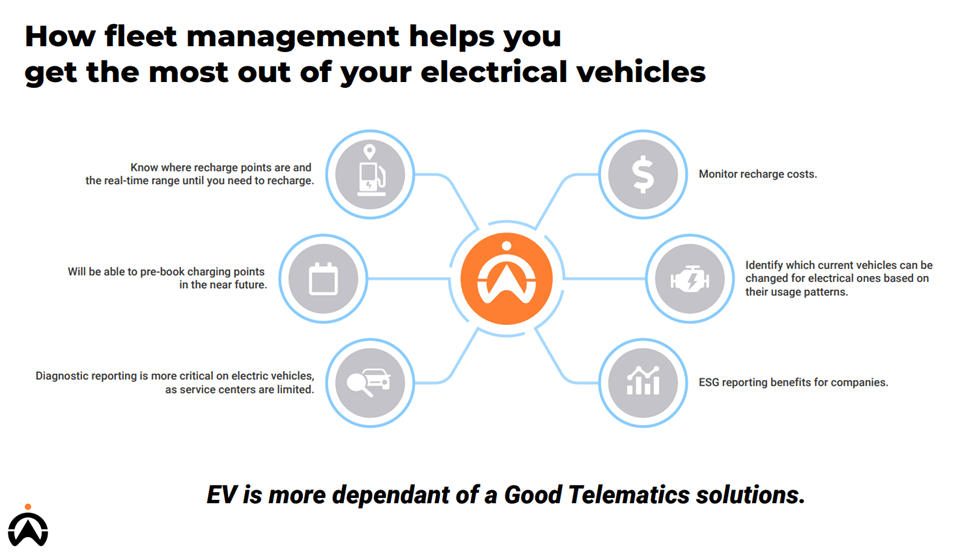
Fleet management can help fleet managers by providing real-time data on vehicle performance, battery life, costs and more. Companies that provide complete fleet management solutions, like Cartrack, can help fleet managers understand vehicle insights and fully optimise their fleets.

Our battery management solution provides real-time monitoring of the battery’s state of charge and temperature, allowing you to optimise battery life and prevent unexpected downtime.

Our fleet management platform and mobile app offer predictive analytics, which uses historical data and machine learning algorithms to predict when maintenance or replacement of the battery will be needed, reducing maintenance costs and ensuring the longevity of your vehicles.

Cartrack helps you stay compliant with local regulations and ensure your fleet meets sustainability goals. We offer support by informing you of how to take advantage of incentives and subsidies for the adoption of EVs. Many countries, like the USA, provide these incentives and promote the switch from fuel to electric vehicles.

Cartrack eases your range anxiety with smart reports. These reports display your speed while charging and our detailed trip reports show the energy consumed per trip. This information keeps you constantly updated on your range status and offers comprehensive reports through our fleet system so you no longer have to feel anxious about your EV’s range capabilities.

With Cartrack, you’ll have access to all the tools and insights you need to manage your EV fleet efficiently and cost-effectively. Our personalised solutions are tailored to your specific needs, ensuring that you get the most out of your EV fleet. Experience the future of fleet management with Cartrack.

Get fleet management solutions that work

Stay ahead of the competition and get the most out of your electric vehicles with Cartrack’s easy-to-use platform.

Learn how Cartrack can help you optimise your electric fleet for cost savings and sustainability.

Contact us today for a free quote.

Fleet Risk Management: Secrets Revealed To Make Your Fleet Thrive

Are you ready to discover the hidden ingredient that separates successful fleets from the rest? Successfully identify, assess, and mitigate potential issues in your commercial fleet that can impact your organisation’s goals and objectives with fleet risk management.

How can risk management achieve all this? Let’s get started.

What makes a fleet safe? — Risk management

You’ve probably heard of the saying “better safe than sorry”. It’s the principle behind risk management. Fleet risk management is the secret weapon companies use to ensure their drivers, other employees, and vehicles are always safe and secure.

We know life happens, so having a backup plan is important to mitigate those risks. This is where your plan B or risk management comes in. This hidden gem helps you foresee and prevent bad things from happening, like accidents, breakdowns, or theft. But effective risk management isn’t just about avoiding problems, it’s also about creating value.

How? Well, if you own or manage a fleet of vehicles, you want to make sure they’re operating at their best and ultimately working hard for the business, right? Managers must minimise the risk of breakdowns or accidents, to avoid expensive repairs and downtime. By implementing safety policies, conducting driver training, and maintaining vehicles regularly, you’re not just reducing risk, you’re also improving performance and cutting fleet costs in the long run.

What is the role of a fleet risk manager?

The fleet risk manager plays a crucial role in overseeing and managing risks associated with operating a fleet of vehicles. They are responsible for identifying potential risks and implementing strategies to mitigate them.

Their duties may include:

  • Developing and implementing safety policies and procedures to promote driver safety and minimise the risk of accidents.
  • Conducting driver training to improve skills and ensure compliance with safety policies and regulations.
  • Monitoring vehicle performance and maintenance to reduce the risk of breakdowns and improve fleet efficiency.
  • Implementing telematics technology to track driver behaviour and vehicle performance, using gathered data to identify areas for improvement.
  • Managing insurance and claims processes to minimise financial risk.
  • Staying updated with industry regulations and best practices to ensure compliance with the latest laws.

Fleet managers work tirelessly to protect their fleet at all times. They not only safeguard their vehicles and the business’s bottom line but also prioritise the safety of their employees. After all, the drivers are the ones behind the wheel, interacting with customers, delivering services, and moving assets from one location to another.

What_is_the_role_of_a_fleet_risk_manager

Unlock the hidden benefits of proper fleet risk management

See immediate results within your fleet with risk management. Unlike hidden secrets that take ages to reveal their benefits, risk management delivers instant advantages from the moment it’s implemented.

Reap the benefits:

1. Increased returns on investment: By keeping your fleet in top shape, you can avoid unexpected downtime and other costly issues, ultimately leading to higher returns on your investment. This can help you save money and invest in other important areas of your business.

2. Lower insurance premiums: When you manage fleet risks, you show your insurance company that you’re committed to safety. This can lead to lower insurance premiums, which can ultimately save you money.

3. Reduced business liability: If one of your drivers causes an accident, it could spell disaster for your business. By taking steps to reduce risk and improve safety, you can protect your business from legal battles and maintain a positive reputation in the market.

4. Heightened work focus: When you prioritise fleet safety, you create a culture that encourages your employees to take extra precautions with their tasks. This can help keep everyone in your organisation safer and more focused on the task at hand.

5. Less guesswork: With a risk strategy in place, you can predict and prevent potential issues before they happen. This helps you make more informed decisions leading to better outcomes for your business.

Why is fleet risk management important?

It’s reported that the risk management software marketwas valued at USD 27.80 billion just two years ago, in 2021, and is now projected to reach USD 86.53 billion by 2030. Many businesses are falling in line with investing in their fleet’s safety.

If you’re not yet convinced that your business needs a fleet risk manager, here are a few key aspects that could have you rethink your approach. Risk managers help:

Reduce costs – By preventing accidents, vehicle downtime, and legal issues, fleet risk management can save your business money in the long run. It also helps you optimise your resources and allocate them to other priorities.

Remain compliant – Compliance with local, provincial, and federal regulations is essential for any business operating a fleet. Failing to comply with regulations can result in hefty fines and legal issues that can damage your business’s reputation and harm your budget.

Improve driver safety – Fleet risk management helps you promote a safety-first culture in your organisation, reducing the risk of accidents and injuries. This can also lead to reduced insurance premiums and a more favourable risk profile.

Improve productivity – By minimising operational interruptions, fleet risk management can improve your fleet’s performance and productivity, leading to increased savings and better resource allocation.

Why_is_fleet_risk_management_important

Areas focused on by risk management

Fleet risk management covers a wide range of areas related to operating a fleet of vehicles. Here are five areas fleet risk management covers:

  1. Driver safety
    This involves implementing safety policies and procedures to promote driver safety and reduce the risk of accidents. This can include driver training, monitoring driver behaviour and implementing telematics technology to track driver performance with AI cameras and audible alerts.

    Monitoring drivers via telematics data can provide behavioural insights such as tailgating, late braking, or speeding. This can then be addressed through coaching safe driving and result in dramatically improving fleet and driver safety.

  2. Insurance and claims management:

    Fleet risk management includes managing insurance policies and claims processes to minimise the business’s financial risk. This can include working with insurance providers to ensure adequate coverage and managing claims processes to minimise downtime and costs.

    Fleet managers regularly review their policy terms with insurance providers to ensure the fleet’s insurance coverage is up to date, and aligned with business needs. This helps to explore opportunities for optimising coverage while minimising costs.

  3. Compliance and regulations

    One of the biggest headaches fleet managers experience is keeping up with the rules that govern commercial fleet operations and the related paperwork.

    Fleet vehicles should be fit for purpose, inspected regularly, and follow a planned maintenance schedule. All drivers should be fully trained to operate their assigned vehicles, be fully aware of the company’s safety policies and know the broader compliance regulations that it operates under. Plus, drivers should be in good health and hold a valid driving licence to drive.
  4. Fleet maintenance

    Maintenance is a vital part of fleet risk management as it directly affects driver safety and fleet efficiency. Fleet risk management involves developing and implementing maintenance schedules, monitoring vehicle performance, and conducting regular inspections.

    With fleet technology, managers can efficiently maintain their vehicles by monitoring engine data, tyre pressure and braking systems, this ensures optimal fleet performance and increases vehicle longevity.

  5. Asset management:

    Fleet risk management involves managing fleet assets, including vehicles, equipment, and facilities. This can include developing asset management plans, monitoring asset performance, and implementing strategies to reduce asset loss or damage.

    Take a construction company for example, managers oversee a fleet of excavators, bulldozers, loaders etc and can accurately track the usage of each piece of equipment, and identify unusual idle times or underutilised assets.

  6. Telematics and GPS technology:

    The use of telematics and technology can help fleet managers identify potential risks, monitor driver behaviour, and improve overall fleet performance. This includes GPS tracking, driver scorecards, and real-time monitoring of vehicle data.

    Fleet managers can use this type of technology to improve equipment visibility, seeing the real-time location of their assets without depending on their drivers to inform them of their whereabouts.

Daily fleet risks

In the world of mitigating risks, every day brings its own set of challenges. From unexpected accidents to rising fuel costs, being aware of these day-to-day risks is the first step towards developing strategies that can overcome these challenges.

Here are some potential fleet risks you can encounter:

  • Vehicle collisions and other accidents
  • Costly vehicle repairs
  • Driver and motorist injuries and fatalities
  • Legal, medical, and other liabilities
  • Property and asset damage
  • Fines and other penalties for violating regulations
  • Vehicle theft and highway robberies
  • Vehicles getting caught on fire (e.g., when carrying highly flammable items)
  • Cargo loss and damage
  • Theft and vandalism
  • Insurance and liability

This long list still doesn’t cover the full extent that fleet risk managers have to oversee and control. Depending on specific industries such as food and pharmaceuticals, risk managers are faced with unique elements they have to take care of to ensure everything runs smoothly daily.

Luckily, fleet management systems are equipped to help.

Daily_fleet_risks

How fleet management systems keep risks under control

Advanced technology such as Cartrack’s smart telematics has given fleets the ability to leverage millions of data points to make better decisions in risk management. Managers can employ a variety of telematics to lower risk and make operations safer and more efficient.

Fleet management can be an effective solution to keeping fleet risks under control for several reasons:

Telematics: Telematics technology uses GPS tracking and other sensors to collect data on vehicle performance, driver behaviour, and other key metrics. Fleet managers can use this data to identify areas of risk, such as speeding or aggressive driving, and implement strategies to improve driver behaviour and reduce accidents.

Data-driven decision-making: Fleet management relies on data to make informed decisions about risk management. By collecting and analysing data on driver behaviour, vehicle performance, and other key metrics, fleet managers can identify areas of risk and develop targeted solutions to address them, as well as track improvements over time.

Proactive approach: Fleet management takes a proactive approach to risk management, which means that potential issues are identified and addressed before they become major problems. By implementing preventive maintenance programs, driver safety training, and other proactive measures, fleet managers can reduce the likelihood of accidents and breakdowns.

Compliance: Fleet management solutions can help fleet managers ensure compliance with regulatory requirements related to vehicle safety and maintenance. By staying up-to-date with the latest regulations and implementing strategies to meet these requirements, fleet managers can reduce the risk of fines, penalties, and other legal issues.Additional devices include:

Additional devices include:

  • GPS tracking devices offer real-time location tracking and other vehicle data on both powered and non-powered assets. They also support better route decisions based on the latest road, weather and traffic condition information
  • ELDs (Electronic Logging Devices) give fleets the ability to collect and transmit reports that are needed to meet compliance mandates

  • Dash cams offer real-time images/footage of what is happening both inside and outside a vehicle
  • Fuel cards give managers control over when and where fuel is purchased and by which driver

How_fleet_management_systems_keep_risks_under_control

The ultimate secret revealed: Cartrack fleet technology

With the ever-increasing number of vehicles on the roads, fleet risk management has become more difficult to manage.
Cartrack provides technology and services designed to help fleet managers ease through this process with their fleet solutions.

Real-time monitoring: With installed tracking units and Cartrack’s fleet management platform, vehicle tracking technology allows fleet managers to stay connected to their fleet at all times with accurate vehicle location and instant notifications. Cartrack also offers a Geofence feature that allows you to set virtual boundaries around areas and receive real-time alerts whenever your vehicle enters or exits these areas.

Driver behaviour analysis: Cartrack’s technology also includes driver behaviour analysis through driver scorecard reports that indicate unsafe driving behaviours like harsh speeding, braking and turning, and AI cameras with in-cabin audio alerts that go off when drivers show signs of fatigue or distraction. This can help fleet managers provide targeted training and coaching to those unfocused drivers, ultimately improving driver safety and reducing the risk of accidents.

Maintenance tracking: Cartrack’s fleet management system keeps track of each vehicle’s mileage, engine hours, and time intervals between services to help ensure that vehicles are properly maintained and serviced on schedule. Managers are informed of the on-coming vehicle service through auto-generated reminders when a vehicle reaches its maintenance threshold. This can reduce the risk of breakdowns and other issues leading to downtime.

Accident management: In the event of an accident, Cartrack’s telematics technology can detect sudden impacts or collisions and instantly send a notification of the event to fleet managers while their tracking units further help by quickly locating the vehicle and prompting a quick response to send emergency personnel to the incident. This can help save the driver’s life and reduce the risk of damage to other motorists and your vehicle.

Remain compliant:Easily manage and automate your regulatory compliance throughout your operations with these Cartrack tools:

  • Time tracking: This enables tracking of driver work and break times, preventing vehicle operation if the driver doesn’t take their full break time, ensuring drivers get the necessary rest periods.
  • Automated compliance management: Automate regulatory compliance and track fleet requirements such as insurance, permits, and contracts through Cartrack reminders.
  • Real-time risk alerts: Prevent violations with Cartrack’s fleet compliance software that provides real-time alerts about compliance or operational risks and prevents unauthorised vehicle or machinery usage until the risk is handled.

Specialised sensors: Cartrack offers a range of specialised sensors that cater to diverse industries. With sensors such as CANBus vehicle diagnostics, cargo door monitoring, temperature monitoring, and seat pressure sensors, Cartrack empowers various industries like transportation, logistics, construction, security and perishable goods to enhance efficiency, security, and safety.

All these smart features and services from Catrack, help fleet managers become more vigilant to potential risky events and alleviate or at least lessen their daily stresses with top-notch fleet management solutions that can help identify and mitigate risks and keep their fleets running safely and efficiently.

A fleet management company that can reduce fleet risks

Looking for a reliable solution to help manage and mitigate fleet risk? Cartrack offers a comprehensive suite of telematics and fleet management services that can help keep your vehicles, drivers, and assets safe and secure.

Contact ustoday to learn more about how we can help your business!