
5 Classic Cars for that retro feeling

Vehicles sure have come a long way since Karl Benz built the first automobile in 1885 in Mannheim, Germany. From a basic design and engineering concept that was more akin to the prevailing horse carriages of that period, cars have become sleek, modern and technologically advanced modes of transport. In fact, we’ve come so far, that most cars may soon have no driver at all.

Despite this progress, nothing beats the allure of the vintage cars of yesteryear. There’s something extremely appealing about the look and feel of a vehicle circa the 50’s or 60’s. Perhaps it’s the fact that these cars were built with comfort, solidity and class at the forefront of design.

To make you feel the nostalgia, here’s a look at some classic cars:

1961 Jaguar E-Type

1961 Jaguar E-Type

Image: historics.co.uk

Vehicles from British automaker Jaguar have always oozed class and style, and the E-Type, which was released in 1961, exemplifies this pedigree. While it certainly has a classic design, it still evokes a modern feeling and would fit in well with contemporary Jaguar cars. This vehicle has received high praise from none other than Enzo Ferrari, who called it “the most beautiful car ever made”.

1969 Ferrari Dino 246 GT

1969 Ferrari Dino 246 GT

Image: classicandperformancecar.com

Speaking of Ferrari, you can’t ever go wrong with a car from this prestigious brand, especially a classic vehicle like the 1969 Ferrari Dino 246 GT. The soft lines on this car are representative of its fast, slick and playful nature, and it is a perfect throwback to the birth of sports vehicles.

1969 Toyota 2000GT

1969 Toyota 2000GT

Image: classicandperformancecar.com

Many modern-day drivers don’t often associate Toyota with “cool”, but there’s no doubt that this vehicle would fit into that category. It’s elongated front and general design positively reeks of something that James Bond would drive, and the vehicle, in general, is more akin to an Italian roadster than the dependable vehicle so widely associated with modern Toyotas.

1957 Mercedes 300SL Gullwing

1957 Mercedes 300SL Gullwing

Image: simpletire.com

Mercedes has always had a reputation for being the leaders in producing cars that exude status and classical style. This car from 1957 wasn’t any different, with its “gullwing” doors only one element of its “cool” factor. In actual fact, the 300SL was the fastest production car of that period, which meant that you wouldn’t have felt out of place feeling like Batman when you drove the car.

1964 Aston Martin DB5

1964 Aston Martin DB5

Image: autoblog.com

Who wouldn’t be enticed about the prospect of driving James Bond’s car? The vehicle most associated with James Bond is the 1964 Aston Martin DB5, which first appeared in the Bond film, Goldfinger in 1964. This car is not only quintessentially British but quintessentially a car of the 60’s, evoking a timeless and classic design and drive.

Whether you’re driving a classic car or a modern powerhouse, let Cartrack protect your “baby” with our world-class vehicle tracking and recovery services.

Related: Top celebrities obsessed with cars

We always hear and read about that old cliché that “celebrities are just like us”. While there is some hyperbole attached to that statement considering the rather privileged and fame-filled life they lead, celebrities do indeed share many of the same passions of us regular folk. One of the most common celebrity thrill is their interest in cars. In fact, there are numerous celebrities that are positively obsessed with vehicles. Read More…


Industry Leaders

Cartrack is the industry leader for car tracking and stolen vehicle recovery. We boast an auto tracking service to more than 670 000 vehicles around the world. Our loyal and trusted services, combined with our state of the art GSM technology, have made us the international go-to car tracking company. Our main priority is the contentment of our customers and we are driven to deliver the latest and most reliable car recovery and tracking systems in the industry. Cartrack is an international and well-respected brand worldwide. We hold a strong auto tracking presence in countries such as South-Africa, Europe and South East Asia.

Our primary priority lies with stolen vehicle tracking, vehicle recovery and device fleet tracking.

What makes these systems unique is the technology we use that offers:

• GPS and GPRS that derives with an internet based driving monitoring software
• Economical text messaging
• Vehicle navigation
• Insurance Telematics
• Premium optimisation
• Stolen vehicle recovery within 24 hours
• Emergency control centres

Cartracks’ teams have an on-going involvement in the manufacturing and procurement of the Cartrack software and systems, which offer clients the highest standards in worldwide vehicle tracking technology. Our dedicated in-house design team make us the number one vehicle tracking and recovery company in the world.

Services include:

• Stolen Vehicle Recovery
• Fleet Management
• Insurance Telematics
• Communicator
• Mi Fleet

Our Mission

Cartrack is fully dedicated to maintaining its industry leading position and we are the most trusted stolen vehicle recovery, insurance telematics and fleet management company. Being an international company, we strive to remain number one with our unfailing service excellence and superior technology. Customers will always remain our top priority, thus we have made it our mission to provide the ultimate customer service.

Social Responsibility

PMR – An Africa survey which is completed every year per province to measure companies economic growth and community development, ranked Cartrack the number one company in the North West and KZN in 2011. Cartrack will continue to be socially responsible and provide better prospects to our community.

Our Approvals

The TT100 is a South-African based program which identifies companies and individual role models who earned a respected role in technology development. Due to our advanced service technology, Cartrack has achieved a rating within the Top 100 of the TT100 list.

If you are looking for industry advanced excellence and high-quality auto tracking and vehicle recovery systems, then look no further than Cartrack… putting you back in control.

Safety – Putting your fleet first

After working with quite a few companies I’ve realized that the concept of safety on the job eludes people still. It’s a simple practice that should be the bare minimum a company can offer. Yet, safety on the job, despite of company size, isn’t considered critical. It is perceived to be a convenience where as it should be a mandatory practice especially for businesses with fleets. Small businesses, in particular lack the manpower for adequate supervision of employees, dedicated safety directors or fleet managers, and often utilize underdeveloped or completely lack formal safety training programs. Vehicles with proper fleet management software can help bridge the gap between small and large fleets by effortlessly identifying problem areas using data and reporting tools.

With this in mind, it’s clear that fleet safety should be made a critical concern for the business. Should an accident occur, a business can be informed at the earliest and help can be on its way. This is a prompt way to deal with the urgency at hand rather than hoping to get spotted by a Good Samaritan on the road. A well-managed and safe fleet of vehicles can result in a more profitable business, better customer service and increased safety, among a myriad other benefits.

Drivers can be rated by their driving behavior. Performance can be judged on factors like harsh cornering, rash driving and idling. Good driving behavior can be patronized by incentivizing drivers that rank well on the above stated factors. The drivers who aren’t performing well can be made to undertake relevant trainings that help improve their rank. By training your fleet drivers and giving them verbal feedback, managers could help avoid possible hazards and accidents. Businesses with fleet management software in place get detailed vehicle and driver data reports. These reports in turn help understand the driver behavior and any issues with the vehicle and both can be handled well in advance. Cartrack helps you give your fleet that well deserved peace of mind. Cartrack will ensure the safety of your fleet and alert fleet managers in times of distress. Precaution is better than cure, and that is exactly how this fleet management software works. Information about anything amiss gets red flagged and is brought to attention to avoid any mishap. It is time that organizations understand the importance of safety of their employees. Safety of the employees should always come first not due to reasons of liability but for the fleet’s welfare.

Reducing Labour Costs in Fleet Management

The weekend just went by and most of my weekends include a lot of networking. In such networking events conversations start about anything from current affairs to the exhausting schedules that profession involves. As a fleet manager it is very common for me to get reminded of work and various fleet related aspects. This is a common occurrence when I hail car -as-a-services, it helps me reflect. Needless to say, we have all had those cab rides that left us hanging onto dear life, hoping that we make our destination on time. It is quite interesting, however, to address the intricacies involved in becoming a “good” cab driver. Not only are the customer reviews critical to their rating, fleet managers around the world are taking massive leaps towards ensuring a disciplined schedule to cab drivers’ daily routes in order to reduce labour costs and increase efficiency.

The foundations for such an intricate system are laid by creating a schedule that involves the least amount of idling, and the most efficient routes possible for every driver from his first trip in the morning to his last to the night. By implementing planned and accurate routes for all drivers, fleets refine dispatch schedules and minimize path coverages to augment cost effectiveness of every driver. Drivers signing out for a snooze, taking extra time for lunch or falsifying records is in the past, with telematics overshadowing every other aspect of monitoring and evaluation. Drivers now have to be privy to a series of different reports that encompass every aspect from objective driver safety to consolidated efficiency reports. Time management allows drivers to efficiently maintain a radius that is conducive to their general area of operation, and also inhibits excessively aggressive driving by sustaining average distances to an optimum level.

Nowadays, fleet managers are provided access to reports that consider behavioural patterns of drivers on daily basis. These patterns are recorded, analyzed, and evaluated over time. By providing data regarding start to end journey of a vehicle, extra usage of vehicle apart from working hours, odd hours movement of vehicles, and reducing the total distance travelled, fleet managers gain an overarching perspective of how every driver operates in the larger system of the fleet. Such reports can also provide fleet managers with insights into how they must manage their insurance premiums for ever driver and vehicle by providing better premiums for drivers that have higher overall ratings. Not only this, one can also avail the details of vehicle breakdowns by regularly maintaining the vehicle and thereby, be aware of the flaws in the vehicle and get it regularly serviced, so as to avoid any roadside interruption, which is the worst nightmare for the driver as well as for the enterprise’s value for time and money.

By maintaining such a keen eye over each driver, the output per vehicle for the company also increases. With fewer overheads to worry about, drivers concentrate on getting more jobs in lesser time, reducing the labour cost for the firm and increasing revenue per vehicle. Not only do such solutions keep drivers satisfied, they garner better dispatching as well as greater client appreciation which is often reflected in the reviews of the individual driver as well as the enterprise. Telematics can also provide information about the condition and output of the vehicle, which directly relates to cost. Fleet managers must establish a culture and practice of regular maintenance and servicing of vehicles, which if not done, adds up to 5% of the original cost per vehicle.

What we observe as patterns apropos fleet managers is the intense scrutiny that they provide in assessing efficiency, and finding novel ways and means to increase efficiency and reduce labour cost. Enterprises like cartrack.com provide such comprehensive services in fleet management and telematics that every variable of a driver’s behaviour is recorded, analyzed and evaluated. This not only helps drives feel guided and supported, it also helps improve their performance and rating over time, making their services more worthwhile over a course of time. By provision of pool services and shared routes, fleet managers can also reduce the number of seats that go empty in a car on a daily average. Pool services work on permitting single drivers to cover specific areas in specific time slots in order to reduce the number of idle vehicles, while distributing time slots amongst drivers that operate in those areas. Such innovative measures go a long way in mitigating the labour costs that are incurred by enterprises that provide large scale services. It could be worthwhile engaging in a conversation with the drivers from your fleet. It can help gain fruitful insight into the practices that they follow. Not only does this help make these private services more efficient, it also possesses an efficacious value for those people that are the building blocks of such services.

Vehicle Maintenance 101

It’s been a week almost that I’ve been suffering from this severe migraine. It took me a week to go see a doctor. When your own health takes a backseat; other important tasks are bound to lag behind. Today’s age of IMs and video conferences don’t leave much time for working professionals. It’s a fast paced life, with work getting done on the go. Oil changes and car services sometimes don’t make the cut when fighting against getting more sleep.

Ignoring that awful noise coming from your car once in a while is ok, right? Wrong. During the cooler months, keeping your vehicle running smoothly and efficiently is of utmost importance. The last thing you want on a rainy December evening is getting stuck on the side of the road during a nasty storm. Vehicle maintenance should be taken seriously, not doing so can leave you open to risks. Interestingly, one of the most asked questions while buying a vehicle is about its maintenance costs. No wonder, discussions among vehicle owners about improved mileage and low maintenance costs are never ending ones. So, we curated some pointers that will help you get more out of your fleet, and spruce up your workhorses.

• Monitor fuel and oil consumption
• Avoid excessive idling
• Say yes to tire care; it’ll help you go a long way. Quite literally.
• Sudden accelerations, although a lot of fun, could hurt your vehicle in the long run.
• Vehicle malfunctions are silent alarms and should be addressed at the earliest.
• It’s a must to have an Inspection Report that allows due assessment of the vehicles to nip any issues before they lead to malfunctions.
• Pre -trip and post trip inspections can help detect any performance issues early on.
• System longevity can be put to risk by fuel additives, thus causing the engine harm.
• Downsizing costs with efficient routing and load optimization.
• Improving the accountability with understanding of the transport chain.
• Prepared for sudden contingencies, to alter delivery plans accordingly.
• Educating and training drivers with driving habits and emergency situations.

Other than these issues the general health of a fleet can be tended to, by keeping the following in mind.
The most important thing all year round on the road is the braking system in good working condition. Any ignorance regarding the brakes is dangerous. My father once told me, brakes are the easiest to take care of; they talk to you if they have a problem. So, any squealing, grinding or difference in the pressure while applying brakes needs to be inspected. Modern brakes systems are sophisticated and easier to care for, with electronic sensors and interrelated safety features in place. It’s hence important to have your brakes serviced by manufacturer-trained service technicians for your make of vehicle. An often overlooked item is the windshield wiper and wiper fluid. These should be checked and replaced/refilled as necessary to help your windshield stay free of cracks and chips.

A good battery can make all the difference to your vehicle. With your battery working extra hard during the colder months, it needs that extra care. The difference between a vehicle instantly humming to life and a vehicle being jump-started on the side of the road is a dead battery. It is always a good idea to have checks in place and avoid unexpected failure. Visibility on the road is an absolute must, so headlamps, tail lamps, fog lamps, parking lights and reverse lights are important. Make sure they are all functioning properly and replace any that are out.

These issues, when they do crop up will need intervention from the management. The key lies in the timely reporting of the issues at their onset. Does the company possess a system that helps communicate these issues to the concerned authority in time to help prevent damages? Is it reliable? That’s where fleet management software comes in. Regular maintenance might sound time consuming and a bit of a hassle. However, in the longer run it will be the cheaper alternative than having your vehicle be a part of a malfunction that threatens fleet safety.

A robust vehicle maintenance program will seem like a miracle 5 years down the line and will pay for itself. It is crucial to make repairs at the earliest and Cartrack can help avoid the hassle with alerts about upcoming vehicle maintenance. Cartrack’s fleet management software will help track everything from time spent idling, mileage, fuel and oil consumption and more with timely alerts for the maintenance that is due.

Petrol price set to rise again

Already buckling under the pressure of a petrol price of more than R15 a litre, motorists will have to brace themselves for yet another imminent hike, with mid-month data suggesting that there will soon be a 29 cents increase a litre in both petrol and diesel.

This time around, the vulnerable Rand is largely to blame for this bad news owing to the fact that our currency has steadily weakened against the US dollar since the start of June. Coupled with the increased oil price, these factors have resulted in this pain that we are experiencing at the pumps.

There’s more bad news than simply what you’ll pay when filling up; the rising petrol price will also have a negative knock-on effect on the economy. Here’s a sample of some of the other goods and services that are likely to rise due to the petrol increase:

Food products
The price of our groceries is always strongly linked to the cost of transporting those goods to the supermarket. As such, one can expect to see an increase in our normal food items, especially staples such as bread, milk and fruits and vegetables.

Clothing
Many clothing items are either shipped or flown in from overseas, and the higher fuel price will, therefore, affect the cost of these items.

Eating out
Much like groceries are expected to rise, it’s likely to be more expensive to eat out owing to the impact that higher fuel prices will have on the delivery of food and ingredients to restaurants.

Holidays
The rising fuel price is going to make it that much more expensive to pack the car and scurry off to your favourite holiday destination at the coast.

Luxury items
Once again, as these items are often flown in from overseas, an additional markup will have to be added on to cover the increased price of obtaining these products.

General leisure activities
Most of your favourite leisure spots such as clubs and stadiums rely on the transport of goods for the entertainment they offer to you. They will now have to charge you more for your fun in order to cover the cost of the increased fuel price.

While the rising petrol price may be giving you headaches, you don’t have to stress about the safety of your car- simply get a tracking device from Cartrack. Contact us today to find out more.

If you happen to manage a large fleet, Cartrack can help you save fuel in your business with our fuel monitoring product.

Is it better to offer a travel allowance or a company car?

New requirements for travel reimbursements from the South African Revenue Service (SARS) has raised a number of questions regarding whether it’s better for companies to provide their employees with a company car or a travel allowance.
This conundrum has been raised due to the removal of the 12 000 km limit that previously applied to reimbursements. Under this scenario, Pay-As-You-Earn (PAYE) tax was not deducted from the employee’s income, as long as the employee was reimbursed at a per-kilometre rate that was higher than prescribed by SARS, or another travel allowance was paid.
However, since March 1 this year, employers have to split the reimbursement into two components should they reimburse staff at a higher per-kilometre rate than prescribed by SARS.

Essentially:

  • Any portion that falls within the SARS rate has to be declared using the code 3702
  • Any portion above that rate must be reflected under the new code, 3722
  • Should the employer also pay a fixed travel allowance, this must be declared separately under the code 3701

The New System
Under the new system, any excess, reimbursed portion will be subject to PAYE, which is how it already is with a fixed travel allowance or fuel, garage and maintenance cards. Any reimbursement that falls below the prescribed rate will not be subject to PAYE, as it was previously.
However, the removal of the 12 000km limit and the introduction of PAYE on the excess portion will significantly affect the reward dynamics. In particular, employers that reimburse staff far above the prescribed rate, will need to review the new rule so that their staff can enjoy maximised cost and tax benefits.

How can an employee benefit?
An employee may have more money put into their pocket, as there is no PAYE on a lower reimbursement rate while the reimbursement does not have to be substantiated by a logbook when the employee files his or her income tax return. In either scenario, having to comply with this new law means that all employers will be compelled to maintain logbooks, even if the employee is not claiming on a tax return. Cartrack offers easy-to-use logbooksthrough its fleet management packages.

What should employers do?
It might be more beneficial for companies to introduce a company car. As a general rule, if 60% to 65% of an employee’s travel is for business purposes, it is better for them to us a company especially since extraneous factors such as insurance, maintenance and depreciation constitute at least 50% of the total costs of owning and using a car.

Image credit: Freepik

How do GPS trackers work?

We’ve all benefited in recent times from Global Positioning System (GPS) technology, and it is quickly becoming an integral part of our lives. You may have also considered investing in a GPS tracker for your vehicle, with Cartrack offering a range of outstanding stolen vehicle recovery and fleet management options that are tailor-made for you.

How much do we actually understand about this technology though? Read below to find out more:

  • What are GPS trackers?

GPS stands for Global Positioning System. A GPS tracker is a portable device that can be fitted into any vehicle and which enables that vehicle to be remotely tracked. Modern GPS trackers are able to provide real-time information on both the vehicle and information surrounding a trip, including speed and location data and driver behaviour through telematics technology.

  • Who typically uses GPS trackers?

Anybody that owns a vehicle and is worried about it being stolen is inclined to use a GPS tracker. Owners of large fleets of trucks or vehicles also like to use them or even parents of teenagers that have recently started driving – this technology enables them to monitor their child’s driving patterns and routes and safely guide them through these novice years on the road.

  • How does GPS tracking work?

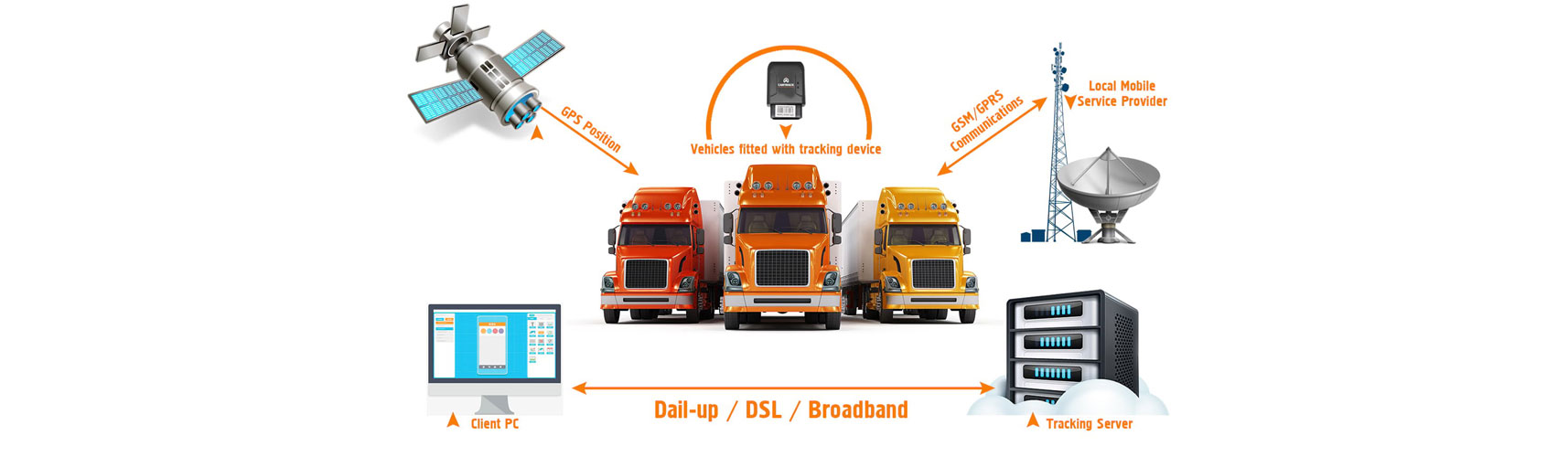
A network of satellites is used to specify the location of an object or person attached to the GPS device. The physical location of this object or person is determined based on its distance from three GPS satellites- this process is called trilateration and is the same technology that a portable or in-car navigation system uses. Typically, a GPS tracker will use the same technology that cellular networks run on, which is called Global System for Mobile communications (GSM). Handily, software on your phone, tablet or computer allows you to view your vehicle’s location in real-time once the GPS tracker is installed in the vehicle.

  • Why use GPS tracking in a vehicle?

A GPS car tracking device lets you know where your vehicle is at all times, which is especially useful if you’re worried about your vehicle being stolen or hijacked – the GPS technology makes the job of both law enforcement authorities and private companies such as Cartrack easier in locating and recovering your vehicle.

The real-time data collected through telematics technology also allows fleet managers to oversee and moderate drive behaviour and implement the necessary changes that will improve safety and reduce operational costs arising from poor driving. These fleet managers are empowered to better coordinate daily operations, while some require this technology to track mileage for either reimbursement or bookkeeping purposes.

  • Are GPS trackers in vehicles Legal?

It is perfectly legal to install a GPS tracker in your own vehicle. However, in all other circumstances, it is usually illegal and you should, therefore, proceed with caution and should rather refrain from installing a GPS tracker, especially on other people’s possessions.

Road safety laws you may not know

When it comes to driving and road safety, you might think that you’re completely in the know regarding what is legal and what is decidedly illegal. However, while it’s common knowledge that you shouldn’t overstep the speed limit, stop at red traffic lights and stay on the left side of the road, there are also several lesser-known laws that the average motorist may be unaware of.

Here are some laws related to driving and road safety that you may not know:

It’s illegal to smoke in a car if a child is present

While many smokers feel slightly aggrieved that their freedom to smoke in public has been restricted in recent years, they take comfort in being able to light one up while on their daily commute. However, even though these smokers are allowed to smoke in a vehicle if they’re on their own or in the presence of adults, they are not allowed to smoke if children are in the car. This is according to Section 2(1)(a)(iii) of the Tobacco Products Control Act, 1993, which states that “no person may smoke any tobacco product in any motor vehicle when a child under the age of 12 years is present in that vehicle.” There is also quite a hefty penalty to pay for breaking this law, with a R500 fine imposed.

Undertaking unlawful towing

You might think as soon as you get your licence that you have carte blanche when it comes to towing your car. However, you would be wrong to assume that, as with a regular driver’s licence (Code B), you are only permitted to tow trailers lighter than 750 kilograms. Should you want to tow a trailer heavier than that, you will need to be in possession of a Code EB licence.

Warning other motorists about roadblocks

It’s become a trend lately for motorists to “look out for each other” and subtly alert fellow drivers to roadblocks by either flashing their lights or even posting messages on social media. This seemingly innocent action could mean though that you run afoul of the law, especially as roadblocks are primarily intended to snare wanted criminals. By alerting other motorists to roadblocks, you could be seen as ben an accomplice to a criminal.

Using a cell phone while driving

Many motorists are still unaware that they are not allowed to use their cell phones at all while driving and will often take chances with their mobile devices on the roads. In actual fact though, the South African National Road Traffic Act prohibits all activities related to a cell phone while driving, with a fine up to R750 that can be imposed if caught in the act. This law recognises that many accidents are often the cause of distracted drivers who are either speaking on their phone or sending text messages.

You can’t transport children in the back of a bakkie for money

On 11 May 2017, a new law came into effect prohibiting the transportation of schoolchildren (for compensation) in the goods compartment of a bakkie. This law was devised in order to address the “bakkie-taxis”, whereby drivers are compensated for transporting children in bakkies in rural areas, as this is often the only way they can get to school. If you’re brave enough to take on this law, you’ll be on the receiving end of a R2,500 when the vehicle is confiscated. Additionally, you’ll have to pay a R7,000 fine to release the impounded vehicle on the first offence, a R10 000 fine to on the second offence, and a R15,000 fine on the third offence.

Once you’re fully aware of your rights on the road, make sure that you protect your precious vehicle by getting a tracking device from Cartrack. Contact us today to find out more.

How fleet management can improve road safety

Road safety is one of the gravest concerns for South African motorists, with statistics from the Road Traffic Management Corporation (RTMC) annual road death statistics revealing that from January to December 2016 shows that 14,071 people died on South African roads, a 9% increase on the 2015 figure of 12,944.

One of the best ways to counter this trend is to implement fleet management practices that can help ensure that your vehicles and drivers are kept safe on the roads. In particular, it is beneficial to invest in vehicle telematics, which refers to the tracking and diagnostics of vehicles.

Through either a GPS system or a cellular triangulation platform, fleet managers can track the journeys of their vehicles and the actions taken during the course of a day by their drivers. Precise data can also be extracted from driver’s trips from the tracking system and onboard. Subsequently, fleet managers can identify areas in which their drivers are not following the rules of the road and endangering both their lives and the lives of other motorists. This data can include:

Engine speed management

Fleet managers can better manage how their engine is performing with information provided on the engine’s Rev’s Per Minute (RPMs). Subsequent mediation with drivers will help to prevent this behaviour and result in improved and therefore safer performance from vehicles within a fleet.

Speeding Reports

This report provides a clear indication how often drivers in a fleet exceed the legal speed limit on their routes. Customers can also pre-determine a maximum speed for their drivers, and duly receive reports related to when they exceed this speed limit. This function enables fleet managers to control over-speeding drivers and prevent potential accidents.

Fuel Consumption

Data can be provided relating to fuel consumption with the intention of improving fuel management, receiving details on fuel consumption and Co2 emissions. Better fuel management not only saves costs, but also ensures that drivers are less likely to run out of fuel on long trips, thereby preventing unnecessary mishaps related to fuel shortages or loss.

Route profile and difficulty

Information can be provided on variables relating to the route that the driver has taken, including the total distance driven, the total ascent and descent and the average uphill and downhill gradient. More information is also provided on actions that the driver has taken during the route, including accelerator and brake pedal frequency, gear change frequency and the average speed recorded. Providing drivers with remedial guidance in relation to these actions will result in better driving behaviour on the roads.

When it comes to fleet management, nobody does it better than Cartrack. Through dedicated GPS monitoring, Cartrack clients are always aware of their fleet’s activity. Customers can locate all the vehicles in their fleet, accurately shown on our web-based street-level map, in real-time. Clients can use their PC or smartphone to monitor their fleet, with no additional software required.