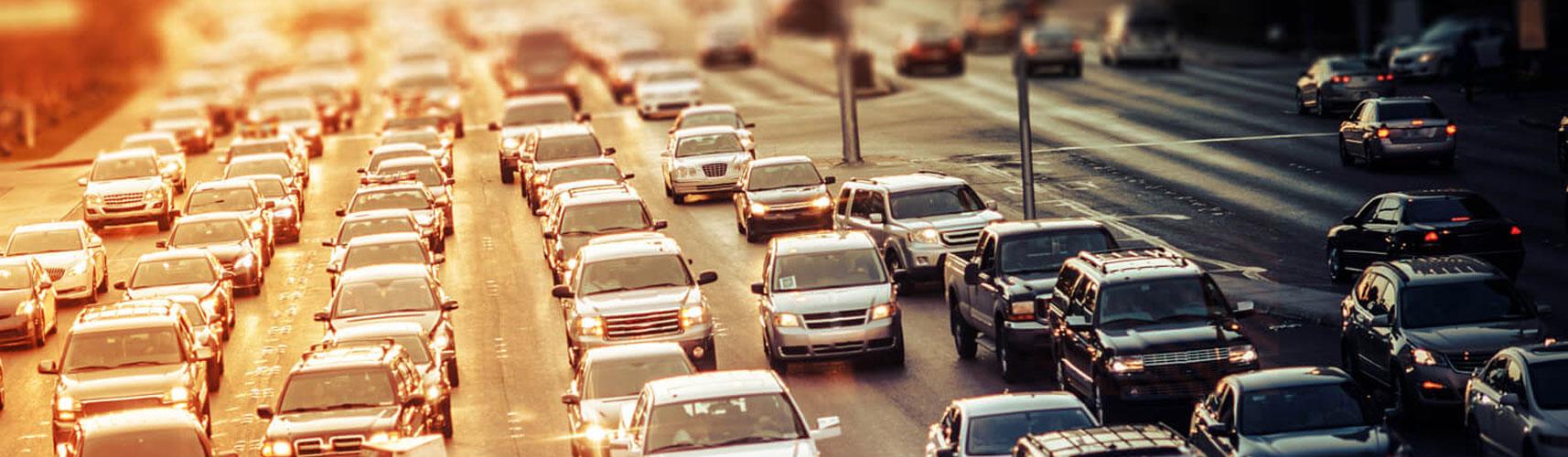
Petrol price surges towards a record R16 a litre

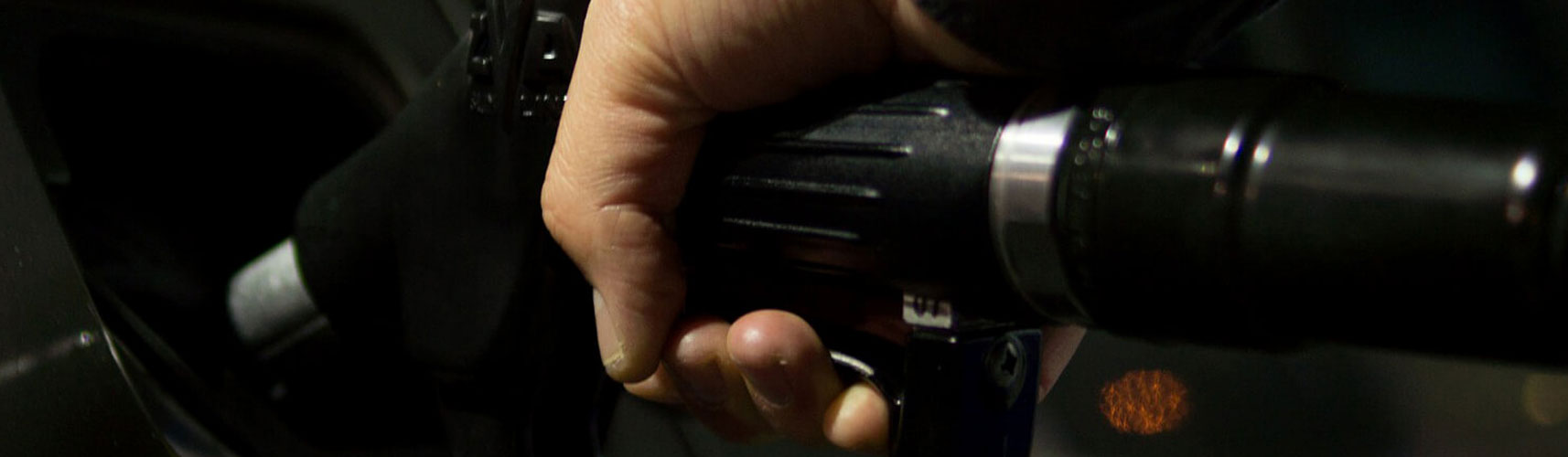
South African drivers are going to have to brace tight, as the Automobile Association (AA) has forecasted that the petrol price could be hiked up to 85 cents per litre in June, while the diesel price could increase by 87 cents a litre and illuminating paraffin will be 82 cents per litre more expensive. Even more shockingly, it’s possible that the price could even rise to R17 a litre in July.

There are several factors causing these shocking increases, but the main cause is the volatile oil price and the country’s fluctuating exchange rate. Political uncertainty surrounding Iran, OPEC and a trade war started by US president Donald Trump are all contributing to the increased oil price, while the weakening of the rand compared to earlier this year has also not helped.

It’s worth noting that R7,50 of the fuel price is fixed; the rest of the price can be attributed to extraneous costs such as fuel levies (R3,50), the Road Accident Fund (R2) and transport and distribution costs.

To try soften the blow of this news, here are some tips on how to save petrol:

  • Only use the heater when necessary
  • Don’t accelerate to red lights
  • Don’t speed unnecessarily
  • Don’t use the clutch unnecessarily
  • Don’t drive in the incorrect gear
  • Don’t overload your vehicle with unnecessary objects
  • Make sure that you service and maintain your vehicle to increase fuel efficiency
  • Don’t idle in traffic
  • Make sure that you plan your route properly and don’t get lost

If you happen to manage a large fleet, Cartrack can help you save fuel in your business with our fuel monitoring product. Click here to find out more.

How to prepare your vehicle for winter

As temperatures around South Africa begin to plummet, we’ve all begun mental and practical preparations for winter, from breaking out blankets and beanies to buying heaters and stocking up on hot chocolate. One of the facets of winter that is often neglected is making preparations to protect your vehicle against the elements. Failing to do so cannot only result in your car breaking down, but also result in accidents on the road.
Here’s how you should prepare your car for winter:

Check your tyres

In certain parts of the country, such as the Western Cape, it is especially important that motorists attend to their tyres during winter, as this is a period that sees increased wet conditions on the road. As such, you should always ensure that your tyres are in good condition, not worn, and inflated to the correct pressure. It is especially important to take these precautions as the danger of worn tyres can be even more apparent in the snowy, icy or wet conditions that occur in winter. The law also requires you to take precautions, with each tyre being required to have a tread of at least one millimetre.

Check your battery

A vehicle’s battery tends to experience more problems during winter as the starter draws increased amps in order to crank the cold engine. Subsequently, this could result in you being stranded with a dead battery. The best way to prevent this scenario is to ensure that your battery is in a proper working condition. It’s essential to consistently check that the water (electrolyte) levels in the battery are correct and to top it up if necessary with distilled water. It’s also important to keep the battery clean (with warm, soapy water), to make sure it’s secured and to charge it regularly. Should you have trouble starting your vehicle in winter, be careful not to rev the engine, as this action may cause damage to the battery as well as the starter and electric components.

Check your windscreen and wipers

Undoubtedly, if your car is parked outdoor overnight, you’ve often arrived at your vehicle in the morning after a cold night and discovered a sheet of frost on your windscreen and wipers. It’s essential that you take care when disposing of this frost – don’t use warm water to clean it as your windscreen could crack. Rather make sure that you use an item such as an old credit card as well as the air-conditioner. Also, don’t use the windscreen fluid in cold conditions, as the water may freeze and you won’t be able to clear it while driving. Lastly, it’s important to inspect the condition of your wiper blades, and if necessary, replace them – they need to be functioning at optimal efficiency in order to clear your windshield during winter.

Don’t forget your lights

With the days being considerably shorter during winter time, one can often neglect the fact that it can get darker much earlier. This is especially true when you drive home from work in fading light, and the darkness suddenly creeps up on you, making visibility poor. It’s therefore critical that you make sure that your vehicle’s headlights are working properly, and you should also check that you turn them off upon finishing your journey.
Unfortunately, winter time doesn’t mean that criminals stop working – make sure that you’re protected by purchasing a vehicle tracking device from Cartrack.

Crippling petrol price increase set to hit pockets in June

South African motorists and commuters already feeling the strain of the recent petrol price hike are about to suffer even more, with another substantial petrol price hike likely to be implemented in June according to mid-month data released by the Department of Energy.
While it’s too early to know precisely how large the increase will be, it could be in the region of 70 cents, which would push the price past R15 a litre. This estimation is extracted from the fact that we are currently more than halfway through the 25 April to 31 May period that will determine June’s fuel price, and the price data that has been collected up to 14 May points to a 71 cents a litre increase in petrol and 79 cents a litre increase in diesel, when averaged out.

Should this scenario occur, motorists who live inland will be forced to pay R15.42 for 93 Unleaded and R15.67 for 95 Unleaded. Those filling up at the coast will also have to dig deep, paying about R15.08 for a litre of 95.

What is causing this steep increase?
This latest, imminent increase can be attributed to a confluence of factors, namely, rising international oil prices, a weakening rand and the recent 52 cents a litre fuel tax hike that was announced in the budget.
After the rand increased sharply in value late last year due to the ascension of President Cyril Ramaphosa to a leadership position in the ANC, it started to weaken towards the end of April, a trend that unfortunately continued well into May. Based on the predictions of economists, the Rand is unlikely to emulate its recent upward curve in the near future.

Simultaneously, oil prices have risen sharply with many analysts predicting that crude oil could soon break through the $80 mark. This development is mainly due to the imminent sanctions that US president Donald Trump has promised to impose on Iran following his decision to leave the Iran nuclear deal, as well as the ongoing Organisation of the Petroleum Exporting Countries (OPEC) production cuts.

Additionally, the taxman has added more pain to our pockets thanks to the aforementioned tax increase that comprises a 22 cents increase in the general fuel levy and a 30 cents increase to the Road Accident Fund contribution. In total, levies actually constitute 38% of the fuel price, according to the Automobile Association.

Unfortunately, there doesn’t seem to be any end in sight to the petrol price increases, with economic experts predicting more pain at the pumps. One way to alleviate this pain in your fleet is to get Cartrack’s fuel monitoring product which can quickly detect any discrepancies caused by fuel theft or uneconomical driving.

Top Telematics Trends in 2018

Telematics is rapidly gaining traction amongst both fleets and businesses, as companies realise the immense intrinsic and material value that this technology can add to businesses. As a result, the technology within this sphere has exponentially expanded, and numerous exciting horizons are around the corner.

Here’s a brief look at some of the top telematics trends in 2018:

Focusing more on the driver

One of the most noticeable trends in telematics has been a shift in focus from vehicle location and routing to solutions that are focused on the drivers. There has been a conscientious emphasis to rather focus more on driver behaviour within the telematics realm, in addition to maintenance intervals and vehicle health. Through monitoring driver behaviour and reducing collisions and actions such as speeding and downtime, the intention is to ensure drivers are more efficient and can get home safely.

Data integration

One of the most noticeable telematics trends is the drive to ensure that fleet management systems can communicate with one another, which is a process called data integration. By ensuring that various elements within the fleet chain such as telematics, delivery, accounting and product tracking systems are integrated, business and fleet owners are able to generate a far more accurate reflection of fleet performance, with analysis and automatic reports key in this regard.

Superior safety training

Business owners have swiftly realised that much of their operational loss derives from drivers who maintain unsafe driving practices. As such, there has been a renewed effort to use telematics to identify how and why these practices are occurring and target specific remedial training methods. The most important safety issues include speeding, harsh braking and turning, distracted driving and sudden bursts of acceleration. All of these actions can lead to accidents and collisions, and telematics is an invaluable ally in formulating training programmes that will minimise bad habits and encourage safer driving on the road.

Predictive analytics

The data that telematics can extract is an important tool in performing a wide range of risk assessments. These predictive analytics can subsequently prove to be of significant help to fleet managers in staying head of driver safety and mechanical breakdowns. As such, the data is so much more than a means to measure past performance; it also allows fleet managers to pre-emptively manage operations.

Utilisation analysis

There are numerous factors in a fleet that are hard to gauge, such as the exact size of it, maintenance and repair issues, and future additions to the fleet. Utilisation analysis help fleets managers to make sense of these components by providing a comprehensive overview of the entire fleet, thereby ensuring that they can make better decisions and maximise their resources. Four categories are provided for every vehicle, including redistribute, replace, reduce and monitor, with these elements ranked according to established thresholds for the utilisation or replacement of vehicles. In-depth information regarding the performance of each vehicle subsequently enables each fleet manager to better maintain a fleet and keep it running at optimal performance.

When it comes to top telematics performance, there isn’t anyone better in the business than Cartrack. Contact us today to find out how we can provide you with premier fleet management solutions.

Tips on how to be a better driver

There’s no doubt that driving a vehicle always poses known and unknown risks. The simple fact that you’re operating a heavy piece of machinery at high speeds while encountering other replicable machines on the road is a formula that has the potential to throw up several challenges. It’s also true that whether you’re a novice or an experienced driver, you are going to require the requisite skills to successfully navigate these challenges.

Here are some handy tips on how to be a better driver:

Place your hands correctly on the wheel

When you were first learning how to drive, you may have been taught to place your hands at “10 and 12” on the steering wheel. However, those guidelines have changed somewhat in the last few years, and it is now recommended that you place your hands somewhat lower on the wheel at either 8 and 4 or 9 and 3. This change reportedly gives you more control and stability and is the most ergonomic position to hold your hands for a considerable period of time.

Learn how to drive defensively

One of the golden rules of the road is that you should expect the unexpected. No matter how adept your driving skills are and no matter how much you follow the rules of the road, you cannot control how other drivers are going to behave on the road. The best way to counter unforeseen circumstances is to learn how to drive “defensively”. A defensive driving course will equip you with the skills to navigate all sorts of situations on the road.

Make sure your blind spots are covered

The so-called “blind spots” in your side mirrors are often a hazardous factor on the road, with many accidents caused by a driver’s inability to take their blind spot into consideration. There’s an easy way to overcome this: simply adjust your side mirrors so far outward that they’re overlapping your rear-view mirror. This simple action will ensure you eliminate your blind spot.

Never speed

With a fast-paced city lifestyle, we’ve all become more assertive and aggressive drivers, and many motorists overstep the speed limit while on the road. However, all you’re doing when speeding is increasing your chances of either getting into an accident or receiving a speeding ticket. Most importantly, studies have determined that you’re not more likely to get your destination any quicker on average, so it’s highly recommended that you drive at the recommended speeds.

Learn how to merge in traffic

Chaotic lane merges don’t only cause accidents but are also major contributors to road rage and accidents. While some drivers are aggressive lane cutters, other drivers politely wait their turn before merging into a lane. Unfortunately, one can’t expect every driver to be as accommodating as the latter type, so the most prudent solution is to be ultra-defensive when merging, while simultaneously having the confidence to not hold up traffic and take the lane plunge when the opportunity presents itself.

Once you’ve equipped yourself with the knowledge to become a better driver, you’re going to want to do everything in your power to keep your wheels. The best way to do this is to get a tracking device from Cartrack, especially considering we have a 91% audited rate for recovery. Contact us today to find out more.

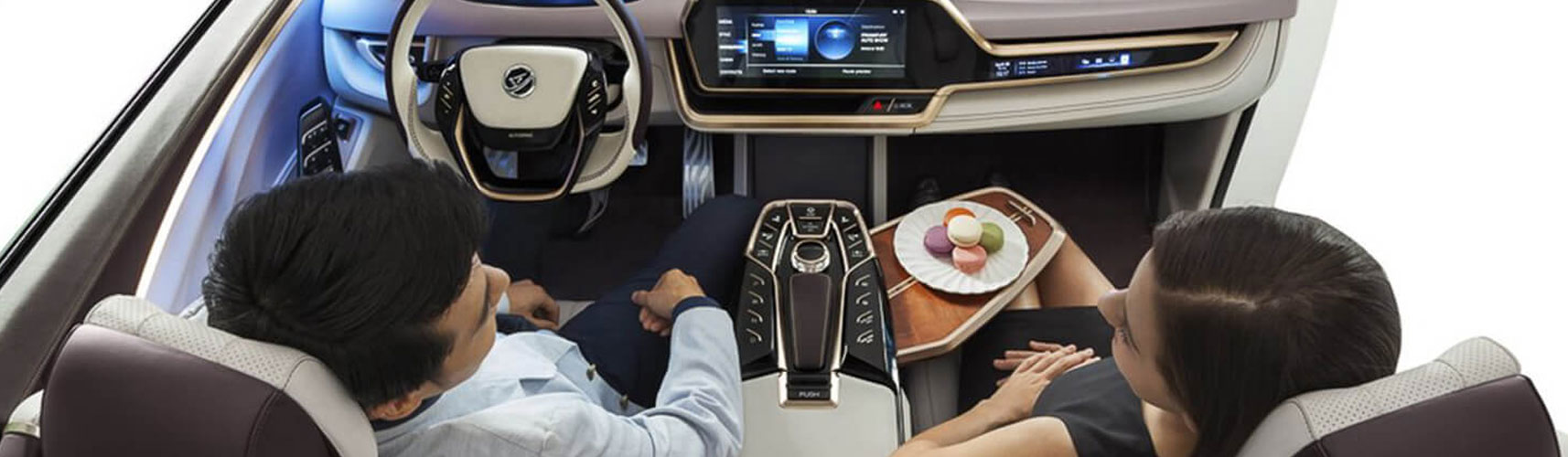
How safe are autonomous vehicles?

While self-driving cars may seem like the future of motoring, recent concerns have been raised following a tragic accident in which a self-driving Uber car in the US, in Tempe, Arizona, killed a female pedestrian. The victim was 49-year-old Elaine Herzberg, who was walking her bicycle down a four-lane road and was about to cross when a grey Volvo hit her at about 65 kilometres per hour. Despite the fact that the vehicle was driving itself, Uber vehicle operator Rafaela Vasquez was behind the wheel of the car.

With a spotlight now being shone on the safety and viability of autonomous vehicles, we thought we’d offer a little insight.

What are autonomous cars?

This refers to a vehicle that is unmanned and is capable of navigating without human input by sensing its environment.

How does an autonomous car drive on its own?

Autonomous vehicles use a variety of methods in order to detect surroundings and navigate. These techniques include GPS, laser light, computer vision, radar and odometry. All autonomous vehicles interpret sensory information through advanced control systems that help identify suitable navigation paths, obstacles and relevant signage. Further, the control systems in each of these cars must have a control system that is able to use sensory data to distinguish between different vehicles on the road.

What is the history of autonomous vehicles?

Autonomous vehicles have been in development for many years, with experiments on automated driving having been conducted as far back as the 1920’s and trials taking place since the 1950’s. With modern technology having broken through several barriers in the last few years, tests and development have been ramped up, and several major auto manufacturers have begun trialling autonomous vehicles

What is the big deal about autonomous vehicles?

Autonomous vehicles offer the promise of greater safety compared to manned vehicles, as software and sensors are ostensibly able to react faster to their surroundings than a human can. That’s why it’s quite ironic that this recent Uber accident occurred, as safety is supposed to be the greatest selling point of autonomous cars.

Almost every auto manufacturer has recognised the potential of autonomous vehicles, with auto players such as BMW, Ford, Tesla and General Motors initiating plans to offer self-driving vehicles within the next few years. Further, tech giants such as Google and Intel have also invested years of technological development in this field

What caused the accident involving the Uber vehicle in the US?

The investigation into the accident is still ongoing, but it seems that a failure occurred with Uber’s automated driving system. In combination with a negligence on the part of the driver, whose head was down in her lap at the time of the accident, it proved to be fatal. This has resulted in Uber temporarily halting its self-driving operations in all cities in the US where it has been testing its vehicles.

The verdict: are autonomous vehicle safe and viable?

It is far too early to make an accurate prediction in this regard, especially since a full investigation hasn’t been fully completed regarding the Uber accident in the US. However, common sense would dictate that autonomous vehicles can’t be written off, with far too much capital invested thus far for this new industry to bite the dust early. It’s also worth considering that the above-mentioned incident could be seen as a once-off glitch and that it wouldn’t define the overall safety of an autonomous vehicle.

In the interim, auto manufacturers are likely to ramp up their development even further in order to ensure that these vehicles are safer and that incidents such as these don’t occur again. Considering the poor track record that humans have behind the wheel, it might be churlish to say that autonomous vehicles still wouldn’t be a safer bet than manned vehicles.

Whether you’re driving on your own or using an autonomous vehicle, you’ll still have to protect one of your most prized assets. Cartrack’s Stolen Vehicle Recovery services will help you have peace of mind, with its 91% audited recovery rate.

How to drive in wet, windy and stormy weather

It’s a common fact that South Africa has one of the worst vehicle accident rates in the world, with 14,071 people dying on South Africa’s roads during 2016, according to the Automobile Association (AA). One of the contributing factors to these shocking statistics is the manner in which motorists drive on the road, especially when there are adverse, weather-related- conditions affecting visibility and vehicle performance. However, there is no need to despair, as there are ways to safely navigate these treacherous conditions.

Here are some tips on how to drive in wet, stormy and windy weather:

Take it Easy

South African drivers tend to be in a hurry when driving, which is always a recipe for disaster in bad weather conditions. Make sure that you slow down considerably when the roads are wet, windy or visibility is poor or even pull over to the side of the road if conditions are particularly hard to drive in. Sometimes, waiting a few minutes, instead of rushing to your destination, is the safer course of action when it is rising.

Give other Vehicles Additional Space

As a general rule, it is always advisable to always keep a healthy distance between your vehicle and other vehicles when driving. This rule is magnified even further in rainy conditions when you require extra space to potentially avoid unforeseen circumstances. As such ensure you add an extra one to two seconds of following time, which will give you the crucial bit of extra time you need to react.

Turn your Headlights On

Whenever light is diminished due to fog or stormy weather should turn on your headlights throughout your journey. Doing so will ensure that your vehicle is far more visible to other drivers, and this will allow them to be more aware of your vehicle and react better should weather conditions cause a mistake on the road.

Maintain a firm grip on the wheel

It might seem like obvious advice, but it is critical that you are more vigilant about keeping both of your hands on the steering wheel whenever the weather is affecting your safety on the road. This action will enable you to better control tricky situations that can arise during these times such ass slippery roads or vehicles spinning out of control.

Beware of Larger Vehicles

Many major accidents during rainy and windy weather can be attributed to larger vehicles such as trucks, recreational vehicles and tractor-trailers. Take care to avoid these vehicles or even give them right of way, as being involved in an accident with one of these vehicles can prove to be deadly.

Anticipate Gusts of Wind

Take extra care when driving in extremely windy conditions, particularly in areas such as Cape Town and Port Elizabeth. Strong winds can surprise even the most experienced of drivers, blowing cars from their lanes and into oncoming traffic. During these times, it is best to slow down and wait for the bad gusts to dissipate.

While you can’t control the weather, you can be in control of how people using your vehicles are driving with one of our fleet management packages.

Top celebrities obsessed with cars

We always hear and read about that old cliché that “celebrities are just like us”. While there is some hyperbole attached to that statement considering the rather privileged and fame-filled life they lead, celebrities do indeed share many of the same passions of us regular folk. One of the most common celebrity thrill is their interest in cars. In fact, there are numerous celebrities that are positively obsessed with vehicles.

Here’s a list of some of the more prominent ones:

Rowan Atkinson

Primarily known for his side-splitting turn as the bumbling, yet ingenious loner Mr. Bean, it is less well known that actor and comedian Rowan Atkinson also has a pretty rad collection of cars. Atkinson has confirmed that he is obsessed about cars, with an Aston Martin V8 Vantage and a McLaren F1 in his collection. He also owns several luxury classics such as an Aston Martin DB2 and a 1939 BMW 328 and has appeared on Top Gear several times.

Eric Clapton

He’s renowned as a rock legend and one of the greatest guitar players of all time. But “slowhand” Eric Clapton also has another passion in his life, and that’s cars. It was revealed in his 2007 autobiography that he has an affinity for classic cars, with several expensive ones at his disposal, including a specially commissioned, one-off Ferrari 458, which is reported to have cost a cool £3 million.

Simon Cowell

Talent show reality king Simon Cowell may love pretty dour clothes for his TV persona, but his taste in cars is somewhat flashier. Since hitting it big, he has been spotted in a variety of swanky vehicles, including a classic Porsche Speedster, a Bentley Azure and a Jaguar E-Type. Cowell’s passion for cars also led to him treating himself with a Bugatti Veyron for his 48th birthday – it’s known as the world’s most expensive and fastest production car.

Idris Elba

Considering that his father worked for Ford, it seems that there was always a good chance that Idris Elba would have a love for everything car-related. His ascent to TV and movie star fame has allowed him to revel in his passion for cars, with several impressive cars in his collection including a Mercedes-Benz SLS AMG Black and a Bentley Continental GT. He’s also parlayed his interest into TV, having hosted the BBC documentary series, Idris Elba: King of Speed, where he had the privilege of taking part in different car races around the world.

Nicolas Cage

In keeping with his sometimes manic persona on screen, Nicolas Cage also has a penchant for fast cars. Having experienced much success in movies like Gone in 60 Seconds, Cage has been able to splash the cash on a range of expensive and exotic cars, including a1955 Porsche 365 Pre-A Speedster, a 1965 Lamborghini 350 GT, a 1958 Ferrari 250 GT Pininfarina, and a rare 1963 Jaguar E-Type Semi-Lightweight Competition.

Jay Leno

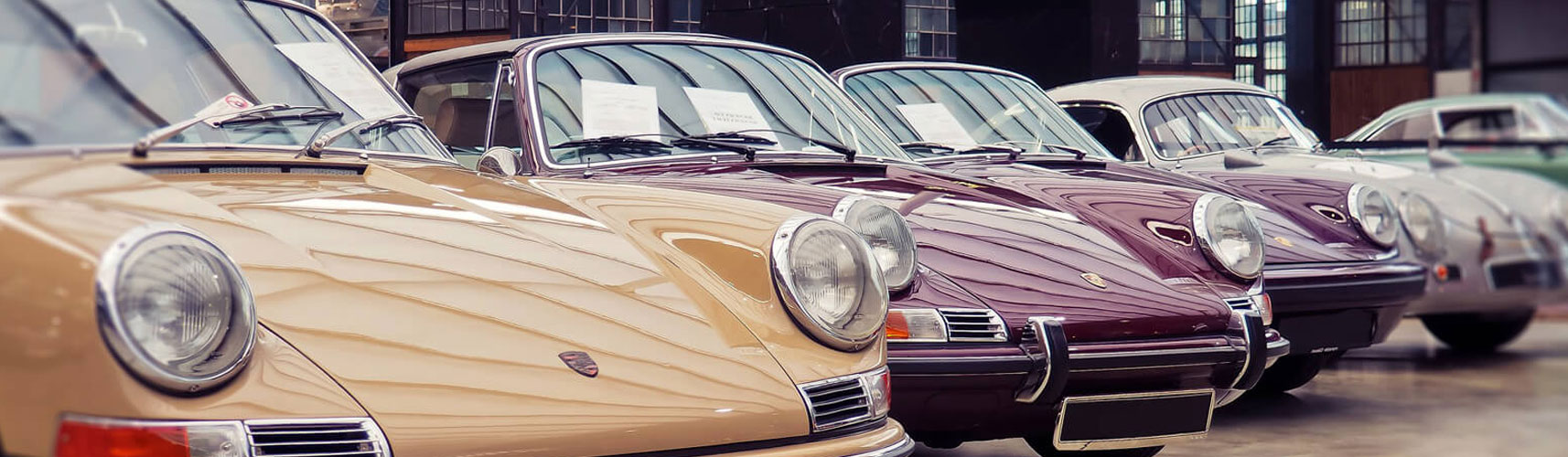
While Jay Leno is renowned for his 22-year run as the host of the Tonight Show, he is almost as well known for his love of cars. Amongst celebrity car enthusiasts, he is the undisputed king, with a massive collection that even requires the employment of four mechanics and four fabricators that take care of his vehicles on a full-time basis. Included in this collection is a 1955 Buick Roadmaster, a pre-war Bugatti a 1909 Baker Electric, a Stanley Steamer. And a pre-war Bugatti. Leno’s love for cars parlayed into his entertainment career, as he has hosted Jay Leno’s garage since retiring from the Tonight show in 2014.

You might not have the cash of these celebrities to buy these cars, but you still undoubtedly treasure your vehicle. Ensure that it can’t be stolen by getting a tracking device from Cartrack.

Ways to avoid traffic

For most people, sitting in traffic is the bane of their life. On a daily basis, citizens have to endure the frustration of time-consuming and hair-pulling traffic that simultaneously heightens frustrations, quells productivity and maybe even shortens life spans. If the thought of being stuck behind a build-up of vehicle fills you with more dread than a hangover than you need not despair entirely; there are ways to beat the traffic.
Check out some of the best ways to avoid traffic:

Always Check Apps and/or GPS trackers

While mobile navigational apps are frequently downloaded, they are often only used when drivers are travelling to a destination that is unknown. This is quite short-sighted, as these apps are an invaluable source for avoiding traffic, even when the drivers know the route to take. It is therefore important to download apps such as Waze and Google Maps in order to decipher current traffic congestion and suggested routes which will shorten your drive home. The reason these apps worm better than anything else in beating traffic in that they rely on reports from road users on accidents, construction and other variables that create traffic along routes.

Don’t discount the traffic report

In addition to using your app, you should also still listen to the good ol’ traffic report, which provides instant updates to travellers on congested areas. It is especially important that you listen to this report before embarking on your commute, as you will be informed of major obstructions such as accidents and broken traffic lights that will seriously hamper your travelling time. Upon hearing these report, you can act decisively and find new, less congested routes to take,

Alternate Your Commute

You will find that alternating your usual commute will open up the possibility of finding less congested areas than your standard route. Commuters will often “stick to the script” and follow a set route, which will result in far less congestion on roads less travelled. Alternating your commutes will also be a welcome break from the monotony of familiar routes.

Leave Early

It may seem like simple advice, but making sure that you depart before your intended time will also usually mean that you encounter less traffic. If you live in a big city like Johannesburg or Cape Town, you would ideally like to depart before 7:00 a.m., which is when traffic starts to build up. In terms of leaving work to go home, it’s probably better to depart before 4.00 p.m., if this is possible.

Take the road less travelled

Sometimes it’s better to add a few extra kilometres to your route and venturing onto back roads in order to avoid the frustration of traffic jams. While some may think that choosing this option will result in more wasted petrol, it will actually save petrol, as sitting in traffic actually increases petrol use. It will also give you the chance to view new sights and sound son your commute – you know the old saying “a change is as good as a holiday”.

Whatever your traffic situation, it’s also good to know that a tracking device from Cartrack will give you peace of mind that your vehicle is in good hands, with up to R150,000 offered in the event of non-recovery.

Legal rights when pulled over

It’s an unpleasant prospect and a situation that most people think they will never have to encounter. However, the stark reality is that at any point in time, metro police could pull you over or stop you at a roadblock while you are driving. In these situations, it is important to know your rights and the appropriate behaviour you should adopt. Here is an outline of what you should know and how you should react.

Are you required to pull over?

Yes. According to the Automobile Association (AA), police officers in uniform have the right to stop vehicles on the road at any time and if required, you will have to provide your name, address, or any other details concerning your identity. Further, the National Road Traffic Act enables traffic officers to demand your driver’s license, which must be kept either in the vehicle or on the driver’s person or in the vehicle.

Must the officer identify themselves?

According to law, you are allowed to request that officers provide verified identification, regardless of whether they are in official uniform. As such, if you feel it is necessary, you have every right to request that they provide identification.

Can they search your vehicle?

This is no simple answer, but the answer is mostly “yes”. At roadblocks, search and seizure have been authorised beforehand, and traffic officers have the right to search your vehicle – you cannot refuse the search at any time.

Zip the Lip

You may have heard the phrase “You have the right to remain silent” uttered many times in movies and TV series – it is also a phrase that applies in real-life situations. Should your experience of being pulled over escalate to the point where you’re arrested, always remember that you have the legal right to remain silent, as any words you say may incriminate yourself.

Will you be arrested for outstanding traffic fines?

If there is no warrant of arrest, a traffic official has no authority to arrest or even detain you for an outstanding traffic fine. However, they do have the authority to serve a summons for you to appear in court at a certain date. Plus, they may be authorised to arrest you for a crime committed, possibly as a result of the search of your vehicle.

Can you refuse a breathalyser or blood test?

According to the National Road Traffic Act (NRTA), no citizen is allowed to refuse a roadside test. In fact, a test can be forcibly performed on you if you happen to be resistant.

What if you are arrested?

Should you actually be arrested, it is important to remember the following:

  • Wait for legal representation before offering any information
  • Do not be confrontational towards the arresting officer
  • Apply for bail as soon as you can

Hopefully, you can stay out of trouble with the law and enjoy the use of the open road unencumbered for many years. To protect your vehicle investment, we recommend that you install a tracking device to help prevent vehicle theft. Contact us today to learn more.